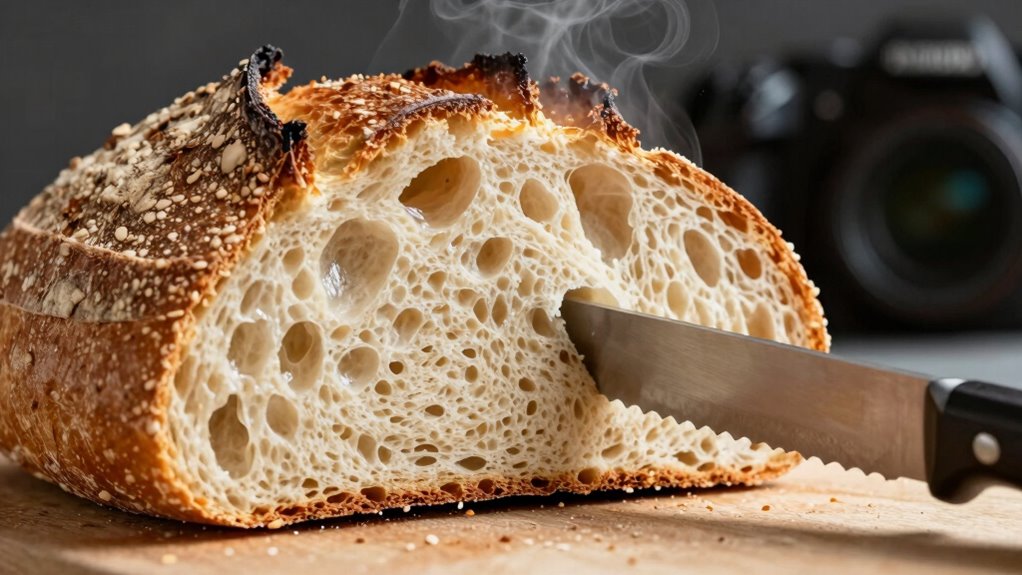

Cooling your sourdough properly is essential for clean, even slices. When you wait until the bread cools completely, the starches and gluten set, preventing squishing or tearing. This makes slicing easier, maintains your loaf’s shape, and gives you a crisp crust. Slicing too early can cause jagged edges, crumb collapse, or a sticky texture. Understanding when your bread is ready and how to cool it properly helps you achieve professional results—something you’ll master with a little more insight.

Get baking supplies delivered free with Prime
- Fast, free delivery on millions of items
- Prime Video, Amazon Music and more included
- Member-only deals all year
Key Takeaways
- Proper cooling allows the crumb to set, preventing tearing and collapsing when slicing.
- Cooling helps starch and gluten stabilize, ensuring clean, even cuts without squishing or tearing.
- Slicing too early can cause jagged edges and gummy crumb due to incomplete internal structure development.
- Adequate cooling promotes crust firmness and crust development, supporting neat, professional slices.
- Using a sharp serrated knife after proper cooling ensures smooth, clean slices and preserves the loaf’s appearance.
serrated bread knife for sourdough
As an affiliate, we earn on qualifying purchases.
As an affiliate, we earn on qualifying purchases.
Why Cooling Is Key to a Perfect Sourdough Structure
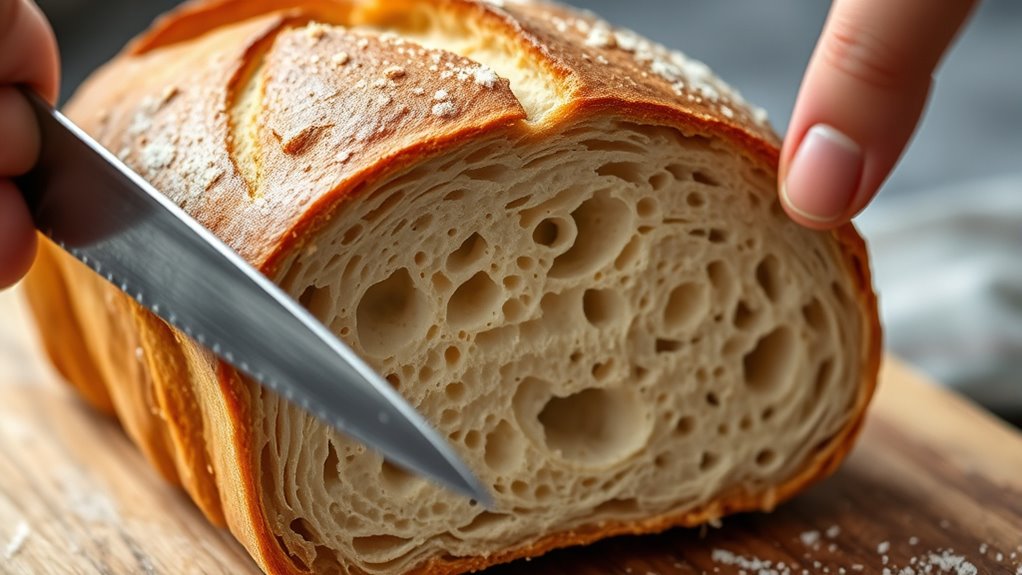
Cooling your sourdough properly is essential because it allows the crumb to set and develop the right structure. When you let it cool, the crust continues to develop, becoming crisp and well-formed, which enhances both texture and visual appeal. Proper cooling also preserves the internal moisture, preventing a gummy or dense crumb. This process helps the flavors deepen, as residual heat allows subtle taste compounds to meld, boosting flavor enhancement. If you slice too early, the steam and heat can cause the crumb to collapse or become sticky, ruining the texture. Additionally, proper cooling techniques help maintain the bread’s overall quality and appearance. Using a wire rack for cooling ensures even air circulation, which further improves the crust and crumb quality. Proper cooling is also vital for preserving crust texture, making each slice as delightful as the first. Taking the time to cool your bread properly also minimizes structure collapse, helping maintain its integrity and aesthetic appeal.
As an affiliate, we earn on qualifying purchases.
How Heat Affects Your Sourdough’s Crumb and Crust
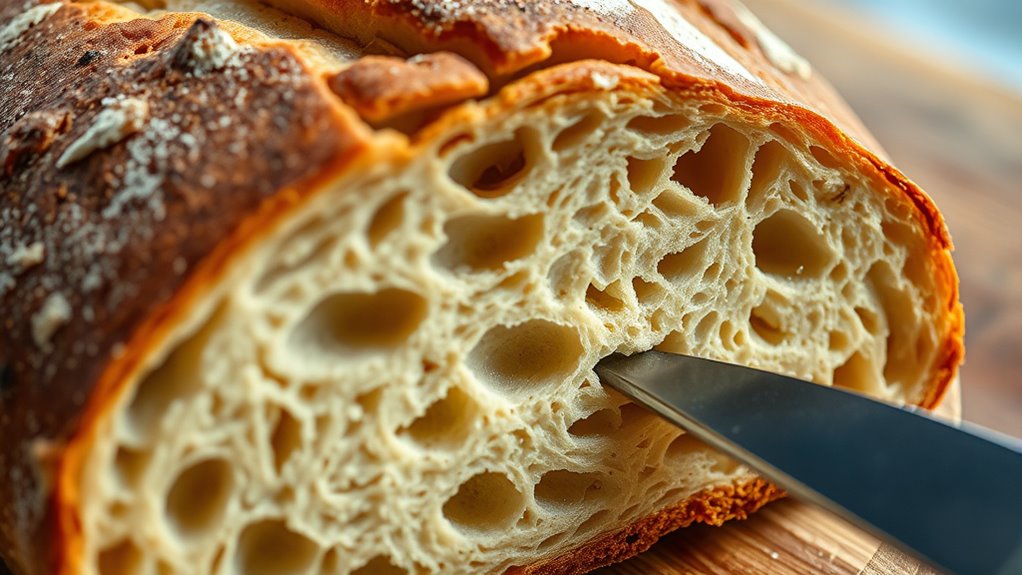
Heat plays a crucial role in shaping your sourdough’s crumb and crust, as it influences how the bread’s internal structure sets and how the crust develops. During baking, heat conduction transfers heat from the oven to the dough, creating a firm crust and setting the crumb’s structure. Proper heat application encourages moisture migration from the interior to the surface, helping develop a glossy, crisp crust. If the oven is too hot or uneven, the crust can burn before the crumb fully sets, leading to a tough exterior and underdeveloped interior. Managing heat ensures balanced crust formation while allowing the crumb to develop its airy, open texture. Understanding how heat affects these processes helps you produce sourdough with a clean slice and ideal internal and external qualities. Controlling heat transfer is essential for achieving consistent results in sourdough baking. Additionally, heat distribution within the oven can significantly impact how evenly the crust and crumb develop, highlighting the importance of proper baking techniques. Proper oven calibration and placement can help optimize heat flow, ensuring your loaf bakes evenly from crust to crumb. Recognizing how heat management impacts each stage of baking allows bakers to fine-tune their process for optimal texture and appearance. Moreover, understanding the thermal properties of your oven and dough helps in achieving precise control over these processes.
As an affiliate, we earn on qualifying purchases.
The Science of Starch and Gluten in Cooling

Once your sourdough comes out of the oven, the baking process isn’t finished—it’s the start of important chemical changes within the bread’s structure. During cooling, starch gelatinization stabilizes, preventing the bread from becoming gummy or sticky when sliced. As the bread cools, the cooked starch molecules set into a firm structure, which helps maintain the crumb’s shape. Gluten development also continues subtly, allowing the gluten network to relax and strengthen, making the crumb less sticky and easier to slice cleanly. Proper cooling allows these processes to complete fully, reducing the risk of tearing or squishing when slicing. Additionally, controlling the cooling time ensures the bread’s texture and flavor develop fully, enhancing the overall quality. Understanding how starch gelatinization and gluten development work together helps you produce bread that slices smoothly and holds its shape. This knowledge about baking science can also assist bakers in troubleshooting and refining their techniques for optimal results. Taking the time to cool properly supports consistent results and produces a more appealing loaf. Proper cooling time also impacts the bread’s structure, leading to a better slicing experience and improved eating quality.
As an affiliate, we earn on qualifying purchases.
How to Tell When Your Sourdough Is Ready to Slice
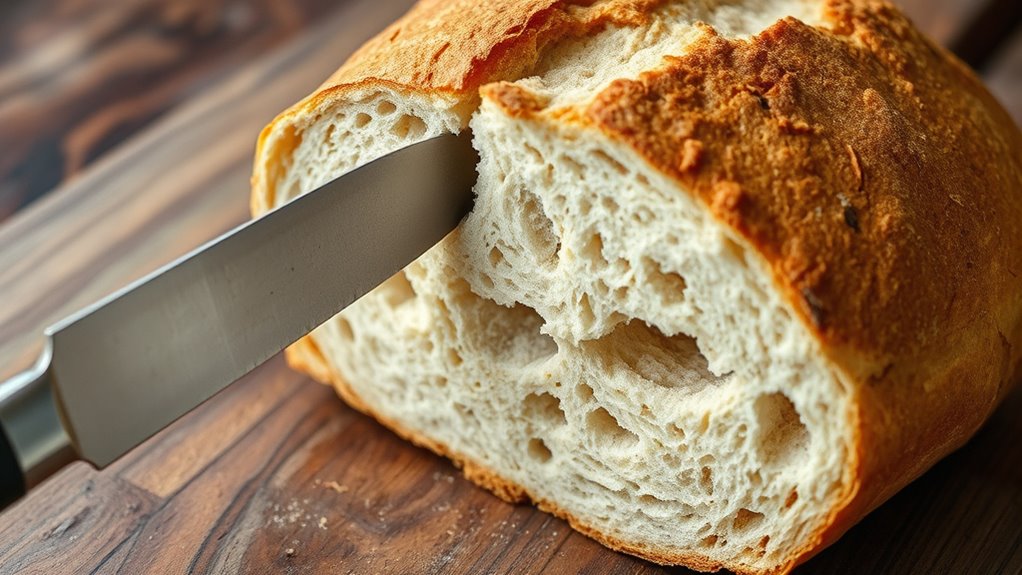
Knowing when your sourdough is ready to slice is essential for achieving clean cuts and maintaining its shape. One telltale sign is the sourdough flavor, which develops fully after cooling, indicating it’s rested enough. You should also observe the crust development; a firm, well-set crust suggests the loaf is ready. Gently tap the bottom—if it sounds hollow, it’s a good sign. Avoid slicing too soon, as the crumb may be gummy or sticky, compromising the appearance and texture. Proper cooling allows the flavor to deepen and the crust to fully develop, making slicing easier and cleaner. Cooling time is a crucial factor that influences the final texture and flavor, ensuring your sourdough is at its best when sliced. Additionally, paying attention to the bread’s internal temperature can help determine its readiness—using a thermometer can provide precise guidance. Monitoring the baking process and knowing the ideal cooling period can further improve your slicing results. Allowing the bread to rest and cool completely also helps the crumb structure set properly, which is key for clean slicing. Resting and cooling times are supported by baked goods science, which explains how proper cooling affects texture and flavor. Trust these indicators to determine the perfect moment to cut into your loaf, ensuring a satisfying presentation and ideal eating experience.
What Happens When You Slice Too Soon?
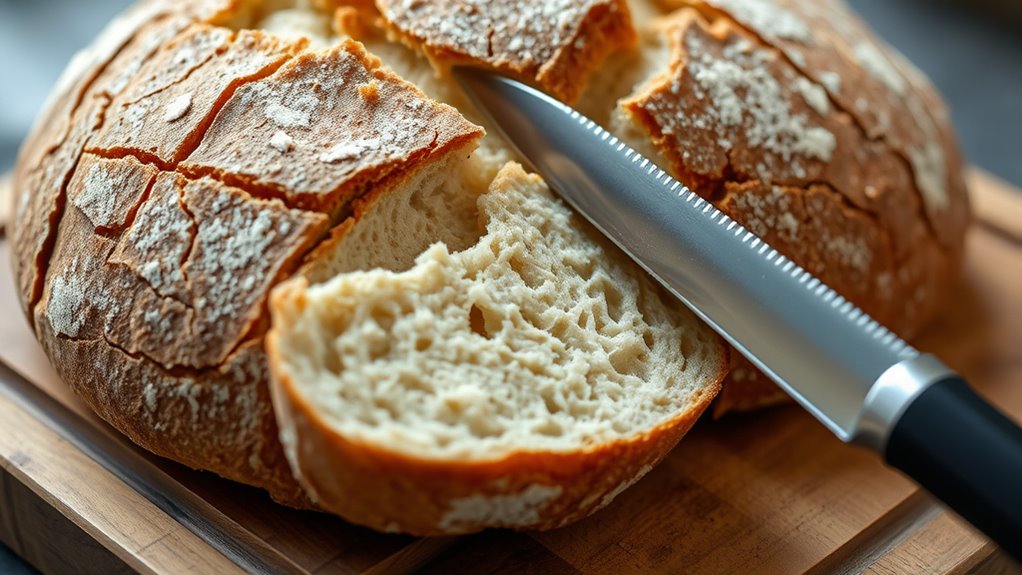
Slicing sourdough too soon can lead to a messy and undesirable eating experience. When you cut into the bread prematurely, the crust may separate easily, creating jagged edges and uneven slices. You might also notice the crumb collapsing or squishing as the internal structure hasn’t set fully. This happens because the bread’s moisture and gases haven’t stabilized, causing the crumb to lose its shape. Cutting too early can also result in tearing or crushing the loaf, making it harder to achieve clean, professional-looking slices. Additionally, the bread’s texture may feel gummy or sticky, further detracting from your enjoyment. To avoid these issues, patience is key—allowing your sourdough to cool properly ensures a clean cut and a more satisfying eating experience. Proper cooling is essential for maximizing your bread’s texture and appearance, and understanding the cooling process can help you achieve the best results. Incorporating adequate resting time allows the bread’s internal structure to stabilize, ensuring optimal slicing quality. Furthermore, understanding the importance of timing in slicing can greatly improve your bread presentation.
Best Cooling Methods for Clean Slices
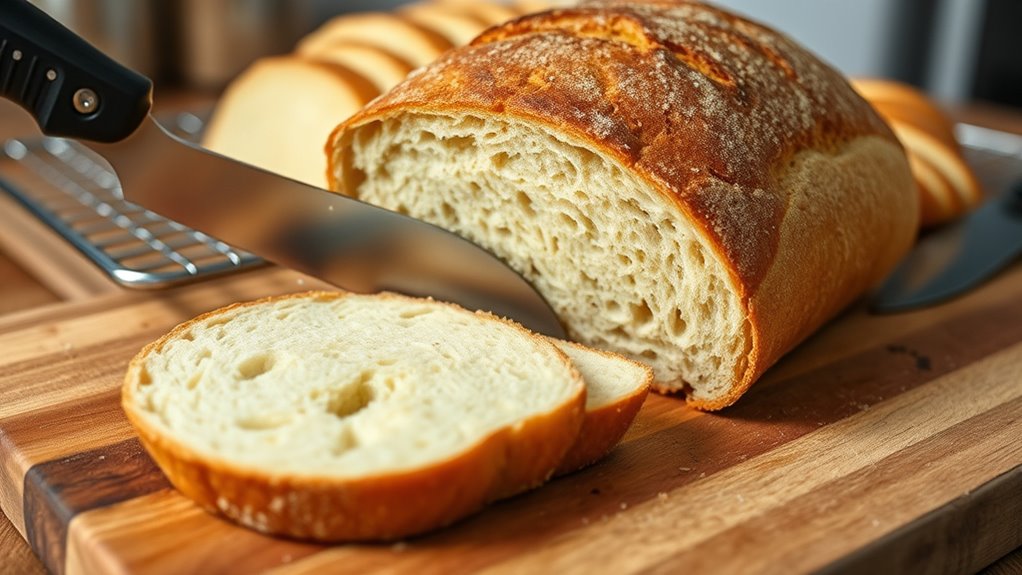
To achieve clean, professional slices of sourdough, proper cooling is vital. Cooling methods directly impact bread aesthetics and flavor preservation by preventing moisture loss and maintaining crumb structure. The best approach is to cool your sourdough at room temperature on a wire rack, allowing air circulation around the loaf. This prevents condensation that can make the crust soggy and ensures an even cool-down. Avoid wrapping the bread immediately, as trapped steam can compromise appearance and taste. For ideal results, wait at least 1-2 hours before slicing. Key points include:
- Use a wire rack for airflow
- Avoid covering immediately after baking
- Ensure complete cooling before slicing
- Maintain consistent room temperature
These methods help preserve the bread’s visual appeal and flavor integrity.
Tools and Tricks for Precise Slicing
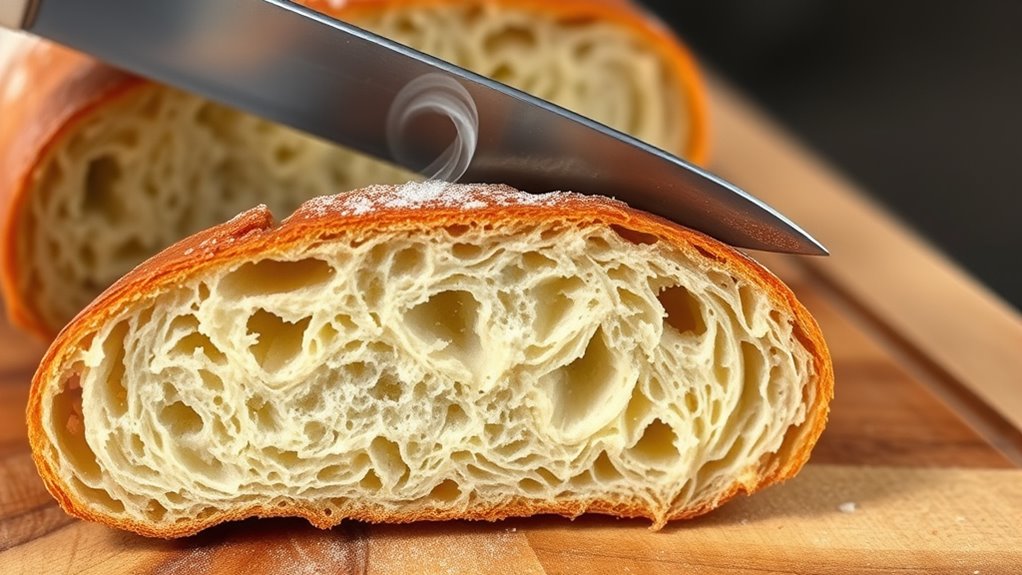
Achieving perfectly even slices of sourdough relies on selecting the right tools and employing effective techniques. Use a sharp bread knife with a serrated edge to glide smoothly through the crust without crushing the crumb. Slicing guides can help maintain consistent thickness, especially for neat presentation. To visualize your options, consider this table:
| Tool | Purpose | Benefit |
|---|---|---|
| Bread Knife | Cutting through crust | Precise, clean slices |
| Slicing Guides | Controlling slice thickness | Uniform slices |
| Sharpener | Maintaining blade sharpness | Easier, safer cuts |
| Cutting Board | Stable surface | Safety and accuracy |
Combining these tools with steady, gentle motions guarantees your slices are even and professional-looking.
How to Store Sourdough to Keep Its Shape
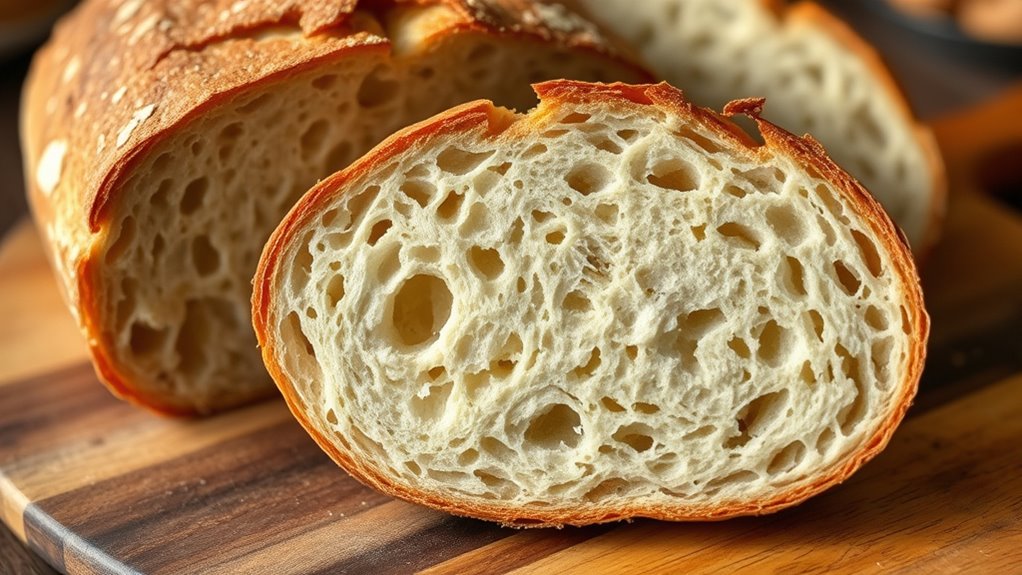
Storing sourdough properly is essential to maintaining its shape and freshness. To keep your loaf intact and preserve its crust, choose your bread storage method wisely. Avoid plastic bags for long-term storage, as they can soften the crust and cause moisture buildup. Instead, use a breathable bread box or linen cloth to maintain crust preservation and prevent mold. If you need to store it longer, slice the bread and freeze it, then reheat slices directly from the freezer. Proper storage ensures your sourdough keeps its shape and texture.
- Use a bread box or linen cloth for day-to-day storage
- Avoid airtight plastic bags for crust preservation
- Slice before freezing for easier reheating
- Keep in a cool, dry place to prevent mold
Troubleshooting: Fixing Unsatisfactory Slices
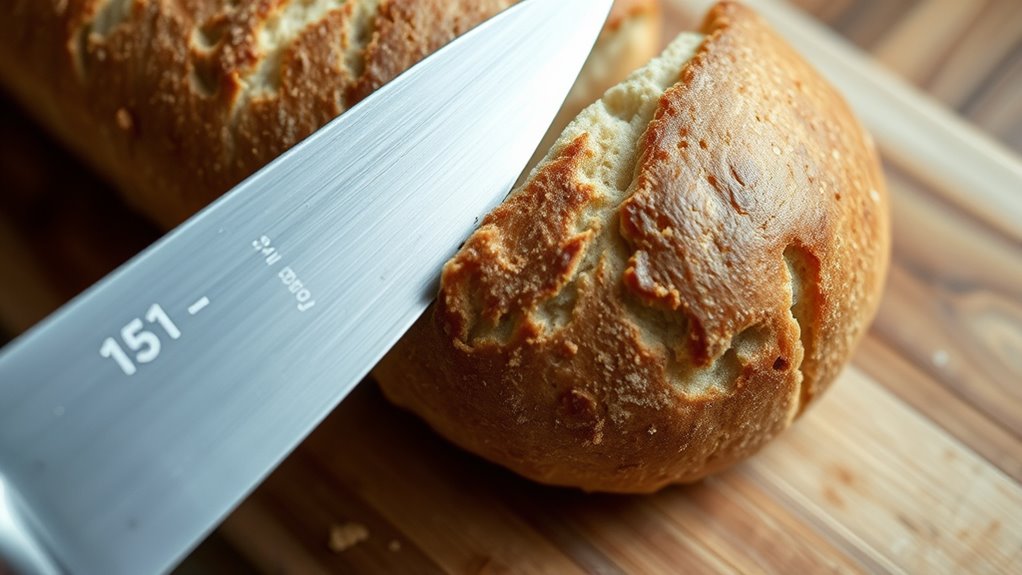
If your sourdough slices aren’t coming out right, start by reviewing your cooling techniques, as uneven cooling can cause tearing. Make sure you’re using a sharp, properly adjusted slicing tool to get clean cuts. Adjusting these factors often makes a noticeable difference in your final slices.
Proper Cooling Techniques
To guarantee your sourdough slices are clean and attractive, proper cooling is vital. Cooling allows the bread to set, which improves bread preservation and ensures crust development. If you slice too early, the bread may be gummy or squishy, ruining the appearance and texture.
To optimize cooling, consider these tips:
- Cool the loaf on a wire rack to promote even air circulation
- Let it rest for at least 1-2 hours before slicing
- Avoid wrapping the bread while it’s still warm to prevent sogginess
- Use a sharp, serrated knife once cooled for smooth cuts
Slicing Tool Tips
Using the right slicing tools can make a significant difference in achieving neat, even slices of your sourdough. A sharp serrated knife is essential for clean cuts, especially if your bread has a thick crust resulting from proper bread scoring. If your slices are tearing or uneven, it’s likely your crust is too thick or your knife isn’t sharp enough. Make sure your knife is well-maintained and use gentle, saw-like motions rather than pressing down. For best results, slice the bread after it’s fully cooled, as warm bread tends to be more fragile. Adjusting your bread scoring can also help, creating controlled cracks that guide your knife. Proper tools combined with careful technique will give you smooth, consistent slices every time.
Frequently Asked Questions
Can Cooling Time Affect Sourdough Flavor Development?
Cooling time definitely influences sourdough flavor development. When you allow the bread to cool properly, it helps stabilize the fermentation impact, which enhances complex flavors. Plus, it improves crumb texture, making the bread easier to slice and more enjoyable to eat. Rushing the cooling process can hinder these benefits, so giving your sourdough enough time to cool ensures you get the best flavor and texture in every bite.
Does the Type of Oven Influence Cooling Needs?
If you use a convection oven, the rapid heat transfer can cause the crust to set quickly, affecting cooling needs. For example, a baker found that their high-end oven required longer cooling times to prevent uneven crumb. Oven effects like heat retention and airflow influence cooling techniques—slower cooling prevents condensation and preserves texture. Adjust your cooling process based on your oven type to maintain sourdough quality.
How Does Humidity Impact Cooling and Slicing?
Humidity effects considerably influence cooling and slicing. High humidity can slow down the cooling process, causing the crust to stay softer longer, which may lead to a gummy texture. It also affects cooling efficiency, making it harder for heat to escape evenly. To slice cleanly, you should guarantee your sourdough cools in a controlled environment with low humidity, allowing the crust to firm up properly for cleaner, neater slices.
Are There Specific Knives Best for Cutting Cooled Sourdough?
You should use a serrated bread knife with a sharp blade for cutting cooled sourdough. Its serrated edge helps you saw through the crust easily without crushing the crumb, especially on a stable, non-slip cutting surface. A sharp knife reduces the effort required, ensuring clean slices. Avoid dull knives or smooth-edged ones, as they can squish or tear the bread, making your slices uneven and less appealing.
Can Overcooling Cause the Crust to Become Too Hard?
Yes, overcooling can make the crust too hard, affecting crust texture. If you leave your sourdough too long, the cooling duration causes the crust to become excessively firm and difficult to cut neatly. To avoid this, aim for the right balance—cool just enough so the crumb sets without making the crust overly tough. This ensures you get a crust that’s crisp but still easy to slice.
Conclusion
Waiting at least two hours before slicing your sourdough can improve its texture and appearance. Did you know that letting your bread cool thoroughly helps develop a better crumb structure and prevents gummy interiors? By giving your loaf proper time, you’ll enjoy cleaner cuts and a more satisfying eating experience. So, next time, resist the urge to slice immediately—your sourdough will thank you with perfect, professional-looking slices every time.
Halloween Picks
halloween
As an affiliate, we earn on qualifying purchases.