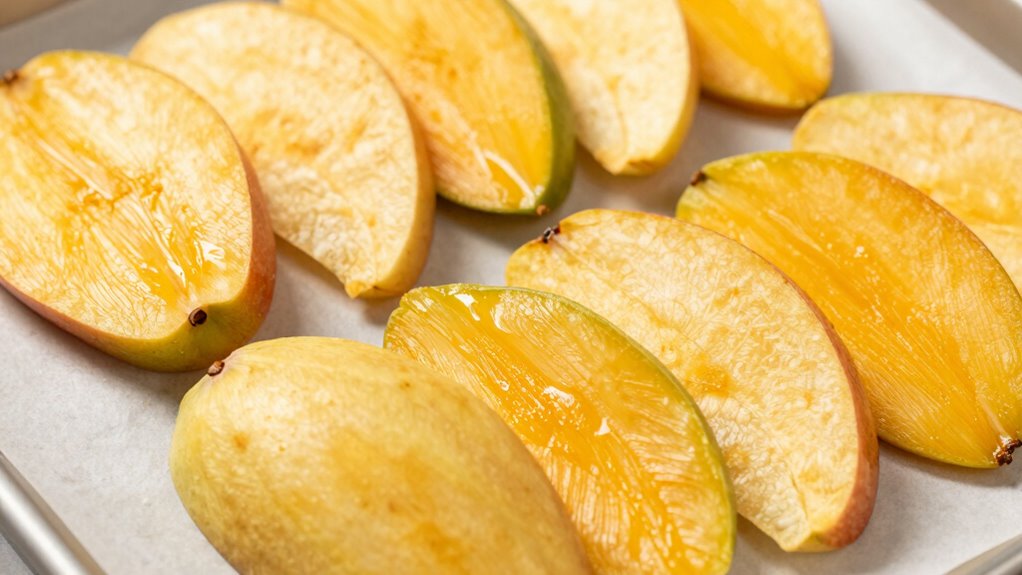

To prevent dried fruit from becoming tough and leathery when baking, choose ripe, firm fruit and cut it into uniform slices. Use proper dehydration temperatures around 125°F to 135°F, and dry the fruit evenly to avoid hot spots. Before storing, consider soaking the dried pieces in juice or syrup to keep them tender and flavorful. If you want to learn more tips to achieve perfect, soft dried fruit, keep exploring further.

Get baking supplies delivered free with Prime
- Fast, free delivery on millions of items
- Prime Video, Amazon Music and more included
- Member-only deals all year
Key Takeaways
- Slice fruit uniformly (1/8 to 1/4 inch) to promote even drying and prevent leathery patches.
- Dry at controlled temperatures (125°F–135°F) to avoid over-drying and sugar crystallization.
- Pre-treat fruit with lemon juice or preservatives to reduce browning and improve moisture retention.
- Rotate dehydrator trays regularly and monitor drying progress for consistent results.
- Rehydrate dried fruit before baking to restore softness and enhance flavor, preventing a tough leather-like texture.
As an affiliate, we earn on qualifying purchases.
What Causes Tough, Leather-Like Dried Fruit?
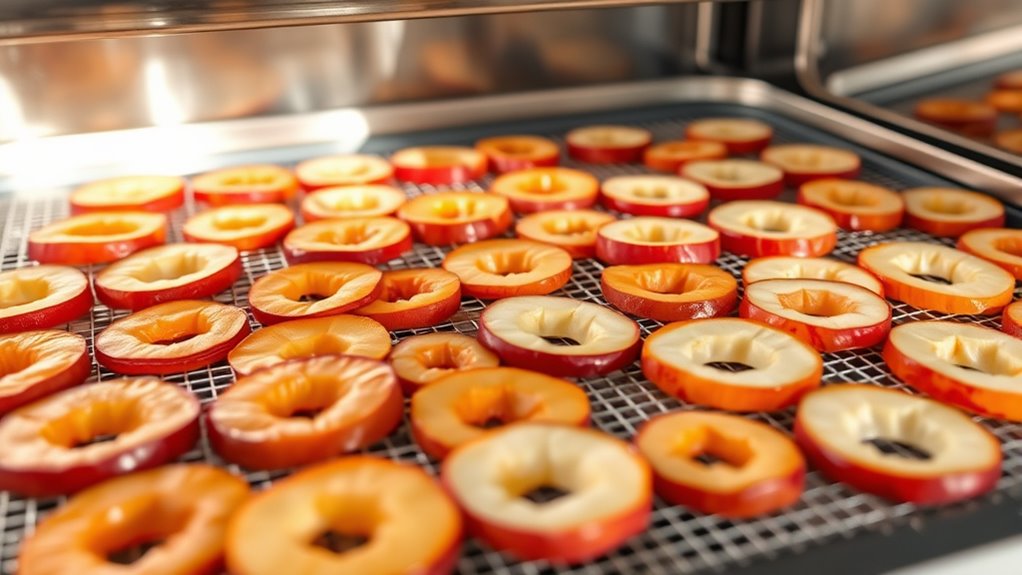
Tough, leather-like dried fruit usually results from over-drying or uneven dehydration. When you leave fruit in the dehydrator too long or at too high a temperature, it can cause sugar crystallization, making the fruit hard and rubbery. Overexposure to heat accelerates moisture loss unevenly, leading to thick, tough textures. If the fruit dries too quickly or unevenly, parts of it become overly concentrated, with sugar forming crystals that stiffen the flesh. This process strips away the fruit’s natural softness, leaving you with an unappetizing, leathery texture. To avoid this, monitor your drying time and temperature carefully. Ensuring even dehydration helps preserve the fruit’s natural moisture and tenderness, preventing it from turning into a tough, chewy, and unappealing snack.
As an affiliate, we earn on qualifying purchases.
How Do You Choose and Prepare Fruit for Drying?
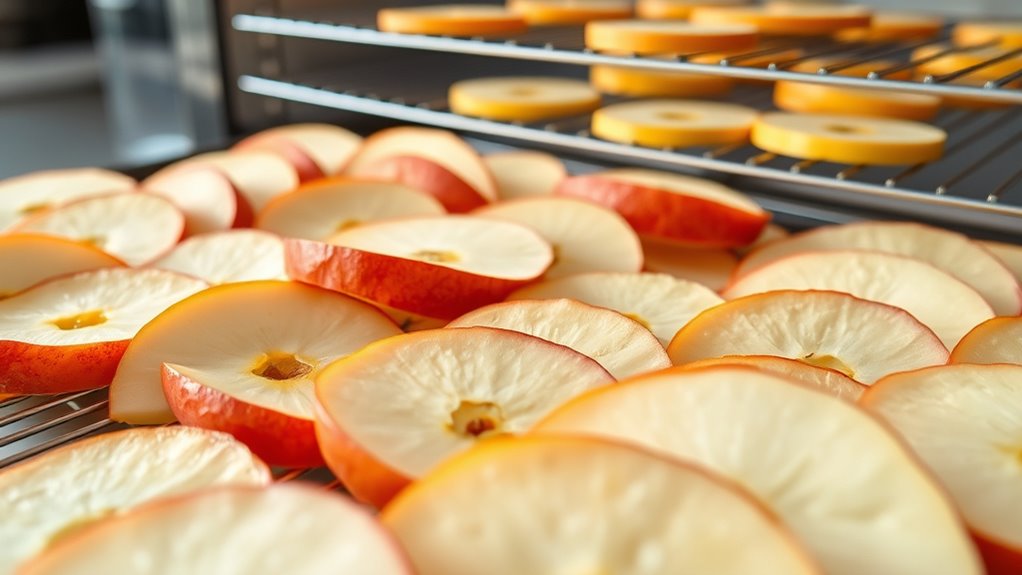
How you choose and prepare fruit for drying can substantially impact the quality of your final product. Start with quality fruit—look for ripe, blemish-free options with firm flesh. Avoid overripe or damaged fruit, as they can lead to uneven drying or spoilage. When preparing, wash the fruit thoroughly to remove dirt and pesticides. Peel or core if necessary, especially with apples, peaches, or pears, to ensure even dehydration. Slice the fruit uniformly to promote consistent drying times; generally, 1/8 to 1/4 inch thick works well. Use preparation techniques like removing seeds or stems, and consider pre-treating with lemon juice or a fruit preservative to prevent browning. Proper selection and preparation help you achieve dried fruit that’s tender, flavorful, and not tough or leathery. Additionally, understanding piercing care and hygiene can help prevent contamination if you are drying fruit at home using equipment that requires cleaning and maintenance. Ensuring proper hygienic practices during handling and drying can significantly reduce the risk of spoilage and bacterial growth, leading to a safer and higher-quality final product. Incorporating sound sound healing science principles, such as maintaining a clean environment, can further enhance the safety of your drying process.
As an affiliate, we earn on qualifying purchases.
What Are the Best Methods and Settings for Dehydrating Fruit?

Dehydrating fruit effectively requires selecting the right method and adjusting the settings to suit the type of fruit you’re drying. For consistent results, pay attention to the fruit slice thickness; thinner slices dry faster and more evenly, reducing the risk of tough leathery spots. When using a food dehydrator, set the dehydration temperature between 125°F and 135°F, depending on the fruit’s moisture content. For oven drying, keep the temperature low—around 140°F or lower—and prop the door open slightly to allow moisture to escape. Keep an eye on the fruit, and rotate trays if necessary to ensure uniform drying. Adjust the temperature based on the fruit’s density and moisture level, aiming for even dehydration without overcooking. Additionally, controlling the humidity levels during drying helps prevent the fruit from becoming too tough or leathery. Monitoring the dehydration process closely ensures optimal texture and quality. Proper air circulation is also essential to achieve consistent dehydration and prevent uneven drying or spoilage. Incorporating smart kitchen appliances that monitor and control temperature and humidity can further enhance the dehydration process for better results. Maintaining consistent drying conditions across all batches is crucial for achieving the desired chewy or crisp textures in dried fruit.
dehydrated fruit storage containers
As an affiliate, we earn on qualifying purchases.
As an affiliate, we earn on qualifying purchases.
How Can You Make Dried Fruit Tender and Flavorful?

To make certain your dried fruit remains tender and bursting with flavor, soaking it in a flavorful liquid before storage can make a significant difference. This method allows for flavor infusion, where the fruit absorbs the liquid’s taste, enhancing its overall flavor profile. For texture enhancement, choose liquids like fruit juice, wine, or a sugar syrup that complement the fruit’s natural sweetness. Let the fruit soak for a few hours or overnight, depending on the desired tenderness. This process softens the dried fruit, preventing it from becoming tough or leathery during baking. Additionally, the added moisture helps maintain a juicy, appealing texture when you use the fruit in recipes, ensuring your baked goods stay moist and flavorful.
How Should You Store and Use Dried Fruit to Keep It Fresh?

Proper storage is essential to keep dried fruit fresh and flavorful for as long as possible. Store dried fruit in an airtight container in a cool, dark place to prevent moisture absorption and spoilage. For longer shelf life, consider refrigeration or freezing, especially if you won’t use it quickly. Use moisture-proof packaging to avoid clumping and mold. When it’s time to use dried fruit, check for any signs of spoilage like off smells or discoloration. Usage suggestions include rehydrating it in warm water or tossing it directly into baking recipes, salads, or snack mixes. Keep dried fruit sealed tightly after each use to prevent exposure to air. Proper storage and usage practices will maintain its quality, ensuring you enjoy fresh, flavorful dried fruit in all your baking creations. Additionally, understanding air quality factors can help you select storage environments that minimize contamination and preserve fruit freshness. Good ventilation and avoiding humidity in storage areas further protect dried fruit from spoilage. Ensuring optimal storage conditions can significantly extend the shelf life of dried fruit and maintain its desirable texture and flavor.
Frequently Asked Questions
How Can I Tell When Dried Fruit Is Perfectly Tender?
You can tell when dried fruit is perfectly tender by checking its fruit moisture and texture indicators. It should feel pliable and slightly soft without being sticky or overly moist. Bending or gently squeezing the fruit, it should give easily without cracking or feeling leathery. The ideal dried fruit maintains a balanced moisture level, ensuring a tender texture that’s perfect for baking without becoming tough or leathery.
Are There Specific Fruits More Prone to Becoming Tough When Dried?
Yes, citrus and stone fruits are more prone to becoming tough when dried. Citrus peels and thick-skinned stone fruits like peaches or plums tend to dry out unevenly, risking a leathery, tough texture. To avoid this, thinly slice these fruits, monitor drying closely, and remove them promptly when tender. Proper slicing and timing help you achieve a chewy, pleasant consistency without turning into tough leather.
Does Adding Sugar or Syrup Affect the Texture of Dried Fruit?
Adding sugar or syrup can considerably influence the texture of dried fruit. Studies show that sugar impact helps retain moisture, making the fruit softer and chewier. Syrup effects often result in a more tender, less leathery outcome by coating the fruit and preventing excessive drying. You’ll notice that sugared or syrup-dipped dried fruits are less tough, enhancing their flavor and texture, perfect for baking or snacking.
Can I Rehydrate Dried Fruit to Improve Its Texture?
Yes, you can rehydrate dried fruit to improve its texture. To do this, soak the fruit in warm water, fruit juice, or a flavored liquid like rum for about 15-30 minutes, depending on the fruit. Rehydration techniques not only restore moisture but also enhance flavor. After soaking, drain and pat the fruit dry, making it softer and more suitable for baking or snacking.
What Are Common Mistakes That Lead to Leathery Dried Fruit?
If you pick the wrong fruit or ignore your drying environment, you’ll end up with leathery dried fruit that could crack your teeth! Using overripe or thin-skinned fruit, or neglecting proper air circulation and temperature control, causes excessive drying. Always choose firm, ripe fruit and dry in a consistent, cool environment. Don’t rush the process or underestimate the importance of proper fruit selection and drying conditions to avoid tough, leathery results.
Conclusion
To keep your dried fruit tender and delicious, proper preparation and storage are key. Did you know that over 70% of dried fruit is enjoyed in baked goods or snacks? By choosing the right fruit, using the correct drying methods, and storing it properly, you’ll enjoy vibrant flavors and perfect texture every time. With a little care, your dehydrated fruit can be just as tempting as fresh, making your baked treats irresistibly flavorful.
Halloween Picks
halloween
As an affiliate, we earn on qualifying purchases.