To reduce flour dust when loading your dough mixer, use low-dust flour and sealed packaging to minimize spillage. Handle flour gently by pouring or scooping carefully, and aim for controlled transfer techniques to avoid turbulence. Position your ventilation and dust collection systems effectively, and keep your workspace clean with damp cloths and regular sweeping. Always wear PPE, and train staff on best handling practices. Continue exploring ways to improve safety and cleanliness during loading.
Key Takeaways
- Use sealed, low-dust flour packaging and transfer via enclosed systems like pneumatic loaders or gravity chutes.
- Employ gentle pouring techniques and scoops to minimize turbulence and airborne particles.
- Maintain clean workspaces by regular sweeping and moist wiping to prevent dust accumulation.
- Install and regularly service effective dust collection and ventilation systems near loading areas.
- Train staff on proper handling, controlled transfer methods, and proper PPE use to prevent dust dispersion.
Understand What Causes Flour Dust When Loading Your Mixer

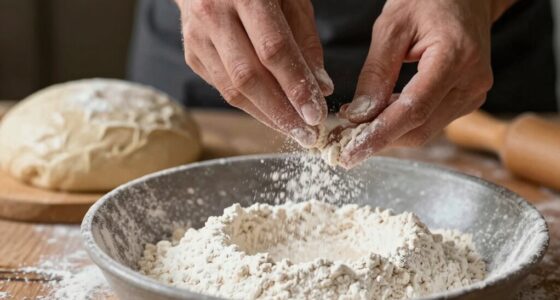
To effectively reduce flour dust when loading your mixer, it’s essential to understand what causes it in the first place. Flour particles are lightweight and easily become airborne during handling, leading to dust dispersion. When you pour or scoop flour into the mixer, turbulence creates tiny particles that scatter into the air. The way you transfer flour markedly impacts dust levels; abrupt movements or pouring from high heights increase dust dispersion. Additionally, loose flour tends to escape more readily, heightening airborne particles. Recognizing that most dust originates from the way flour is handled helps you identify key points to improve. By controlling how flour is transferred and minimizing sudden movements, you can considerably reduce the amount of flour dust when loading your mixer. Implementing proper handling techniques can significantly mitigate dust generation and improve safety. Using innovative European cloud solutions for process monitoring can also help optimize handling techniques to further minimize dust. Incorporating dust containment equipment such as sealed scoops or hoppers can further reduce airborne particles during loading. Paying attention to environmental conditions, like humidity, can also lessen dust dispersal, creating a safer workspace. Additionally, using dust extraction systems can capture airborne particles directly at the source, enhancing overall dust control.
Choose Flour and Packaging That Help Reduce Dust
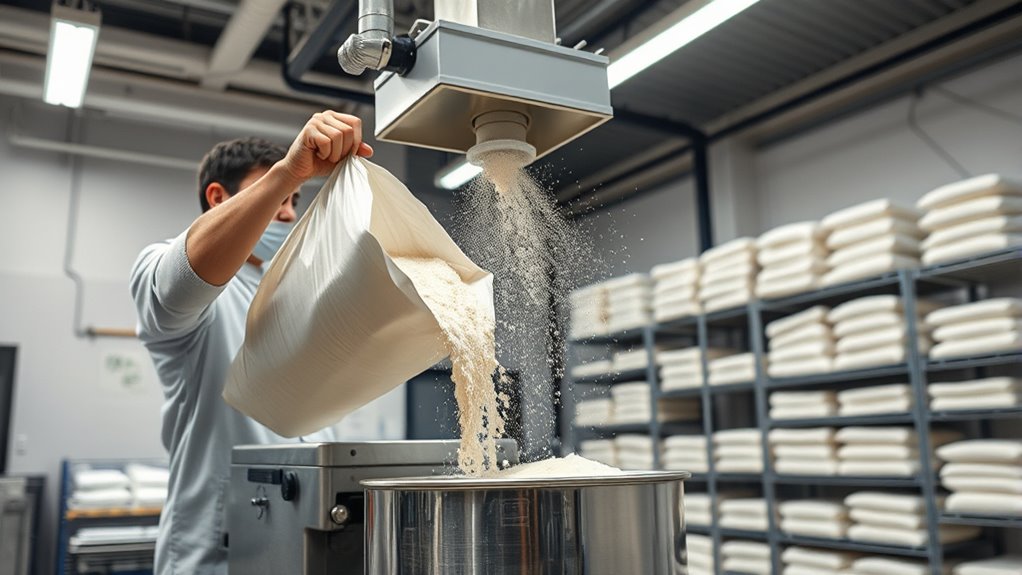
Selecting the right flour and packaging can considerably reduce dust during loading. Opt for low-dust flour types, such as pre-mixed or specially processed varieties designed for minimal airborne particles. Choosing appropriate packaging options that minimize dust release, like sealed bags or containers with secure closures, is essential. Proper packaging reduces flour spillage and airborne particles, making loading safer and cleaner. Incorporating Free Floating techniques in packaging design can further help control dust dispersion and improve safety. Additionally, selecting dust-reducing equipment such as enclosed loading systems can greatly enhance safety and cleanliness during the process. Implementing industrial best practices for handling and loading flour can also significantly decrease dust exposure and improve overall safety during operations. Consider the table below for options:
How to Load Your Mixer Properly to Minimize Dust
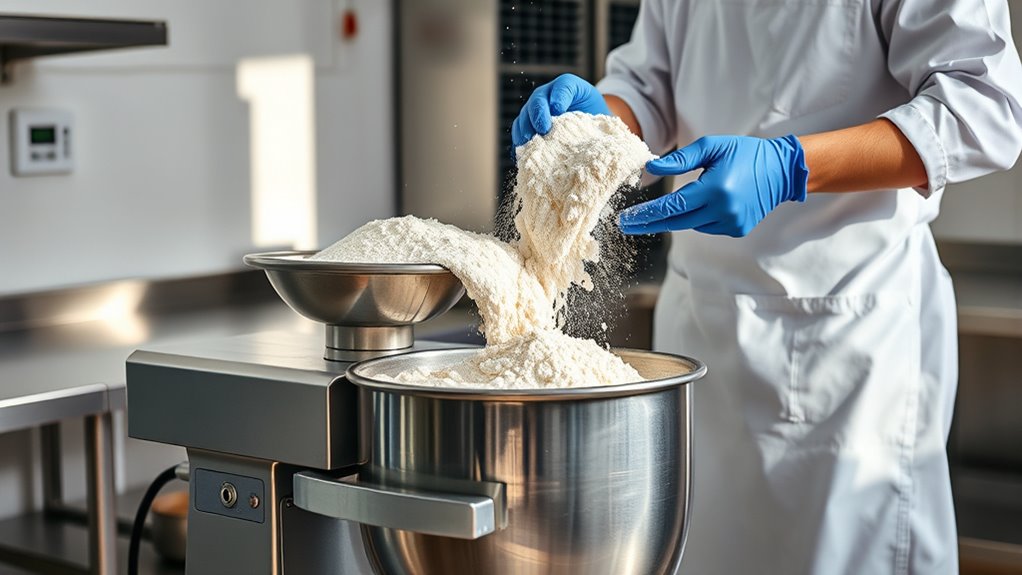
Properly loading your mixer can considerably reduce the amount of dust that becomes airborne during operation. Start by using precise measuring techniques to guarantee accurate ingredient quantities, which helps prevent excess flour from creating dust. When storing ingredients, keep flour in sealed containers away from high-traffic areas to minimize spillage. Before loading, sift or gently pour flour into the mixer to prevent clumping and reduce dust clouds. Avoid dumping large amounts directly from bags, and instead, use a scoop or a chute to control the flow. Consistently applying these practices helps contain flour within the mixer and decreases airborne dust. Proper ingredient storage combined with careful measuring techniques ensures a cleaner, safer working environment and more efficient mixing process. Incorporating dust control strategies can further enhance safety and cleanliness in your baking area, especially when considering airborne particles and proper ventilation. Implementing sound masking techniques can also help reduce the impact of noise and improve overall working conditions. Additionally, ensuring that the mixer is well-maintained and fitted with appropriate filtering systems can significantly reduce dust emissions during operation. Regular cleaning and inspection of equipment, along with the use of air purification devices, can further contribute to a healthier workspace.
Use Dust Collection and Ventilation Systems Effectively
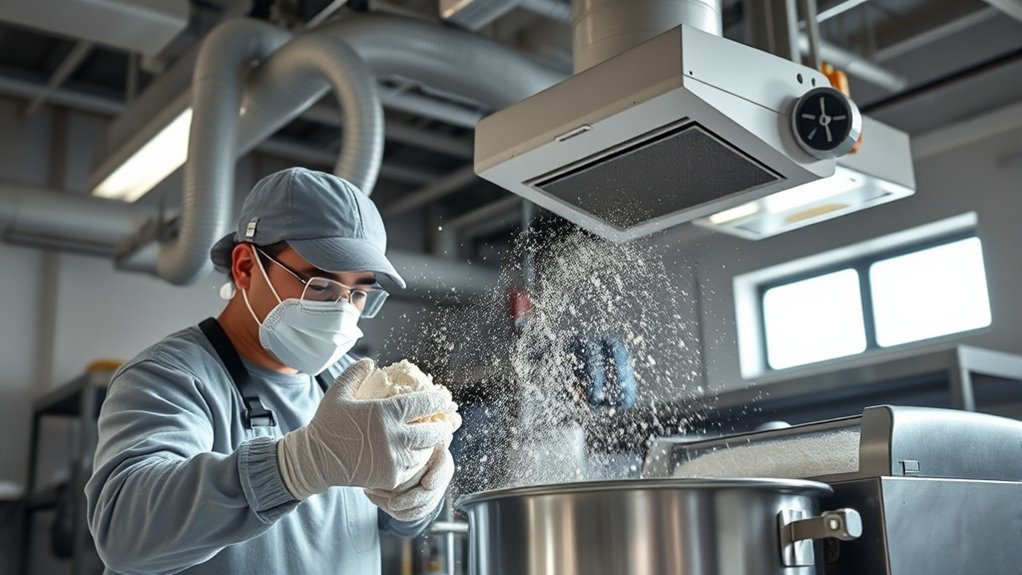
To keep flour dust under control, you need to position your dust collection and ventilation systems correctly. Regular maintenance guarantees these systems work efficiently and safely. By paying attention to placement and upkeep, you can substantially reduce airborne dust during loading. Incorporating hydrotherapy techniques like water-based extraction can further minimize dust exposure and improve air quality in the workspace. Additionally, understanding thermal behavior of heat sources can help optimize ventilation for better dust control during dough handling. Proper airflow management ensures that dust is effectively captured and directed away from breathing zones.
Proper System Placement
Effective placement of dust collection and ventilation systems is essential for minimizing flour dust exposure when loading the dough mixer. Proper equipment placement enhances kitchen safety by directing dust away from workers and high-traffic areas. Position vents and hoods close to the dust source, ensuring airflow captures flour particles before they disperse. Avoid obstructing airflow with equipment or structural elements. Keep flexible hoses and ducts free of kinks to maintain ideal suction. Consider airflow patterns to prevent dust from settling in corners or behind equipment. Regularly evaluate and adjust system placement based on workflow changes. Proper airflow management helps reduce airborne dust, creating a safer environment and supporting good kitchen safety practices. Additionally, incorporating dust control strategies can further improve air quality during mixing processes. Using proper system placement is a simple yet effective step in minimizing flour dust during mixing. Employing system testing and adjustments ensures that the dust collection system remains effective over time. For optimal results, understanding the airflow patterns in your workspace can guide better system positioning and improve overall dust control.
Regular Maintenance Practices
Regular maintenance of dust collection and ventilation systems keeps them functioning at peak performance, preventing flour dust from accumulating and becoming a health hazard. Establishing regular cleaning schedules guarantees filters and ducts stay clear, reducing dust buildup. You should also perform routine equipment inspections to identify worn or damaged parts that could impair airflow or cause leaks. Promptly replacing or repairing faulty components maintains system efficiency. Keep filters clean and replace them as needed, and check ventilation fans for proper operation. Additionally, incorporating proper airflow management techniques can significantly enhance dust extraction efficiency and safety. Implementing smart monitoring systems can help track system performance and alert you to issues before they escalate. Regular maintenance not only minimizes dust exposure but also prolongs the lifespan of your equipment. Staying proactive with cleaning schedules and inspections ensures your dust control systems work effectively, protecting worker health and maintaining a cleaner, safer workspace.
Select Bakery Tools and Equipment to Keep Dust Down
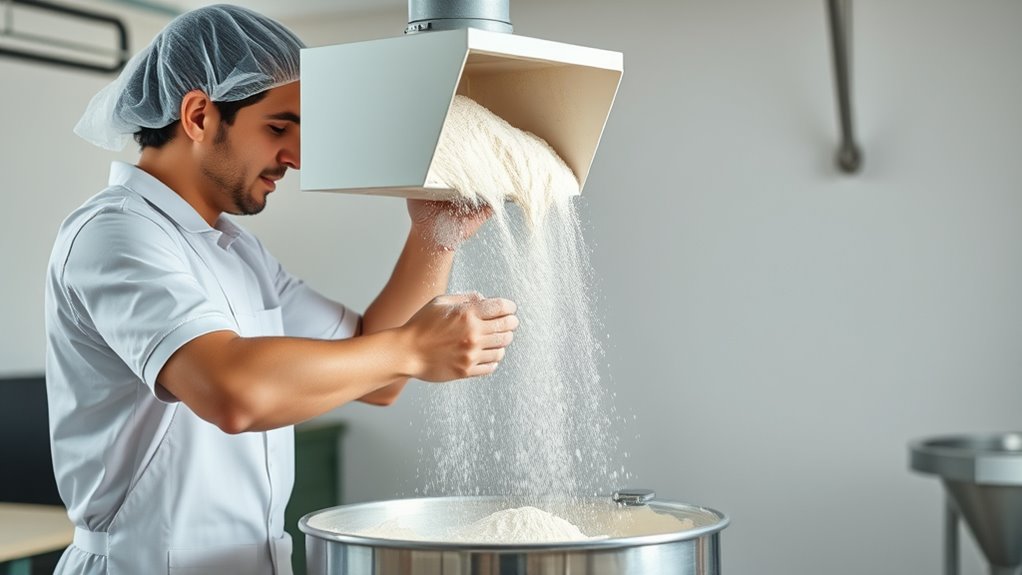
Choosing the right bakery tools and equipment can considerably reduce flour dust. Enclosed loading systems help contain dust during loading, while dust-resistant equipment minimizes particle release. Making these smart choices keeps your workspace cleaner and safer.
Use Enclosed Loading Systems
Enclosed loading systems are essential tools for minimizing flour dust during the dough mixing process. They help improve dust containment, protecting your staff and workspace. By using these systems, you reduce airborne flour particles and lower cleanup time. An enclosed loading setup includes a sealed hopper and transfer chute, preventing dust escape during ingredient transfer. Consider the following options:
| System Type | Features | Benefits |
|---|---|---|
| Pneumatic Loaders | Air pressure for gentle transfer | Reduced dust release |
| Gravity Chutes | Enclosed, downward flow | Minimal dust escape |
| Screw Feeders | Sealed, continuous feed | Consistent ingredient flow |
| Hopper Covers | Full enclosure | Prevents dust dispersal |
| Dust Collection Units | Integrated or standalone | Maintains clean environment |
Implementing enclosed loading systems markedly enhances dust containment, creating a safer, cleaner bakery environment.
Opt for Dust-Resistant Equipment
To effectively reduce flour dust during loading and handling, you should select bakery tools and equipment specifically designed to resist dust accumulation. Dust resistant equipment minimizes flour escape, promoting better flour containment and a cleaner workspace. Look for tools with sealed or smooth surfaces that prevent flour from settling in crevices. Equipment with tight-fitting lids or covers also helps contain dust during transfers. Investing in specialized loading chutes or hoppers that limit airflow and dust dispersal can make a significant difference. By choosing tools and machinery built for flour containment, you reduce airborne dust and improve overall hygiene. Opting for dust resistant equipment not only keeps your workspace cleaner but also enhances safety and efficiency during dough preparation.
Keep Your Workspace Clean to Control Flour Dust
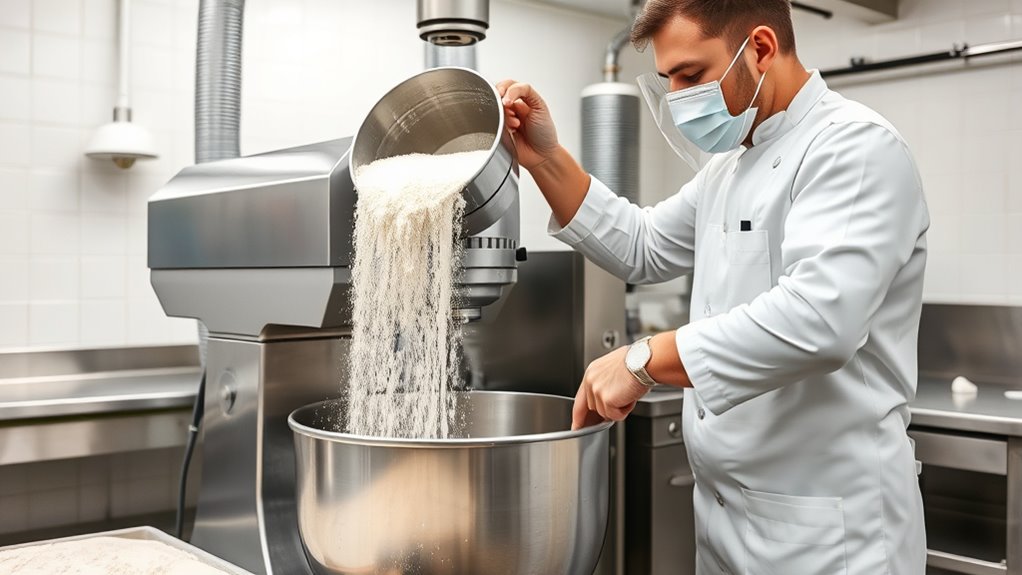
Keeping your workspace clean is essential for controlling flour dust and maintaining a safe environment. Regularly sweeping and wiping surfaces reduces dust hazards that can accumulate during loading and mixing. Keep floors free of spilled flour and debris to prevent dust from becoming airborne. Properly dispose of dust and discarded flour in sealed containers to minimize contamination. Using damp cloths instead of dry dusting helps improve air quality by trapping dust particles rather than dispersing them. Maintaining a tidy workspace also makes it easier to spot and address dust buildup early. When your workspace stays clean, you reduce airborne flour particles that can compromise air quality and pose health risks. Consistent cleaning routines create a safer environment and help keep dust hazards under control during your baking operations.
Wear PPE to Protect Yourself From Flour Dust
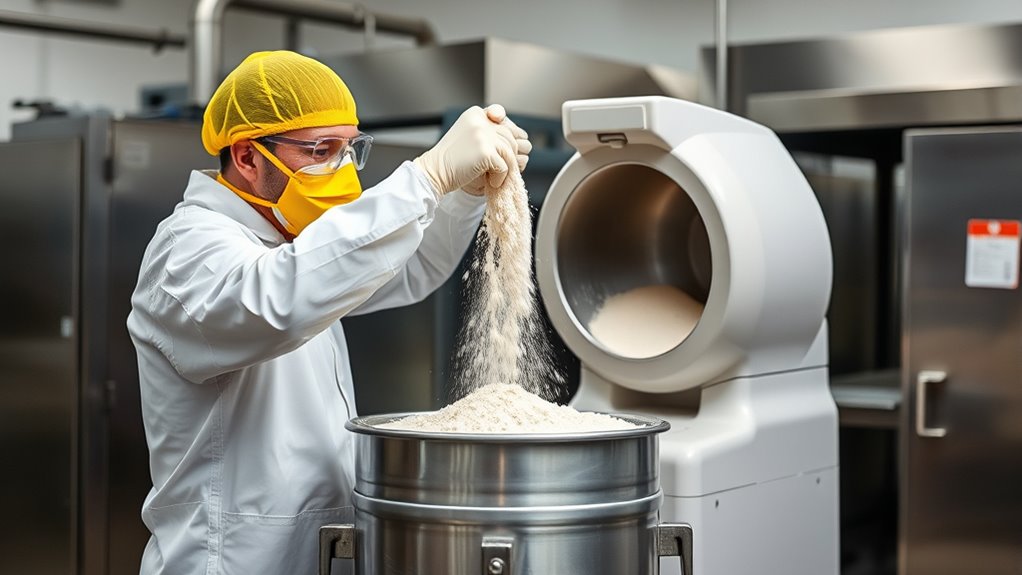
Wearing personal protective equipment (PPE) is essential for safeguarding yourself against inhaling flour dust during loading and mixing. Using the right PPE minimizes health risks associated with dust exposure. Always wear respirator masks designed to filter fine particles, preventing flour dust from reaching your lungs. In addition, consider the following PPE items:
- Protective gloves to avoid skin contact
- Safety goggles to shield your eyes
- Long-sleeved clothing to reduce dust settling on skin
These measures ensure you’re protected from inhalation and skin irritation caused by flour dust. Proper PPE use not only keeps you safe but also maintains a healthier work environment. Make sure your PPE fits well and is worn consistently during all loading and mixing tasks involving flour.
Train Your Staff on Best Flour Handling Practices
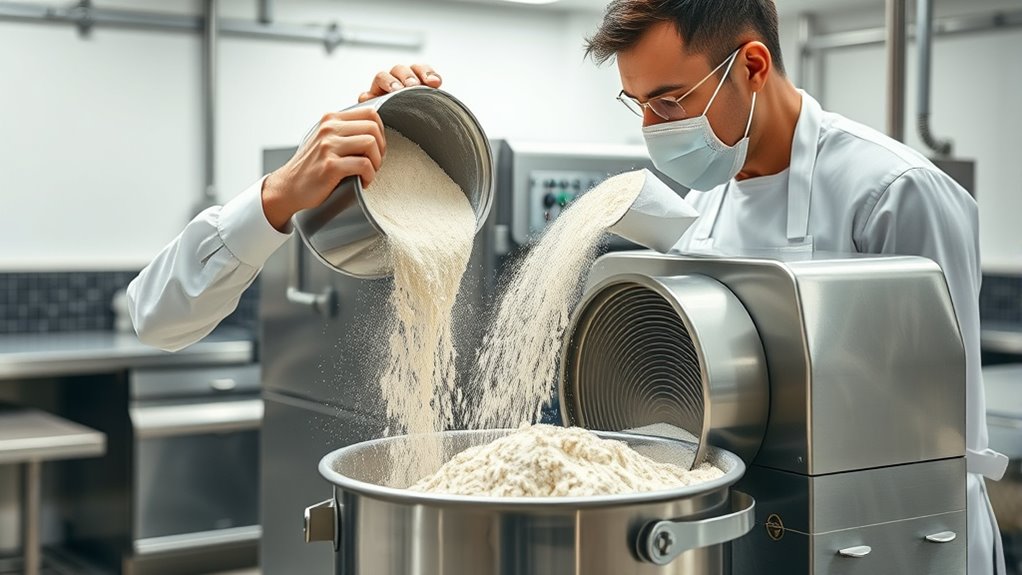
Training your staff on best flour handling practices is essential for reducing dust and maintaining a safe work environment. Proper staff training ensures everyone understands safety protocols, such as gently pouring flour to minimize airborne particles and avoiding excessive agitation. Emphasize the importance of consistent techniques to prevent unnecessary dust dispersion. Make sure your team knows how to use tools correctly and store flour securely to reduce spills. Reinforcing safety protocols helps prevent accidents and health risks associated with flour dust exposure. Regular training sessions keep staff updated on best practices and new safety measures. When everyone follows these protocols, dust levels decrease, and your workspace becomes safer and cleaner. Well-trained staff are your best defense against dust-related hazards in flour handling.
Regularly Check and Maintain Dust Control Measures
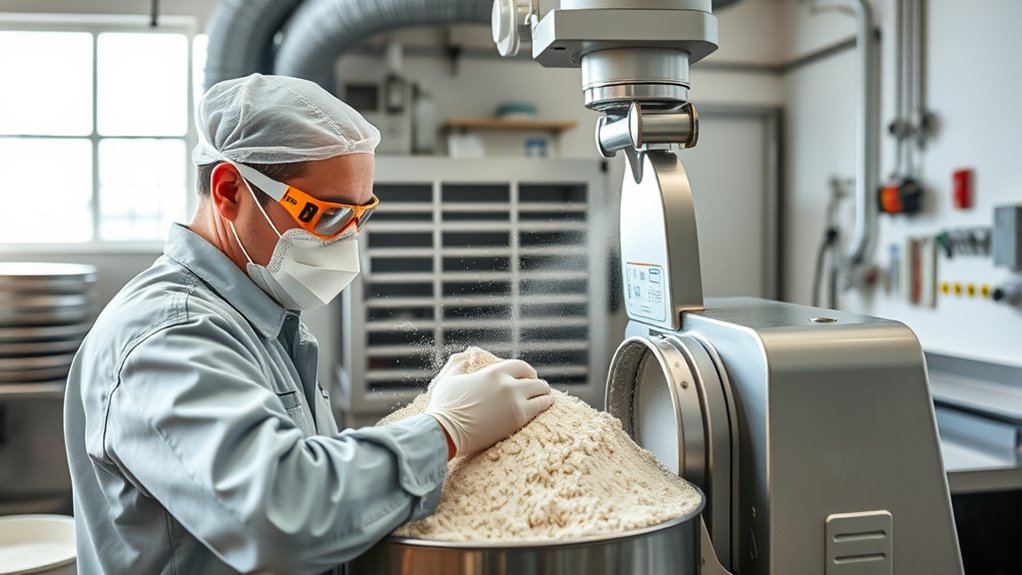
Regularly checking and maintaining dust control measures is essential to ensuring they remain effective over time. Consistent dust monitoring helps identify areas where dust might escape or accumulate, allowing you to address issues promptly. To keep your system in top shape, schedule routine inspections and perform maintenance tasks without delay. Remember, well-trained employees are key to effective dust control; ongoing employee training ensures everyone understands proper procedures and how to spot potential problems. You should:
- Regularly verify dust containment equipment’s integrity
- Conduct dust monitoring to detect airborne flour levels
- Train staff on proper cleaning and maintenance protocols
Frequently Asked Questions
Are There Specific Types of Flour That Produce Less Dust?
Certain types of flour, like cake or pastry flour, tend to produce less dust because they’re finer and less airborne. Using low-dust or dust-reducing flour blends can also help minimize airborne particles during loading. You should also consider pre-sifting flour or using specialized equipment that reduces dust generation. These choices make dust reduction easier, creating a safer and cleaner workspace while maintaining the quality of your dough.
How Often Should Dust Collection Systems Be Inspected and Cleaned?
Did you know that improper dust collection maintenance can lead to a 50% increase in dust emissions? You should inspect and clean your dust collection systems at least monthly, or more frequently if your operation produces high dust levels. Regular inspection frequency ensures peak performance, reduces fire hazards, and keeps your environment safe. Don’t overlook dust collection maintenance—staying on top of it helps prevent costly repairs and health risks.
Can Humidity Levels Affect Flour Dust Dispersion?
Yes, humidity levels can considerably affect flour dust dispersion. Proper humidity regulation helps keep flour particles settled, reducing airborne dust during loading. When humidity is too low, dust disperses easily, increasing health risks and cleanup. Maintaining ideal humidity levels prevents excessive dust spread, creating a safer environment. Regularly monitor and adjust humidity to guarantee consistent conditions, minimizing flour dust dispersion and promoting a cleaner, healthier workspace.
What Are the Safety Regulations Regarding Flour Dust in Bakeries?
You need to follow safety regulations that require wearing a dust mask and installing proper ventilation systems in your bakery. These measures help prevent flour dust inhalation and reduce explosion hazards. Regularly maintain ventilation systems to guarantee they work effectively, and use dust masks when handling flour. Staying compliant with OSHA standards and local safety codes protects your staff and keeps your bakery safe from flour dust-related risks.
How Can I Train New Staff Effectively on Dust Reduction Practices?
Imagine a bakery where dust particles dance in the air, unseen threats to safety. To combat this, you train new staff with engaging training techniques that highlight dust reduction practices. Incorporate hands-on demos into your onboarding procedures, emphasizing proper loading, cleaning, and PPE use. By making safety practices clear and memorable, you guarantee they’re second nature, creating a safer environment where dust hazards are effectively minimized from day one.
Conclusion
By following these tips, you’ll keep flour dust at bay and create a safer, cleaner bakery environment. Proper handling, equipment, and maintenance are your best allies—think of it as your own personal squire guarding your workspace like a knight of old. Remember, a well-managed bakery isn’t just efficient; it’s a place where you can craft delicious creations without dust storms slowing you down. Stay vigilant, and your bakery will thrive like a well-guarded castle.