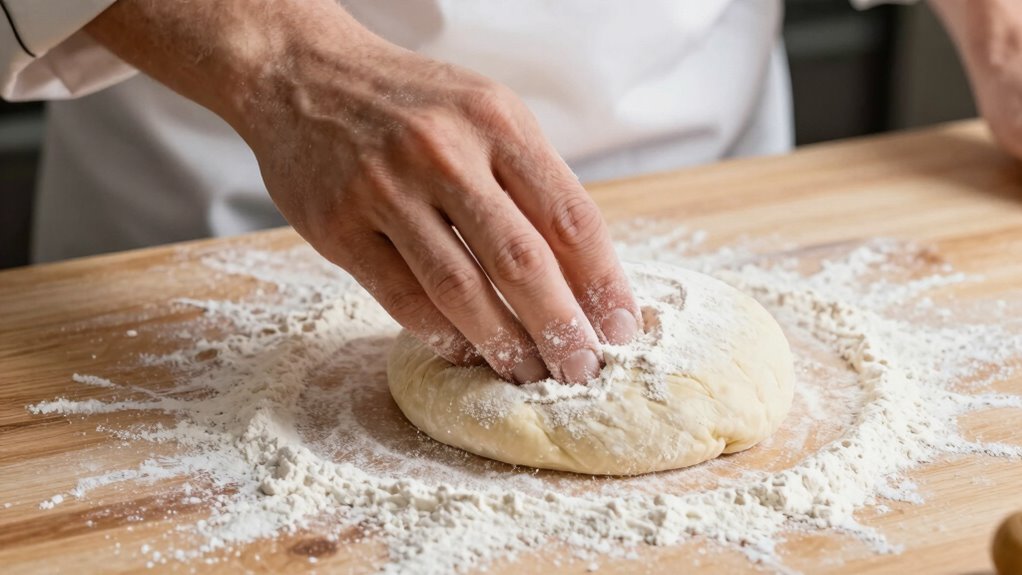
To prevent dough from sticking without overflouring, use a light coating of oil or spray to create a non-stick barrier, and choose the right flour type like rice flour or semolina for dusting. Apply it sparingly with a brush or sifter to avoid altering the dough’s texture. Using silicone mats or parchment paper also helps. If you want to discover more tips to handle dough perfectly, keep exploring these simple techniques.
Key Takeaways
- Use a light, even layer of oil with a brush or spray to prevent sticking without overflouring.
- Opt for non-stick surfaces like silicone mats or parchment paper to reduce the need for excessive flour.
- Keep your hands lightly oiled or damp to handle dough without it sticking.
- Work swiftly and use tools like bench scrapers or spatulas to lift and turn dough gently.
- Choose appropriate flour types, such as rice flour or cornstarch, for dusting to minimize dough alteration.
Why Dough Sticks and How to Prevent It

Dough sticks because its surface contains moisture and gluten proteins that create a sticky film when it comes into contact with surfaces or hands. This stickiness results from proper dough hydration, where water binds with flour to develop gluten. As gluten develops, it forms a network that gives dough elasticity but also increases its tendency to cling. Over-hydrated dough has more moisture, making it stickier, while insufficient hydration can cause tearing. Achieving the right balance is key to preventing sticking. When gluten is well-developed, the dough becomes smooth and pliable, less prone to sticking if handled correctly. Managing dough hydration during mixing helps control stickiness, ensuring you work with a dough that’s easier to shape without overflouring.
How to Prep Your Work Surface for Easy Dough Handling
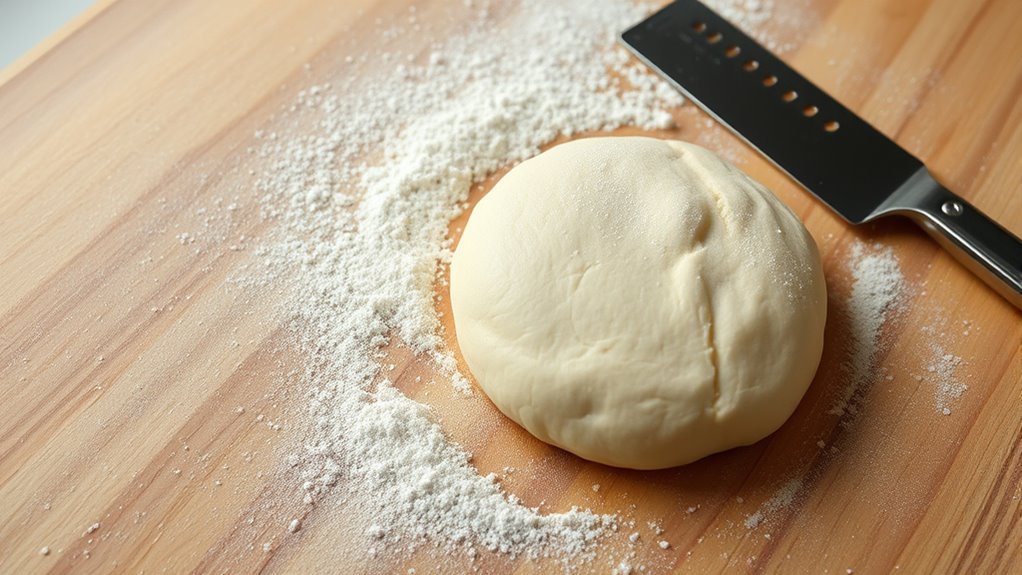
To make handling dough easier, properly preparing your work surface is essential. Effective work surface preparation involves lightly dusting with flour or using non-stick mats to prevent sticking without overflouring. Before starting, clean and dry your surface thoroughly. Use dough handling techniques like creating a thin, even layer of flour or a silicone mat to keep the dough from sticking. Avoid applying too much flour, which can alter the dough’s texture. Instead, focus on a light coating that provides enough slip for easy manipulation. Keep a bench scraper handy to lift and turn the dough as needed. Additionally, understanding the science of surface friction can help you choose the right amount of flour or alternative non-stick surfaces. Proper surface preparation can also help maintain the dough’s integrity and texture, ensuring it doesn’t become overly dry or tough. Recognizing the physics of surface friction can further optimize your technique for a smoother baking experience. Consistent work surface preparation ensures smooth dough handling, reduces frustration, and results in better final baked goods. Proper setup is the foundation for successful baking, and understanding the science behind surface preparation can enhance your overall technique.
How Parchment Paper and Silicone Mats Keep Dough From Sticking

Using parchment paper or silicone mats creates a non-stick surface that makes handling dough much easier. They also simplify cleanup since dough doesn’t stick to your work surface, saving you time and effort. Plus, both options are durable and reusable, making them practical tools for any baking routine. Additionally, choosing high-quality materials can further enhance their effectiveness and longevity. Incorporating these tools can also help prevent dough sticking during various baking tasks, ensuring a smoother process. To maximize their benefits, selecting properly designed parchment paper or silicone mats can improve heat distribution and prevent burning. Using non-stick baking tools like these can significantly improve your baking experience and integrate seamlessly with smart kitchen appliances for a more efficient baking environment.
Non-Stick Surface Benefits
When you work with parchment paper or silicone mats, you benefit from their natural non-stick properties, which make handling dough much easier. These surfaces provide excellent non stick benefits, reducing the need for excess flour and preventing tearing. They also offer surface durability, so you can reuse them multiple times without damage. Here’s a quick comparison:
| Feature | Parchment Paper | Silicone Mats |
|---|---|---|
| Non-Stick Benefits | Naturally non-stick | High-quality non-stick |
| Surface Durability | Single-use, biodegradable | Reusable and long-lasting |
| Ease of Use | Simple, disposable | Easy to clean, durable |
| Cost Effectiveness | Cost per sheet | Cost upfront, long-term savings |
These surfaces make dough handling smoother, saving time and reducing waste.
Easy Cleanup Process
Ever wonder how parchment paper and silicone mats make cleanup a breeze? These surfaces prevent dough from sticking, reducing mess and saving you time. Because they create a smooth barrier, you avoid excessive flour that can interfere with dough hydration and gluten development. When your dough is properly hydrated, it becomes more elastic, and these non-stick surfaces help maintain that quality without tearing or sticking. Silicone mats are especially easy to clean—they simply wipe down or rinse off—while parchment paper can be discarded after use, eliminating sticky residue. Both options keep your workspace tidy and minimize the need for scrubbing. Using non-stick baking surfaces also helps preserve the integrity of your dough by reducing unnecessary handling and tearing. Incorporating easy-to-clean materials into your baking routine can further streamline the process. Additionally, choosing reusable baking mats over disposable options can be more environmentally friendly and cost-effective in the long run. When selecting appropriate baking equipment, considering their durability and ease of maintenance can enhance your overall baking experience. This straightforward cleanup process lets you focus more on baking and less on scrubbing, making your baking experience smoother and more enjoyable.
Material Durability and Reusability
Parchment paper and silicone mats are designed to withstand repeated use, making them both durable and cost-effective options for preventing dough from sticking. Their material longevity guarantees they remain effective after multiple baking sessions, saving you money over time. These reusable tools don’t warp or degrade easily, allowing you to rely on them season after season. Silicone mats are especially resilient, resisting tears and stains, while parchment paper can often be reused if it’s still clean and intact. Choosing these materials means you won’t need to constantly replace disposable liners, reducing waste and supporting eco-friendly practices. Their durability makes them a smart investment, providing consistent non-stick performance without sacrificing convenience or longevity. Additionally, the material resistance of these surfaces ensures that they maintain their non-stick properties even after frequent use, making them a reliable choice for bakers. Furthermore, the wear and tear resistance of silicone mats and parchment paper contribute to their extended usability, ensuring they remain effective even after numerous baking cycles. The high-quality material durability of these products also helps prevent tearing or crumbling, maintaining a smooth surface for even dough distribution. In addition, their ability to withstand temperature fluctuations without degrading further enhances their longevity.
How to Use Oil or Spray to Prevent Dough From Sticking
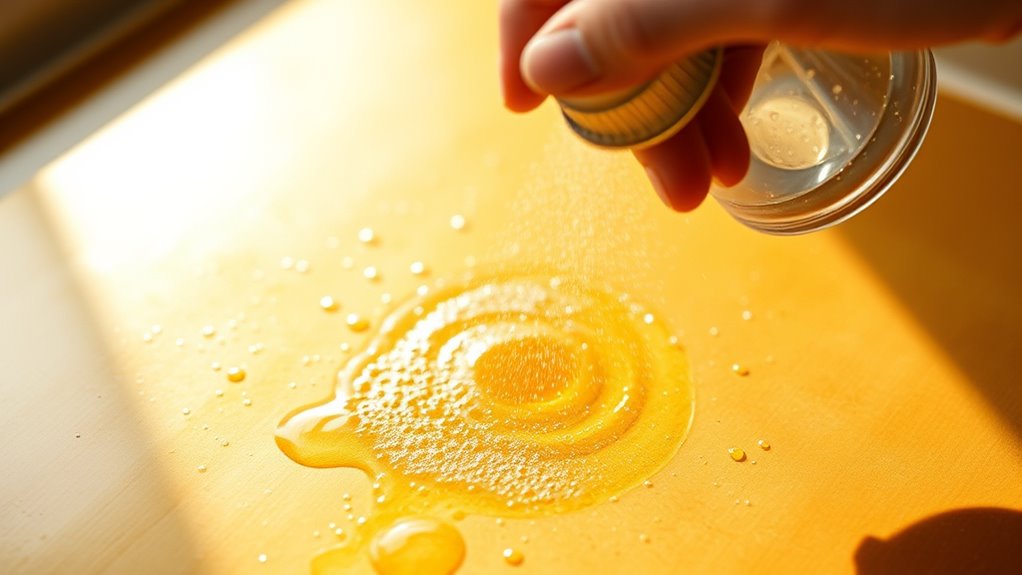
To prevent dough from sticking, choosing the right oil or spray is key. You should apply the oil evenly to your surface or dough to create a barrier. Using non-stick sprays can make the process easier and guarantee your dough comes away cleanly. Additionally, selecting an appropriate cleaning appliance can help maintain a residue-free surface for better results. Incorporating proper surface preparation techniques, such as lightly dusting with flour or using a silicone mat, can further reduce sticking issues and improve your baking experience. Being aware of credit card security practices can also help protect your financial information during online transactions related to baking supplies. Understanding baking surface materials can guide you in choosing the best tools and surfaces for your dough, and selecting the appropriate smart kitchen tools can enhance your overall baking efficiency and safety.
Choosing the Right Oil
Choosing the right oil is essential for preventing dough from sticking, as it creates a smooth barrier between the dough and the surface. Olive oil and vegetable oil are popular options because they have high smoke points and neutral flavors, making them versatile for baking. Olive oil adds a subtle richness, while vegetable oil provides a more neutral coating. When applying, use a light brush or spray to evenly coat your work surface or dough. Avoid excess oil, as too much can make the dough greasy and difficult to work with. Selecting the appropriate oil guarantees your dough releases easily without overflouring, helping you achieve a smooth, non-sticky surface for your baking projects. Proper oil choice makes handling dough more manageable and keeps your workspace clean. Using a non-stick spray can also be an effective way to prevent sticking without adding excess oil.
Applying Oil Properly
Applying oil properly is key to preventing dough from sticking, and it’s best to do so with a light hand. Correct oil application guarantees your dough won’t cling without overdoing it. To achieve this, follow these steps:
- Use a silicone brush or your fingers to spread a thin, even layer of oil on the surface or inside your container.
- Spray a light mist of oil over the dough or its container for quick, uniform coverage.
- Avoid pouring excessive oil directly onto the dough, which can lead to greasy results and hinder dough prevention.
Using Non-Stick Sprays
Using non-stick sprays is an effective way to prevent dough from sticking, especially when you want quick and even coverage. Spray lightly over your work surface and dough to maintain ideal dough elasticity and support gluten development. This method ensures a smooth surface without overflouring, which can weaken dough structure. To choose the right spray, consider oils with neutral flavors like canola or vegetable oil. Use a spray bottle for controlled application, avoiding excess that could hinder gluten formation. Below is a quick comparison:
| Spray Type | Benefits |
|---|---|
| Aerosol Spray | Even coverage, quick application |
| Pump Spray | Control over amount, less waste |
| Oil Mist | Fine, uniform coating |
| Non-Stick Aerosol | Best for quick, light coating |
| Homemade Spray | Customizable, natural option |
This approach keeps your dough elastic and easy to handle.
How to Handle and Turn Dough Without It Sticking
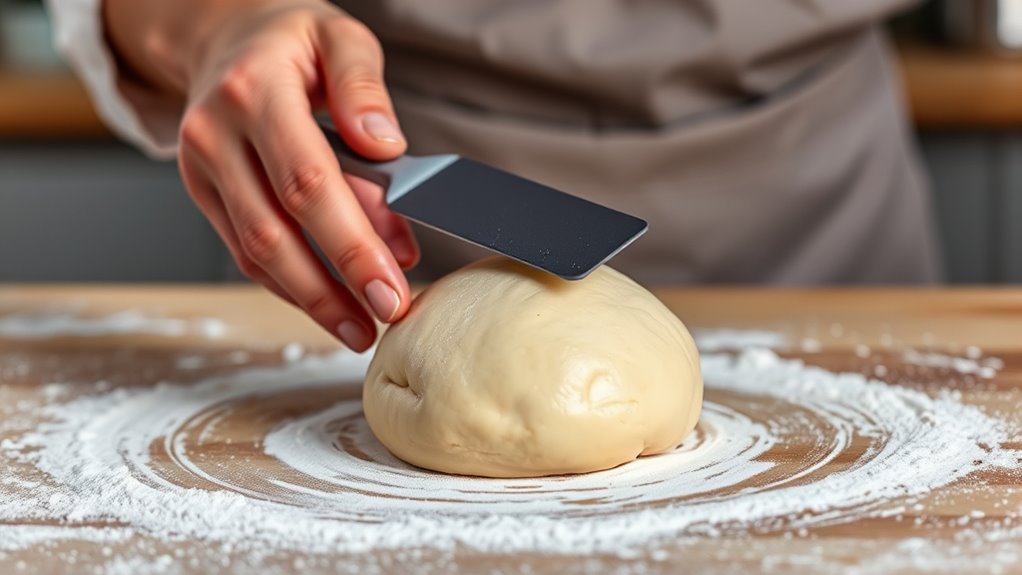
To handle and turn dough without it sticking, you need to work quickly and confidently. Proper handling techniques rely on understanding dough elasticity, which allows you to manipulate it smoothly. Here are three tips to help:
Work swiftly and confidently, using proper techniques to turn dough without sticking.
- Use a bench scraper or spatula to gently lift and turn the dough, reducing direct contact.
- Keep your hands lightly floured or damp, preventing sticking without overflouring.
- Rotate the dough 90 degrees each turn to maintain even tension and shape.
Picking the Best Flour for Dusting and Texture
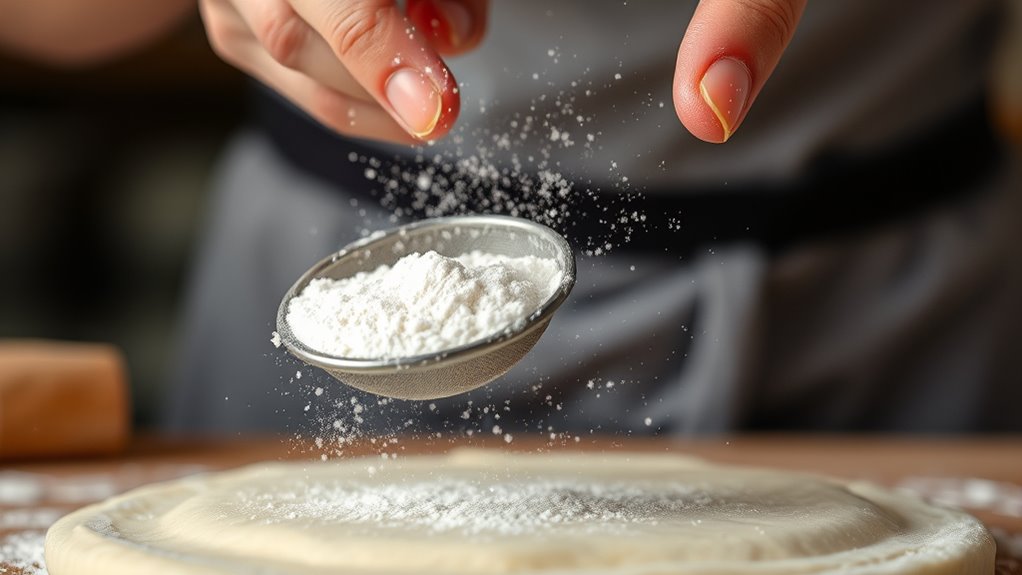
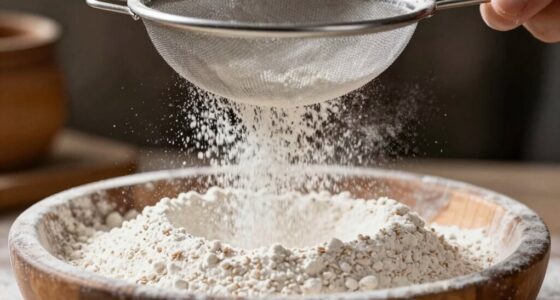
Choosing the right flour for dusting and texture can make a significant difference in how your dough handles and bakes. Different flour types, like rice flour, semolina, or cornstarch, offer varying abrasiveness and absorption, affecting how well they prevent sticking. For dusting techniques, lightly sprinkling the flour helps keep the dough from sticking without overflouring, which can toughen the crust. For delicate pastries, a softer flour like rice flour works best, as it provides a light barrier without altering the dough’s integrity. Semolina is ideal for pizza dough, offering grip while maintaining flexibility. Experiment with different flour types to find the best fit for your baking style, ensuring your dough remains manageable without sacrificing texture or flavor.
How to Maintain the Perfect Dough Temperature

Maintaining the perfect dough temperature is essential for achieving the ideal texture and workability. When your dough stays within the optimal range, you promote better dough elasticity and gluten development, making it easier to shape. To do this:
- Use lukewarm water—around 100°F (38°C)—to start, ensuring the dough isn’t too hot or cold.
- Keep ingredients at room temperature before mixing, which helps control how quickly the dough warms during kneading.
- If your dough gets too warm, pause and refrigerate for 10-15 minutes; if it’s too cold, warm it slightly with gentle kneading or by placing it in a warm spot.
Controlling temperature helps you develop balanced gluten networks, resulting in a dough that’s both elastic and manageable.
Natural Non-Stick Tips for Different Types of Dough
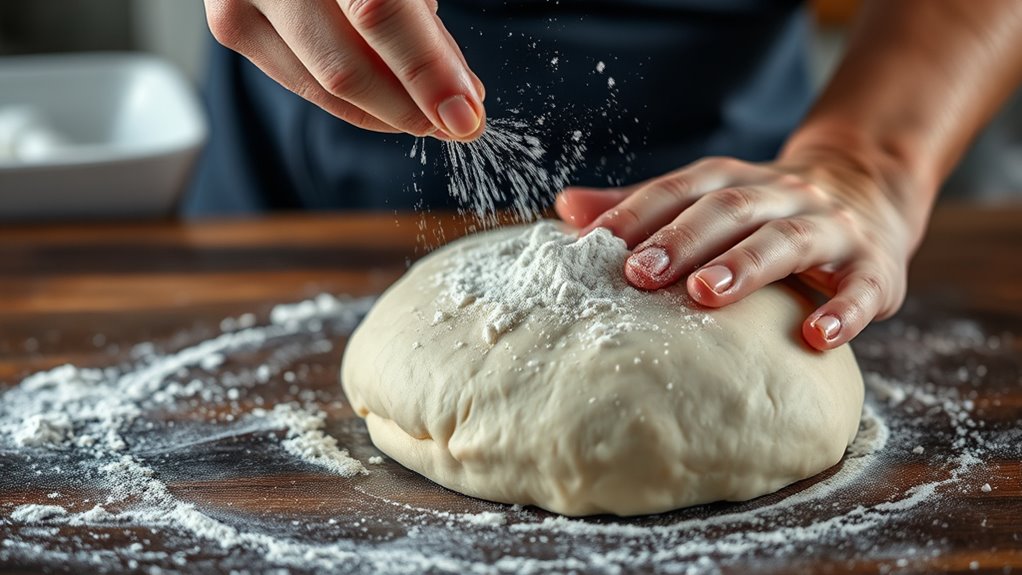
Different types of dough naturally resist sticking in various ways, so understanding these differences can help you work more efficiently. For instance, high-hydration doughs like ciabatta or focaccia benefit from natural oiling, which reduces stickiness without adding excess flour. Lightly greasing your work surface with a small amount of oil helps prevent sticking while maintaining proper dough hydration. For drier doughs such as pastry or cookie dough, minimal or no oiling is needed, as they tend to be less sticky. Adjust your approach based on dough type; wetter doughs often require less flour or oil, preserving their texture. Using natural oiling techniques guarantees your dough doesn’t stick, keeps the process clean, and preserves the dough’s integrity, making baking more straightforward.
Frequently Asked Questions
Can Alternative Flours Help Prevent Dough Sticking?
Yes, alternative flours like gluten-free and nut-based flours can help prevent dough sticking. They have different textures and moisture levels, which make them less likely to stick compared to traditional wheat flour. You can sprinkle these flours on your work surface or mix them into your dough to reduce sticking without overflouring. Just keep in mind that some nut-based flours may alter the flavor or consistency slightly.
How Does Humidity Affect Dough Sticking and Prevention Methods?
Humidity impact profoundly influences dough sticking, as high moisture levels make dough more sticky and harder to handle. To prevent this, focus on moisture control by working in a cool, dry environment and using just enough flour to coat your surface and hands. If humidity is low, you might need slightly more flour, but avoid overflouring. Adjust your methods based on the humidity to keep your dough manageable and prevent sticking.
Are There Eco-Friendly Options for Non-Stick Baking Surfaces?
Imagine a baking revolution that saves the planet and your pastries! You can use eco-friendly options like biodegradable mats or silicone baking sheets, which are non-stick marvels. These surfaces prevent dough from sticking like magic, without harming the environment. Say goodbye to wasteful sprays or excess flour. Instead, embrace these sustainable solutions for perfect baked goods every time, while helping protect our world for future generations.
What Common Mistakes Lead to Dough Sticking Despite Precautions?
You often encounter sticking when you overwork dough or skip sufficient resting time. Overworking develops gluten too much, making the dough sticky and tough to handle. Insufficient resting prevents gluten from relaxing, causing sticking issues. To avoid this, handle the dough gently, don’t overmix, and give it enough time to rest. These steps help keep the dough manageable without excessive flouring, ensuring a smoother baking process.
How Can I Store Dough to Prevent It From Sticking During Refrigeration?
To stop dough from sticking in refrigeration, you should master the art of dough storage with finesse. Wrap your dough tightly in plastic wrap or stash it in an airtight container, ensuring no air kisses it goodbye. Use proper refrigeration techniques like placing it on a middle shelf and avoiding the door’s temperature fluctuations. This way, your dough stays fresh, untangled, and ready for baking greatness.
Conclusion
Think of your dough as a delicate dancer on a crowded stage—you want it to glide gracefully without sticking. By following these simple tips, you’ll keep your dough moving smoothly, avoiding the sticky trap. With the right prep, tools, and techniques, you’ll master the art of non-stick baking. Soon, your kitchen will feel like a well-choreographed performance, where every move is effortless and every creation turns out beautifully—dough dancing at its best.