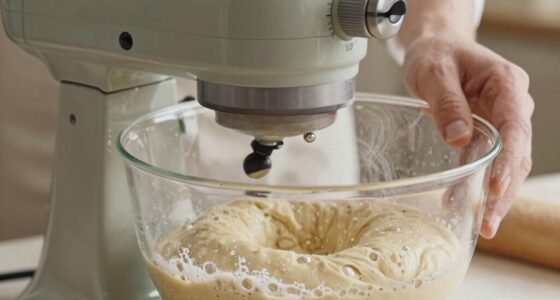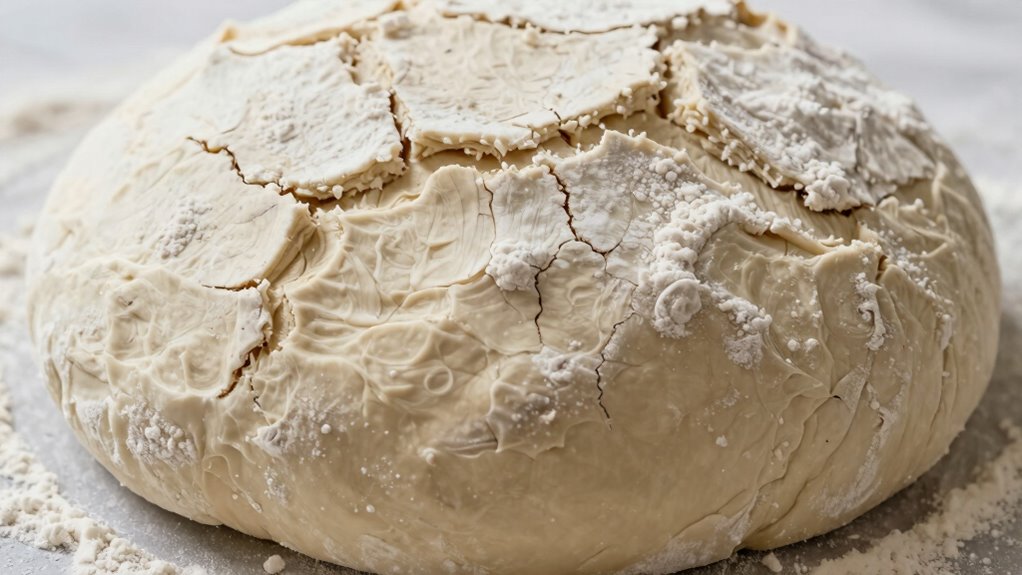
If you overwork dough, you disrupt the yeast activity that’s essential for developing flavors during fermentation. Excess kneading can also cause gluten overdevelopment, making the dough tough and dense instead of tender and airy. This limits proper rise and fermentation, resulting in a flat, bland taste. You’ll notice a chewy, heavy texture with tearing during shaping. To avoid these issues and discover how to perfect your dough, keep exploring the main factors involved.
Key Takeaways
- Overworking disrupts yeast activity, leading to incomplete fermentation and diminished flavor development.
- Excess kneading damages gluten structure, resulting in a dense, chewy texture that masks natural flavors.
- Over-kneaded dough releases fewer aromatic compounds, reducing the bread’s overall flavor profile.
- Tightly developed gluten limits dough expansion, preventing proper flavor infusion during baking.
- Breakdown of delicate dough balance from overworking causes a flat, bland final product.
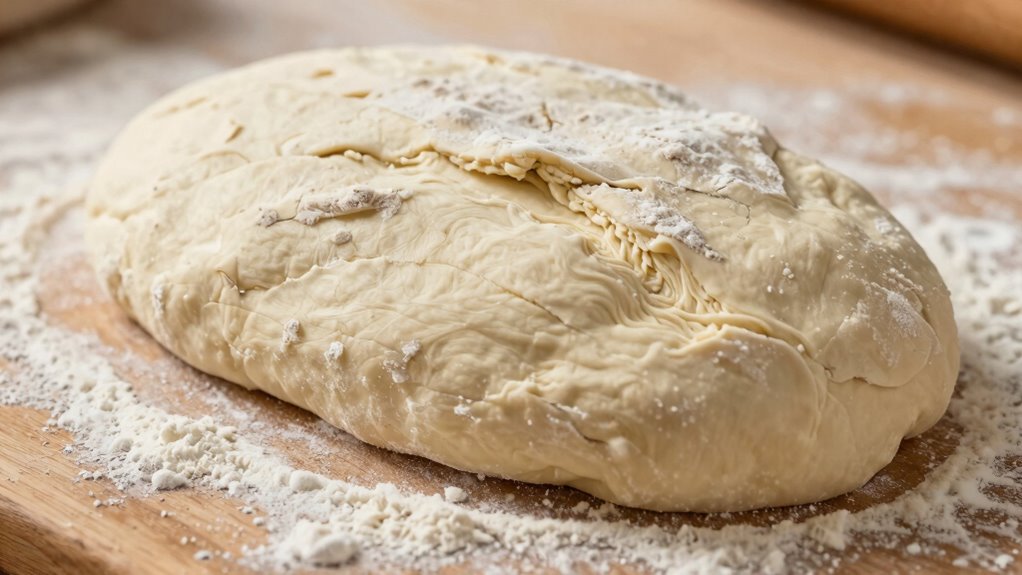
When you overwork dough, you risk compromising both its flavor and texture. Pushing the dough past its ideal point can lead to a series of problems that diminish the quality of your final baked product. One of the main issues is fermentation slowdown. As you knead excessively, you may inadvertently disrupt the yeast’s activity, which is essential for developing flavor through fermentation. Overworking the dough can cause the yeast to become less active, stalling the fermentation process and preventing the dough from achieving the depth of flavor that comes from proper proofing. This results in a bread that tastes flat or bland, lacking the complexity that proper fermentation imparts.
Overworking dough can stall fermentation and lead to bland, flat bread.
Another critical consequence of overworking dough is gluten overdevelopment. Gluten, the protein structure that gives dough its elasticity and chewiness, forms when you knead. However, too much kneading causes the gluten strands to become overly developed, which can make the dough tough and dense instead of light and airy. When gluten becomes overdeveloped, it loses its ability to stretch properly, leading to a bread that’s chewy and less tender. The texture becomes rubbery or dry, and the final product feels heavy rather than light and fluffy. Additionally, overworking the dough can hinder proper fermentation, which is vital for flavor development. Over-kneading can also cause the dough to become overly tight, making it difficult to achieve a good rise during proofing. Furthermore, excessive kneading can break down the delicate gluten network, which may compromise the dough’s overall structure and elasticity. Recognizing the signs of optimal gluten development**** can help you avoid these issues and improve your baking results.
Overworking dough also increases the risk of tearing during shaping. As the gluten network tightens beyond its optimal point, it becomes fragile and prone to breakage. This can ruin the dough’s structure, making it difficult to shape evenly or achieve the desired rise. Moreover, the excessive kneading can expedite the breakdown of the dough’s delicate balance, resulting in a less desirable crumb and overall poor texture. Furthermore, understanding the importance of proper kneading techniques can help prevent these issues and elevate your baking results. Being aware of the signs that indicate optimal gluten development, like the elasticity and the windowpane test, can help you avoid overdoing it.
As an affiliate, we earn on qualifying purchases.
Frequently Asked Questions
How Can I Tell if Dough Is Overworked Before Baking?
You can tell if dough is overworked by noticing excessive gluten development, which makes it tough and elastic. If the dough becomes very stiff or tears easily when you stretch it, it’s a sign of overworking. Texture alteration occurs, making the dough rubbery or dense rather than soft and pliable. Keep an eye on these signs while kneading, and stop as soon as the dough reaches the ideal smoothness and elasticity.
Does Overworking Dough Affect Its Nutritional Value?
Overworking dough can subtly chip away at its nutritional value, like a gentle erosion wearing down a shoreline. It slows enzyme activity, leading to nutritional degradation over time. While the impact isn’t massive, overmixing can diminish vitamins and minerals, making your baked goods less nourishing. So, you should handle dough with care, respecting its delicate balance, to preserve both its flavor and nutrients for a wholesome, satisfying bite.
Are There Specific Types of Dough More Prone to Overworking?
Certain types of dough, like bread or pizza dough, are more prone to overworking because their gluten development and dough elasticity are sensitive to handling. When you overwork these doughs, you break down the gluten strands, reducing elasticity and causing a tough, dense texture. To avoid this, handle the dough gently and stop kneading once the gluten has sufficiently developed, ensuring ideal flavor and texture.
Can Overworking Dough Lead to Health Issues?
Overworking dough doesn’t directly cause health issues, but it impacts gluten development and fermentation slowdown, which can affect digestion. When you knead too much, you create dense, tough bread that’s harder for your body to process, potentially leading to discomfort. While it’s unlikely to cause serious health problems, overworked dough can make your baked goods less enjoyable and harder to digest, so balance your kneading for better health and flavor.
How Long Should I Knead Dough to Prevent Overworking?
You should knead dough for about 8-10 minutes using gentle, consistent kneading techniques to prevent overworking. Pay attention to the dough’s texture—it’s ready when it’s smooth and elastic. After kneading, let the dough rest for at least 30 minutes; this allows gluten to relax, improving flavor and texture. Avoid over-kneading; it can make your dough tough and diminish its overall quality.
As an affiliate, we earn on qualifying purchases.
Conclusion
Overworking dough is like beating a perfect melody into chaos—you lose both the flavor and the texture that make your baked goods shine. When you knead too much, gluten becomes tough, and the flavors are squeezed out like juice from an overripe fruit. To keep your dough singing with flavor and tenderness, handle it gently, respecting its delicate nature. Remember, less is often more—let your ingredients shine without overworking them into submission.
As an affiliate, we earn on qualifying purchases.
As an affiliate, we earn on qualifying purchases.