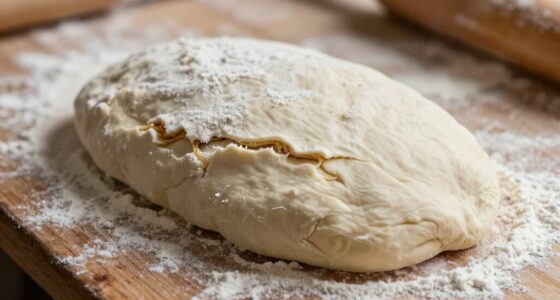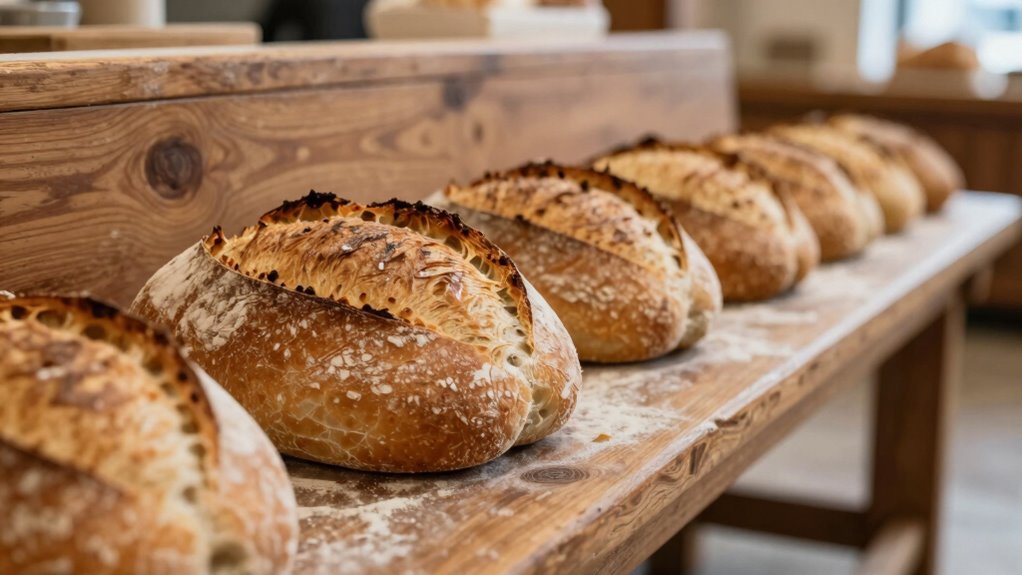

Bench rest might seem like a simple pause, but it actually plays a crucial role in bread quality. During this time, fermentation develops flavors and carbon dioxide, while dough relaxes for easier shaping. Proper timing guarantees an airy, uniform crumb and prevents over or under-proofing. Skipping or rushing this step can compromise loaf structure and taste. Keep exploring to discover how optimizing bench rest makes your bread consistently better.
Key Takeaways
- Bench resting allows controlled fermentation, developing flavors and CO2 for better loaf structure.
- It relaxes gluten, making dough easier to shape and improving crumb texture.
- Proper resting ensures even gas distribution, preventing dense or uneven bread.
- Timing and duration of bench rest are crucial for optimal gluten development and dough elasticity.
- Strategic bench resting enhances overall bread quality, flavor, appearance, and consistency.
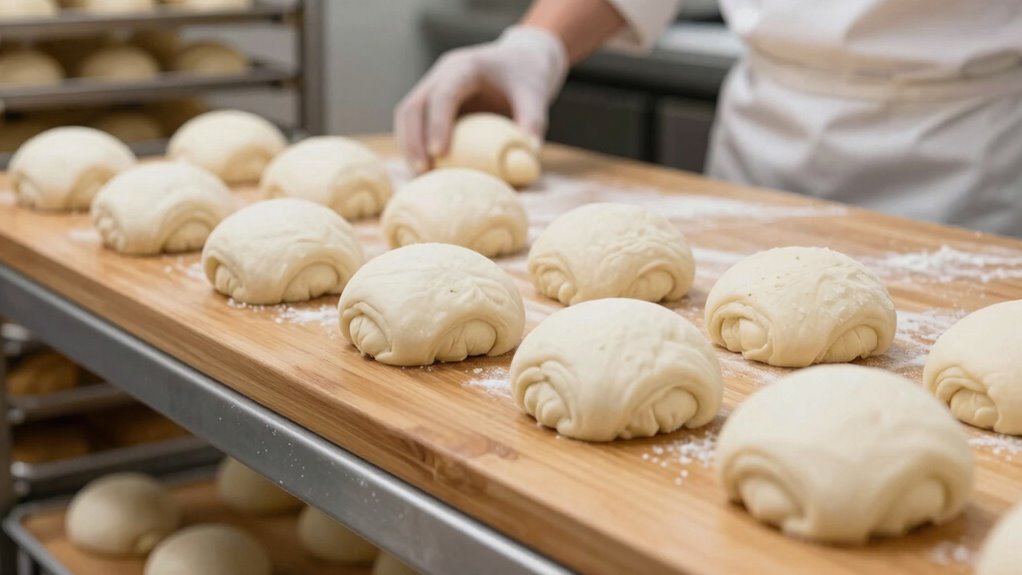
When it comes to baking the perfect loaf, guaranteeing consistent bread quality often depends on a essential step: bench resting. This pause in the baking process allows your dough to undergo pivotal changes that influence both texture and flavor. One of the key benefits of bench resting is its role in optimizing fermentation timing. During fermentation, yeast activity produces carbon dioxide and develops flavors. However, if you skip or rush this resting phase, you risk disrupting the delicate balance of fermentation, which can lead to over-proofed or under-proofed bread. By giving your dough adequate time to rest on the bench, you allow fermentation to proceed at a steady, controlled pace, ensuring the dough develops the right structure and taste. Proper fermentation control during bench resting is essential for achieving the desired bread quality. Additionally, understanding how to monitor fermentation progress can help bakers fine-tune this step for consistently excellent results.
Bench resting ensures steady fermentation, vital for perfect flavor and structure in your bread.
Dough relaxation is another critical aspect influenced by bench resting. After kneading, your dough is often tight and elastic, which can make shaping difficult and result in a dense loaf. Resting the dough on the bench helps relax the gluten network, making it more pliable and easier to handle. This relaxation process improves the dough’s extensibility, allowing for better shaping and a more even crumb structure once baked. Not only does this lead to a more aesthetically pleasing loaf, but it also enhances the overall eating experience. Additionally, understanding the role of gluten development**** can help bakers optimize this step for better results.
Furthermore, the process of bench resting contributes to the bread’s final texture by promoting even crumb development. When you let the dough rest, gas bubbles distribute more uniformly, creating a consistent, airy interior. This step might seem minor, but it’s essential in preventing uneven holes or dense patches. It also helps the dough settle, reducing the risk of shrinkage or tearing during shaping. Proper timing ensures that the gluten has relaxed enough without over-developing, which can weaken the dough’s structure over time. Keeping an eye on dough elasticity can guide you in determining the ideal resting duration for your specific dough.
Timing is critical; too short a bench rest leaves the dough tough and difficult to shape, while too long can over-develop gluten and flatten the dough’s rise. Finding the right balance, based on the dough’s elasticity and fermentation stage, ensures you’re maximizing the benefits of dough relaxation and fermentation timing. By paying close attention to this step, you markedly elevate your bread’s quality, resulting in a loaf that’s flavorful, well-textured, and visually appealing. In essence, bench resting isn’t just a pause—it’s a strategic step that ties together fermentation, gluten development, and shaping, ultimately making a noticeable difference in the bread you bake.

Saint Germain Bakery Premium Round Bread Banneton Basket with Liner – Perfect Brotform Proofing Basket for Making Beautiful Bread (9 inch)
"EXCELLENT CRAFTSMANSHIP: Beautiful handmade using natural rattan, absolutely free from dye and free from chemicals. Made with love…
As an affiliate, we earn on qualifying purchases.
As an affiliate, we earn on qualifying purchases.
Frequently Asked Questions
How Does Bench Rest Influence Bread Flavor?
Bench rest considerably influences your bread’s flavor by enhancing aromatic development and boosting flavor complexity. During this resting period, fermentation continues subtly, allowing enzymes to break down starches and proteins, which deepens the aroma and enriches taste. By giving your dough time to rest, you enable these processes to unfold naturally, resulting in bread with a more nuanced flavor profile and a delightful aromatic presence that elevates your baking.
What Is the Ideal Bench Rest Duration?
Think of bench rest as giving your dough a gentle pause to breathe. The ideal bench rest duration, usually 15-30 minutes, depends on your fermentation timing and gluten development. Too short, and gluten remains underdeveloped; too long, and the dough risks over-fermentation. During this break, gluten relaxes, making shaping easier and improving texture. Adjust based on dough feel, but 20 minutes often strikes the perfect balance.
Does Bench Rest Vary With Bread Type?
Yes, bench rest varies with bread type because different recipes require varying dough fermentation times and gluten development. For lighter, airy breads like ciabatta, shorter bench rests help maintain open crumb structure. Denser breads, like whole wheat, benefit from longer rests to enhance gluten development and improve texture. Adjusting bench rest duration according to bread type guarantees ideal fermentation and gluten strength, resulting in better overall bread quality.
Can Improper Bench Rest Cause Dough Failure?
A chain is only as strong as its weakest link, and improper bench rest can cause dough failure. When you skip or rush this step, fermentation stability suffers, leading to uneven proofing. Additionally, inadequate rest hampers gluten development, making the dough less elastic and more prone to tearing. You must give your dough proper time to rest so it can achieve the perfect structure, ensuring a successful bake.
How Does Bench Rest Impact Bread Crust Texture?
Bench rest profoundly impacts bread crust texture and development. During this period, gluten relaxes, allowing for even expansion and better crust formation. Proper bench rest promotes crust development by enabling the dough to settle, resulting in a crisp, evenly colored crust. Additionally, it enhances texture by reducing surface tension, leading to a more tender, chewy crust. Skipping or rushing this step can cause uneven crust and compromised texture, affecting overall bread quality.
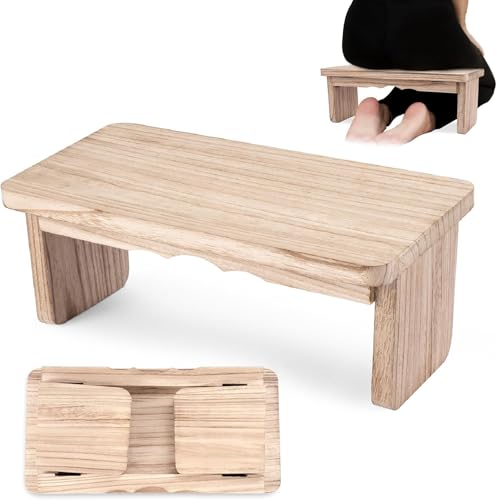
Elfzone Meditation Bench – Yoga Bench,Wooden Zen Meditation Stool Kneeling Bench for Mindfulness Practice Tea Ceremony and Relaxation Ergonomic Design for Comfort and Support Household (Light Wood)
Multi-Functional Zen Design – Perfect as a meditation stool, kneeling bench, prayer seat, stepping stool, or yoga prop….
As an affiliate, we earn on qualifying purchases.
As an affiliate, we earn on qualifying purchases.
Conclusion
Don’t dismiss the power of bench rest—it’s the quiet hero in shaping your perfect loaf. By giving dough time to settle, you activate its full potential, much like a silent symphony reaching its crescendo. Embrace this step, and watch your bread transform from good to unforgettable. Remember, sometimes the smallest pauses create the grandest flavors. So, give your dough the rest it deserves, and let patience be the secret ingredient to your baking masterpiece.

HOLIDYOYO 3Pcs Fermentation Thermometer Stickers for Brewing Yeast Bread and Yogurt Accurate Stick on Temperature Strips 5.11 Inch
Core Function Monitoring: This fermentation thermometer strip is designed to accurately measure temperature on fermentation jars, brewing bottles,…
As an affiliate, we earn on qualifying purchases.
As an affiliate, we earn on qualifying purchases.

Mozeat Lens Proofing Cloth for Bread Baking 2PCS 17×29 Inches Linen Cloth Reusable Bread Proofing Cloth Thick Baking Bread Cloth for Rolling Dough, Baguettes, Loaves, Pastry, Homemade Bread
Quality Linen Cloth: Crafted from linen cloth, our bread cloth offers durability while providing a soft and luxurious…
As an affiliate, we earn on qualifying purchases.
As an affiliate, we earn on qualifying purchases.