Overheating chocolate affects more than just its texture; it also harms its appearance, flavor, and structure. When temperature gets too high, the fats and sugars break down, causing dullness, streaks, and poor gloss. It can also lead to burnt, bitter flavors and disrupt the delicate cocoa butter crystal formation necessary for proper tempering. If you want to understand how to prevent these issues and keep your chocolate perfect, there’s more to take into account.

Get baking supplies delivered free with Prime
- Fast, free delivery on millions of items
- Prime Video, Amazon Music and more included
- Member-only deals all year
Key Takeaways
- Overheating causes fats and sugars in chocolate to degrade, affecting flavor and aroma.
- Excess heat disrupts cocoa butter crystal structure, leading to poor tempering and appearance.
- High temperatures can produce bitter, burnt tastes beyond just a gritty texture.
- Overheating accelerates sugar recrystallization, impacting smoothness and structural integrity.
- Deterioration of delicate cocoa notes results from thermal breakdown during excessive heating.
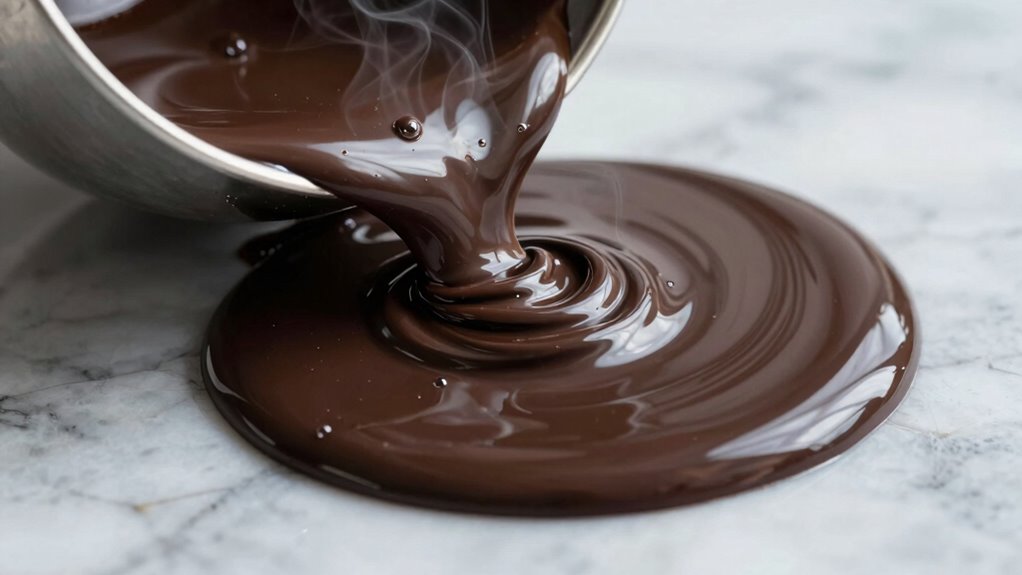
When chocolate gets too hot, the sugars within it can dissolve and then recrystallize as it cools, leading to unwanted graininess. This crystallization causes a gritty texture that’s hard to smooth out, even with stirring. To avoid this, it’s crucial to heat chocolate gently and steadily, keeping an eye on temperature. Using a double boiler or a microwave in short bursts can help regulate heat and prevent these issues. Additionally, understanding the crystal structure of cocoa butter can help you better manage the tempering process and avoid problems caused by improper heating. Maintaining the correct temperature range is essential for ensuring that the cocoa butter crystals form properly, preventing issues like streaks or dullness. Overheating doesn’t just compromise appearance and texture; it can also degrade flavor. Excess heat can cause the delicate cocoa notes to become bitter and burnt-tasting. This is especially true if the chocolate reaches temperatures above 120°F (49°C), where the fats and sugars start to break down. When you understand the importance of proper heat management, you can better control the process of melting and tempering, ensuring your chocolate remains smooth, shiny, and flavorful. Recognizing the sugar crystallization process can help you troubleshoot and improve your technique.
Furthermore, precise temperature control is vital for achieving a professional finish and consistency in your chocolates.
In essence, the key to great chocolate is precision. Overheating isn’t just a minor mistake—it can unravel the entire quality of your work by messing with chocolate tempering and promoting sugar crystallization. The next time you melt chocolate, remember that patience and careful temperature control are your best tools. By keeping the heat gentle and steady, you help preserve the structure of the cocoa butter crystals, prevent unwanted sugar crystallization, and keep your finished product glossy, smooth, and delicious. Overheating might seem like a simple mistake, but it has far-reaching effects that can ruin your chocolate’s texture, appearance, and flavor if you’re not careful.
digital chocolate melting thermometer
As an affiliate, we earn on qualifying purchases.
As an affiliate, we earn on qualifying purchases.
Frequently Asked Questions
Can Overheating Chocolate Cause Health Hazards?
Overheating chocolate can pose health hazards, especially if you’re sensitive or allergic to certain ingredients. It might cause food poisoning if contaminated or improperly stored beforehand. While chocolate allergy reactions are unlikely from overheating alone, burnt or scorched chocolate can produce harmful compounds that irritate your digestive system. So, always heat chocolate carefully to avoid potential health issues, and be aware of any allergies or sensitivities you might have.
How Does Overheating Affect Chocolate’s Aroma?
Overheating chocolate causes aroma alteration because high temperatures break down aromatic compounds, leading to scent degradation. You might notice a loss of the rich, chocolaty aroma and the emergence of burnt or off-putting smells. This change diminishes the chocolate’s overall flavor experience. To preserve its aroma, you should heat chocolate gently and avoid overheating, ensuring you maintain its delightful scent and maximum flavor potential.
Does Overheating Change Chocolate’s Nutritional Value?
Overheating chocolate can slightly diminish its nutritional preservation because high temperatures may break down sensitive nutrients like antioxidants and vitamins. While the flavor of chocolate might change, affecting its richness, the core nutritional value can be compromised if overheated excessively. To maintain both the chocolate flavor and nutritional integrity, it’s best to melt chocolate gently and avoid overheating, ensuring you get the most out of its nutritional benefits.
Can Overheated Chocolate Be Salvaged?
Yes, you can salvage overheated chocolate. If it’s only slightly overheated, gently reheat it with careful melting techniques, stirring constantly to restore its smooth texture and chocolate flavor. For severely overheated chocolate, it might be too broken down to recover fully, but you can try adding a small amount of vegetable oil or cocoa butter to smooth it out. Keep a close eye to prevent further overheating.
What Is the Ideal Temperature for Melting Chocolate?
The ideal temperature for melting chocolate is between 115°F and 120°F (46°C-49°C). Studies show that even a 2°F increase can cause seizing or burning. With proper temperature control and melting techniques, you can guarantee smooth, glossy chocolate. Use a double boiler or microwave in short bursts, stirring frequently. This prevents overheating and preserves the chocolate’s texture and flavor, making your confections perfect every time.
double boiler for melting chocolate
As an affiliate, we earn on qualifying purchases.
As an affiliate, we earn on qualifying purchases.
Conclusion
So, next time you heat your chocolate, remember it’s more than just a change in texture—you’re dancing with delicate chemistry. Overheating is like playing with fire; it can scorch your chances of perfect, glossy chocolates. Keep your heat gentle and steady, and you’ll preserve that silky smoothness. Treat your chocolate with care, and it’ll reward you with a luscious, melt-in-your-mouth finish—like a well-orchestrated symphony, every note perfectly in tune.
As an affiliate, we earn on qualifying purchases.
microwave-safe chocolate melting bowl
As an affiliate, we earn on qualifying purchases.
As an affiliate, we earn on qualifying purchases.
Halloween Picks
halloween
As an affiliate, we earn on qualifying purchases.