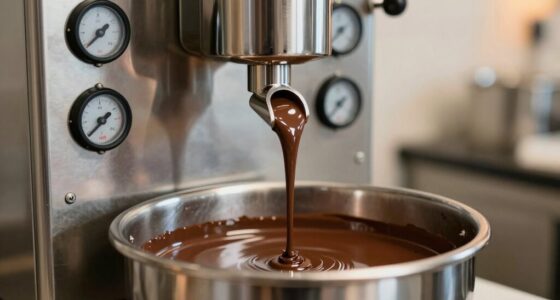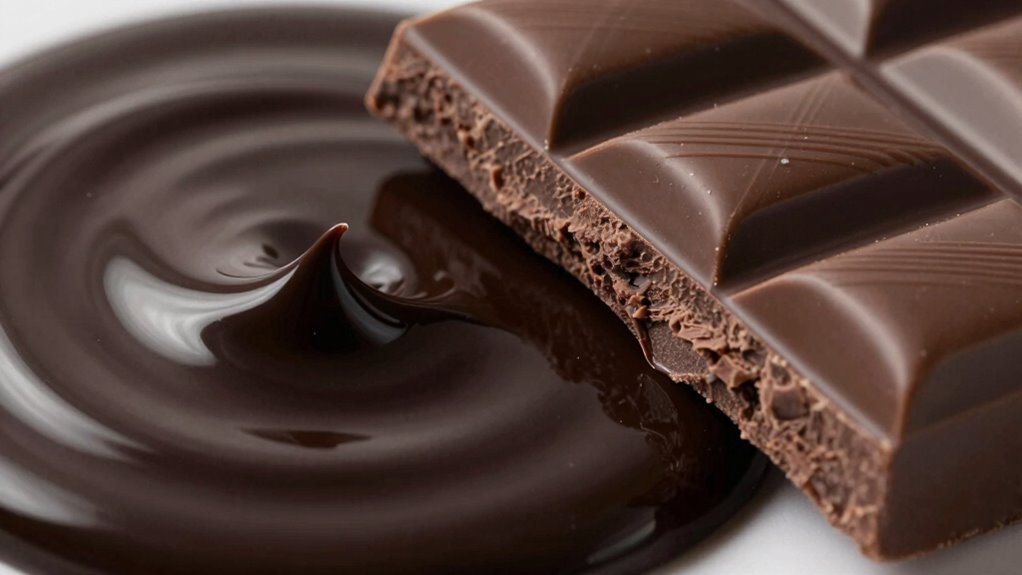

When you melt chocolate, its crystalline structure breaks down, turning it into a smooth liquid without stability. Tempering carefully controls the formation of cocoa butter crystals, creating a stable, glossy, and firm chocolate. Without proper tempering, chocolate remains dull, soft, or crumbly because its crystals are unstable. This difference in internal organization makes melted chocolate sticky and messy, while tempered chocolate holds its shape and shines. Keep exploring to discover how mastering these processes influences your chocolate’s behavior and quality.

Get baking supplies delivered free with Prime
- Fast, free delivery on millions of items
- Prime Video, Amazon Music and more included
- Member-only deals all year
Key Takeaways
- Proper tempering stabilizes cocoa butter crystals, giving chocolate a firm, glossy, and crisp texture, unlike melted chocolate which lacks stability.
- Melting disrupts crystalline structures, resulting in a smooth, liquid state, whereas tempering promotes controlled crystallization for desired texture.
- Tempered chocolate has uniform, stable fat crystals, leading to shine and snap; melted chocolate contains unstable crystals, causing dullness and softness.
- Controlled cooling during tempering ensures fine sugar and fat crystals, producing a crisp, smooth mouthfeel; improper cooling results in grainy or sticky texture.
- The crystalline transformations during tempering directly influence chocolate’s appearance, texture, and sensory qualities, unlike the inconsistent behavior of melted chocolate.
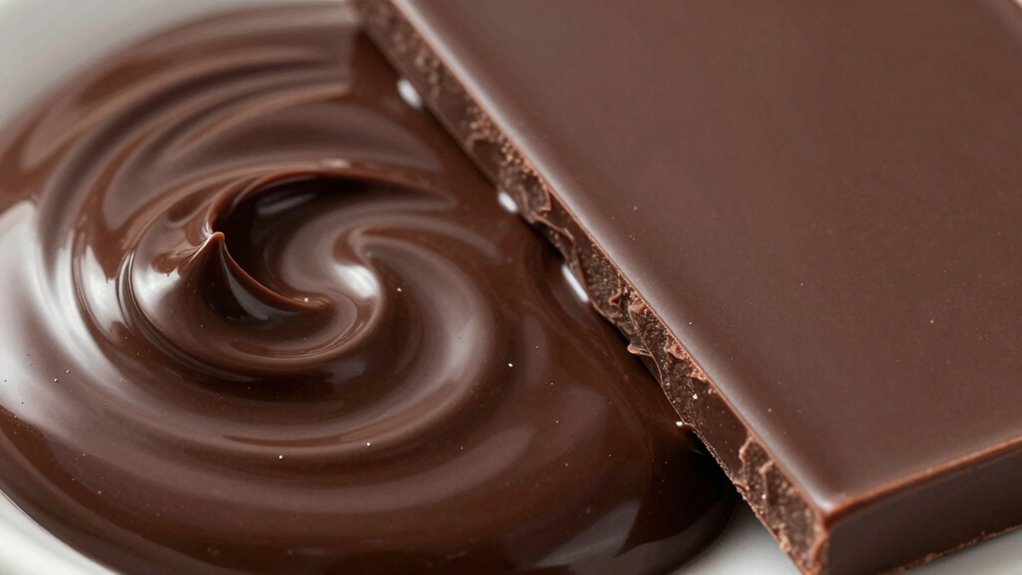
Despite its universal appeal, chocolate can influence behavior in surprisingly different ways across individuals. One reason for this variability lies in how chocolate’s physical and chemical properties change during melting and tempering. When you melt chocolate, you’re essentially breaking down its crystalline structure, which affects how it behaves and feels. Tempered chocolate, on the other hand, involves carefully controlling the crystallization process, especially cocoa butter crystallization, to produce a glossy, firm surface with a satisfying snap. These differences come down to the way the fats and sugars within the chocolate interact during various stages.
Proper tempering creates glossy, firm chocolate with a satisfying snap by controlling fat and sugar crystallization.
Cocoa butter crystallization plays a central role here. Cocoa butter is made up of different fat crystal forms, called polymorphs, each with unique melting points and textures. When you melt chocolate, you disrupt these crystals, creating a liquid that’s smooth but unstable. If you then cool it quickly or improperly, the cocoa butter crystals form irregularly or too slowly, resulting in dull, soft, or crumbly chocolate. Proper tempering involves heating the chocolate to a specific temperature to melt all the crystal forms and then cooling it gradually to encourage the formation of stable, uniform crystals—mainly the beta crystals. This controlled cocoa butter crystallization gives the chocolate its characteristic shine and firm, brittle texture. Additionally, understanding how crystallization processes influence texture can help in achieving the desired chocolate quality. Recognizing the importance of crystal formation in chocolate can deepen your appreciation for its craftsmanship. A further understanding of thermal management during tempering highlights how precise temperature control is essential for optimal crystal development. Moreover, the way temperature influences crystal stability underscores the importance of careful process control in chocolate making.
Sugar crystallization processes also influence chocolate behavior, especially during cooling. When chocolate cools after melting, sugars tend to crystallize in different ways depending on the cooling rate and temperature. Rapid cooling can trap sugars in an amorphous, glassy state, leading to a smooth, velvety mouthfeel. Slow cooling allows sugars to form larger crystals, making the chocolate gritty or grainy. Tempered chocolate’s controlled cooling promotes a fine, uniform sugar crystal structure that contributes to its crisp snap and smooth texture. Conversely, melted chocolate that’s not properly tempered may have inconsistent sugar crystallization, affecting how it melts in your mouth and how it behaves when you bite into it. This delicate balance of sugar crystallization is essential for achieving the ideal sensory experience.
In essence, the difference in behavior between melted and tempered chocolate stems from how carefully you manage the crystallization of both cocoa butter and sugar. Proper tempering ensures that cocoa butter crystallizes into the most stable form, giving the chocolate its iconic appearance and texture, while controlled sugar crystallization enhances mouthfeel and melting qualities. When you understand these processes, you gain a clearer picture of why melted chocolate can feel sticky or dull, while tempered chocolate delights with its glossy finish and satisfying snap. It’s all about mastering these crystalline transformations to craft chocolate that looks, feels, and behaves just right.
As an affiliate, we earn on qualifying purchases.
Frequently Asked Questions
How Does Chocolate’s Fat Content Affect Its Melting Point?
Your chocolate’s fat content directly influences its melting point, affecting its melting behavior. Higher chocolate fat levels lower the melting point, making it melt more easily at lower temperatures. Conversely, chocolates with less fat have a higher melting point, so they stay solid longer. By adjusting the fat content, you can control how quickly or slowly your chocolate melts, which is essential for achieving the perfect texture and appearance in your confections.
Can Tempering Prevent Chocolate Bloom?
Yes, tempering can prevent chocolate bloom by controlling chocolate crystallization. When you temper chocolate, you encourage the formation of stable cocoa butter crystals, which lead to a glossy finish and a firm snap. This process also enhances flavor development, making your chocolate taste richer and more refined. Proper tempering guarantees the chocolate stays smooth and attractive, preventing fat or sugar bloom caused by unstable crystal formations.
Why Does Chocolate Seize When Melted Improperly?
When you melt chocolate improperly, it seizes because the heat causes cocoa butter to behave unpredictably, disrupting chocolate crystallization. This sudden thickening happens as moisture or overheating triggers cocoa butter molecules to seize, forming clumps. To avoid this, melt chocolate gently and avoid water contact, ensuring proper cocoa butter behavior and smooth melting. Proper tempering helps maintain stable crystallization, preventing seizing and ensuring glossy, smooth chocolate.
What Role Does Moisture Play in Chocolate Behavior?
Moisture plays a vital role in chocolate behavior because water interference causes the cocoa particles to seize, turning the chocolate grainy and thick. Humidity effects are particularly problematic; high humidity introduces moisture into the environment, which can lead to clumping and spoil the smooth, glossy finish of tempered chocolate. To prevent this, keep chocolate dry and store it in a low-humidity setting, avoiding water contact during melting.
How Does Temperature Stability Influence Chocolate’s Texture?
Imagine your chocolate as a delicate dancer, needing perfect balance to stay graceful. Temperature stability directly influences its texture by controlling chocolate crystallization, preventing it from becoming grainy or dull. Poor storage conditions cause fluctuations, leading to unwanted crystals that ruin the smoothness. When you keep your chocolate at a stable temperature, it stays glossy, firm, and melts beautifully—making all your treats irresistibly perfect.
professional chocolate tempering machine
As an affiliate, we earn on qualifying purchases.
As an affiliate, we earn on qualifying purchases.
Conclusion
So, next time you melt or temper chocolate, remember it’s like a dance between science and art. Melting lets it flow freely, while tempering sets it into a perfect, glossy masterpiece. Think of it as taming a wild stallion—each step creates a different magic. Embrace the process, and you’ll turn simple chocolate into a masterpiece that delights both the eyes and the taste buds. After all, isn’t that what sweet dreams are made of?
silicone chocolate molds for tempering
As an affiliate, we earn on qualifying purchases.
As an affiliate, we earn on qualifying purchases.
chocolate melting and tempering kit
As an affiliate, we earn on qualifying purchases.
As an affiliate, we earn on qualifying purchases.
Columbus Day / Indigenous Peoples' Day Picks
long weekend sales
As an affiliate, we earn on qualifying purchases.