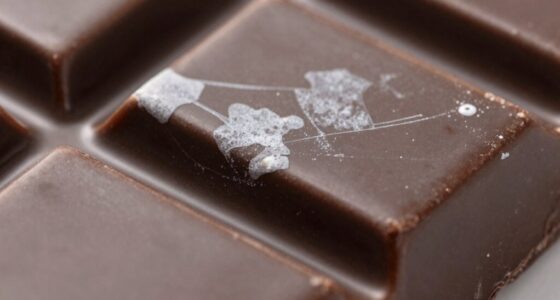
White chocolate acts more like a fat than traditional chocolate because of its high cocoa butter content. Unlike dark or milk chocolate, it melts near your body temperature, softening instantly and behaving like a fat when heated or cooled. This makes it ideal for drizzling and shaping, but also sensitive to temperature and moisture. If you’re curious about how its unique makeup influences its behavior, there’s much more to discover below.

Get baking supplies delivered free with Prime
- Fast, free delivery on millions of items
- Prime Video, Amazon Music and more included
- Member-only deals all year
Key Takeaways
- White chocolate’s high cocoa butter content causes it to melt and behave more like fat than typical chocolate solids.
- Its lower melting point, near body temperature, makes it soften quickly, unlike darker chocolates.
- The high fat composition affects how it interacts with other ingredients and sets during cooling.
- Sensitive to heat and moisture, white chocolate can seize or develop a bloom, altering its behavior.
- Proper temperature control during melting and tempering ensures its smooth texture and glossy finish.

You might notice that white chocolate behaves more like a fat than a traditional chocolate when heated. Its melting point is close to body temperature, allowing it to soften and melt almost instantly upon contact with warm hands or warm environments. This is unlike dark chocolates, which require higher temperatures to melt completely because of their cocoa solids. Because of its lower melting point, you need to be cautious when melting white chocolate—overheating can cause it to seize or become grainy, losing that silky candy texture you’re aiming for. You’ll find that gentle, slow heating—either via double boiler or microwave in short bursts—works best. Once melted, white chocolate’s smooth, fluid consistency makes it ideal for drizzling, dipping, or creating delicate confections. Its high cocoa butter content is a key factor in its melting behavior, making it behave more like a fat or oil rather than a solid chocolate. In baking and confectionery, understanding the behavior of white chocolate is essential. Its melting characteristics influence how it combines with other ingredients and how it sets once cooled. Because of its unique composition, white chocolate can sometimes separate or seize if exposed to moisture or high heat, which is less common with darker chocolates. This sensitivity ties back to its melting point and candy texture, both of which are influenced by its high cocoa butter content. It’s also important to note that white chocolate’s composition makes it more prone to blooming—a whitish film that can appear on the surface—if not stored or handled properly. Proper storage conditions are crucial to maintain its quality and appearance over time. Additionally, its fat content impacts how it reacts during tempering or melting, requiring precise temperature control. Recognizing how the fat composition affects its melting properties can help prevent common issues like seizing or blooming. Proper handling and understanding of these factors can ensure the best results in your culinary creations. So, when you’re working with white chocolate, keep in mind that it behaves differently, almost like a fat or oil, rather than a traditional cocoa-based chocolate. Recognizing these differences helps you manipulate it more effectively, ensuring your desserts look glossy, taste smooth, and melt perfectly in your mouth.
As an affiliate, we earn on qualifying purchases.
Frequently Asked Questions
Does White Chocolate Melt at a Different Temperature Than Regular Chocolate?
Yes, white chocolate melts at a different temperature than regular chocolate. Its flavor profile and texture differences mean it melts more quickly because it contains cocoa butter without cocoa solids, which influence melting points. You’ll notice white chocolate becomes smooth and creamy faster, but it’s more sensitive to heat. So, when melting, keep an eye on it to avoid burning or seizing, especially since its melting point is slightly lower.
Can White Chocolate Be Used as a Substitute in Recipes?
Yes, you can use white chocolate as a substitute in recipes, but keep in mind its unique flavor pairing and texture variation. Its sweetness and creamy texture differ from regular chocolate, so it may alter the dish’s overall taste and consistency. White chocolate melts differently and lacks cocoa solids, so adjust your recipes accordingly. Experimenting with it can create delightful new flavors, but be prepared for some differences in final results.
Why Does White Chocolate Seize More Easily Than Dark Chocolate?
White chocolate seizes more easily than dark chocolate because its delicate flavor profile and ingredient stability make it more sensitive to temperature changes. Think of it as a fragile dance partner—any sudden shift can throw it off balance. When heated or mixed improperly, the cocoa butter and milk solids in white chocolate separate quickly, causing it to seize. This is why careful tempering and gentle handling are key.
How Does Fat Content Influence White Chocolate’s Behavior?
Fat content plays a vital role in white chocolate’s behavior. With a higher fat percentage, it creates a smoother, creamier texture, but also makes it more prone to seizing or melting inconsistently. You’ll notice texture variation depending on its fat level; too much fat can cause it to melt too quickly or become greasy, while too little might make it grainy. Adjusting fat content helps you achieve the perfect consistency.
Is White Chocolate More Sensitive to Humidity During Baking?
Imagine baking a batch of white chocolate cookies on a humid day—you notice the chocolate melts unevenly. White chocolate is more sensitive to humidity during baking because its sugar and fat components react quickly to moisture, leading to storage challenges and texture issues. High humidity can cause it to seize or bloom, making it tricky to work with. So, yes, white chocolate’s humidity sensitivity impacts baking outcomes considerably.
white chocolate tempering thermometer
As an affiliate, we earn on qualifying purchases.
As an affiliate, we earn on qualifying purchases.
Conclusion
Understanding why white chocolate behaves differently helps you master its unique qualities. For instance, imagine trying to melt white chocolate for a recipe and ending up with a grainy mess—this happens because of its high milk and fat content, unlike regular chocolate. When you recognize these differences, you can adjust your techniques accordingly. Embrace white chocolate’s quirks, and you’ll create smoother, more decadent treats every time, just like a skilled chocolatier turning a potential mess into perfection.
double boiler for melting chocolate
As an affiliate, we earn on qualifying purchases.
As an affiliate, we earn on qualifying purchases.
As an affiliate, we earn on qualifying purchases.
Halloween Picks
halloween
As an affiliate, we earn on qualifying purchases.