If your cupcakes are overflowing, it’s not your pan but likely how you prepare and portion your batter. Overfilling liners, using inconsistent measuring tools, or overmixing can cause excessive rise and spills. Properly filling cupcake liners about two-thirds full, measuring ingredients accurately, and mixing gently help prevent overflow. Temperature and leavening amounts also matter. Keep these tips in mind, and you’ll discover more ways to bake tidy, perfect cupcakes every time.
Key Takeaways
- Overmixing batter introduces excess air, causing it to rise too quickly and overflow during baking.
- Using too much leavening agent or measuring it inaccurately can lead to excessive expansion and spills.
- Filling cupcake liners more than two-thirds full leaves little room for rising, increasing overflow risk.
- High oven temperatures cause rapid batter expansion, making overflow more likely if not properly controlled.
- Inconsistent batter consistency or improper measuring of ingredients can result in uneven rise and overflowing cupcakes.

Cupcake Scoop, Cupcake Batter Scoop Batter Dispenser Sliding Button Dispenses DIY Bakeware Measuring Equal Amounts Kitchen Gadget Baking Tool Flour Distribution Silicone Plunger
[Keep Counters Clean]: Cake transfer shovel supports batter, minimizing the chances of spills or splatters while pouring batter…
As an affiliate, we earn on qualifying purchases.
As an affiliate, we earn on qualifying purchases.
Are Batter Prep Mistakes Causing Your Overflow?

If your cupcakes are overflowing in the oven, the problem often starts with how you prepare the batter. Poor egg quality can affect the batter’s structure and stability, making it more prone to rising too much. Use fresh, high-quality eggs for better consistency. Additionally, your mixing technique plays a pivotal role. Overmixing can incorporate too much air, causing excessive rise and overflow, while undermixing leaves ingredients uneven, affecting batter cohesion. Gently fold ingredients together until just combined, avoiding vigorous stirring. Pay attention to the eggs’ freshness and handle the batter with care. By choosing good eggs and mastering your mixing technique, you can create a stable batter that bakes evenly without overflowing. Proper preparation makes all the difference in achieving perfect cupcakes. Refer to batter stability principles to understand how ingredient quality and mixing impact the final product. Maintaining the correct mixing technique can prevent over-incorporation of air and help produce consistent results. Ensuring the right ingredient quality and handling the batter gently can significantly improve your baking outcomes. Being mindful of batter consistency is essential for preventing overflow and achieving uniform cupcakes. Additionally, understanding how ingredient ratios influence batter behavior can further enhance your results and keep your cupcakes perfectly baked.
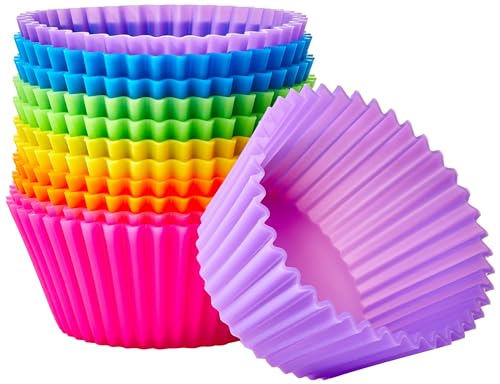
Amazon Basics Reusable Non-Stick Silicone Baking Cups, BPA Free, Muffin Liners, Dishwasher Safe, Microwave and Oven Safe, 2.9 x 2.9 x 1.3 in (LxWxH), Multicolor, 12-Pack
Reusable round baking cups (12-pack) in assorted colors; ideal for baking, lunch/snack cups, and more
As an affiliate, we earn on qualifying purchases.
As an affiliate, we earn on qualifying purchases.
How Proper Measuring Stops Cupcake Overflow

Accurate measuring is essential to prevent cupcakes from overflowing in the oven. When you focus on measuring accuracy, you ensure each cupcake has the correct amount of batter, reducing the risk of spills. Proper ingredient scaling is key—using the right measuring tools for dry and wet ingredients guarantees consistency. To achieve this, follow these steps:
Accurate measuring prevents spills and ensures perfect cupcake batter portions every time.
- Use a kitchen scale or measuring cups for precise ingredient amounts, avoiding guesswork.
- Level off dry ingredients like flour and sugar to prevent over-measuring.
- Measure liquids at eye level in clear containers to guarantee accuracy.

Etekcity Food Kitchen Scale, Digital Grams and Ounces for Weight Loss, Baking, Cooking, Keto and Meal Prep, LCD Display, Medium, 304 Stainless Steel
𝗘𝗳𝗳𝗼𝗿𝘁𝗹𝗲𝘀𝘀 𝗪𝗲𝗶𝗴𝗵𝗶𝗻𝗴: Supports 5 units (oz/lb:oz/fl'oz/g/mL), tare function, and includes 2 AAA batteries for hassle-free operation
As an affiliate, we earn on qualifying purchases.
As an affiliate, we earn on qualifying purchases.
How Overmixing Leads to Overflowing Cupcakes

When you overmix your batter, you activate gluten, making it tougher and denser. This traps air, causing the cupcakes to rise too quickly and spill over the edges. As a result, your batter becomes too thick and spills out of the liners. Additionally, overmixing can lead to a less tender texture, which affects the overall quality of your cupcakes. Proper mixing techniques help prevent passive voice and ensure a light, fluffy crumb.
Overmixing Develops Gluten
Overmixing your cupcake batter can cause it to develop too much gluten, which affects the texture and structure of the baked cupcakes. When you overmix, gluten formation increases, making the batter more elastic and tough. This heightened elasticity can lead to a denser crumb and less delicate rise. To prevent this, keep these tips in mind:
- Mix just until ingredients are combined to avoid developing excess gluten.
- Use a gentle folding motion rather than vigorous stirring.
- Stop mixing as soon as you see no streaks of flour, maintaining a tender crumb.
- Be aware that overmixing can also influence the home theatre projector image quality, as it alters the batter’s consistency and final texture.
Air Incorporation Causes Rise
If you mix your cupcake batter too vigorously, you introduce excess air into the mixture, which can cause your cupcakes to rise too much and even overflow in the oven. Overmixing creates large air bubbles that expand during baking, pushing batter over the edges. Your mixing techniques matter—gentler folding helps control air incorporation and prevents overflow. Additionally, incorporating Piercing Care and Hygiene principles, such as avoiding contamination, can help maintain batter quality and consistency.
Dense Batter Spills Over
Dense batter can spill over the edges of your cupcake liners because overmixing develops too much gluten, making the batter thick and heavy. When batter becomes too dense, it doesn’t hold air well, resulting in a heavier consistency that’s prone to overflow. To prevent this, focus on your mixing techniques and aim for the right batter consistency.
Here are three key tips:
- Mix just until ingredients are combined to avoid overworking the batter.
- Use gentle folding instead of vigorous stirring.
- Pay attention to the batter’s texture, aiming for smooth, slightly thick but pourable consistency.

Tips To Bake Perfect Homemade Cupcakes: Master the Art of Cupcake Baking with Proven Tips and Techniques. Ideal gift for home bakers and pastry enthusiasts.
As an affiliate, we earn on qualifying purchases.
As an affiliate, we earn on qualifying purchases.
Does Oven Temperature Make Your Cupcakes Spill Over?

When the oven temperature is too high, your cupcakes are more likely to spill over the sides of the liners. A hot oven causes the batter to rise rapidly, which can overwhelm the liner’s capacity and lead to overflow. The pan material also plays a role; lighter metals heat quickly, increasing the risk of sudden rises, while darker pans absorb more heat and may cause uneven baking. If your oven runs hot, try lowering the temperature slightly and monitor the cupcakes closely. Using an oven thermometer helps you maintain consistent heat. Additionally, proper pan selection can help distribute heat more evenly, reducing the chances of overflows, and choosing the right tip size for your batter consistency can improve baking results. Adjusting oven temperature and choosing the right pan material can prevent overflows, ensuring your cupcakes bake evenly without spilling over the edges. Incorporating baking techniques such as filling liners only two-thirds full can also minimize overflow issues. Proper oven calibration ensures the temperature you set matches the actual heat inside, further helping to prevent spills. Understanding baking science can also help you troubleshoot and perfect your cupcake recipes for consistently great results. Being aware of heat transfer mechanisms in baking can give you a better grasp of how ingredients and temperature interact during the process.
How to Pick the Best Pan and Liners for Overflow-Free Bakes

Choosing the right baking pan and liners can make a significant difference in preventing cupcakes from spilling over. First, select cupcake liners that fit snugly in your pan; avoid overly large or small liners. Second, consider the pan material—metal pans conduct heat evenly and promote stable rising, while silicone pans are flexible but may cause uneven baking. Third, opt for high-quality cupcake liners made from grease-resistant material to prevent sticking and ensure clean edges. Using the correct liners and pan material helps control the batter’s rise and keeps cupcakes contained. Additionally, selecting appropriate pan size ensures the batter has enough room to rise without overflowing. Remember, the right combination minimizes overflow, giving you neat, professional-looking cupcakes every time.
Why Filling Levels Matter to Prevent Overflow

When you fill cupcake liners too high, spills and messes become unavoidable. Maintaining proper filling levels helps keep your cupcakes neat and prevents overflow. By paying attention to this detail, you’ll save time cleaning and make certain your treats look and taste perfect. Proper upgrades and modifications can also help optimize your baking process and consistency. Additionally, understanding the design of your cupcake liners can influence how much batter they hold and how they respond during baking. Being aware of batter volume and how it interacts with liner size can further improve your results and reduce waste, especially when considering the material of the liners and how it affects expansion during baking.
Proper Filling Levels
Ensuring the right filling level in your cupcake liners is essential to preventing overflow during baking. Proper cupcake portioning helps maintain consistent results and avoids messes. To achieve this, focus on these key points:
- Use filling techniques that measure each scoop to ensure uniformity.
- Fill each cupcake about two-thirds full; this allows room for rising without spilling over.
- Adjust your cupcake portioning tools based on cupcake size and batter consistency.
Prevents Spills and Messes
Since filling cupcakes too full can lead to spills and messy ovens, maintaining the correct filling level is essential for a tidy baking process. Using proper cooking techniques, like filling each cup no more than two-thirds full, helps prevent overflow. If you’re using ingredient substitutions, such as applesauce or yogurt instead of oil, adjust the amount to avoid overfilling, which can cause spillage. Measuring cups or spoons ensure consistent portions, reducing the risk of messes. Keeping fillings below the brim also promotes even baking and prevents batter from overflowing during rise. Accurate measurement and mindful ingredient substitutions can make a significant difference in preventing spills. Additionally, being aware of AI-powered virtual reality applications in baking tutorials can provide visual guidance to improve your filling techniques. Incorporating baking technology tools can enhance precision and consistency in your cupcake preparation. Using digital thermometers can help monitor batter temperature, ensuring proper consistency and reducing overflow risks. By paying attention to filling levels and making mindful ingredient substitutions, you’ll keep your baking area clean and your cupcakes perfectly shaped. Proper baking techniques can help you better control batter volume and prevent overflow during baking. Consistent filling is key to preventing spills and maintaining a smooth baking experience.
How Rising Agents Influence Cupcake Expansion

Rising agents like baking soda and baking powder are key drivers behind cupcake expansion. They produce carbon dioxide, which creates bubbles that lift the batter as it bakes. Your batter consistency plays a vital role in how effectively these leavening agents work. If the batter is too thick, it won’t rise properly; if too thin, it can overflow.
Properly measuring leavening agents and maintaining batter consistency ensures perfect cupcake rise without spills.
Here are three key points to take into account:
- Proper measurement of leavening agents ensures consistent rise.
- A balanced batter consistency allows bubbles to form without overexpanding.
- Overuse of rising agents can cause excessive expansion, leading to overflowing.
Understanding how these agents interact with your batter helps control cupcake size and prevents spills. Adjusting leavening and batter consistency makes all the difference.
Tips to Bake Cupcakes Without Overflow Every Time

To prevent cupcakes from overflowing, start by carefully measuring your leavening agents and adjusting the batter consistency before baking. Thick, but pourable batter helps control how much rises, reducing overflow. If your batter is too thin, it’ll spill over easily; if too thick, it won’t rise properly. Use a cookie scoop or filling tool to distribute batter evenly, leaving about one-third of the cup empty. After baking, apply cooling techniques like removing cupcakes promptly from the pan to stop residual heat from causing over-expansion. Additionally, gently tapping the pan on the counter to settle the batter can prevent sudden rises. Proper batter consistency combined with strategic cooling ensures your cupcakes stay within the pan’s boundaries and look picture-perfect.
Frequently Asked Questions
Can Using Different Cupcake Liners Reduce Overflow Risks?
Using different cupcake liners, like decorative liners or reusable cups, can help prevent overflow risks. Thicker, sturdier liners provide better support and prevent batter from spilling over the edges. Reusable cups often have a more secure fit, minimizing leaks. Opting for the right liners ensures your cupcakes bake evenly and stay neat, allowing you to avoid messes and achieve perfect results every time.
Does Altitude Affect Cupcake Overflow During Baking?
Think of altitude baking like sailing into new waters—you need to adjust your sails. Yes, altitude affects cupcake overflow because lower air pressure makes leavening gases expand faster. To keep cupcakes from spilling over, you should make pan size adjustments—using smaller pans or reducing leavening ingredients. These tweaks help your baked goods stay steady on course, even in high-altitude kitchens.
Are There Specific Ingredients That Cause Cupcakes to Spill Over?
Certain ingredients can cause cupcakes to spill over, especially if ingredient reactions happen too quickly or if you use excessive ingredient quantities. For example, too much baking soda or baking powder creates rapid rising, leading to overflow. Overmixing batter also activates reactions prematurely. To prevent spills, measure ingredients carefully and mix just enough to combine. Adjust ingredient quantities based on your recipe and oven conditions to keep cupcakes perfectly contained.
How Does Baking Time Influence Cupcake Overflow?
Think of baking time as the heartbeat of your cupcakes. If you bake too long at the right temperature, the batter’s potential to overflow remains contained, like a calm lake. But if the temperature’s too high or the batter’s too runny, even perfect timing can’t hold back the surge. Adjust baking temperature and keep your batter consistency just right; that’s the secret to preventing overflowing cupcakes.
Can Storage Conditions Impact Cupcake Spillover After Baking?
Yes, storage conditions can impact cupcake spillover after baking. If your storage container is too moist due to high storage moisture, cupcakes may become soggy and lose their shape, causing spillover. Similarly, storing cupcakes in a cold container can cause condensation, adding moisture that leads to overflow or mushiness. To prevent this, keep cupcakes in a dry, airtight container at room temperature and avoid coldness that creates condensation.
Conclusion
By mastering proper batter prep, measuring, and oven settings, you’ll keep your cupcakes from spilling over like a volcano about to erupt. Think of your pan as a calm harbor, not a stormy sea—choosing the right tools and techniques helps prevent chaos in the oven. With these tips, your cupcakes will rise perfectly, giving you a sweet victory in every batch. Baking with confidence turns chaos into a cupcake masterpiece you’ll be proud of!