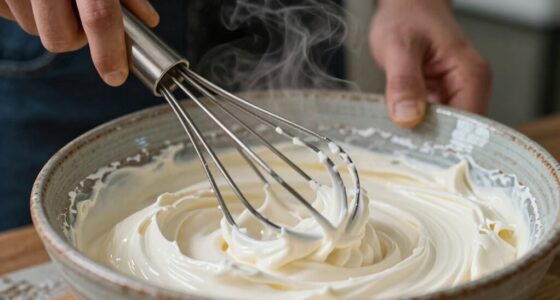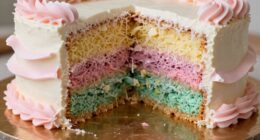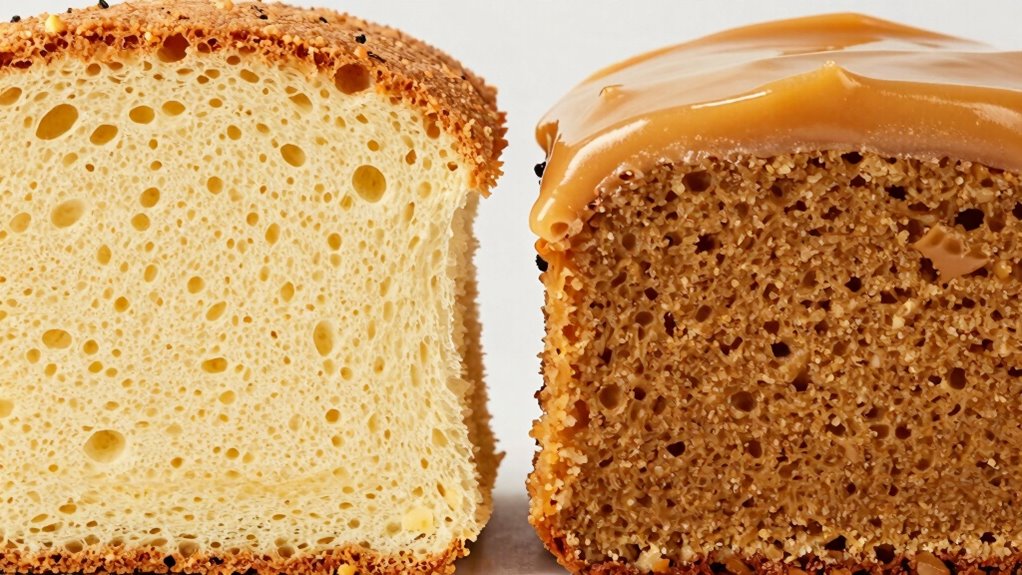

When making sponge cakes and butter cakes, you need to use different mixing techniques. Sponge cakes rely on whipped eggs or whites to create a light, airy structure, while butter cakes use creamed butter and sugar for density and moisture. Mixing these methods incorrectly can ruin each cake’s texture and stability. To get the best results, understand each technique’s purpose. Keep going to discover how mastering these differences will improve your baking skills.
Key Takeaways
- Sponge cakes rely on whipped eggs and air for structure, while butter cakes use creamed butter and sugar for density.
- The airy, delicate crumb of sponge cakes contrasts with the dense, moist crumb of butter cakes.
- Techniques for lightening sponge cakes are different from creaming methods used in butter cakes.
- Frosting choices should match the cake type; light toppings for sponge cakes and rich frostings for butter cakes.
- Proper technique separation ensures the desired texture and appearance, preventing the mixing of these distinct methods.
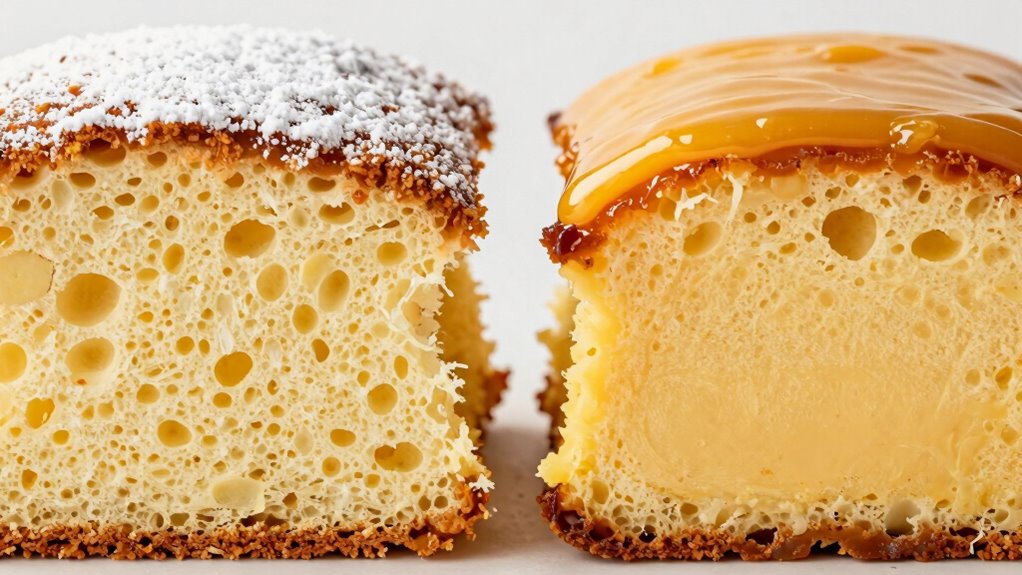
Have you ever wondered what sets sponge cake apart from butter cake? It all comes down to the techniques used during baking and how those methods influence the final texture and flavor. When you’re deciding which to make, understanding these differences helps you choose the right cake for your occasion. Sponge cakes rely on whipped eggs and air to create a light, airy structure, while butter cakes use creamed butter and sugar to produce a dense, moist crumb. This fundamental difference impacts everything from frosting techniques to flavor pairings.
With sponge cakes, you’ll find that their delicate, open crumb makes them perfect for light frosting techniques like whipped cream, fruit preserves, or a thin layer of buttercream. Since the texture is so airy, heavy frosting can weigh down the cake or mask its subtle flavor. Instead, you might opt for a dusting of powdered sugar or a simple glaze to enhance the cake’s natural sweetness. When it comes to flavor pairings, sponge cakes shine with fresh berries, citrus zest, or floral extracts like rose or lavender. These light flavors complement the cake’s airy nature without overpowering it, creating a balanced, elegant dessert.
Sponge cakes pair beautifully with light toppings like whipped cream, fresh berries, and delicate floral flavors.
In contrast, butter cakes are more versatile when it comes to frosting techniques. Their dense crumb holds up well to rich, creamy frostings like thick buttercream, cream cheese frosting, or even fondant. You can layer and carve butter cakes more easily, making them ideal for multi-tiered wedding cakes or elaborate decorations. The richer texture also pairs beautifully with bold flavors such as chocolate ganache, caramel, or spiced fillings like cinnamon or nutmeg. These flavor pairings enhance the cake’s moistness and add complexity, making butter cakes suitable for more decadent, indulgent desserts.
Understanding these distinctions helps you tailor your frosting techniques to the cake type. For sponge cakes, lighter frostings or simple toppings preserve their airy quality, while butter cakes benefit from more substantial frostings that add richness and moisture. The choice of flavor pairings is equally important: opt for delicate, fresh flavors with sponge cakes to keep the lightness intact. Conversely, bold, intense flavors work better with butter cakes, complementing their richer texture.
Knowing when to employ specific frosting techniques and flavor pairings ensures your cake turns out just right. Whether you’re aiming for a delicate, chiffon-like sponge or a dense, buttery masterpiece, mastering these techniques means your cake will look stunning and taste incredible. So next time you bake, remember: the essential differences in method and flavor pairing can make all the difference in creating a show-stopping dessert.
Frequently Asked Questions
Can I Substitute Sponge Cake Ingredients With Butter Cake Ingredients?
You can’t directly substitute sponge cake ingredients with butter cake ingredients because of ingredient substitution differences affecting texture and rise. Sponge cakes rely on beaten eggs for aeration, while butter cakes use creamed butter for richness. This impacts flavor compatibility and structure. If you try to swap, the cake might turn out dense or crumbly. To guarantee success, stick to the specific techniques and ingredients for each cake type.
Which Cake Type Is Better for Layering and Frosting?
You’ll find butter cake better for layering and frosting because it offers superior cake stability and frosting adhesion. Its dense, moist texture holds up well under multiple layers and thick coatings, reducing the risk of collapsing or sliding apart. Sponge cake, being lighter and more delicate, isn’t ideal for elaborate frosting work or stacking, as it can be more fragile and prone to tearing. For a sturdy, beautifully layered cake, butter cake is your best choice.
How Do Storage Methods Differ for Sponge and Butter Cakes?
Think of storage methods as safeguarding treasures in a vault. For sponge cakes, you should wrap them tightly and store at room temperature or refrigerate to maintain moisture retention, especially if filled or frosted. Butter cakes benefit from airtight wrapping and refrigeration to keep them fresh longer. Use proper refrigeration techniques to prevent drying out or spoilage, ensuring both cakes stay moist and delicious until you’re ready to enjoy them.
Are There Dietary Differences Between Sponge and Butter Cakes?
Yes, there are dietary differences between sponge and butter cakes. Sponge cakes usually have lower fat content and higher gluten levels due to the whipped egg whites, making them lighter and lower in calories. Butter cakes contain more butter and sugar, increasing calorie and fat content. If you’re watching gluten or sugar intake, sponge cakes might be a better choice, but always check specific recipes for exact nutritional info.
What Are Common Flavor Pairings for Each Cake Type?
Imagine biting into a fluffy sponge cake topped with vibrant berries, where fresh fruit and sweet cream dance together in harmony. You’ll find that citrus fruits, like lemon or orange, brighten sponge cakes, while vanilla and almond flavors beautifully complement their airy texture. For butter cakes, rich chocolate, caramel, or spiced fruit preserves create indulgent pairings. These complementary flavors enhance each cake’s unique qualities, making each bite memorable and perfectly balanced.
Conclusion
Now that you know the colossal difference between sponge and butter cakes, you’re practically a baking superhero! Mix them up, and you could turn your kitchen into a battleground of culinary chaos—imagine butter storms or sponge earthquakes! Stick to the right techniques, and you’ll create desserts so perfect, they’ll make even the most seasoned bakers bow in awe. So go forth, conquer your baking fears, and make cake magic that’ll blow minds!