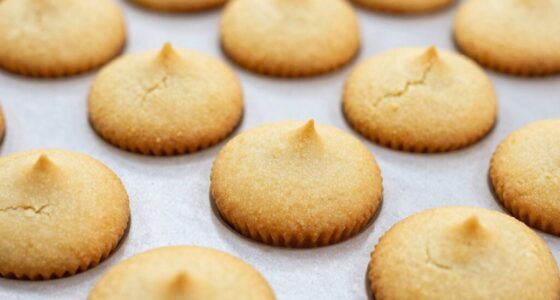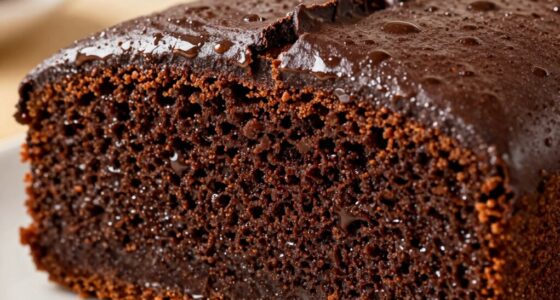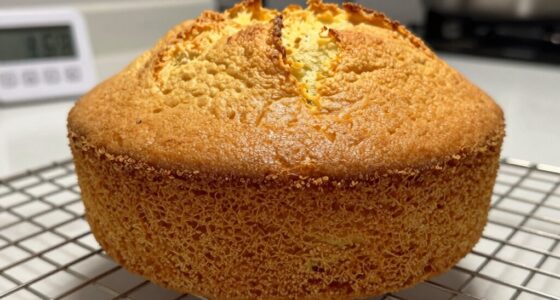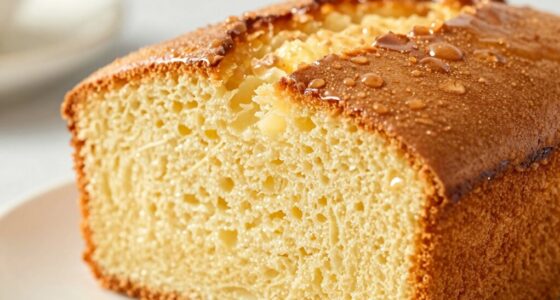
If you notice your batter is dense, with tight, uniform crumbs and large holes, you’re likely overmixing. A gummy or rubbery texture also indicates excess gluten development, while a shiny, smooth surface suggests overworking the mixture. Batter that’s overly thin, sticky, or elastic feels off and signals overmixing. Pay attention to these signs; if you keep going, your baked goods might turn out tough and dense. Keep these clues in mind to perfect your technique.
Key Takeaways
- Large, irregular holes and a dense crumb indicate overmixing and excessive gluten development.
- Batter appears overly smooth, shiny, and thin, showing signs of gluten overproduction.
- The batter feels sticky, elastic, or rubbery to the touch, suggesting overworking the gluten.
- Baked goods have a tough, chewy texture with large holes and a gummy crumb.
- A shiny surface and absence of lumps in batter signal overmixing early in the process.
How Dense, Tight Crumbs Show Overmixed Batter
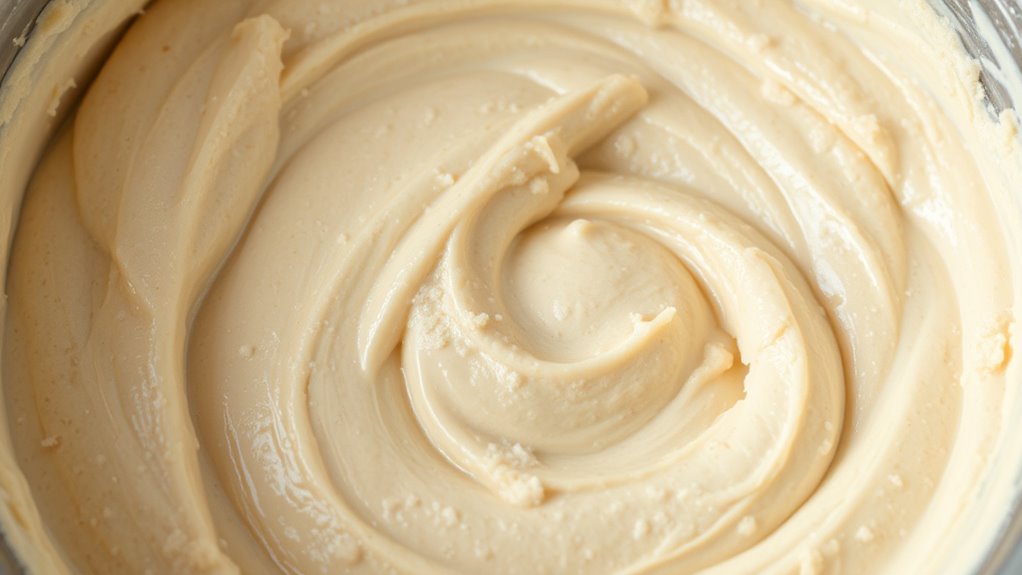
When batter is overmixed, the resulting crumbs tend to be dense and tight. This happens because excessive mixing increases the mixing intensity, causing gluten development that traps air and moisture improperly. As you overmix, you’ll notice the batter’s color darkens slightly, indicating more mixing than necessary. Dense, tight crumbs are a clear sign that the batter has been overworked, preventing it from forming a light, airy structure. Instead of a tender crumb, you’ll get a rubbery, compact texture. To avoid this, mix just until the ingredients are combined, and watch the batter’s color and consistency. Proper mixing keeps the gluten in check and results in a fluffier crumb with a more appealing, even color. Additionally, paying attention to mixing techniques can prevent overworking the batter from the start. Recognizing these signs early can help you adjust your method and achieve a perfect, tender baked good, especially when you understand how batter consistency impacts the final texture. Being mindful of mixing speed can also help prevent overmixing and achieve the desired crumb.
Why Gummy or Rubber Textures Mean You’ve Overmixed
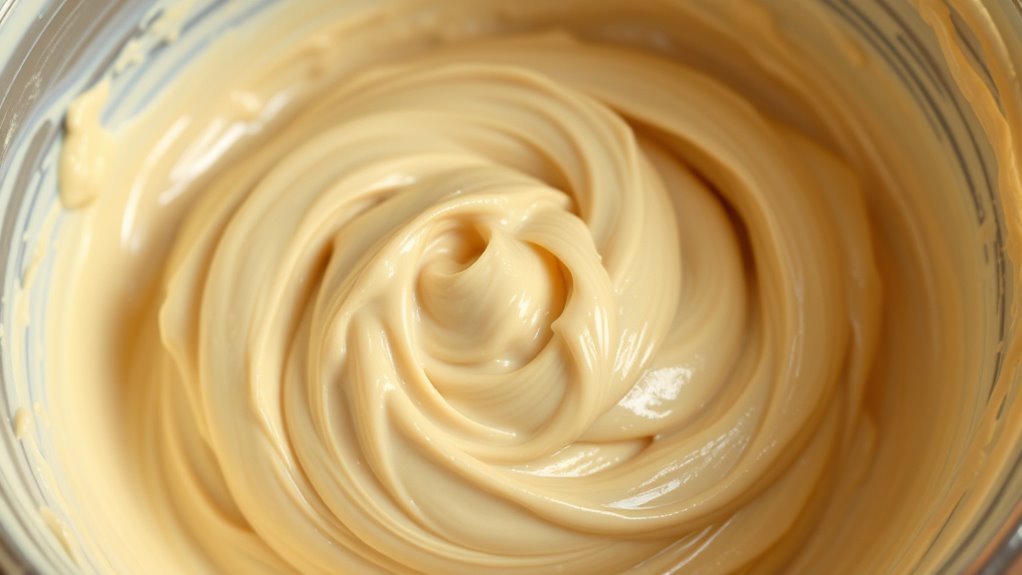
When your baked goods turn out gummy or rubbery, it’s usually because you’ve overmixed the batter. This overmixing causes excess gluten development and changes the protein structure, making the texture tough. As a result, the dough loses its elasticity, leading to that undesirable chewy feel.
Excess Gluten Development
Excess gluten development occurs when you mix the batter too much, causing the proteins in the flour to form an overly strong network. This leads to excessive gluten formation, which impacts the batter’s texture. As gluten develops, dough elasticity increases, making the mixture tougher and more resistant to folding or mixing. When you overmix, the batter can become stiff and sticky, resulting in a gummy or rubbery texture once baked. You might notice that the baked goods are dense and chewy instead of light and tender. This is a clear sign that you’ve pushed gluten development too far. To avoid this, mix just until the ingredients are combined, stopping as soon as the batter is smooth and homogeneous. Proper mixing techniques ensure a delicate, tender crumb without over-strengthening the gluten network. Understanding gluten development is key to achieving the perfect batter texture.
Altered Protein Structure
Overmixing batter can cause the proteins in the flour to undergo structural changes that alter their natural properties. When you mix too much, protein denaturation occurs, disrupting the proteins’ original shape. This process leads to excessive gluten formation, which toughens the batter’s texture. Instead of creating a tender crumb, the overmixed mixture develops a gummy or rubbery feel, as the proteins bond too tightly. This altered protein structure makes the batter less elastic and more resistant to rising, resulting in dense or chewy baked goods. Recognizing these signs early helps you stop mixing before the proteins become over-structured, preserving the desired lightness and tenderness. Proper mixing techniques can help prevent gluten overdevelopment and maintain a perfect batter consistency. Understanding how overmixing affects protein behavior allows you to improve your baking results consistently.
Reduced Dough Elasticity
Gummy or rubbery textures in baked goods are clear signs that you’ve overmixed your batter, which reduces its natural elasticity. When dough elasticity diminishes, your batter loses resilience, making it tough and chewy instead of tender. Overmixing causes gluten strands to overdevelop, leading to a stiff, less flexible dough. You might notice your batter resisting folding or spreading easily. This resistance indicates compromised dough elasticity, which impacts the final texture. To avoid this, stop mixing as soon as ingredients are just combined. Overworking the batter creates a dense, rubbery mouthfeel that’s hard to enjoy. Keep an eye out for these signs to ensure your baked goods stay light, tender, and perfectly textured. Proper mixing preserves batter resilience and overall baked good quality.
What Overmixed Batter Looks Like — Gluten Development Signs
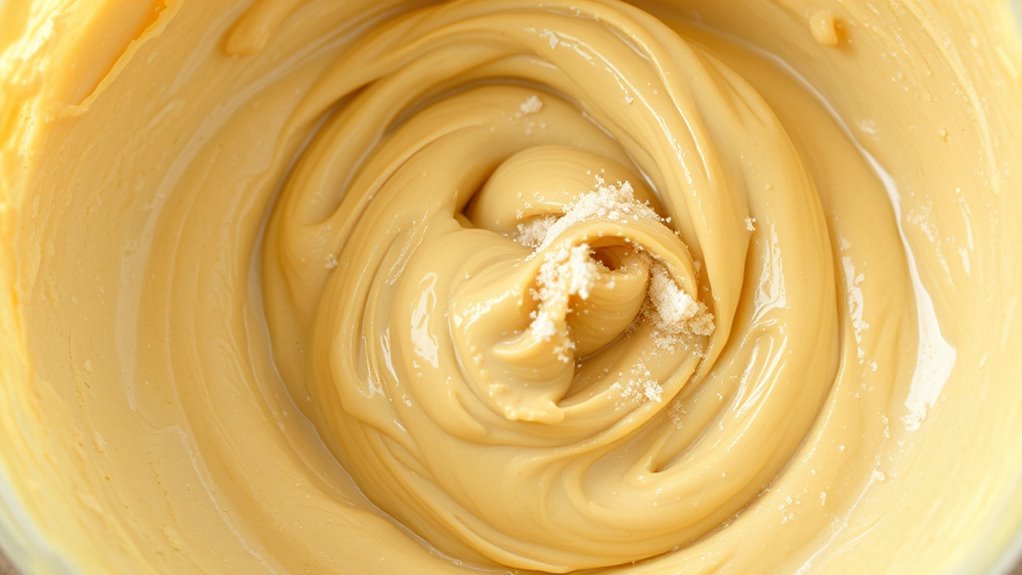
When your batter is overmixed, you’ll notice visible gluten strands forming and excessive bubbles popping up. The texture becomes denser and tougher, making baked goods less tender. Keep an eye out for these signs to prevent overworking your batter.
Visible Gluten Strands
Visible gluten strands are a clear sign that your batter has been overmixed. When you notice these thin, web-like formations, it indicates excessive gluten development, which impacts batter elasticity. Overmixing causes the gluten strands to become prominent, making the batter tougher rather than tender.
You might observe:
- Thick, stringy gluten formations
- Batter appearing dense or sticky
- Reduced smoothness and uniformity
- Excessive stretchiness when mixing
- A rubbery texture upon touch
These signs show that gluten has been overworked, leading to a tougher final product. Recognizing visible gluten strands helps you stop mixing at the right moment, ensuring a tender, airy texture in your baked goods.
Excessive Bubbles Formation
Excessive bubbles forming in your batter is a clear sign that it has been overmixed, indicating overdevelopment of gluten. In baking science, this often results from vigorous mixing techniques that incorporate too much air or stretch the gluten too far. When you overmix, the gluten strands become overly developed, trapping air and creating a network that produces more bubbles than necessary. These bubbles can be seen rising to the surface or dispersed throughout the batter, giving it a foamy appearance. While some bubbles are good to help leaven baked goods, too many indicate you’ve gone beyond the ideal mixing point. Recognizing this sign helps you prevent overmixing, ensuring your baked items stay tender rather than overly airy and tough.
Dense, Tough Texture
Overmixing not only causes excessive bubbles but also leads to a dense, tough texture in your baked goods. When gluten develops too much, your crust becomes tougher, making bites less tender. You might notice a noticeable flavor loss, as overmixed batter can dull the natural taste of ingredients. To spot this, look for:
- A heavy, chewy bite instead of lightness
- Crust that feels overly tough or rubbery
- Reduced fluffiness or height in baked goods
- An uneven crumb with dense pockets
- A dull, less vibrant flavor overall
These signs indicate overmixed batter, which compromises both texture and flavor. Be mindful of your mixing time to keep your baked goods tender and flavorful, avoiding that undesirable dense and tough outcome. Additionally, understanding gluten development can help you better control mixing and achieve the perfect texture. Knowing how mixing techniques influence gluten formation allows bakers to prevent overmixing and maintain optimal crumb and tenderness.
How Excess Bubbles and Large Holes Signal Overmixing
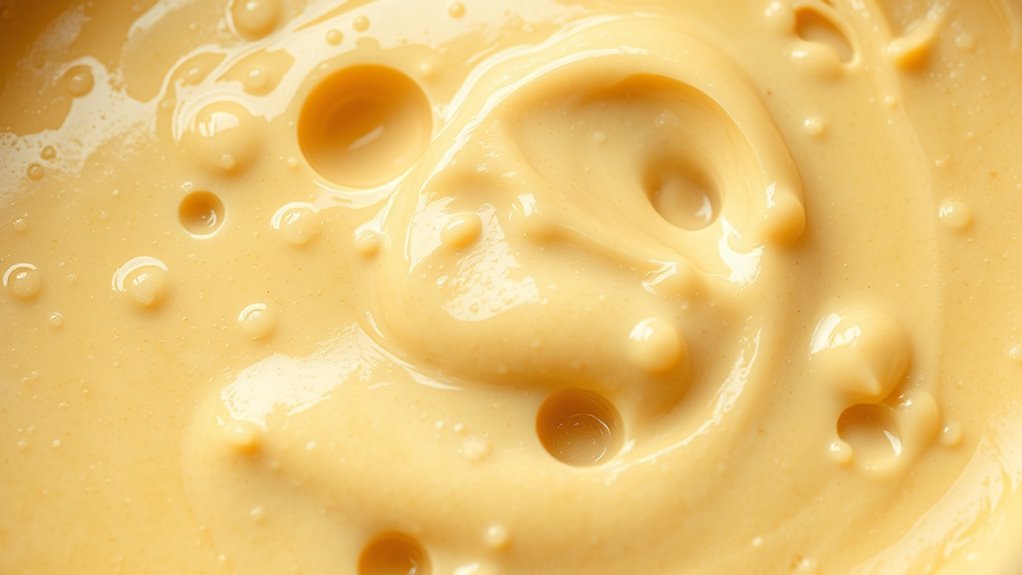
When you notice large holes and an abundance of bubbles in your batter, it’s a clear sign that you’ve overmixed. Excessive bubbles formation creates uneven textures, and large hole sizes indicate too much air has been incorporated. This happens when you beat the batter too aggressively, trapping air and weakening the gluten network. The result is a batter with visible large holes and inconsistent structure. Here’s a quick overview:
| Bubbles Formation | Hole Size |
|---|---|
| Excessive bubbles appear | Large, irregular holes |
| Too much aeration | Uneven crumb |
| Rapid bubble growth | Weak structure |
| Overmixing accelerates | Disrupts texture |
| Signs of overmixing | Deflates or collapses |
Stay attentive to these signs to avoid overmixing and ensure a perfect bake. Additionally, understanding the baking process can help you better control the batter’s texture and prevent overmixing.
Batter Consistency: From Smooth to Thin or Runny

Batter consistency plays a key role in achieving the perfect baked good. If your batter becomes too thin or runny, it can affect texture and rise. You’ll notice the batter color may lighten, indicating overmixing or too much liquid. To avoid this, keep an eye on mixing speed—slow and gentle mixing helps maintain the right thickness. When your batter is smooth but still thick enough to hold its shape, you’re on the right track. But if it’s overly runny, it might be a sign you’ve added too much liquid or overmixed. Here are some tips to spot the signs:
- Batter looks too watery
- Batter color appears pale
- Mixing speed is too fast
- Lumps are completely gone
- Batter flows easily off the spoon
Be mindful of passive voice detection, as it can help improve clarity and conciseness in your baking instructions. Additionally, understanding batter texture can help you adjust your mixing technique more effectively.
Why Shiny or Glossy Surfaces Indicate Overmixing
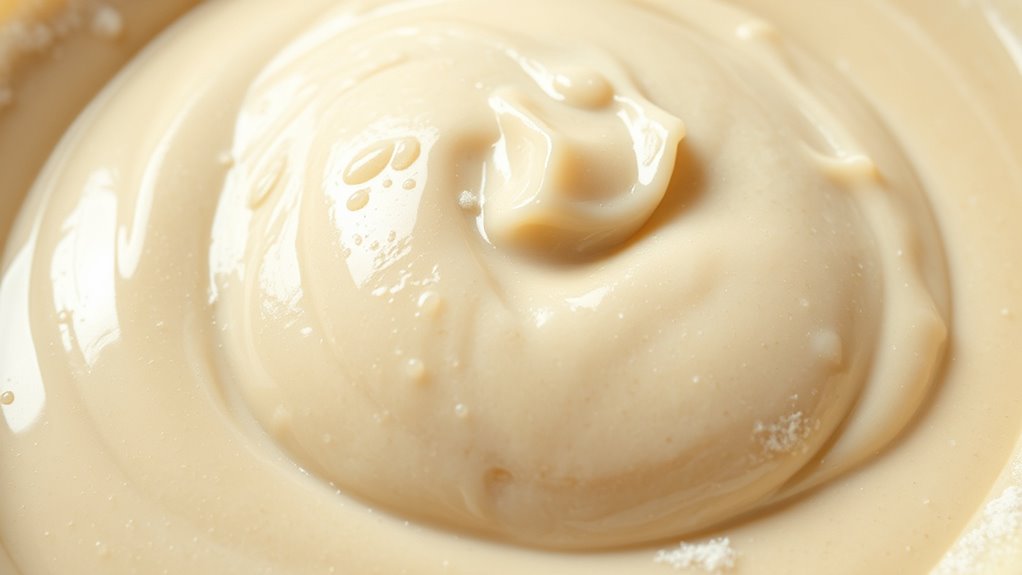
A shiny or glossy surface on your batter often signals that you’ve overmixed it. This glossy sheen results from the excessive development of gluten, which creates a smooth, shiny surface. When you overmix, the batter’s proteins become too active, forming a dense network that reflects light, giving it that shiny surface. Understanding gluten development is key to recognizing the signs of overmixing because it directly impacts the batter’s texture. While a glossy sheen might look appealing, it actually indicates that the batter has been overworked, which can lead to a tougher texture in your final baked goods. Instead of a matte or slightly dull appearance, the shiny surface is a clear sign that your batter has been overmixed beyond the ideal point. Recognizing this overworking and gluten overdevelopment helps you prevent overworking your batter, ensuring a tender, airy result.
How to Use Feel to Detect Overmixed Batter
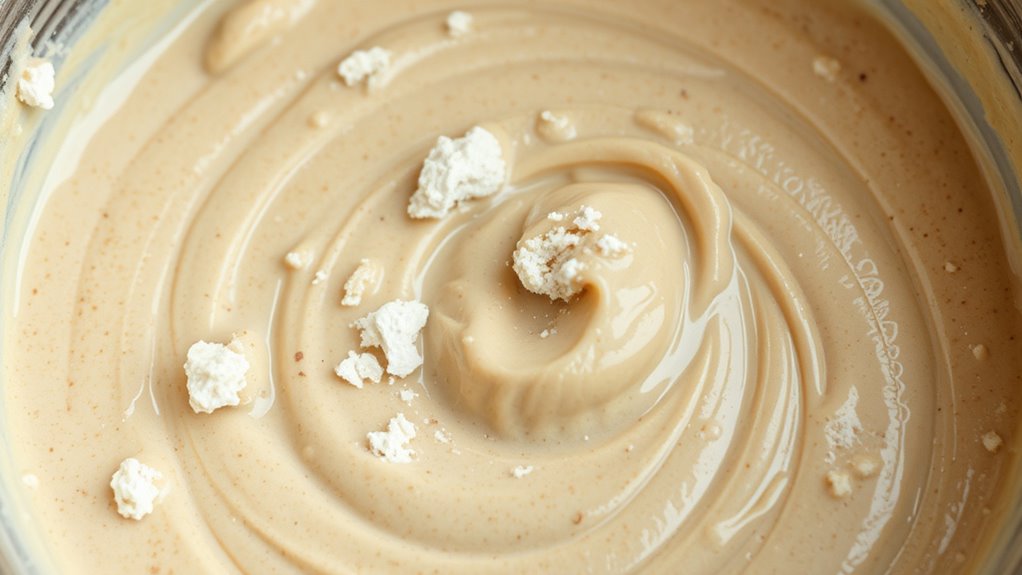
Using your sense of touch is one of the most reliable ways to detect overmixed batter. By feeling the batter’s texture clues, you can tell if it’s been overmixed or just right. Gently lift some batter with your finger or spatula and observe its consistency. If it feels excessively sticky or elastic, it’s likely overmixed. Proper mixing techniques aim for a smooth, slightly thick but soft texture. Here are some tips:
- Batter feels very stretchy or rubbery
- It’s unusually stiff or firm
- It sticks excessively to your fingers or utensil
- It’s no longer smooth but has a tough, dense feel
- It feels overly glossy or shiny, indicating overmixing
- Overmixing can also affect the texture of baked goods, leading to less tender results. Recognizing signs of overmixing early enables you to adjust your mixing technique and prevent compromising the final product’s quality. Developing a good feel for batter texture can help you catch overmixing early and make necessary adjustments. Trust your touch to catch overmixing early and prevent overmixing by stopping mixing as soon as the batter reaches the right consistency. Additionally, understanding the properties of different flours can help you better judge when your batter is mixed properly.
How Overmixing Affects Your Baked Goods’ Texture

When you overmix your batter, you risk ending up with a dense, gummy texture that’s less enjoyable to eat. It also reduces the lightness and airiness that make baked goods tender and fluffy. Additionally, overmixing can lead to a tough, chewy crust that affects the overall quality of your baked treats.
Dense, Gummy Texture
Overmixing your batter can lead to a dense, gummy texture that detracts from the final baked good. When you overmix, gluten formation becomes excessive, creating a tight crumb structure that feels heavy and chewy. This happens because the flour’s proteins develop too much, trapping moisture and air, which results in a gummy mouthfeel. You’ll notice the texture is less tender and more compact, losing the lightness you want. To avoid this, stop mixing as soon as ingredients are just combined. Keep an eye out for these signs:
- Excessive elasticity in the batter
- Gummy or rubbery feel when touched
- Crumb that’s overly tight or heavy
- Lack of rise or volume
- Uneven texture throughout the baked item
Additionally, overmixing can cause the gluten to become too developed, impacting the final texture. Proper mixing techniques help prevent overdevelopment of gluten and maintain a tender crumb. Being mindful of mixing times and techniques can also help preserve the delicate structure of your baked goods. Incorporating gentle folding techniques can also minimize overmixing and support a lighter, more tender crumb.
Reduced Lightness and Airiness
Overmixing batter not only creates a dense, gummy texture but also diminishes the baked goods’ overall lightness and airiness. When you overmix, gluten formation becomes excessive, tightening the dough and reducing its ability to trap air. This hampers air retention, leading to a flatter, less buoyant crumb. To understand this better:
| Mixing Level | Gluten Formation | Air Retention | Result |
|---|---|---|---|
| Under-mixed | Minimal | Poor | Dense, crumbly |
| Perfect mix | Balanced | Good | Light, tender |
| Overmixed | Excessive | Reduced | Dense, heavy |
Tough, Chewy Crust
As you continue to mix your batter excessively, you may notice the crust developing a tough, chewy texture instead of a tender, delicate one. Overmixing increases crust firmness, making it less flaky and more resistant to bite. You’ll find the chewiness level rises, resulting in a crust that feels dense and rubbery. This happens because the gluten structure becomes overly developed, toughening the outer layer. You might observe:
- An overly dense, thick crust
- Reduced crispness and flakiness
- A rubbery, stubborn bite
- Difficulty cutting through the baked good
- A general sense of heaviness on the outside
These signs indicate that your batter was overmixed, leading to a crust that’s far from tender. To avoid this, mix just until ingredients are combined.
What Smell Tells You About Overmixed Batter
When batter is overmixed, it often develops a distinct, sour smell that signals trouble. This batter aroma is a key smell indicator that your mixture has gone too far. If you notice a sharp, tangy scent, it’s a sign that gluten has been overworked, and the batter’s texture may suffer. The sour smell indicates fermentation or the breakdown of ingredients, which can lead to a dense or tough final product. Trust your nose; it’s a quick and reliable way to assess mixing. If the smell is off or unpleasant, it’s best to start fresh or adjust your mixing technique. Recognizing these smell indicators early helps you avoid overmixing and ensures your baked goods stay light, tender, and perfect.
Tips to Prevent Overmixing and Keep Your Batter Perfect
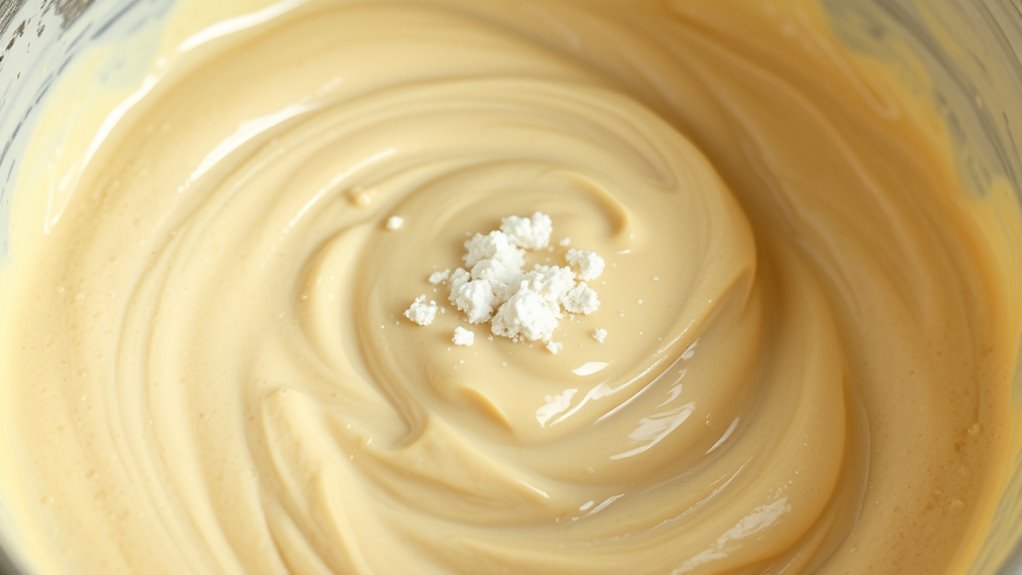
To prevent overmixing and keep your batter perfect, pay close attention to your mixing technique and stop as soon as the ingredients are just combined. Using a gentle mixing speed helps avoid developing gluten too early, which can lead to a tough texture. Be mindful of ingredient ratios; adding ingredients gradually ensures even distribution without overworking the batter. Avoid vigorous stirring once the wet and dry ingredients are incorporated. Instead, fold gently until just combined. Keep an eye on your mixing speed, and don’t rush the process. Overmixing often happens when you’re enthusiastic to finish, but patience results in a tender, light batter. Remember, less is more—stop mixing as soon as the ingredients are combined to prevent overworking the batter.
Frequently Asked Questions
Can Overmixed Batter Be Salvaged Before Baking?
Yes, you can salvage overmixed batter before baking. First, gently fold in a small amount of extra flour or liquid to adjust the batter consistency. Use light mixing techniques to avoid further overmixing. Be careful not to overdo it, as this can still develop gluten and affect texture. Quick adjustments like these can help restore the batter’s ideal state, improving your chances of baking a tender, fluffy final product.
Does Overmixing Affect the Flavor of Baked Goods?
Overmixing can totally wreck your baked goods, causing a flavor alteration and a drastic texture change. When you overmix, you activate gluten, making everything dense, chewy, and less flavorful—like eating a sponge! So yes, it definitely affects flavor because it changes how ingredients blend. To keep your treats light and tasty, mix just enough to combine ingredients. Trust me, a little patience goes a long way!
How Does Overmixing Impact Rising and Leavening?
Overmixing your batter disrupts leavening by damaging gluten development, which hampers the batter’s ability to trap air. This results in less rise and a denser texture. As you mix too much, the batter becomes tough, preventing proper expansion during baking. To guarantee good rising, mix just until ingredients are combined, avoiding excessive stirring that causes gluten overdevelopment and leavening disruption.
Are Specific Ingredients More Prone to Overmixing Issues?
Did you know that flour is especially ingredient sensitive to overmixing? You’re more prone to overmixing with ingredients like flour and eggs because their proteins can develop too much gluten or coagulate, affecting texture. To avoid issues, use gentle mixing techniques and pay close attention to ingredient sensitivity. This guarantees your batter remains fluffy and light, preventing dense or tough baked goods.
Can Overmixing Cause Gluten Development in Gluten-Free Recipes?
Overmixing in gluten-free recipes can cause gluten formation, which isn’t ideal since these recipes rely on different binding agents. While you won’t get traditional gluten development, overmixing can still increase dough elasticity, making your batter tough and difficult to work with. To prevent this, mix just until ingredients are combined, avoiding excessive stirring that can alter the desired texture and consistency of your gluten-free baked goods.
Conclusion
By paying close attention to the texture signs and trusting your senses, you can avoid overmixing and achieve perfect baked goods every time. Remember, a batter’s consistency and appearance tell you more than you think. Are you willing to sacrifice fluffiness and tenderness just to beat the mixing clock? With practice, you’ll master the art of mixing just right, ensuring delicious results that impress with their texture and flavor.