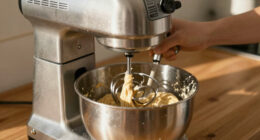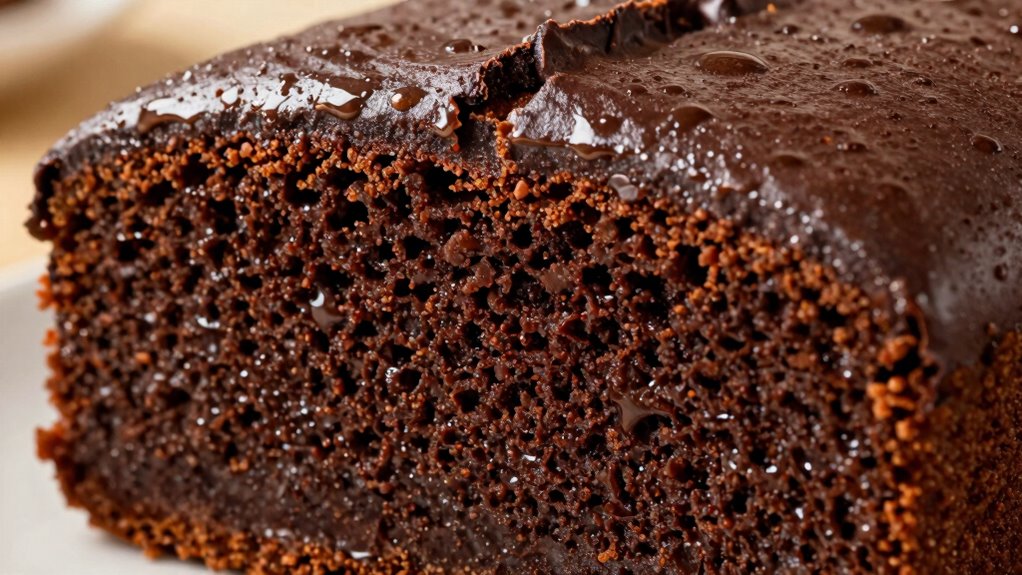

Oil-based cakes stay moist longer because oil acts as a natural moisture barrier that keeps the crumb tender and fresh. Unlike butter, oil remains liquid at room temperature, distributing evenly throughout the batter and helping retain moisture over time. Proper mixing, baking at the right temperature, and covering the cake also boost moisture retention. If you want to discover more tips on creating irresistibly moist cakes that last, keep exploring the key techniques involved.
Key Takeaways
- Oil remains liquid at room temperature, providing continuous moisture and preventing the cake from drying out.
- Even fat distribution through emulsification creates a tender, moist crumb that lasts longer.
- Oil’s ability to retain moisture helps cakes stay soft and fresh over extended periods.
- Using oil instead of butter reduces rapid solidification, maintaining moistness during storage.
- Proper baking techniques and covering during cooling lock in moisture, enhancing longevity.
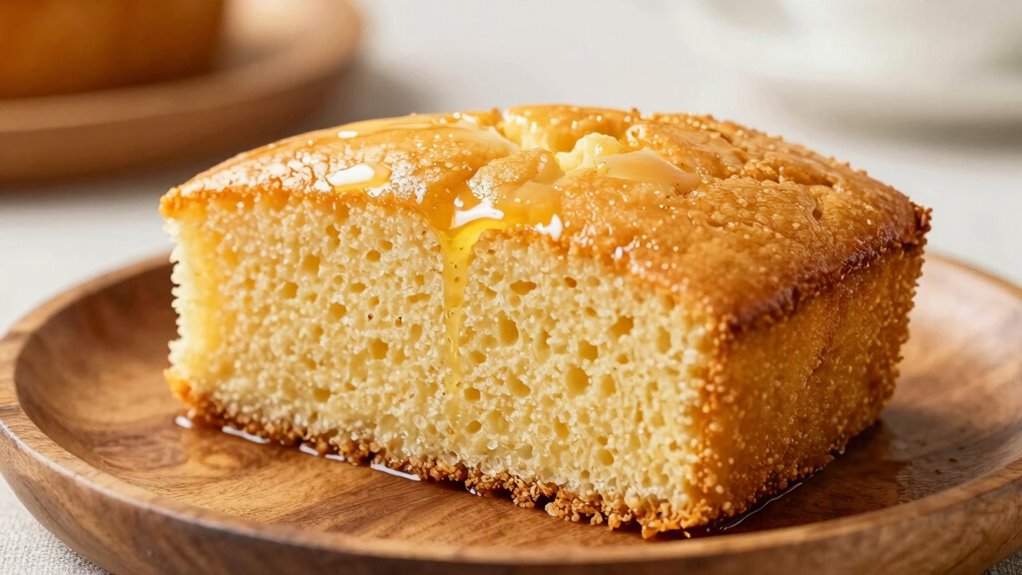
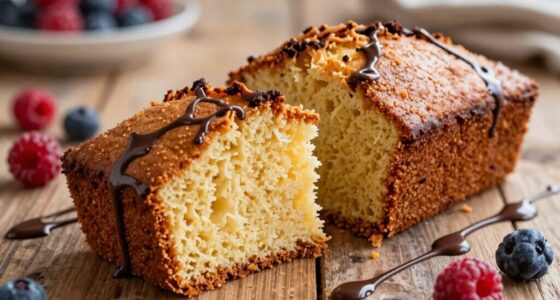
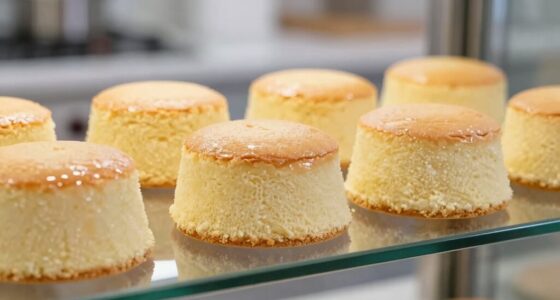
Have you ever wondered what makes oil-based cakes so moist and flavorful? The secret lies in the way oil interacts with the other ingredients, creating a cake texture that stays tender and moist longer than traditional butter-based cakes. Unlike butter, which solidifies at room temperature, oil remains liquid, helping to keep the crumb soft and moist over time. This continuous moisture retention is why oil-based cakes often stay fresh and appealing even days after baking. When you bake a cake with oil, you’re leveraging a simple yet effective way to enhance its longevity and flavor profile. Additionally, the emulsification process created by oil helps distribute fats evenly throughout the batter, contributing to a more uniform crumb and improved moistness. Your choice of baking techniques plays a crucial role in maximizing these benefits. For example, mixing the batter just enough to incorporate all ingredients ensures a uniform cake texture without overdeveloping the gluten, which can lead to a dense crumb. Using the correct method—such as combining wet and dry ingredients separately before folding—helps maintain a light, airy structure that complements the moistness provided by the oil. Additionally, incorporating ingredients like yogurt or sour cream can boost moisture and contribute to a tender crumb, further improving the cake’s overall texture. When you prepare an oil-based cake, pay attention to how you measure and add the oil. Using the right amount ensures the cake isn’t greasy but retains enough fat to keep it moist. Too little oil, and the cake might turn out dry; too much, and it could become overly dense or greasy. Baking at the correct temperature is also vital. A slightly lower oven temperature allows the cake to bake evenly, preventing the outer layers from drying out before the center is fully cooked. This careful control over baking techniques helps preserve the moist, delicate cake texture you’re aiming for. Another tip is to avoid overbaking. Once a toothpick inserted into the center comes out with a few moist crumbs, it’s ready. Overbaking will dry out the cake and diminish the benefits of using oil as a fat. Once baked, letting the cake cool in the pan for a few minutes before transferring it to a wire rack helps lock in moisture. Covering the cake with a cloth or storing it in an airtight container also prevents it from drying out prematurely. In essence, the magic of oil-based cakes lies in their ingredient choices and baking techniques. By understanding how oil influences cake texture and applying precise methods, you can create desserts that stay moist and flavorful longer, delighting anyone who takes a bite. It’s a simple yet powerful way to elevate your baking game and enjoy cakes that remain tender and delicious for days.
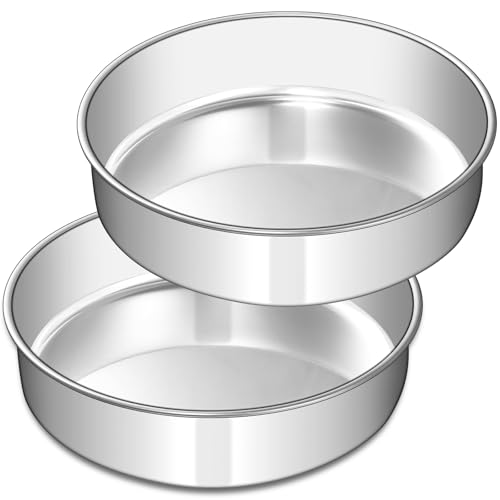
EWFEN 8 Inch Cake Pan Set of 2, Stainless Steel Round Layer Cake Baking Pans Tins, Non-Toxic & Healthy, Leak-proof & Easy Clean & Dishwasher Safe
SAFE & HEALTHY: EWFEN round cake pans are made of pure stainless steel without toxic materials, No harmful…
As an affiliate, we earn on qualifying purchases.
As an affiliate, we earn on qualifying purchases.
Frequently Asked Questions
How Does Oil Affect the Texture of Cakes Compared to Butter?
You’ll notice that oil makes your cakes softer and moister because it enhances moisture retention and crumb softness. Unlike butter, which can make cakes crumbly or dry when overused, oil stays liquid at room temperature, keeping the cake moist longer. This results in a tender, moist crumb that feels luxurious. So, when you choose oil, you’re ensuring your cake remains moist and soft, even days after baking.
Can Oil-Based Cakes Be Stored at Room Temperature?
You can store oil-based cakes at room temperature safely, thanks to their shelf stability. Their moisture-locking nature prevents rapid spoilage, and they often boast boosted flavor enhancement. Keep your cake covered and in a cool, dry place to preserve freshness. This way, your moist, flavorful masterpiece stays inviting longer, offering luscious bites when you’re ready to indulge.
Are There Specific Oils Better Suited for Baking Cakes?
You should choose cooking oils like canola, vegetable, or light olive oil for baking cakes, as they have neutral flavors and high smoke points. When it comes to oil selection, consider the flavor profile and consistency you want; for instance, coconut oil adds richness, while avocado oil offers health benefits. Using the right oil guarantees your cake stays moist and tastes great, while also enhancing texture and quality.
How Does Oil Influence the Flavor Profile of Cakes?
Your cake’s flavor profile skyrockets with oil, turning each bite into a symphony of richness. Oil enhances flavor by amplifying ingredients’ natural notes, making your cake taste deeper and more complex. It also boosts aroma development, filling your kitchen with irresistible scents. As a result, every slice delivers a lush, buttery experience that’s impossible to forget. Oil truly transforms ordinary cakes into unforgettable, aromatic delights!
Do Oil-Based Cakes Require Different Baking Times?
You might need to adjust your baking time slightly when working with oil-based cakes. Because oil keeps the batter moist, they often bake more evenly at the same temperature, but check for doneness earlier. Use proper mixing techniques to incorporate oil thoroughly, ensuring consistent texture. Keep an eye on your baking temperature, as high heat can cause the cake to brown quickly without setting properly, so monitor closely for perfect results.

Ohuhu Cake Carrier with Lid and Handle, BPA-Free Cake Containers Cake Holder for 10 inch Cake with 2 Handles Cupcake Carrier – Plastic Cover Two Sided Base for Transport Pie Nuts Fruit Perfect Gifts
FOOD-GRADE MATERIAL: We put your health first, and made this cake carrier with food-grade PP material, ensuring you…
As an affiliate, we earn on qualifying purchases.
As an affiliate, we earn on qualifying purchases.
Conclusion
Oil-based cakes stay moist longer, offering a tender, rich bite that lingers on your palate. While traditional butter cakes might boast a fluffier crumb, they often dry out faster. The oil’s moisture-retaining properties create a comforting, lasting freshness, contrasting sharply with the fleeting softness of other cakes. So, next time you crave a dessert that stays indulgently moist, remember: oil-based cakes deliver a resilient, luscious experience—satisfying now, and still delightful tomorrow.

Umite Chef Mixing Bowls with Airtight Lids Set, 8PCS Stainless Steel Khaki Nesting Bowls with Grater Attachments, Kitchen Bowls with Non-Slip Bottoms, Size 5, 4, 3.5, 2, 1.5QT for Mixing & Serving
3GRATER ATTACHMENTS: This bowl set comes with 3 different grater attachments (slicing/grating/shredding) just shred or slice right into…
As an affiliate, we earn on qualifying purchases.
As an affiliate, we earn on qualifying purchases.

2PCS Cooling Racks for Cooking and Baking – 10" x 15"Heavy Duty Stainless Steel Wire Rack for Baking, Grilling, Roasting – Oven & Dishwasher Safe – Fits Jelly Roll Sheet Pan-Silver
QUALITY STAINLESS STEEL CONSTRUCTION: Made from food grade stainless steel instead of metal plating or coating, the grill…
As an affiliate, we earn on qualifying purchases.
As an affiliate, we earn on qualifying purchases.