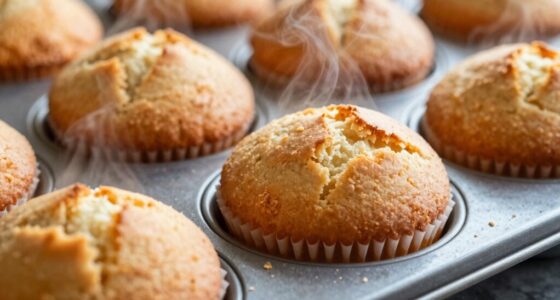
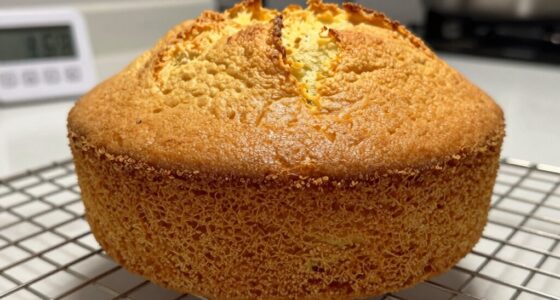
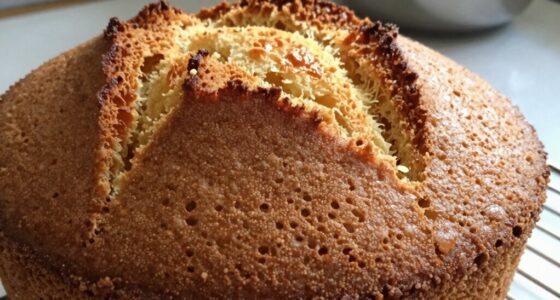
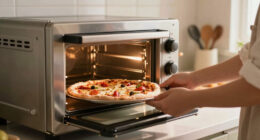
To get flat cupcake tops instead of volcano shapes, start by filling the liners no more than two-thirds full and use a scoop for even distribution. Bake at a consistent temperature between 325°F and 350°F, making sure your oven is preheated and accurate. Avoid overmixing your batter to prevent excess air. Let your cupcakes cool completely before frosting, and use a spatula or cake scraper to smooth the tops. Keep these tips in mind to achieve flat, even cupcakes every time.
Key Takeaways
- Fill cupcake liners no more than two-thirds full to prevent overflowing and peaked tops.
- Bake at a consistent, verified temperature (325°F–350°F) for even rising and flat tops.
- Avoid overmixing batter to minimize excess air that causes domed cupcakes.
- Use an oven thermometer and preheat fully for uniform heat distribution.
- Cool cupcakes completely before frosting and smooth the surface with a spatula for a flat finish.
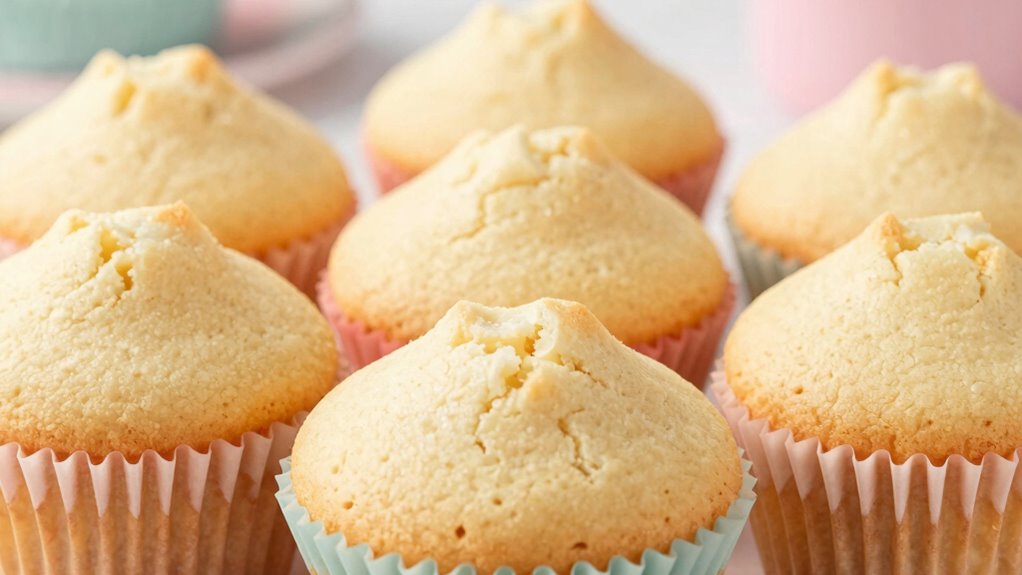
Getting flat cupcake tops can be surprisingly simple when you know the right techniques. The key is to control the factors that influence how your cupcakes rise and spread during baking. One of the most important aspects is understanding frosting techniques, as the way you prepare your cupcakes before applying frosting can make a big difference. If your cupcakes rise too much and form peaks or volcanoes, it’s often because they’re overgrown or unevenly baked. To prevent this, start by ensuring your batter is mixed just enough; overmixing can incorporate too much air, leading to excessive rise. When it’s time to frost, make sure your cupcakes have cooled completely to avoid melting or uneven spreading, which can highlight uneven tops.
Another vital factor that impacts cupcake tops is baking temperature. Baking at the correct temperature ensures your cupcakes rise evenly and don’t develop that peaked, volcano-like appearance. Too high a temperature causes rapid rising, which can result in a domed top, while too low can produce flat, dense cupcakes. For most standard cupcakes, set your oven between 325°F and 350°F (160°C to 175°C). Use an oven thermometer to verify your oven’s actual temperature, as many home ovens run hotter or cooler than indicated. Preheat the oven thoroughly before baking, so the heat is even from the start. Consistent heat helps the batter rise uniformly and then settle flat, avoiding unsightly peaks.
To further promote flat tops, consider your cupcake liners and batter filling. Use the same size liners and fill them no more than two-thirds full. Overfilled cups tend to overflow and create uneven or peaked tops. When filling, use a scoop or piping bag for precision, ensuring each cupcake gets an equal amount of batter. This consistency helps all cupcakes bake evenly and results in flatter, more uniform tops.
Incorporate frosting techniques that emphasize flatness by smoothing the surface after applying a crumb coat. Once the cupcakes are cooled, apply a thin layer of frosting to seal in crumbs, then chill for 15-20 minutes. Afterward, add a final layer and use a spatula or icing scraper to gently smooth the surface. The smoother the top, the less noticeable any minor imperfections. If you want an ultra-flat look, consider using a hot spatula or cake scraper to gently level the frosting, which can also help disguise small unevenness in the cupcake tops.
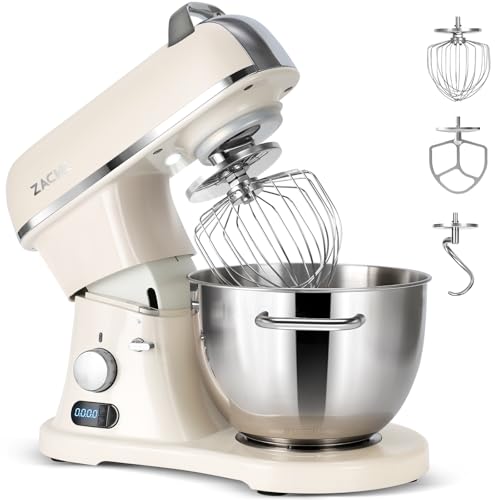
8.4QT Commercial Stand Mixer 800W with Aluminum Die Casting Meets the Standard of NSF/ANSI 8-2023, Mixers Kitchen Electric Stand Mixer with Stainless Steel 8L Bowl, Dough Hook, Whisk and Beater
High Capacity & High Efficiency: The maximum amount of dough is 3 kg/6.6 lbs/105.8 oz. Compared with other...
As an affiliate, we earn on qualifying purchases.
Frequently Asked Questions
Can Overmixing Batter Cause Cupcake Tops to Rise Unevenly?
Yes, overmixing batter can cause cupcake tops to rise unevenly. When you overmix, the mixing technique breaks down the batter’s structure, creating excess gluten that leads to uneven rising. This also affects batter consistency, making it too dense or airy in spots, which results in volcano-shaped cupcakes instead of flat tops. To prevent this, mix just until ingredients are combined and avoid overworking the batter.
Do Different Cupcake Flavors Affect How Tops Rise and Flatten?
Like a painter blending shades, different cupcake flavors can influence how tops rise and flatten. Flavors with varying moisture levels or acidity, such as fruit or chocolate, impact batter consistency and baking behavior. This affects the rise, creating uneven tops or color contrast. To keep tops flat regardless of flavor, maintain consistent ingredient ratios and batter texture, ensuring each cupcake bakes evenly and achieves that smooth, flat finish you desire.
Is It Better to Bake Cupcakes in Convection or Conventional Ovens?
You should use a convection oven for baking cupcakes because its better oven ventilation promotes even heat distribution, helping achieve flat tops. Convection ovens often require shorter baking duration, so keep an eye on your cupcakes to prevent overbaking. Conventional ovens can work too, but they may cause uneven rises. Adjust your baking time accordingly, and always monitor closely to get those perfectly flat cupcake tops.
How Does Altitude Impact Cupcake Top Formation?
Altitude effects profoundly influence cupcake top formation because lower air pressure at high altitudes reduces baking pressure, causing cupcakes to rise too quickly and form volcanoes. To counter this, you should adjust your recipe by decreasing leavening agents and increasing liquids. Baking at higher altitudes requires these modifications to guarantee your cupcake tops stay flat and smooth, preventing them from erupting or collapsing.
What Role Does Ingredient Temperature Play in Cupcake Surface?
When you consider ingredient temperature, it’s the secret to a perfect cupcake surface. If your ingredients are too cold, your batter becomes thick and stiff, leading to uneven rising and volcanoes. But if they’re just right, your batter stays smooth and consistent, promoting even heat distribution. Keep your ingredients at room temperature, and you’ll notice a significant difference in batter consistency—helping you achieve those flat, beautiful cupcake tops every time.

Ooni Halo Pro Spiral Mixer - Dough Stand Mixer with Attachments, 7.3 Quart Capacity and 58 Speed Settings - Charcoal Grey
Better Dough at Home - Make bakery-quality dough at home with groundbreaking spiral mixing technology used in professional...
As an affiliate, we earn on qualifying purchases.
Conclusion
Achieving flat cupcake tops is like taming a wild horse—you just need the right tools and patience. Stick to the tips, like not overfilling and evenly distributing batter, and you’ll soon have cupcakes that look as polished as a mirror. Remember, practice makes perfect, so don’t get discouraged if your first few aren’t flawless. With a little effort, you’ll turn your cupcakes into miniature works of art that are as smooth as glass on top.
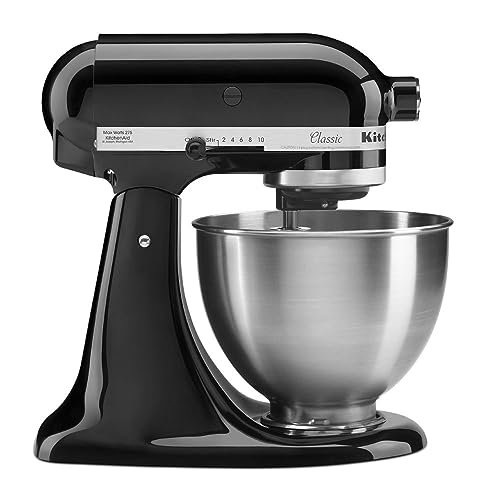
KitchenAid Classic Series 4.5 Quart Tilt-Head Stand Mixer K45SS, Onyx Black
Built to take it all on with the durable and built-to-last metal construction, and 59 touchpoints around the...
As an affiliate, we earn on qualifying purchases.

Dough Mixer 7L Large Capacity Electric Dough Maker with Ferment Function for Baking Bread Dough&Pizza Dough - Dough whisk 304 Stainless Steel Blender Add water/seasoning with Top Small Window
[Style Meets Easy Cleaning]:This dough mixer not only features a sleek and sophisticated design but also offers easy...
As an affiliate, we earn on qualifying purchases.