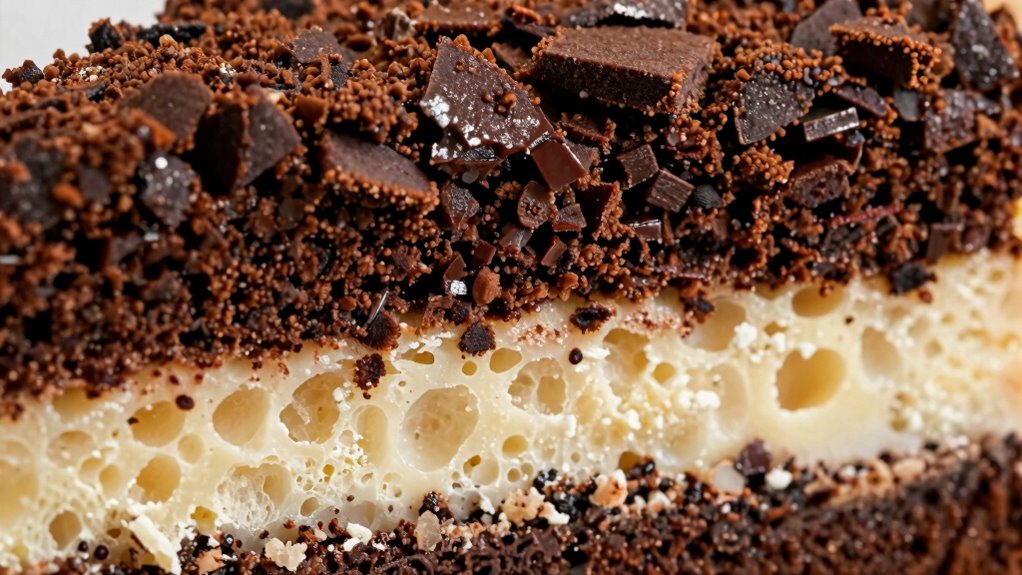

If your cake crumb is darker than expected, it usually means the oven was too hot or it was over-baked, leading to potential flavor burn or uneven coloring. Pale crumbs often indicate under-baking or insufficient heat, resulting in a soggy or dense texture. The shade also reflects ingredient quality, mixing techniques, and baking time. To better understand what your cake’s crumb color reveals about your baking, keep exploring these clues—there’s more to discover.
Key Takeaways
- Darker crumbs often indicate over-baking or high oven temperatures, leading to potential flavor and texture issues.
- Pale crumbs may suggest under-baking or insufficient heat, resulting in a less developed flavor and dense texture.
- Evenly colored crumbs reflect proper baking temperature and technique, ensuring optimal flavor and appearance.
- Ingredient quality, such as fresh eggs and premium flour, influences the crumb’s color and overall cake quality.
- Mixing technique affects crumb color; inconsistent mixing can cause uneven coloring and affect cake appearance.
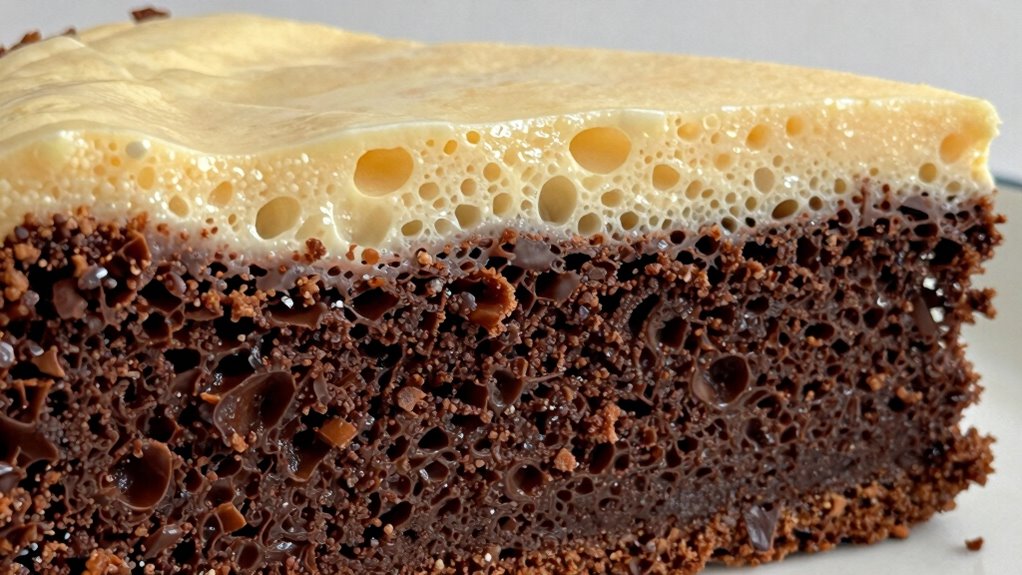
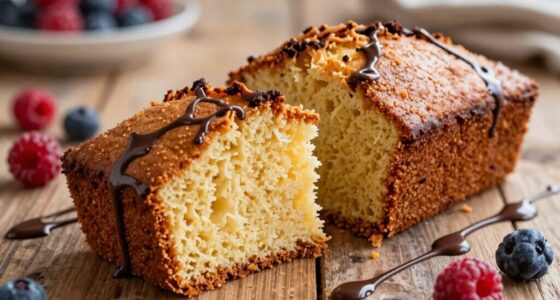
When it comes to baking, the color of cake crumbs might seem like a minor detail, but it actually plays a essential role in both the appearance and texture of your finished dessert. The shade of your crumbs—whether dark or pale—can tell you a lot about the baking process and the ingredients used. Understanding what these differences mean helps you achieve a perfect cake every time. A key factor influencing crumb color is baking temperature. If you bake at too high a temperature, your cake is likely to develop a darker, sometimes even uneven, crust. This can lead to crumbs that are darker than intended, signaling over-baking or an excessively hot oven. Conversely, baking at too low a temperature often results in paler crumbs, which might indicate under-baking or insufficient heat penetration. When your cake’s crumb is too pale, it can be a sign that the baking temperature wasn’t high enough to promote proper Maillard reactions—those browning processes that develop flavor and color. Adjusting your oven temperature ensures your cake bakes evenly and develops the desired crumb color, giving it an appealing look and better flavor. Ingredient quality also plays a critical role in crumb color. High-quality ingredients, such as fresh eggs, premium flour, and real vanilla, contribute to a more consistent and appealing crumb. Using fresh ingredients generally results in a richer, more evenly colored crumb, while lower-quality ingredients might cause uneven browning or a duller appearance. For example, older eggs can affect the cake’s structure, causing it to bake unevenly and potentially resulting in lighter or uneven crumbs. Additionally, the type of flour you select influences crumb texture and color; refined flours tend to produce lighter crumbs, while whole-grain or less processed flours create darker, denser crumbs. Your choice of fats and sweeteners also impacts crumb coloration. Butter, which browns during baking, tends to give a warmer, golden hue to the crumbs, whereas margarine might produce a paler result. Similarly, using real vanilla or natural flavorings enhances the overall coloration and flavor, compared to artificial or synthetic alternatives. Proper mixing techniques can also influence the evenness of crumb color, ensuring a consistent texture throughout your cake.
Frequently Asked Questions
How Does Crumb Color Affect the Cake’s Flavor Profile?
Crumb color influences your cake’s flavor profile by hinting at its ingredients and baking techniques. A darker crumb often means richer, deeper flavors from caramelization or longer baking, while a paler crumb tends to be lighter and more delicate. Your choice of ingredients and baking methods directly impact this, so pay attention to how your techniques and ingredient ratios shape the crumb flavor. This adds depth and character to your cake.
Can Crumb Color Indicate the Cake’s Freshness?
Yes, crumb color can indicate crumb freshness. A darker or duller crumb often suggests the cake has been stored for a while, with potential effects like staling or moisture loss. Conversely, a pale, vibrant crumb usually means it’s fresher. Pay attention to storage effects—proper sealing and refrigeration help maintain crumb freshness and keep the color bright longer, ensuring your cake stays delicious and visually appealing.
What Ingredients Influence the Darkening of Cake Crumbs?
You’ll notice ingredients like food coloring and baking time influence how dark your cake crumbs get. Adding dark food coloring, like cocoa or caramel, naturally deepens the crumb color. Longer baking times also cause the crumbs to darken due to caramelization and Maillard reactions. So, if you want a lighter crumb, stick to less food coloring and keep an eye on your baking time to prevent over-darkening.
Is There a Way to Customize Crumb Color Intentionally?
Yes, you can customize crumb color intentionally using various color modification techniques. To achieve darker crumbs, add ingredients like browned butter, molasses, or cocoa powder, or bake at slightly higher temperatures. For lighter crumbs, use less sugar and avoid over-baking. You can also incorporate natural colorants like beet juice or turmeric for unique hues. Experimenting with these crumb customization methods helps you control the final appearance of your cake.
Does Crumb Color Impact the Cake’s Texture or Moistness?
Like in an old film, crumb color hints at more than looks—darker crumbs often mean richer flavor but can impact crumb moisture and firmness. Lighter crumbs tend to be softer and moister, while darker ones might be firmer and drier. So, yes, crumb color can influence the cake’s texture, affecting how moist or firm it feels. Keep in mind, baking techniques and ingredients also play a vital role.
Conclusion
So, remember, the difference between dark and pale crumb colors isn’t just about looks — it’s about flavor, freshness, and food safety. Darker crumbs often suggest richer, more developed flavors, while paler ones highlight lightness and delicacy. Pay attention to color cues, and you’ll better understand your baked goods. Don’t dismiss the subtle signals — savor, scrutinize, and celebrate your cake’s color clues for perfect pastries every time!