Sharp buttercream edges are crafted long before your final scrape by using the right tools, maintaining consistent pressure, and applying smooth, confident motions. Start with a firm, creamy buttercream that’s easy to work with, and use high-quality spatulas or scrapers to shape and refine as you go. Taking your time and paying attention to detail early on sets the stage for crisp edges later. Keep going, and you’ll discover even more tips to perfect your finish.

Get baking supplies delivered free with Prime
- Fast, free delivery on millions of items
- Prime Video, Amazon Music and more included
- Member-only deals all year
Key Takeaways
- Use firm, but not stiff, buttercream to maintain shape and prevent edges from melting or blurring.
- Apply a thin, even layer of fondant or buttercream as a smooth base to support sharp edges.
- Maintain consistent tool angles and steady pressure during initial smoothing and application.
- Regularly clean and dry tools to avoid imperfections that can affect edge sharpness.
- Practice patience and gentle, confident movements to develop precise, clean edge techniques from the start.
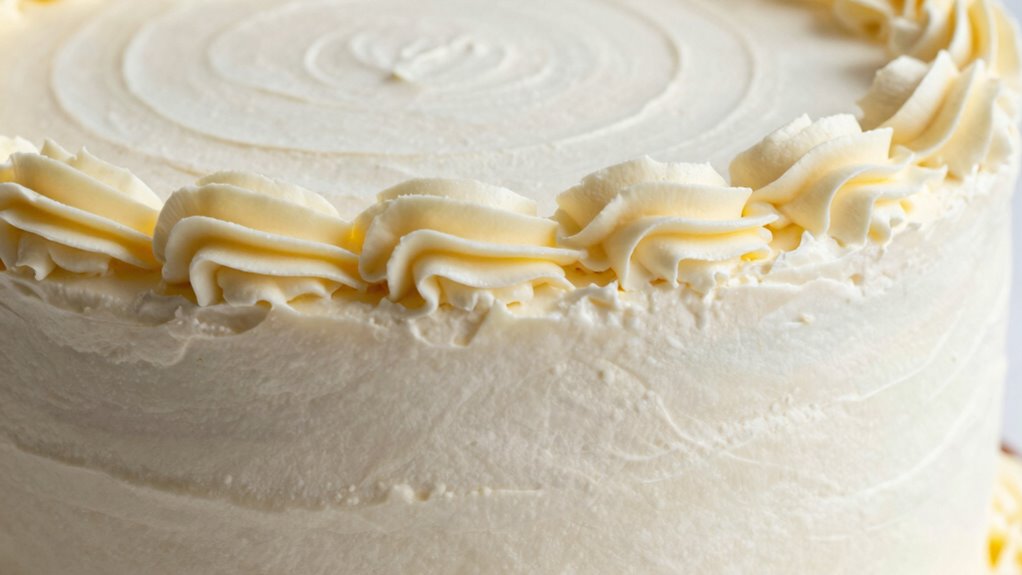
Creating sharp buttercream edges can dramatically enhance the clean, professional look of your cakes. Achieving that crisp, defined finish isn’t just about the final scrape; it starts long before you even reach that step. The foundation lies in your technique, your tools, and your attention to detail throughout the decorating process. One of the most significant aspects is managing your buttercream consistency. If it’s too soft, your edges will melt and blur. If it’s too stiff, you’ll struggle to get a smooth, even surface. Aim for a buttercream that’s creamy but firm enough to hold its shape when applied. Using the right piping techniques is essential here. When you pipe your buttercream, do so with steady, confident movements, keeping your spatula or bench scraper at a consistent angle. This helps create even layers and prevents jagged edges that are hard to fix later.
Achieve sharp, professional cake edges with consistent buttercream, steady piping, and proper tools for a flawless finish.
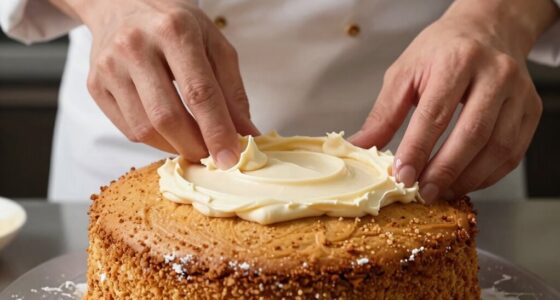
Another key element is the choice of tools. Use a high-quality offset spatula or a bench scraper to smooth the surface after applying the buttercream. When you’re ready to refine your edges, hold the scraper at a slight angle and rotate the cake slowly, maintaining even pressure. This guarantees your edges stay sharp and clean. It’s a process that requires patience and a light touch; rushing can cause the buttercream to smudge or fold over, ruining that crisp look. Proper tool selection can significantly impact the final result, making your process smoother and more precise. Additionally, practicing consistent pressure during application can lead to more uniform edges and a more refined finish. Developing a good technique for smoothing can also help prevent imperfections that might compromise the sharpness of your edges. Ensuring your workspace and tools are clean and dry is equally important to avoid unwanted smudges or uneven textures. Regularly checking your tools for cleanliness helps maintain a smooth surface and prevents any unwanted bumps or imperfections from transferring onto the cake.
Fondant smoothing techniques can also influence your buttercream’s edge sharpness. Even if you’re not covering the cake entirely with fondant, a thin layer can serve as a smooth base, helping you achieve those sharp, defined edges with buttercream on top. When you apply fondant, use a fondant smoother to eliminate air bubbles and create a seamless surface. This foundation makes it easier to work with buttercream, making sure your edges stay neat and precise. Plus, a smooth fondant surface reduces the risk of uneven buttercream application, which can compromise your sharp edges.
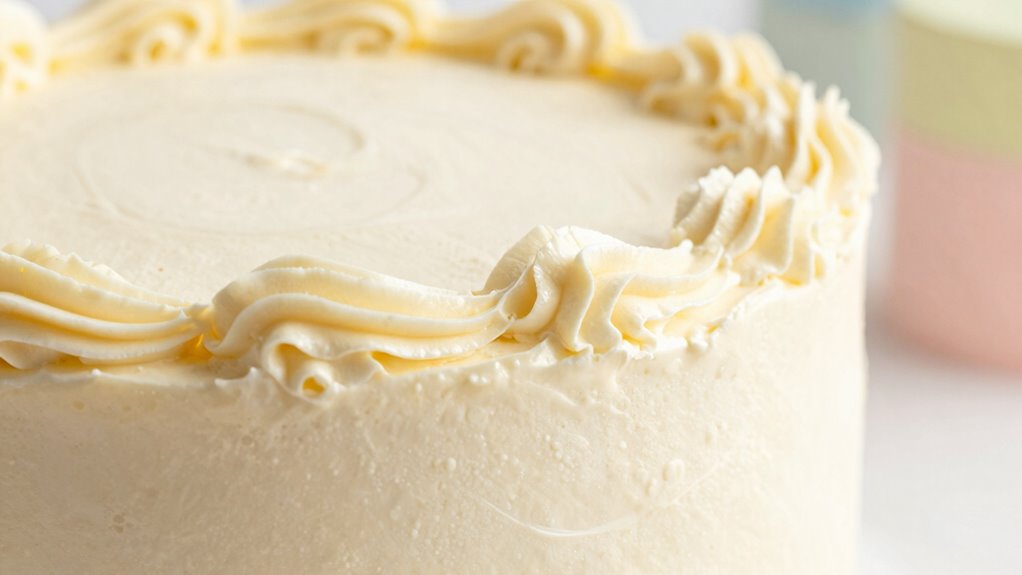
Ultimately, the secret to sharp buttercream edges lies in your prep work and your approach during application. Pay attention to your piping techniques, maintain consistent pressure, and use the right tools to carve and smooth. Incorporating fondant smoothing techniques where appropriate can give you an even better base. When you’re meticulous from start to finish, those clean, sharp edges become a natural part of your cake’s professional appearance. It’s all about patience, practice, and attention to detail—start early, and your cakes will always look polished and impeccable.
Products Worth Considering

Vitamix Propel Series 750 Professional-Grade Blender, 4 Programs, Black
Vitamix Ascent X3 Professional-Grade Blender, 3 Programs, Shadow Black

Vitamix 5200 Professional-Grade Blender, 64 oz. Container, Black
As an affiliate, we earn on qualifying purchases.
Frequently Asked Questions
How Do Humidity Levels Affect Buttercream Edge Sharpness?
Humidity levels can soften buttercream, making it harder to achieve sharp edges and a smooth fondant finish. When humidity is high, your cake’s fondant smoothing may become challenging, and your cake height might seem uneven as the buttercream becomes more pliable. To maintain sharp edges, work in a cool, dry environment, and consider chilling your cake briefly before final smoothing, ensuring clean lines and a polished look.
What Tools Are Best for Achieving Sharp Edges?
You’ll want a sharp offset spatula and a palette knife for crisp edges. Imagine a baker using a metal spatula to carefully smooth buttercream, creating clean lines with precise fondant smoothing and piping techniques. These tools help you carve and shape the buttercream effortlessly, ensuring sharp edges before the final scrape. Their sturdy, narrow blades give you control and accuracy, making your cake look professional and polished.
Can Temperature Variations Impact Buttercream Edge Quality?
Yes, temperature variations impact buttercream edge quality. When it’s too warm, buttercream melts slightly, causing uneven edges and making fondant smoothing difficult. Cold temperatures can make buttercream stiff, hindering cake leveling and resulting in dull edges. Maintaining a consistent, moderate temperature helps you achieve sharp, clean edges. Properly leveled cakes and smooth fondant application depend on these conditions, ensuring your final presentation is crisp and professional.
How Early Should I Start Preparing for Sharp Edges?
Like a master sculptor, you should start preparing for sharp edges early in your decorating process. Focus on achieving the perfect frosting consistency and employing proper decorating techniques from the outset. Allow your buttercream to firm up slightly before applying, and use smooth tools to shape the edges. This preparation guarantees your final finish is crisp and clean, making your cake look polished and professional from the very first layer to the final scrape.
Are There Specific Buttercream Recipes Better for Sharp Edges?
You should choose buttercream recipes with a stable texture for sharp edges, like Swiss meringue or Italian meringue buttercream, which hold shape well. While fondant alternatives can also create crisp edges, opt for recipes that incorporate flavor enhancements like vanilla bean or citrus zest to boost taste. Consistently chilling and smoothing your buttercream helps achieve those sharp, clean edges, regardless of the recipe.
Conclusion
Remember, the magic of those perfectly sharp buttercream edges isn’t just about the final touches—it begins long before your last scrape. With gentle patience and a keen eye, you shape each layer, guiding your cake toward elegance. It’s in those quiet, careful moments that the true artistry unfolds, revealing a finish that captivates. So, embrace the subtle journey, and let your craftsmanship subtly whisper through every crisp, flawless edge.