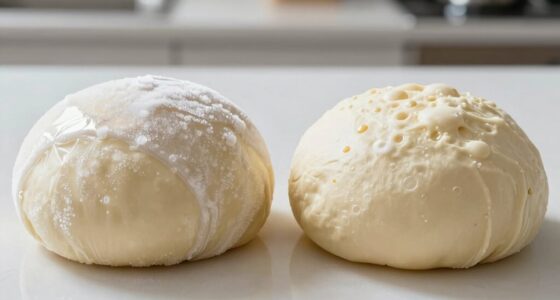
By regularly performing the stretch-and-fold technique, you activate gluten development and improve dough elasticity. When done properly—gently lifting, stretching, and folding the dough at intervals—you’ll notice it becomes more resilient, bubbly, and easier to handle. Watching for signs like bubbles, a domed surface, and a windowpane test shows your dough is ready for the next step. Keeping up this process transforms sluggish dough into lively, well-structured bread—learn more to master the method.
Key Takeaways
- Perform stretch-and-folds when the dough shows bubbles and slight doming, indicating active fermentation and gluten development.
- Use gentle tension during folding to prevent tearing and promote elasticity.
- Space out folds every 20-30 minutes early on, then gradually extend intervals as dough strengthens.
- Check the windowpane test—dough should be thin, translucent, and tear-free—to confirm readiness.
- Recognize signs like increased volume, bubbles, and resilience to ensure your dough responds dramatically.
What Is the Stretch-and-Fold Technique and Why Does It Help Dough?

Have you ever wondered how skilled bakers develop dough with a perfect structure? The stretch-and-fold technique is key to this process. It enhances gluten development, which is essential for creating strong, resilient dough. By repeatedly stretching and folding, you encourage the gluten strands to align and strengthen, leading to better dough elasticity. This method also helps distribute air bubbles evenly throughout the dough, resulting in a lighter, more open crumb. Unlike kneading, which can sometimes overwork the dough, the stretch-and-fold approach is gentle yet effective. It allows the dough to relax and develop gradually, making it easier to handle and shaping. Additionally, understanding the gluten network is crucial for appreciating how this technique improves the dough’s texture and structure, setting the foundation for bakery-quality bread. Proper gluten formation is fundamental to achieving the desired dough strength and extensibility, which in turn affects the final baked product. Developing a dough’s elasticity is vital for bakers aiming for consistent and high-quality results. Recognizing how gluten strands behave during fermentation can further enhance your baking outcomes.
How Often Should You Perform the Stretch-and-Fold?

To achieve ideal gluten development without overworking your dough, it’s important to determine the right frequency for performing the stretch-and-fold. The hydration level influences how often you should do it: higher hydration doughs may require more frequent folds to build structure, while lower hydration doughs need less. Pay attention to the fermentation stage; during bulk fermentation, perform the stretch-and-fold every 30 minutes to an hour early on, then extend the intervals as fermentation progresses. This approach allows gluten to develop gradually without tearing. As fermentation slows, you can reduce the frequency, perhaps doing a fold every few hours. Adjusting based on your dough’s response helps ensure proper gluten formation and a light, airy crumb.
How to Properly Stretch and Fold Your Dough Step by Step

To get the best results, you need to prepare your dough correctly before folding. Make sure it’s hydrated and has rested enough so it’s easy to stretch without tearing. Then, follow the proper folding technique to strengthen the dough and develop its structure effectively.
Prepare Your Dough Properly
Preparing your dough properly is essential for achieving the best results with the stretch-and-fold technique. Start by ensuring your ingredients are fresh and high quality, as this impacts the fermentation process and the dough’s overall structure. Use the right flour for your recipe, and measure ingredients accurately. Before you begin folding, let the dough ferment until it reaches the proper level of elasticity and bubbles appear on the surface—this signals it’s ready. Proper hydration and temperature also play a key role in consistency. Avoid rushing this stage; patience allows the gluten to develop fully. When your dough is properly prepared, it will be easier to handle during the stretch-and-fold process, leading to a more elastic, well-structured loaf.
Execute the Folding Technique
Once your dough is ready, it’s time to begin the stretch-and-fold process. Gently lift one side of the dough, stretching it outward without tearing, to promote gluten development. Fold it back toward the center, then rotate the bowl a quarter turn. Repeat this process on all four sides, each time stretching the dough to enhance its elasticity. Be careful not to over-stretch or tear the dough; the goal is a smooth, resilient surface. As you fold, you’re strengthening the gluten network, which improves the dough’s structure and rise. This technique encourages even fermentation and better dough handling. Incorporating smart automation can help monitor and optimize fermentation times, ensuring consistent results. Consistent, gentle stretching helps your dough become more elastic and easier to work with in later steps. Developing gluten structure through these folds is key to achieving a strong, airy crumb in your final bread. Keep practicing to master this essential step for perfect bread.
What Common Mistakes Should You Avoid When Stretching and Folding?

Even experienced bakers can make mistakes when stretching and folding dough, which can affect the final bread’s texture and structure. One common error is overworking the dough, which can develop too much gluten and make it tough rather than airy. Avoid pulling or stretching the dough too aggressively; this can lead to improper tension, causing uneven layers or tearing. It’s important to handle the dough gently and consistently to maintain its elasticity. Additionally, rushing the process or applying too much force can compromise the dough’s integrity. Always pay attention to the dough’s feel and resistance, stopping when it’s sufficiently stretched. By avoiding these mistakes, your dough will develop better structure, resulting in a lighter, more balanced loaf.
How Can You Tell When Your Dough Is Ready for the Next Stage?

How can you tell when your dough is ready for the next stage? Watch for fermentation signs like bubbling and a slightly domed surface, indicating active yeast. The dough’s dough elasticity also plays a key role—when it feels smooth, supple, and stretches without tearing, it’s ready. You can gently perform the windowpane test: stretch a small piece until thin; if it becomes translucent without ripping, fermentation is complete. Additionally, look for a slight increase in volume and a mild, yeasty aroma. The dough should feel airy and resilient, not stiff or sticky. Trust these cues to know when it’s time to proceed, ensuring your stretch-and-fold process yields a well-developed dough ready for shaping and baking.
Top Tips to Get the Most Out of Your Stretch-and-Fold Practice

To maximize your stretch-and-fold practice, focus on mastering proper technique, including gentle handling and even tension. Keep an eye on timing and frequency to avoid overworking or underdeveloping your dough. Recognize when your dough is ready for the next step by observing its elasticity and surface appearance.
Proper Technique Essentials
Mastering the proper technique is essential for maximizing the benefits of your stretch-and-fold practice. To do this effectively, focus on gentle handling to avoid tearing the dough. Keep your hands moist to prevent sticking and ensure smooth stretches. Use consistent pressure to encourage gluten development without overworking. Pay attention to fermentation control; a well-timed fold helps regulate dough strength and elasticity. If an ingredient substitution is needed, adjust hydration levels accordingly to maintain dough consistency. Remember, the goal is to strengthen the dough gradually without compromising its delicate structure. By following these tips, you’ll improve fermentation, dough strength, and overall bake quality, making each stretch-and-fold session more productive and rewarding. Proper technique is key to unlocking consistent, high-quality results in your baking process.
Timing and Frequency
Timing and frequency are essential for enhancing your stretch-and-fold routine, ensuring the dough develops strength and elasticity without overworking it. Pay close attention to fermentation timing, as this dictates when to perform each fold. Typically, you want to fold when the dough has risen enough to show noticeable bubbles but hasn’t overproofed. Adjust ingredient quantities if you notice sluggish fermentation or overly rapid rises, as this affects how often you should fold. Doing too many folds too early can weaken gluten, while too few can hinder development. Aim for a consistent schedule, such as folding every 20 to 30 minutes during the first hours. Monitoring how your dough responds allows you to tailor the timing and frequency, achieving ideal gluten structure and fermentation balance.
Recognizing Dough Readiness
Knowing when your dough is ready for the stretch-and-fold is key to building strong, elastic gluten. You’ll notice it becomes slightly more aerated and has developed good dough elasticity. Look for fermentation signs like bubbles on the surface or a slight doming. The dough should feel jiggly but resist tearing easily when stretched. It shouldn’t be sticky or overly slack. Timing varies depending on temperature and recipe, so trust these cues over clock hours. To check readiness:
- Observe visible bubbles during fermentation
- Feel for a smooth, elastic texture
- Notice increased volume and slight doming
- Ensure dough isn’t overly sticky or slack
- Test stretchability without tearing
Recognizing these signs helps you determine the perfect moment for your stretch-and-fold, ensuring ideal gluten development.
Frequently Asked Questions
Can I Use the Stretch-And-Fold Technique for All Types of Bread Dough?
You can use the stretch-and-fold technique for most bread doughs, but it’s especially effective for improving dough elasticity and controlling fermentation. This method helps develop gluten structure without overworking the dough, making it ideal for high-hydration or artisan bread. However, for very delicate or enriched doughs, you might need gentler handling. Overall, it’s a versatile technique that enhances dough strength and fermentation management across many bread types.
How Does Hydration Level Affect the Effectiveness of Stretch-And-Fold?
Think of hydration level as the secret sauce for your dough’s elasticity. Higher hydration impacts the effectiveness of stretch-and-fold by making the dough softer and more extensible, allowing you to stretch and fold more easily. Conversely, lower hydration results in firmer dough, which may resist stretching. Adjusting hydration impacts how well your dough responds, so experiment to find the perfect balance that makes your stretch-and-fold technique shine.
Is It Necessary to Perform Stretch-And-Fold if I’M Using a Stand Mixer?
You don’t have to do stretch-and-fold if you’re using a stand mixer, since it handles kneading mechanically. Manual stretching mimics this process and helps develop gluten, but automatic mixers often knead thoroughly enough on their own. If you want to improve dough strength and elasticity, a manual stretch-and-fold can be beneficial, especially with high-hydration doughs, but it’s not strictly necessary if your stand mixer does a good job.
How Long Should I Wait Between Each Stretch-And-Fold Session?
You should wait about 30 to 45 minutes between each stretch-and-fold session. This timing interval allows the dough to rest and develop better texture, making it easier to stretch without tearing. Keep an eye on the dough’s feel—if it becomes smooth and elastic, you’re on the right track. Adjust the intervals slightly based on how your dough responds, ensuring ideal fermentation and gluten development for the best results.
Can Stretch-And-Fold Be Used to Improve Gluten Development in Whole Grain Doughs?
Yes, you can use stretch-and-fold to improve gluten development in whole grain doughs. This technique enhances gluten structure by increasing dough elasticity, making it stronger and more cohesive. Regular stretch-and-folds during bulk fermentation help align gluten strands, resulting in better bread volume and texture. Just be gentle to avoid tearing the delicate gluten network in whole grain doughs, and you’ll notice improved dough strength and elasticity.
Conclusion
Mastering the stretch-and-fold technique transforms your dough from stubborn to supple, revealing bakery-quality results at home. Think of it as gentle persuasion—your dough’s little secret weapon for perfect gluten development. When you embrace this simple step, you’re not just kneading; you’re nurturing a masterpiece in the making. So, keep practicing, stay patient, and watch your dough become your best ally in baking—because greatness is just a stretch away.