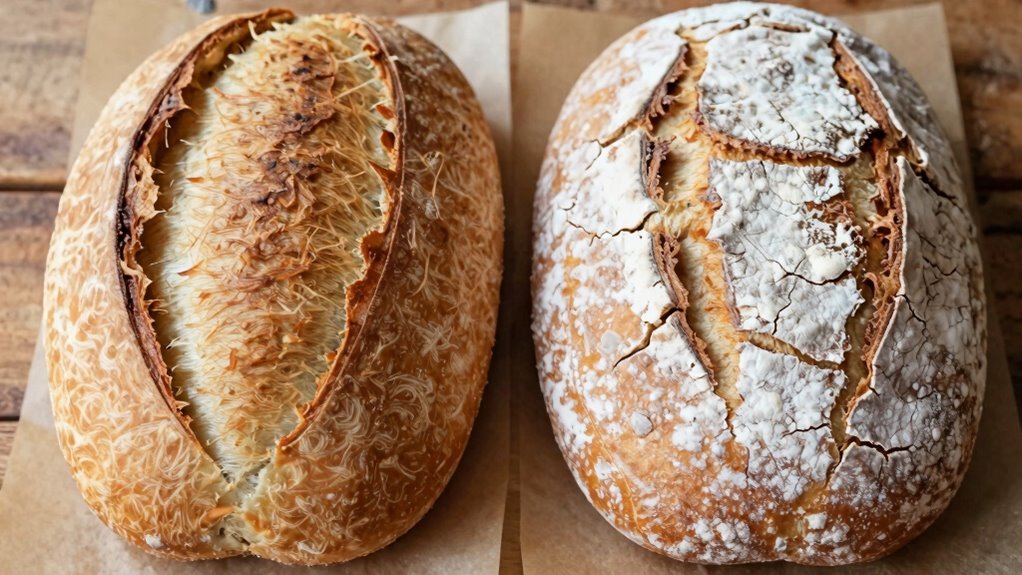
Using parchment paper during baking acts as an insulating barrier, slowing heat transfer and helping your bread expand more evenly for a better oven spring. It also retains moisture, preventing thick crusts and promoting a softer crumb. Without parchment, direct contact with hot surfaces like stones or racks can hinder expansion and create uneven height. To reveal the full potential of your bake, exploring how parchment influences oven spring can really boost your results.
Key Takeaways
- Parchment acts as an insulating barrier, moderating heat transfer and promoting more even oven spring.
- Using parchment reduces direct heat contact, which can slow crust setting and influence dough expansion.
- Baking without parchment on hot surfaces like stones enhances heat conduction, leading to potentially greater oven spring.
- Parchment minimizes sticking, allowing for more controlled dough expansion and uniform oven spring.
- Overall, parchment can slightly limit oven spring compared to bare surfaces but improves consistency and handling.
What Is Oven Spring and Why Does It Matter?

Have you ever wondered why your bread suddenly puffs up in the oven? That’s oven spring, and it’s vital for a perfect loaf. Oven spring happens when gases expand rapidly as the dough heats, causing it to rise quickly. Proper gluten development is essential here because it creates a strong, elastic structure that traps those gases. If your dough isn’t well-developed, it won’t hold the gases well, leading to a flatter loaf. Additionally, oven temperature plays a key role; a hot oven causes the gases to expand swiftly, producing a good oven spring. Achieving ideal oven spring depends on balancing gluten development and oven temperature, which ultimately influences the bread’s texture, rise, and overall quality. Gluten development is crucial because it affects how well the dough can trap gases during baking. Crucial factors like dough fermentation and oven humidity also impact oven spring, contributing to the bread’s final rise and texture. Understanding how dough elasticity affects gas retention can help improve your bread’s rise and overall quality, especially when considering techniques like parchment use for shaping and baking.
How Parchment Paper Changes Heat Transfer During Baking

Parchment paper markedly alters heat transfer during baking by providing a non-stick, insulating layer between the dough and the oven rack or baking surface. This layer impacts heat conduction, slowing the transfer of heat from the oven to your dough. As a result, the heat spreads more evenly, reducing hot spots that can cause uneven baking. Additionally, parchment acts as a moisture barrier, helping retain steam around the dough. This retained moisture influences how heat interacts with the surface, often leading to a softer crust and better oven spring. By moderating heat conduction and controlling moisture loss, parchment paper helps you achieve more consistent results, especially for delicate baked goods that benefit from even heat distribution and moisture retention. Understanding how heat transfer works in baking can further improve your results and optimize oven spring.
How Parchment Affects Your Bread’s Crust and Crumb Development

Using parchment can directly influence your bread’s crust texture, making it crisper or softer depending on how you bake. It also impacts the crumb structure, helping it stay even and well-formed. Plus, parchment retains moisture, keeping your bread fresh longer and enhancing overall development. Additionally, the color temperature adjustments during baking can further affect the crust’s appearance and texture, contributing to your desired bread quality. Incorporating coaching techniques can optimize your baking process, resulting in more consistent and satisfying results. Proper use of water in the oven can also improve oven spring and crust development, leading to a better overall loaf. Understanding how AI in cookware design influences baking tools can also help you select better materials and techniques for consistent results. Using baking surface materials designed with smart technology can further enhance your bread’s oven spring and overall quality.
Crust Texture Impact
When you bake bread on parchment paper, it creates a barrier between the dough and the hot baking surface, which can influence the crust’s texture. This barrier prevents direct contact with high heat, leading to a softer, less blistered crust. If your dough has high hydration, parchment helps manage moisture release, resulting in a more even crust. Additionally, parchment can slightly lower oven temperature impact on the crust, reducing charring or overly thick crusts. Without parchment, the direct heat encourages a crisper, more caramelized crust, especially at higher oven temperatures. Using parchment may slightly soften the crust, but it promotes a more uniform development, balancing the crust’s texture with the overall baking process. Furthermore, the use of parchment can impact the overall heat transfer, influencing how quickly and evenly the crust develops during baking. It can also reduce the risk of sticking, making the baking process cleaner and more manageable. Incorporating parchment can additionally help control moisture, especially in bread with high hydration levels, leading to better crust consistency. Additionally, insulating the dough from direct heat can prevent uneven baking and promote a more consistent crumb structure. A better understanding of thermal insulation can help bakers optimize crust development according to their desired texture.
Crumb Structure Effects
Because parchment acts as a barrier between the dough and the baking surface, it can influence how the crumb develops during baking. When using parchment, the dough’s dough elasticity isn’t directly affected, but the barrier can slightly alter heat transfer, affecting fermentation timing. This may lead to a more even oven spring, resulting in a lighter, more open crumb. Without parchment, direct contact with the hot surface encourages quicker heat transfer, which can cause the crust to set faster and restrict the crumb’s expansion. This can lead to a denser crumb with smaller holes. Your choice impacts how the dough’s elasticity works during baking, ultimately shaping the crumb structure and how airy or compact your final bread turns out. Additionally, understanding heat transfer can help you optimize your baking process for the desired crust and crumb qualities. Using baking surface materials thoughtfully can further influence the final texture and appearance of your bread. Recognizing how thermal conductivity varies among different surfaces can guide you in selecting the best baking setup for your preferred bread characteristics.
Moisture Retention Benefits
Parchment paper plays a significant role in retaining moisture during baking, which directly influences your bread’s crust and crumb development. By trapping steam and slowing moisture loss, it helps maintain ideal conditions for dough fermentation and consistent oven spring. When moisture stays in the dough longer, the crust develops a nicer texture, and the crumb remains tender and well-structured. Additionally, parchment helps regulate oven temperature around the bread, preventing rapid drying or scorching. This moisture retention is especially beneficial during the initial baking phase, where controlled humidity promotes better fermentation of the dough’s interior. Furthermore, halal certification can be a consideration for bakers seeking compliant baking supplies, ensuring that all materials used meet specific dietary standards. Using parchment not only enhances moisture retention but also contributes to uniform baking and a more professional finish. Proper moisture management during baking is essential for achieving the desired bread quality. Incorporating baking techniques that optimize moisture retention can further improve your bread’s overall texture and appearance. Understanding the science of moisture can help bakers better control the baking environment for optimal results. Overall, using parchment enhances moisture retention, ensuring your bread achieves preferable crust coloration, softer crumb, and improved oven spring.
Baking Directly on Racks or Stones: Pros and Cons for Oven Spring
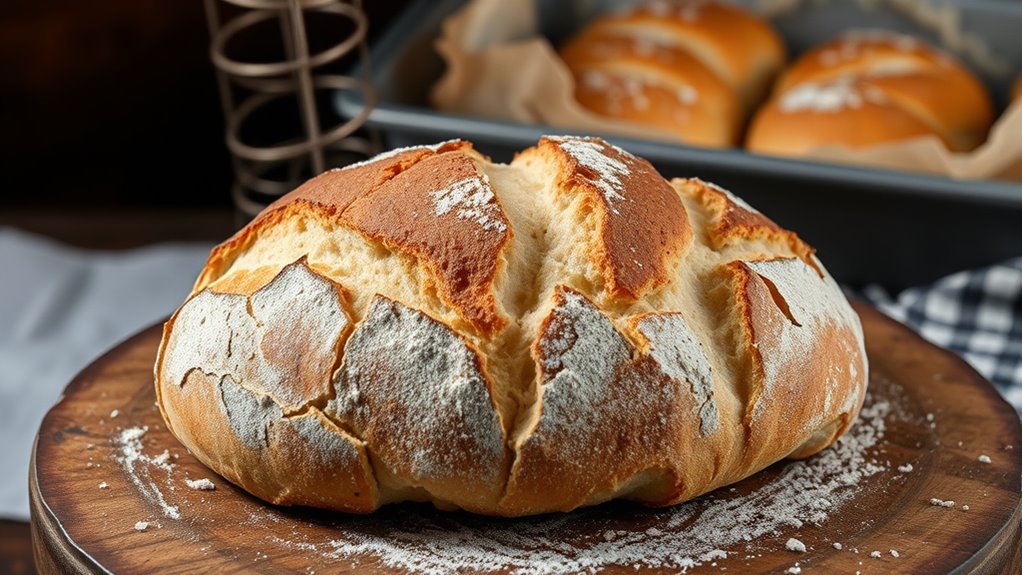
Baking directly on racks or stones can substantially impact your bread’s oven spring, but each method has its advantages and drawbacks. Using a baking surface like a stone provides superior heat conduction, promoting a vigorous oven spring and a crisp crust. It evenly distributes heat, allowing the bread to rise fully. Additionally, natural materials like stones can help create a more free floating baking environment that supports even fermentation and rising. However, stones can be heavy and require preheating, which adds time. Baking directly on racks offers convenience and easier handling, but the lack of a dense heat-conducting surface may result in slightly less oven spring and a less crispy crust. Without the thermal mass of a stone, heat transfer isn’t as efficient, possibly limiting the bread’s rise. Choosing between these surfaces depends on your baking goals and equipment flexibility.
How Heat Retention Differs Between Parchment and Bare Surfaces
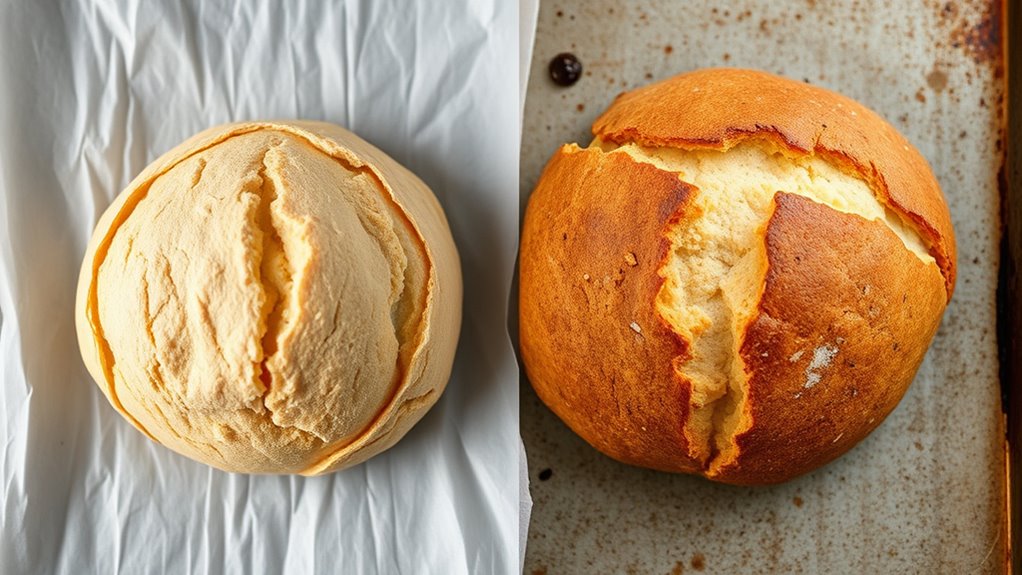
While parchment provides a convenient non-stick surface, it doesn’t retain heat as effectively as bare baking surfaces like stones or metal racks. Parchment’s thermal conductivity is lower, meaning it doesn’t transfer or hold heat as efficiently. When you bake directly on a stone or metal, these surfaces absorb and retain heat better, creating a more consistent oven environment. This improved heat retention helps maintain higher oven temperatures and promotes better oven spring. Conversely, parchment acts as an insulator, reducing heat transfer to the dough’s bottom. As a result, baked goods on parchment may not benefit from the same heat retention qualities, which can affect crust development and rise. Understanding these differences helps you choose the right surface for optimal oven spring and crust texture.
How Parchment Impacts Surface Contact and Dough Expansion
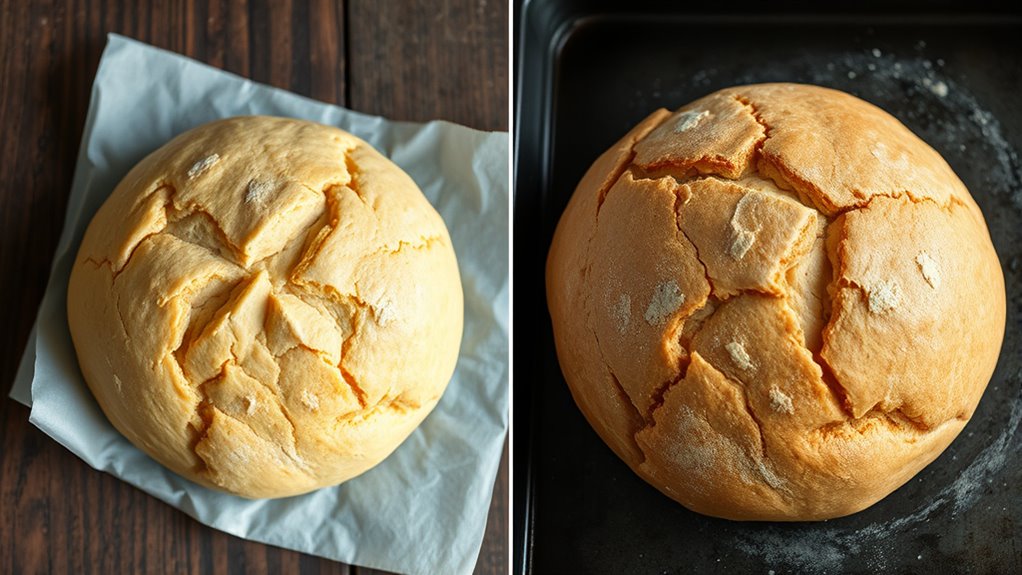
The choice of surface considerably influences how your dough makes contact and expands during baking. When you use parchment, it creates a non-stick barrier that reduces dough adhesion, allowing the dough to glide smoothly and maintain its shape. This surface contact prevents sticking and tearing, enabling even expansion. Without parchment, the dough directly contacts the baking surface, which can increase adhesion and hinder surface contact. This might restrict dough expansion and cause uneven oven spring, especially if the surface is too sticky or uneven. Parchment ensures consistent contact, promoting ideal dough expansion and a better oven spring. By minimizing adhesion, parchment helps your dough expand freely, resulting in a lighter, more evenly risen loaf.
Does Parchment Reduce Resistance or Help Dough Rise More?
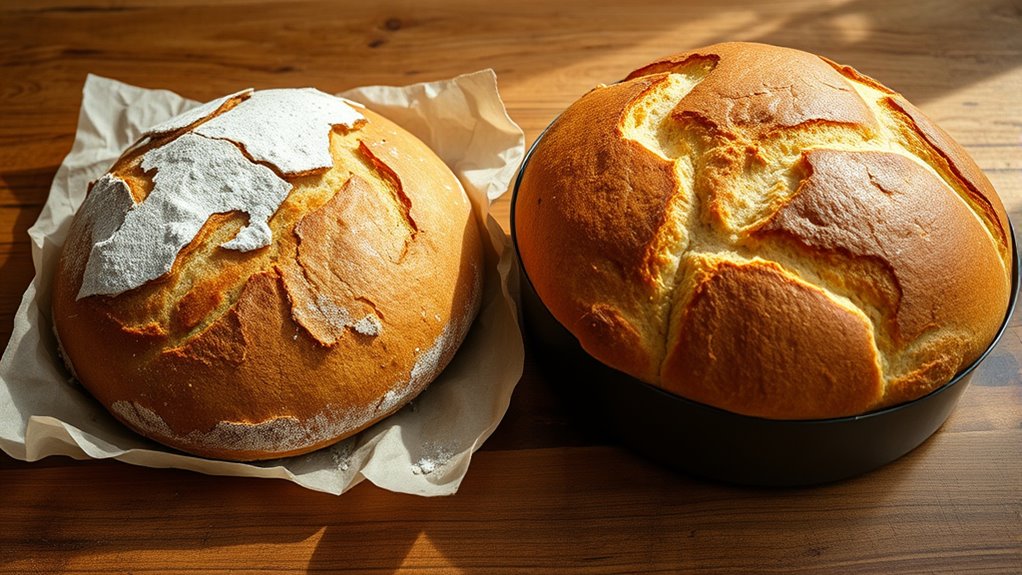
Does parchment actually reduce resistance or does it simply help dough rise more effectively? It mainly influences how your dough behaves during fermentation and baking. Parchment minimizes surface resistance, allowing for better dough elasticity without sticking, which can lead to more consistent oven spring. It also affects fermentation timing by preventing over-expansion at the edges, giving your dough a chance to develop evenly.
- It reduces surface resistance, making it easier for the dough to expand smoothly.
- It preserves dough elasticity by preventing tearing during handling.
- It helps regulate fermentation timing, avoiding premature over-expansion.
Ultimately, parchment doesn’t directly increase rise but creates a more favorable environment for your dough to reach its full oven spring potential.
Tips to Maximize Oven Spring With or Without Parchment
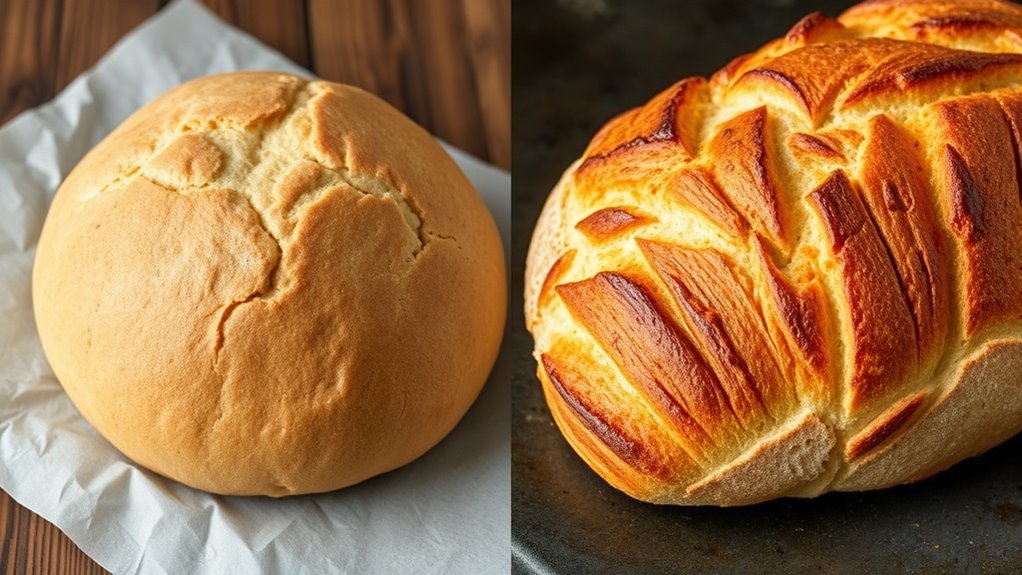
Maximizing oven spring depends on creating the ideal environment for your dough to expand rapidly and evenly. To do this, ensure your dough has good elasticity by kneading it properly, which helps it stretch without tearing. Preheat your oven thoroughly, as a high oven temperature—around 450°F to 500°F—promotes rapid yeast activity and gas expansion, resulting in better oven spring. Use a baking stone or steel if possible, as these retain heat and provide a consistent, intense heat source. Whether baking with or without parchment, avoid opening the oven too early, which can cause temperature drops and deflate your dough. Proper oven environment, combined with well-developed dough elasticity and optimal temperature, will give you the best rise and crust.
Myths About Parchment and Oven Spring Debunked
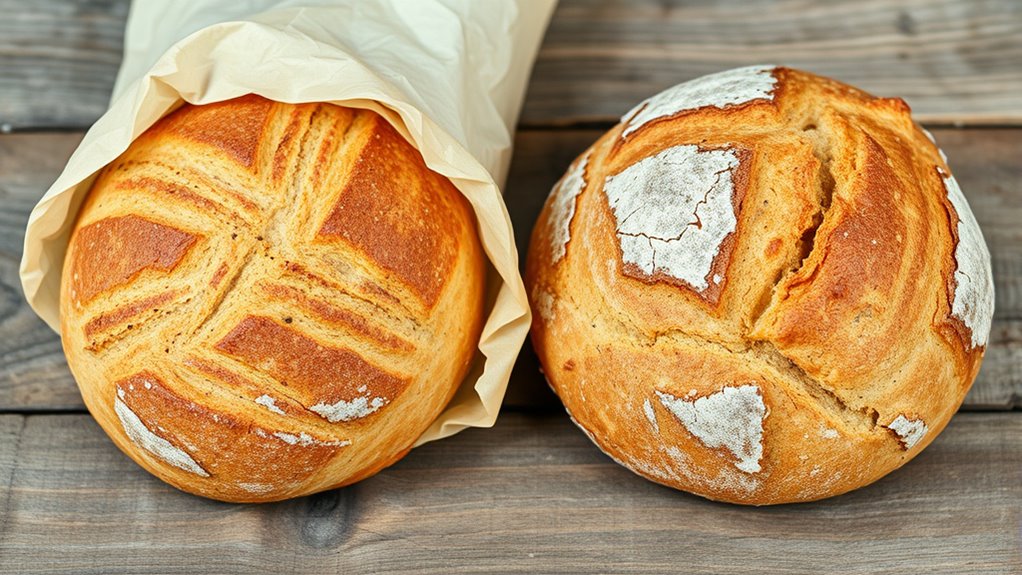
Many bakers believe that using parchment either guarantees a perfect oven spring or hinders it entirely. This is a common baking misconception that needs myth clarification. In reality, parchment’s role is often overstated.
- Parchment doesn’t inherently improve oven spring; it mainly prevents sticking and simplifies handling.
- It doesn’t restrict bread’s rise; oven spring depends more on dough fermentation and scoring.
- Using parchment isn’t a shortcut to better oven spring; proper technique and ingredients matter more.
Understanding these facts helps you avoid baking misconceptions. Parchment is a useful tool, but it’s not a magic solution for oven spring. Instead, focus on dough development and scoring for optimal rise, and see parchment as a helpful accessory rather than a baking game-changer.
How to Experiment and Find the Best Baking Setup for Your Bread
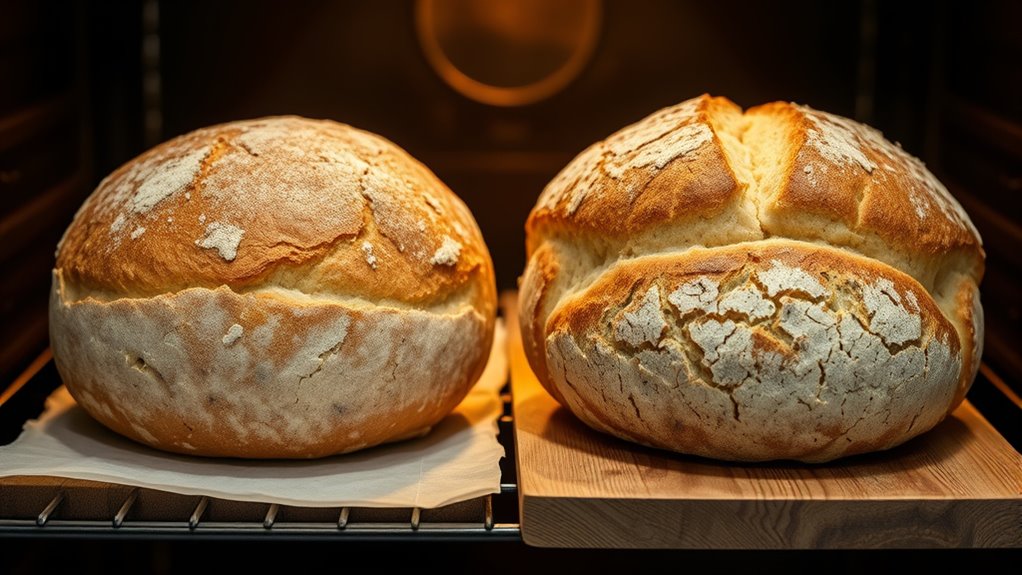
Finding the best baking setup for your bread involves a process of trial and error, as every oven and dough behaves differently. Start by experimenting with alternative materials like Dutch ovens, cast iron pots, or ceramic baking vessels, which can influence oven spring. Try baking on different vessel types to see how they affect crust and rise. Use a baking stone or steel for direct heat transfer, or parchment-lined pans for easy handling. Adjust preheating times and oven temperatures to optimize results. Keep notes of each setup, noting how your dough responds. Over time, you’ll identify which combination of vessel type and materials yields the best oven spring and crust. Persistence and careful observation are key to discovering your perfect baking environment.
Frequently Asked Questions
Does Using Parchment Paper Affect the Bread’s Overall Flavor?
Using parchment paper doesn’t substantially affect your bread’s flavor, so you won’t notice a taste change. It mainly offers a non-stick surface, preventing sticking and shaping issues. While parchment can slightly influence the crust’s texture, it doesn’t enhance or diminish flavor. Ultimately, your bread’s taste remains consistent whether you use parchment or not, so focus on your ingredients and baking technique for the best flavor impact and taste enhancement.
Can Parchment Paper Be Reused for Multiple Baking Sessions?
Yes, you can reuse parchment paper for multiple baking sessions if it’s still in good condition. Carefully remove it, wipe off any residues, and store it flat for future use. Reusing parchment reduces waste, which benefits the environment by lowering paper consumption. Just make certain it’s not torn or overly stained to prevent sticking or burning. Reusing parchment paper helps you bake sustainably while maintaining good results.
How Does Parchment Influence the Baking Time of Bread?
Using parchment can slightly influence your baking time by improving oven efficiency. It helps distribute heat more evenly, which may reduce the baking time needed for your bread. You might notice your loaf bakes more uniformly and quickly. Keep an eye on your bread’s crust and internal temperature to avoid overbaking, as parchment optimizes heat transfer, potentially shortening your overall baking time without sacrificing quality.
Is Parchment Suitable for High-Temperature Baking Above 450°F?
You shouldn’t use parchment for high-temperature baking above 450°F, as it may pose safety concerns. Parchment is designed for moderate heat, and at higher temps, it can char or ignite. To guarantee high temperature safety, consider parchment alternatives like silicone baking mats or well-seasoned cast iron pans. These options withstand intense heat, helping you bake safely without compromising your crust or oven spring.
Does Parchment Paper Impact the Ease of Removing Baked Bread From the Oven?
Using parchment paper makes removing baked bread easier because it provides a non-stick surface, preventing the bread from sticking to the pan. This reduces mess and hassle, especially when you’re trying to transfer delicate loaves. With parchment, you can lift the bread out smoothly, preserving its shape and crust. It’s a simple trick that makes cleanup easier and guarantees your bread comes out cleanly every time.
Conclusion
So, whether you swear by parchment or prefer the bare-baked truth, remember that even the best oven spring can surprise you. Ironically, choosing the right setup might feel like a gamble, but it’s all about experimentation. After all, in baking, the only thing more unpredictable than your dough’s rise is whether you’ll get that perfect crust. Embrace the chaos—you might just discover your secret weapon in the oven.