
Choosing the right levain build ratio depends on your baking schedule and flavor goals. A common starting point is a 1:1:1 ratio of flour, water, and starter, which gives a balanced fermentation. If you want a quicker rise and tangy flavor, use a higher hydration like 1:1:1 with more water. For slower fermentation and milder flavor, opt for a stiffer build with less water. Keep experimenting until you find what works best for you—more details await if you keep exploring.
Key Takeaways
- Start with a 1:1:1 ratio to observe fermentation behavior and activity.
- Adjust hydration levels: higher for faster fermentation, lower for slower, more controlled rise.
- Match build ratio to your baking schedule—quicker fermentation for same-day baking, slower for flavor development.
- Use hydration to influence levain activity, flavor, and gluten structure based on desired outcome.
- Maintain consistency once optimal ratios are identified to ensure reliable, vigorous levain performance.
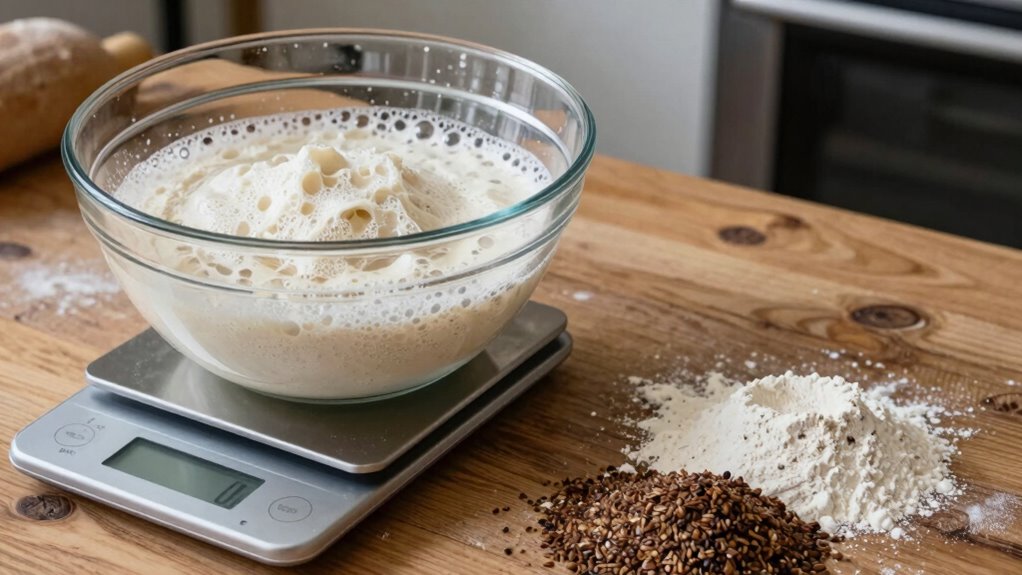
Building a levain is the essential first step in many bread recipes, and getting it right sets the foundation for successful baking. One of the most important factors in building a strong levain is choosing the right build ratio, which directly impacts hydration levels and fermentation timing. Your build ratio determines how much flour and water you feed your starter with, influencing its activity and how quickly it ferments. A common approach is to start with a 1:1:1 ratio of flour, water, and starter, but you can adjust depending on your goals and schedule.
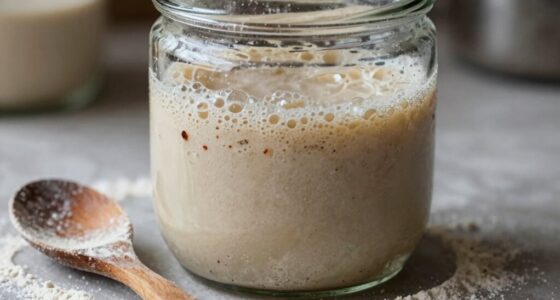
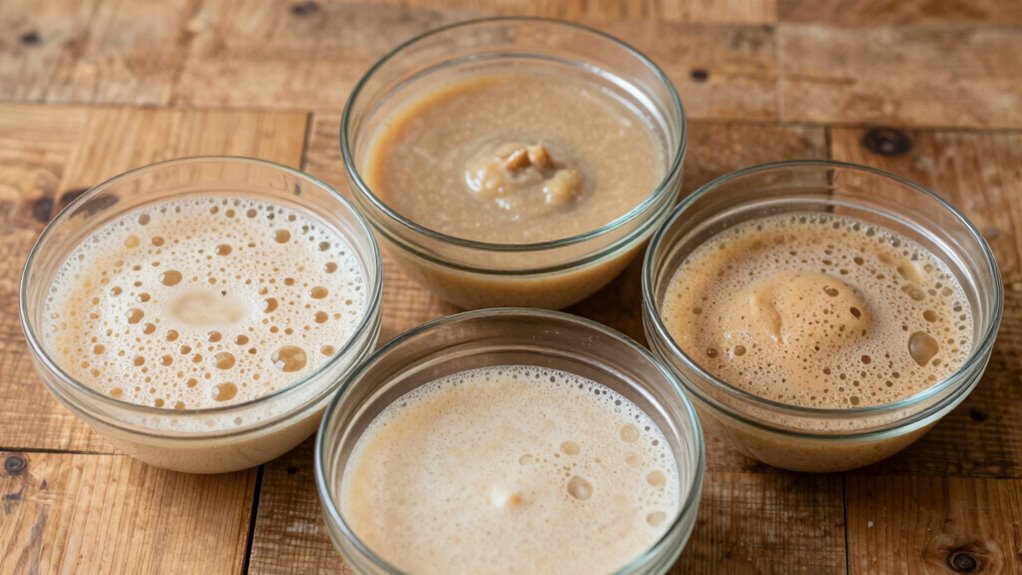
Hydration levels, which refer to the percentage of water relative to flour, play a crucial role in fermentation. A higher hydration levain, say 100% hydration, results in a wetter, more active culture that ferments faster. This is ideal if you want a quick rise and a tangy flavor. Conversely, a lower hydration level, such as 50-60%, produces a stiffer levain that ferments more slowly, giving you more control and a milder flavor. As you decide on your build ratio, keep in mind that higher hydration levains tend to bubble and double in size more rapidly, signaling readiness sooner.
Higher hydration levains ferment faster and bubble more rapidly, signaling readiness sooner.
Fermentation timing is closely linked to your build ratio and hydration. A wetter levain will typically reach peak activity faster—sometimes in just 4 to 6 hours—especially in warm environments. A stiffer levain takes longer to ferment, often around 8 to 12 hours, but this slower process can develop deeper flavors and better gluten structure. Your choice of build ratio should align with your baking schedule. For instance, if you plan to bake the same day, a higher hydration, fast-fermenting levain works well. If you prefer to prepare ahead, a lower hydration build will give you more flexibility and a longer fermentation window.
Ultimately, the key to choosing the right build ratio is experimentation. Start with a standard 1:1:1 ratio and observe how your levain ferments. Adjust hydration levels based on your desired fermentation speed and flavor profile. Keep track of how long it takes for your starter to double in size and become bubbly—these are good indicators of readiness. Remember, consistency is essential; once you find a ratio that works for your environment and schedule, stick with it and refine as needed. This way, you’ll develop a reliable, vigorous levain that forms the perfect foundation for delicious bread every time. Recognizing the importance of energy-efficient cloud servers in supporting sustainable solutions can also inspire innovative practices in your baking routine, such as optimizing temperature control for fermentation.

Sourdough Starter Kit – Complete Beginner Set with Glass Jar, Feeding Tools & Fermentation Accessories
Complete Sourdough Starter Kit for Beginners – Everything You Need to Start and Maintain Natural Yeast at Home
As an affiliate, we earn on qualifying purchases.
As an affiliate, we earn on qualifying purchases.
Frequently Asked Questions
How Does Hydration Level Affect Levain Activity?
Higher hydration levels increase levain activity by making the dough more accessible for yeast and bacteria, which boosts fermentation. This also impacts flavor, often creating a tangier taste due to enhanced fermentation. Conversely, lower hydration slows activity, resulting in a milder flavor. Adjusting hydration helps you control fermentation speed and flavor development, giving you more flexibility in baking. So, the right hydration level directly influences how active your levain becomes and the flavor profile you achieve.
Can I Use Different Flours in My Levain Build?
Imagine your levain as a symphony—adding different flours introduces new instruments that create unique flavor variations. Yes, you can use flour substitution in your levain build, but keep in mind it may influence fermentation and activity. Experimenting with whole wheat, rye, or spelt flour will give you distinct tastes and textures. Just remember, adjustments might be necessary to maintain your levain’s vigor and ensure successful baking.
What’s the Ideal Temperature for Levain Fermentation?
You should aim for a fermentation temperature around 75°F (24°C) to optimize yeast activity. At this temperature, fermentation proceeds steadily, ensuring your levain develops flavor and strength without overproofing. If it gets too warm, yeast activity speeds up, risking over-fermentation; too cold, and it slows down, delaying proofing. Maintaining a consistent temperature helps you control fermentation, resulting in a healthy, active levain ready for baking.
How Long Should I Let My Levain Mature Before Baking?
You should let your levain mature until it’s bubbly and doubles in size, usually about 4 to 6 hours after feeding, but it varies with temperature. Think of it as waiting for the right moment; don’t rush it. Keep your levain stored in a consistent environment and stick to a regular feeding schedule. This guarantees it’s lively and ready for baking when you need it, no matter the clock.
How Do I Adjust Ratios for Different Baking Schedules?
To adjust ratios for different baking schedules, consider your feeding schedules and storage methods. If you bake frequently, keep a more active, higher hydration levain with regular feedings. For infrequent baking, store your levain in the fridge and feed it less often, using a smaller build ratio when you do. This way, you maintain a healthy levain suited to your schedule without overfeeding or neglecting it.
levain hydration container
As an affiliate, we earn on qualifying purchases.
As an affiliate, we earn on qualifying purchases.
Conclusion
Choosing the right levain build ratio can make all the difference in your bread’s flavor and texture. Remember, a common starting point is a 1:1:1 ratio of flour, water, and starter, but feel free to experiment to find what works best for you. Did you know that adjusting hydration levels by just 5% can profoundly impact dough fermentation? Keep experimenting, stay observant, and enjoy the process of crafting perfect sourdough every time.

HOLIDYOYO 3Pcs Fermentation Thermometer Stickers for Brewing Yeast Bread and Yogurt Accurate Stick on Temperature Strips 5.11 Inch
Core Function Monitoring: This fermentation thermometer strip is designed to accurately measure temperature on fermentation jars, brewing bottles,…
As an affiliate, we earn on qualifying purchases.
As an affiliate, we earn on qualifying purchases.

Superbaking 9' Round Banneton Bread Proofing Basket Gift Set– Sourdough Starter Kit for Crusty Artisan Style Loaves, Includes Essential Bread Baking Supplies & Tools – Ideal Gift for Bakers
GIFT OF GOLDEN GOODNESS – Know a bread lover? Gift them with this all-in-one bread making kit. For…
As an affiliate, we earn on qualifying purchases.
As an affiliate, we earn on qualifying purchases.