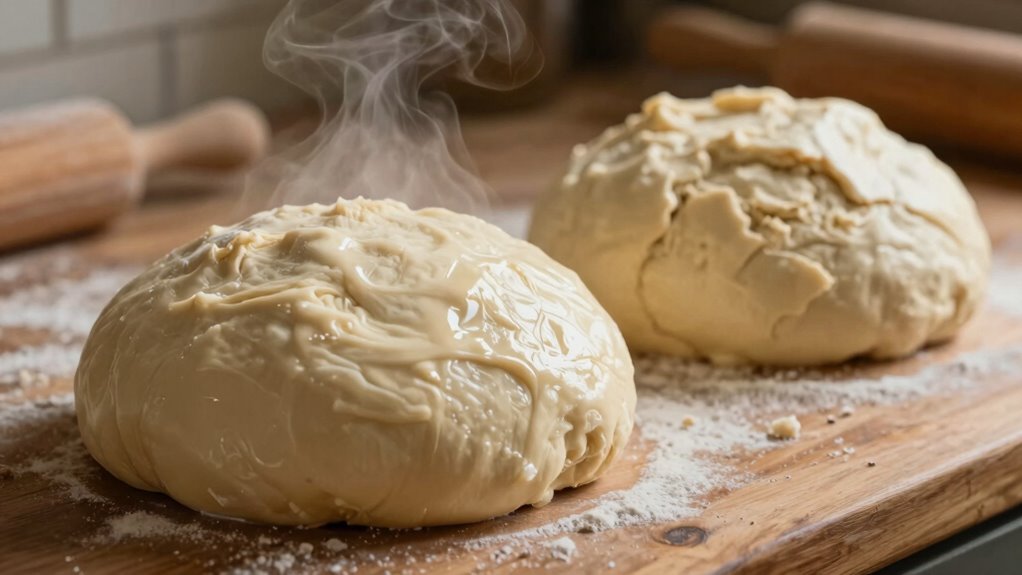

To prevent blowouts and a gummy crust when baking at high heat, manage your dough’s hydration carefully. Too much water makes the dough loose and prone to spreading, while too little causes dryness and cracking. Adjust hydration based on oven temperature and environment, and monitor dough feel and appearance. Maintaining proper moisture levels ensures good gluten development and oven spring. Keep these tips in mind, and you’ll discover how to achieve ideal results in hot baking conditions.
Key Takeaways
- Adjust hydration levels carefully, reducing water slightly in high heat to prevent over-loose dough and blowouts.
- Monitor dough texture regularly during mixing and proofing for signs of over- or under-hydration.
- Use techniques like autolyse and resting periods to improve gluten development and moisture retention.
- Maintain consistent environmental conditions and consider chilling ingredients to control dough elasticity.
- Balance hydration with proper fermentation time to ensure strong gluten structure and prevent gumminess.
How High Heat Affects Dough Hydration
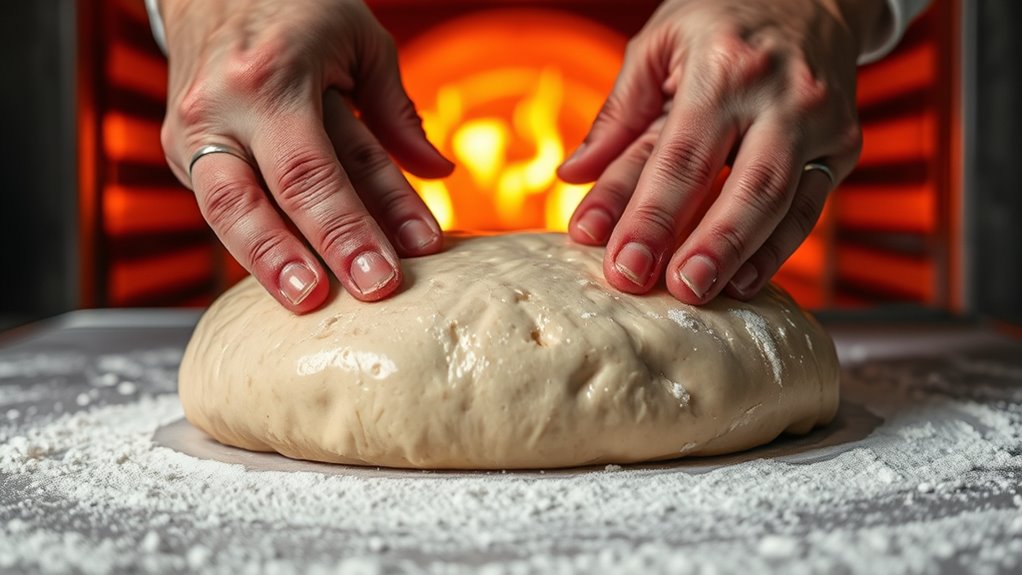
When baking in high heat, the moisture content in your dough can change rapidly, affecting its hydration level. As the temperature rises, moisture evaporates quickly, which can hinder dough elasticity. Less moisture means less flexibility, making it harder for gluten development to reach its full potential. Without proper gluten structure, your dough may become tough or gummier. High heat accelerates dehydration, so you need to monitor hydration carefully. Ensuring your dough has enough water helps maintain elasticity during baking. Proper hydration supports strong gluten networks, which allow your dough to stretch without tearing. If the dough dries out too fast, gluten development stalls, leading to poor rise and texture. Controlling moisture loss is vital for achieving ideal dough elasticity and a desirable final bake.
Why Water Matters for Dough Structure and Texture
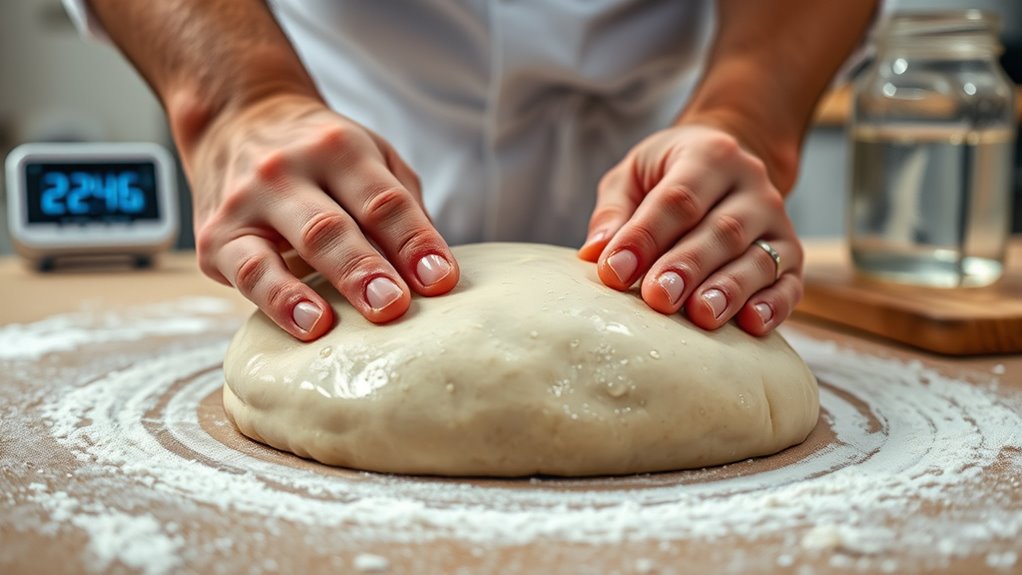
Water is essential for developing the structure and texture of your dough because it activates gluten proteins and dissolves starches, creating a cohesive network. Proper water absorption ensures the dough’s elasticity and strength, which are vital during high heat baking. Without enough water, gluten development stalls, leading to a dense, rubbery texture. Conversely, too much water makes the dough too loose, risking blowouts. To optimize hydration, focus on these key points:
- Achieve consistent water absorption for even gluten formation.
- Monitor dough texture to prevent gumminess or collapse.
- Adjust hydration levels based on flour type and baking conditions.
Understanding how water influences gluten development helps you craft doughs that hold together well and develop the desired crumb structure, even in high heat environments.
How to Spot Over- and Under-Hydrated Dough in Heat
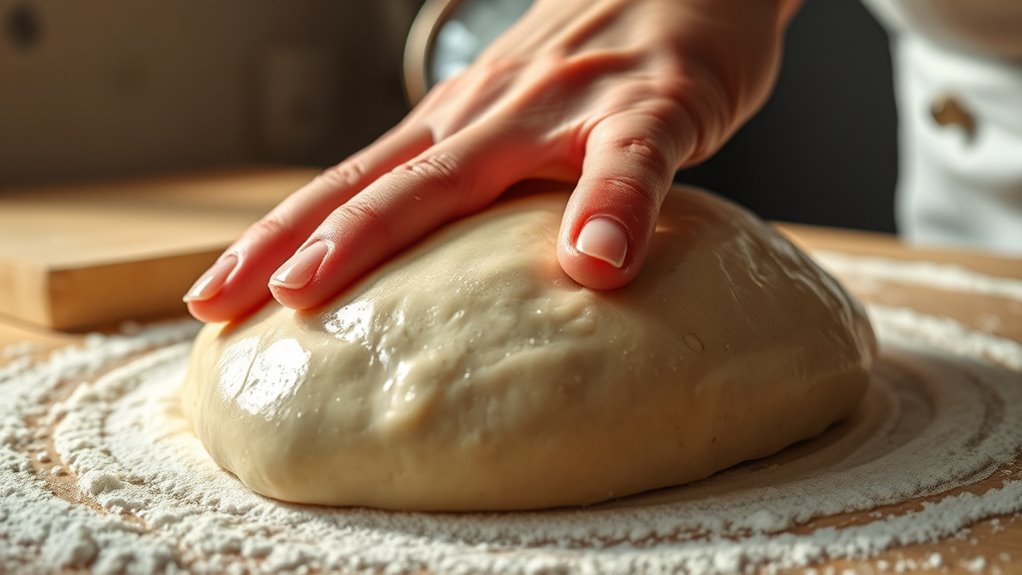
To tell if your dough is over- or under-hydrated in heat, you’ll want to check its visual consistency and how it feels. A dough that’s too wet looks shiny and slack, while one that’s too dry appears crumbly and stiff. Use your touch and texture tests to gauge hydration levels accurately, adjusting as needed. Monitoring dough hydration closely helps prevent issues like blowouts and gumminess during baking. Being aware of ambient climate conditions can also influence hydration, so adjust accordingly for optimal results.
Visual Dough Consistency
In hot conditions, identifying whether your dough is over- or under-hydrated becomes easier by observing its appearance and texture. The dough appearance reveals hydration levels quickly. Over-hydrated dough tends to look shiny, sticky, and loose, often spreading out more than desired. Under-hydrated dough appears dry, stiff, and crumbly, with cracks on the surface. To assess accurately, look for these signs:
- Excessive glossiness or stickiness indicates too much hydration.
- Matte, dry, or cracked surface suggests insufficient hydration.
- An overly loose or overly stiff dough points to improper hydration levels for heat.
Recognizing these visual cues helps you adjust hydration early, preventing blowouts or gumminess during baking. Proper dough appearance ensures consistent, high-quality results in hot conditions.
Feel and Texture Test
When working with dough in hot conditions, feeling its texture is the quickest way to identify hydration issues. Over-hydrated dough often feels slack, very soft, and lacks dough elasticity, making it difficult to shape and prone to blowouts. It may also lead to less flavor development, as excess moisture can dilute fermentation. Under-hydrated dough, on the other hand, feels stiff, firm, and resistant, with poor extensibility. It’s often dry to the touch and doesn’t stretch easily, which can result in a dense crumb. To test, gently pinch and stretch the dough; a well-hydrated dough stretches smoothly and feels moist but resilient. Consistently evaluating texture helps you fine-tune hydration levels, ensuring ideal dough elasticity, better oven spring, and richer flavor in high heat environments. Additionally, understanding filtration and airflow in your environment can help maintain consistent dough hydration during baking.
How High Temperatures Speed Up Dough Fermentation and Hydration
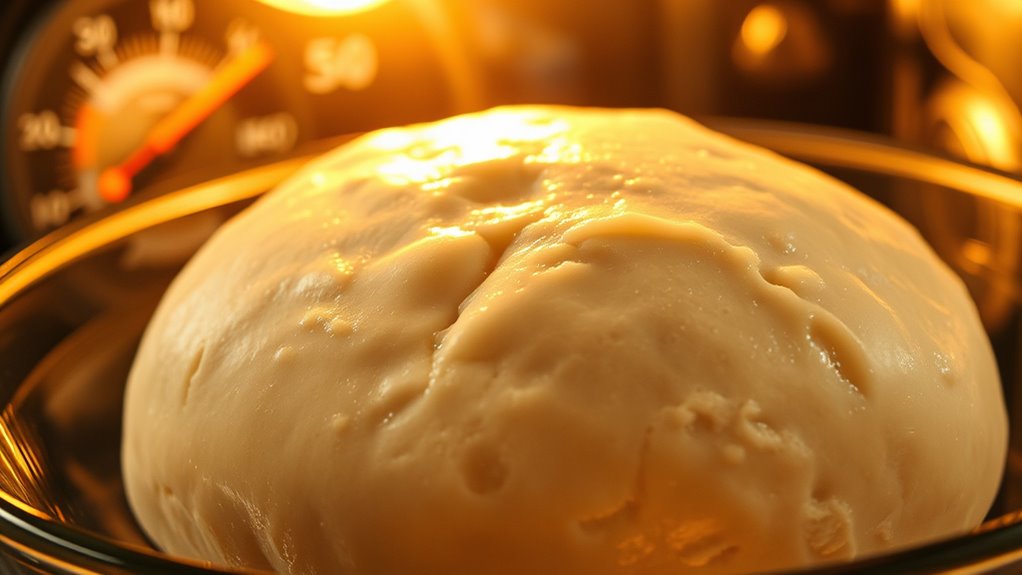
When the heat rises, your dough ferments faster, giving you quicker rise times. Higher temperatures also boost hydration, allowing the flour to absorb water more rapidly. Understanding these effects helps you adjust your process for perfect results in hot conditions. Incorporating Free Floating techniques can help manage dough consistency without relying solely on temperature control.
Accelerated Fermentation Process
High temperatures accelerate dough fermentation by speeding up yeast activity and enzyme reactions. This quickens the development of dough elasticity, making it easier to shape. Elevated heat boosts yeast activity, which produces carbon dioxide faster, leading to quicker rise times. To manage this process effectively, keep in mind:
- Monitor dough closely to prevent over-proofing.
- Adjust fermentation time based on temperature fluctuations.
- Use gentle handling to maintain dough integrity and elasticity.
Increased Dough Hydration
As temperatures rise, dough naturally absorbs water more quickly, leading to increased hydration levels. This heightened hydration enhances dough elasticity, making it more extensible and easier to work with. However, too much water can weaken the gluten structure, risking blowouts during baking. Elevated hydration also accelerates fermentation, boosting flavor development as yeast produces more complex compounds faster. To manage this, you should adjust water content carefully, balancing the benefits of improved elasticity and flavor with the risk of gumminess or structural issues. Monitoring dough consistency becomes vital, ensuring it remains supple without becoming overly sticky. By controlling hydration in high heat, you can optimize fermentation, improve texture, and achieve a well-developed flavor profile without sacrificing dough stability.
How to Adjust Dough Hydration for Hot Bakes
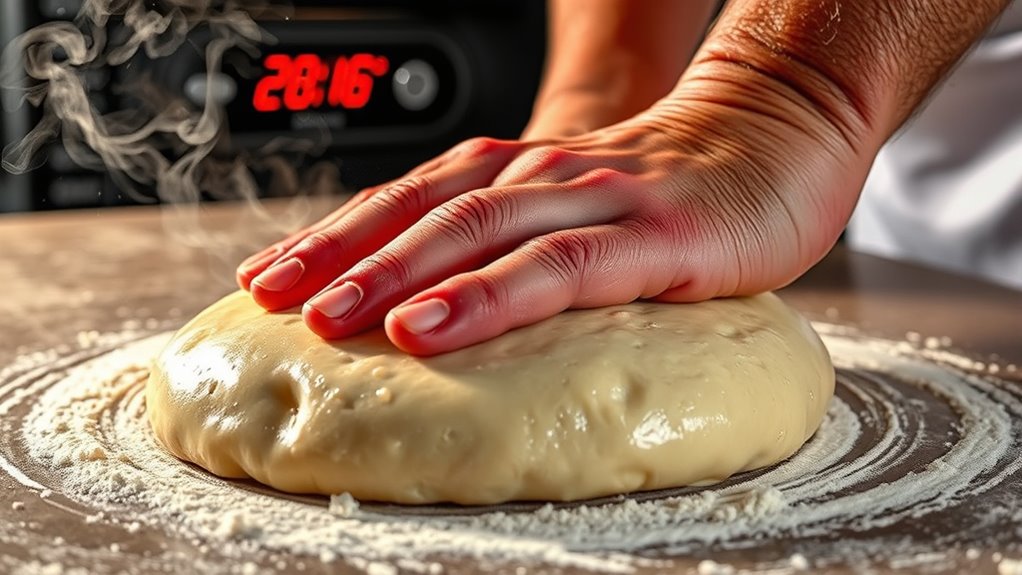
In hot baking environments, adjusting your dough hydration is essential to achieve the best results. Higher temperatures can weaken dough elasticity and hinder flavor development. To adapt, consider these steps:
- Reduce water content slightly to prevent excessive stickiness and blowouts.
- Increase fermentation time to enhance flavor without overhydrating.
- Use chilled ingredients or dough resting periods to maintain proper elasticity and control moisture.
- Monitoring auditory cues during fermentation can help gauge dough readiness and prevent overproofing.
- Maintaining proper dough hydration levels ensures consistent texture and oven spring in high heat conditions. Additionally, understanding dough behavior under heat can help you better anticipate how your dough will respond during baking.
Balancing hydration helps keep the dough supple, ensuring good oven spring and preventing gumminess. It also allows the flavors to develop fully without sacrificing structure. Remember, in high heat, less water often results in a better crust and more consistent texture. Fine-tuning hydration levels is key to managing dough behavior under these conditions.
How to Manage Dough Moisture in High-Heat Baking
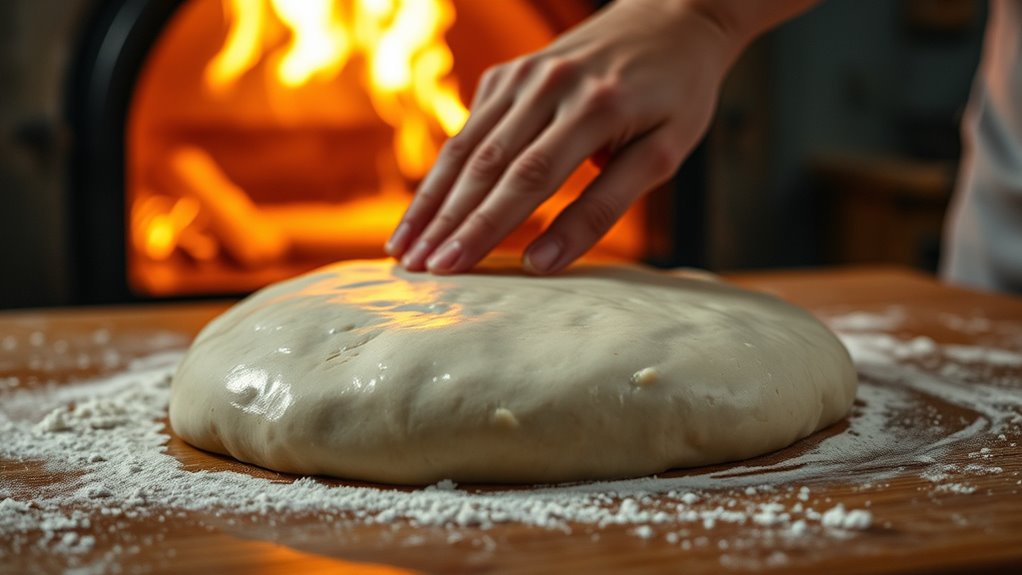
Managing dough moisture effectively in high-heat baking requires paying close attention to how water interacts with your dough during mixing and proofing. Too much moisture can weaken dough elasticity, leading to a gummy crust or blowouts, while too little can cause dryness and hinder flavor development. To regulate moisture, monitor your water addition carefully and adjust based on the dough’s response. Use techniques like autolyse to improve gluten structure and retain moisture evenly. Proper hydration ensures your dough maintains ideal elasticity, allowing it to stretch without tearing. Additionally, consistent moisture levels support complex flavor development, as the dough ferments uniformly. Monitoring water absorption during mixing can help you achieve the desired dough consistency and prevent issues caused by excess moisture. Keep an eye on environmental factors, like humidity and oven heat, which can influence moisture loss, and adapt your process accordingly for perfect high-heat results. Controlling moisture levels is essential for achieving a balanced, well-textured loaf, especially in environments where climatic conditions can significantly impact dough behavior. Being aware of oven temperature control can further optimize moisture retention and baking outcomes. Paying attention to baking environment variables can help you fine-tune your process and prevent common problems like blowouts or gumminess.
How Hydration Adjustment Prevents Blowouts and Gummy Crusts
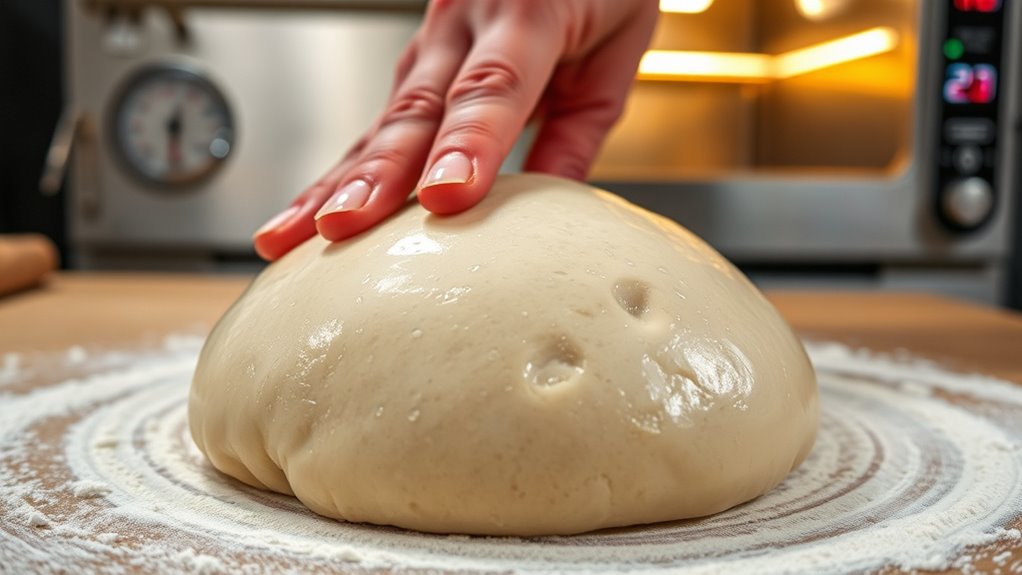
Adjusting hydration levels is essential for preventing common high-heat baking issues like blowouts and gummy crusts. Proper hydration influences dough elasticity and gluten development, which are key to controlling oven spring and crust texture. When dough has the right moisture:
Proper hydration is key to achieving a well-developed crust and avoiding blowouts and gummy textures.
- It develops ideal gluten networks, providing strength without becoming overly sticky.
- Dough elasticity improves, allowing it to expand evenly without blowouts.
- Excess moisture is minimized, reducing the risk of a gummy, dense crust.
Hydration Tips for Different Baked Goods: Practical Examples
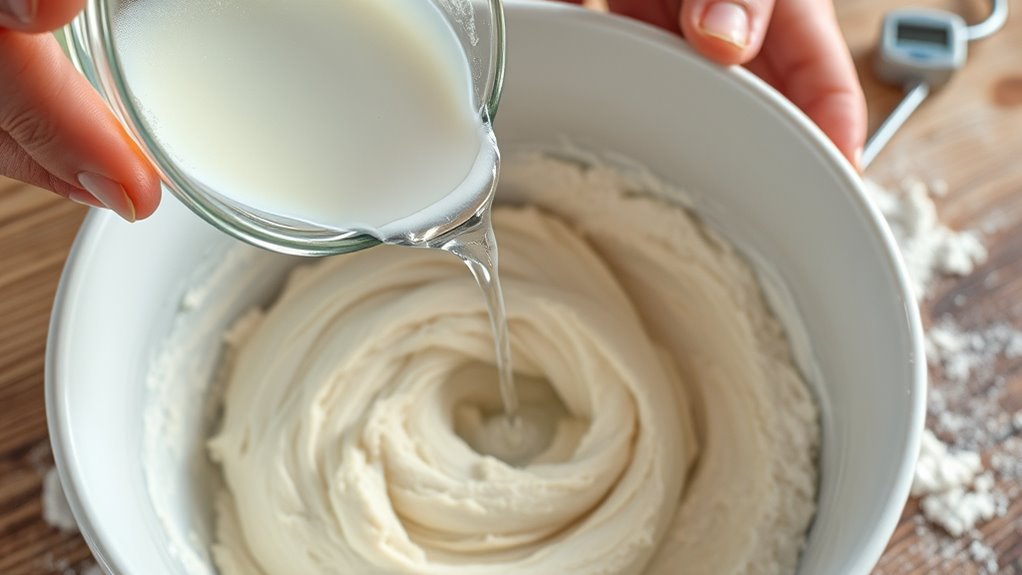
Different baked goods require specific hydration levels to achieve the best results. For bread with a chewy crumb and good dough elasticity, aim for slightly higher hydration to enhance extensibility without risking blowouts. When making sourdoughs or rustic loaves, a hydration level of around 75-80% helps develop gluten structure while allowing proper fermentation timing. For tender pastries or cakes, lower hydration ensures a softer crumb and prevents gumminess. Adjust hydration based on ingredient absorbency and desired texture, remembering that higher hydration can accelerate fermentation, so monitor dough elasticity carefully. Proper hydration not only influences the final texture but also affects fermentation timing, ensuring your baked goods develop flavor and structure without overproofing or underproofing.
Monitoring and Maintaining Perfect Dough Hydration in Hot Weather
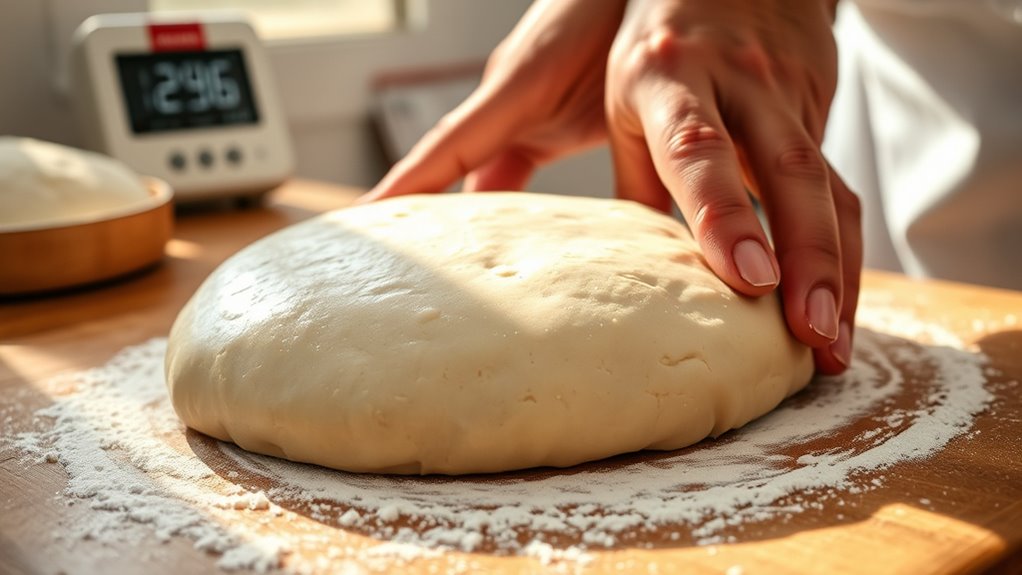
Hot weather can quickly cause dough to become overly hydrated and sticky, making it challenging to work with and risking overproofing. To monitor and maintain perfect dough hydration, focus on dough consistency and hydration levels. First, regularly check the dough’s texture—should be smooth and elastic, not overly sticky. Second, adjust hydration carefully: add small amounts of flour if it’s too wet or water if it’s too dry. Third, record hydration levels and dough behavior under different conditions to refine your process. Using these steps helps you stay ahead of the heat’s effects, ensuring your dough remains manageable and consistent. Maintaining proper hydration levels prevents blowouts and gumminess, keeping your baked goods perfect even on hot days.
Frequently Asked Questions
How Does Humidity Affect Dough Hydration in High Heat?
Humidity affects dough hydration by influencing moisture retention, especially in high heat. When ambient humidity is high, your dough absorbs more moisture, so you might need to reduce added water to prevent gumminess. Conversely, in dry conditions, your dough loses moisture quickly, requiring a bit more water to maintain proper hydration. Adjust your recipe based on ambient humidity to keep your dough consistent and prevent issues like blowouts or gumminess.
Can Adding Fats or Oils Influence Hydration Needs in Hot Weather?
Adding fats or oils can influence hydration needs in hot weather because they affect dough’s texture and moisture absorption. Fat absorption can make the dough less sticky and improve extensibility, while oil effects help prevent dryness and gumminess. You might need to slightly reduce water content, as fats and oils trap moisture and aid in maintaining a tender crumb. This adjustment guarantees your dough remains manageable and resilient in high heat.
What Are Signs of Dehydration in Dough During High-Temperature Baking?
You’ll notice signs of dehydration in your dough during high-temperature baking if it becomes overmixed or develops a sticky texture. Overmixed dough can lose its elasticity, leading to a dense crumb, while a sticky surface indicates insufficient hydration. To prevent this, keep an eye on dough consistency and avoid overworking it. Adjust hydration levels as needed, especially in hot conditions, to maintain proper dough structure and prevent baking issues.
How Does Altitude Impact Hydration Adjustments in Hot Climates?
You’ll want to pay close attention to altitude adjustments, as they influence your dough’s consistency in hot climates. Higher altitudes tend to dry out your dough faster, so increase hydration slightly to maintain elasticity and prevent issues like blowouts or gumminess. By adapting your hydration levels, you ensure your dough remains manageable and perfect for high-temperature baking, giving you consistent results regardless of elevation.
Are There Specific Hydration Techniques for Gluten-Free Dough in Heat?
In hot weather, you should adjust gluten-free dough hydration by incorporating more gluten-free binders like xanthan gum or guar gum, which help mimic gluten’s structure. Use alternative flours such as rice or tapioca to improve moisture retention. Keep the dough slightly wetter than usual and work quickly to prevent drying out. This guarantees your gluten-free dough remains pliable, prevents blowouts, and avoids gumminess in high heat conditions.
Conclusion
So, here’s the irony: the hotter it gets, the more you need to watch your dough, yet many bakers assume heat magically solves hydration issues. In reality, high temperatures demand your close attention and adjustments. If you ignore this, you’ll end up with blowouts or gummy crusts instead of perfect loaves. Stay vigilant, tweak your hydration, and embrace the challenge—because in baking, the only thing hotter than your oven should be your attention to detail.