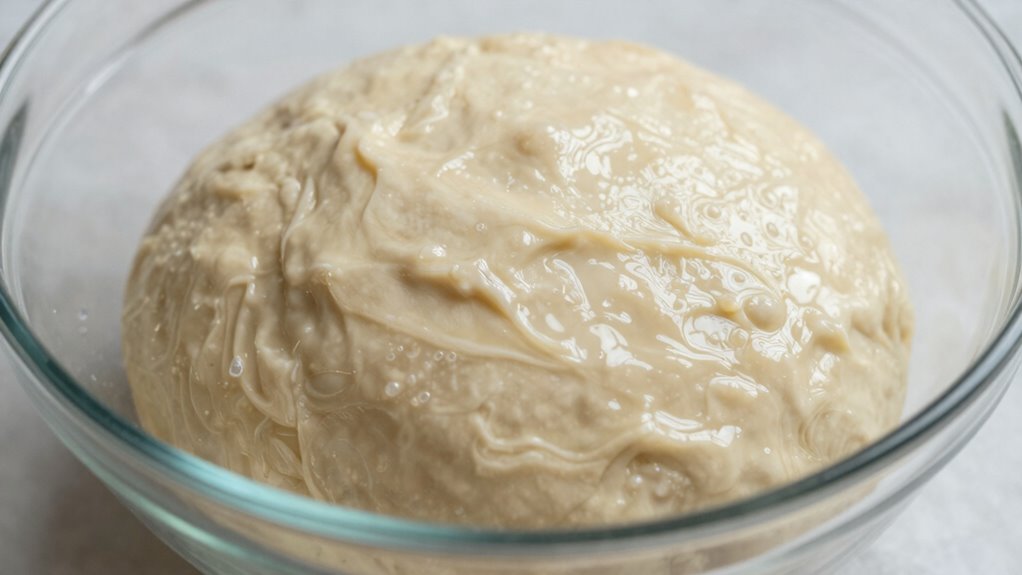
To handle sticky, high-hydration dough without adding extra flour, use damp hands and a bench scraper to lift and fold the dough gently. Avoid kneading with more flour, as it can alter hydration and crumb structure. Use stretch and folds during fermentation to develop gluten and improve elasticity. Keep your handling gentle to preserve gluten strands and overall dough quality. If you keep experimenting, you’ll discover more tips to master this approach effectively.
Key Takeaways
- Use damp hands and bench scrapers to prevent sticking and tear the dough during handling.
- Employ gentle techniques like stretch and fold to develop gluten without adding extra flour.
- Rest the dough between folds to enhance elasticity and manage stickiness naturally.
- Avoid adding flour; instead, rely on proper handling and minimal dusting to control stickiness.
- Keep handling surfaces and tools moist or lightly floured to prevent sticking without compromising hydration.

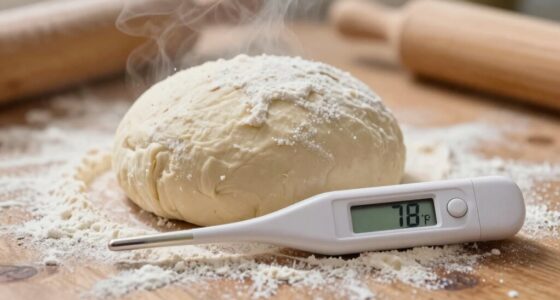
If you’ve ever tried making bread with high-hydration dough, you know it can be sticky and difficult to handle. That stickiness isn’t a flaw; it’s a sign of the fermentation process happening inside your dough. During fermentation, yeast feeds on the sugars, producing carbon dioxide that creates bubbles, making the dough rise and develop flavor. This process also encourages gluten development, which is essential for structure and elasticity. As the gluten network forms, it traps the gases produced by fermentation, giving the dough its rise and chewy texture. The challenge is managing this sticky, wet dough without adding excess flour, which can alter the hydration balance and affect the final crumb.
Handling high-hydration dough requires a gentle touch and understanding of its natural properties. Instead of trying to knead in more flour, focus on techniques that enhance gluten development without increasing stickiness. One effective method is stretch and fold. After the initial mixing, let the dough rest for a period, then stretch it out and fold it over itself. This action encourages gluten strands to form and strengthens the dough’s structure. Repeat this process at intervals, and you’ll notice the dough becoming more elastic and less sticky over time. The goal is to develop the gluten network gradually through fermentation and these stretch-and-folds, rather than forcing it with more flour.
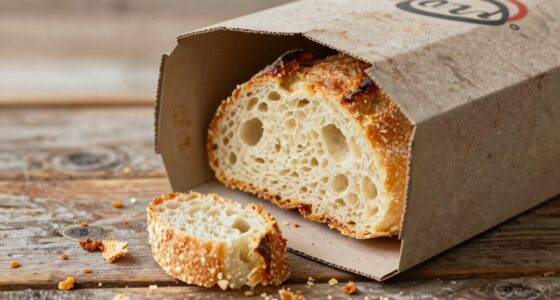
Another tip is to use wet hands and a gentle touch when handling the dough. Dampening your hands prevents sticking, making it easier to manipulate without tearing the delicate gluten strands. Using a bench scraper can also help lift and fold the dough without adding excess flour. These tools and techniques allow you to keep the dough’s hydration intact, ensuring that you retain the benefits of high hydration—such as an open crumb and moist interior. As you work with the dough, you’ll notice it becomes more cohesive and easier to shape, thanks to the gluten development fostered by proper fermentation.
Top picks for "sticky high hydration"
Open Amazon search results for this keyword.
As an affiliate, we earn on qualifying purchases.
Frequently Asked Questions
How Do I Prevent Sticking During Shaping?
To prevent sticking during shaping, confirm your dough has good elasticity, which helps it hold its shape. Use handling techniques like lightly flouring your work surface or wetting your hands to keep the dough from sticking without adding excess flour. Gently stretch and fold the dough, avoiding overworking it. These methods maintain the dough’s hydration and elasticity, making shaping easier and more precise.
Can I Store Sticky Dough for Later Use?
You can definitely store sticky dough for later. Think of it as hitting two birds with one stone—refrigeration techniques work wonders. Wrap the dough tightly in plastic or store it in an airtight container, then refrigerate it. This keeps the dough fresh and manageable for subsequent use. Just remember to bring it back to room temperature before shaping, so it’s easier to work with and retains its elasticity.
What Tools Work Best for Handling High-Hydration Dough?
You should use a bench scraper or a dough scraper to handle high-hydration dough, as these tools help maintain the dough’s consistency without sticking excessively. Additionally, wet hands or a damp cloth work well for shaping and folding, leveraging hydration techniques to prevent sticking. These tools and methods allow you to manage sticky dough efficiently, keeping it workable without adding extra flour, ensuring your dough remains properly hydrated and easy to handle.
How Does Hydration Level Affect Dough Elasticity?
Think of hydration level like water in a sponge: the higher it is, the more flexible and elastic the dough becomes. With increased hydration, gluten development is enhanced, making the dough more elastic and easier to stretch without tearing. However, too much hydration can make it overly sticky and difficult to handle. Balancing hydration is key to achieving ideal dough elasticity and a perfect, airy crumb.
Are There Specific Flours Better for Sticky Dough?
You should choose flours with higher protein content, like bread flour, for sticky dough, as they promote better gluten development and structure. If you’re seeking flour alternatives, consider chickpea or spelt flour, which can improve elasticity without adding extra flour. These options help maintain the dough’s hydration level, making handling easier without sacrificing the desired stickiness or texture.
Conclusion
Mastering sticky high-hydration dough is like taming a wild stallion—you just need patience and the right technique. Once you get the feel for it, you’ll realize it’s more about gentle handling than fighting the dough. Embrace its stickiness, and you’ll create bread that’s light, airy, and full of character. Remember, the mess is just a sign you’re on your way to baking something truly extraordinary—so keep your hands confident and your mind patient.