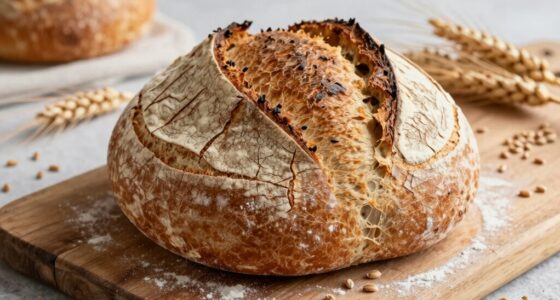
Cold fridge proofing slows fermentation, which allows complex flavors and aromas to develop gradually. This process also strengthens gluten, leading to a denser, chewier texture. The prolonged fermentation results in richer, layered taste profiles with tangy, nutty, and toasted notes, while preserving delicate aromas. If you want to understand how temperature control impacts flavor development and improve your baking, keep exploring this technique’s effects.

Get baking supplies delivered free with Prime
- Fast, free delivery on millions of items
- Prime Video, Amazon Music and more included
- Member-only deals all year
Key Takeaways
- Cold retarding slows fermentation, resulting in milder, more nuanced flavors with complex aromatic compounds.
- Fridge proofing enhances bread’s depth by promoting the development of organic acids, esters, and layered aroma profiles.
- Extended cold fermentation reduces raw grain taste and introduces tangy, nutty, toasted flavor notes.
- Proper chilling preserves delicate volatile aromas, creating a richer, more refined flavor compared to quick fermentation.
- Over-refrigeration can dull flavors and cause staling, so optimal timing is essential for maximizing taste improvements.
As an affiliate, we earn on qualifying purchases.
What Is Cold Retard and How Does Fridge Proofing Work?
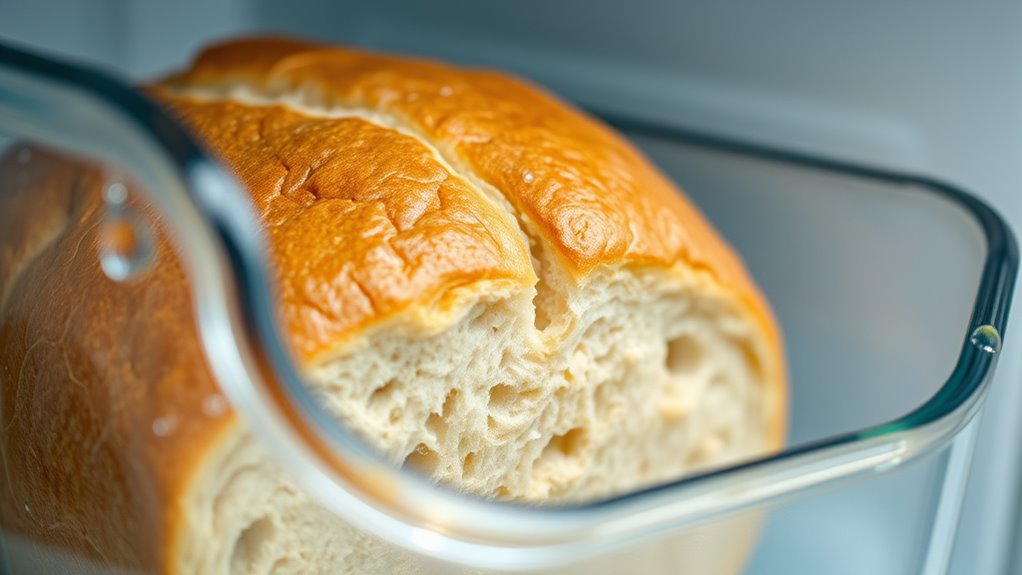
Ever wondered how cold retarding transforms fresh bread dough? When you refrigerate dough, you slow down yeast activity, which prevents it from fermenting too quickly. This extended fermentation allows flavors to develop more fully, but it also affects gluten development. As the dough chills, gluten strands continue to strengthen, creating a better structure and improved elasticity. This process, called cold retard, fundamentally pauses fermentation at an ideal point, giving the dough time to mature. The cold environment reduces yeast activity, but gluten continues to develop gradually, resulting in a dough that’s easier to shape and yields a bread with a more complex texture. Additionally, cold retard can improve bread shelf life by slowing down microbial growth. Fridge proofing, consequently, combines controlled fermentation with enhanced gluten development, setting the stage for better flavor and texture. Understanding fermentation control is essential for bakers aiming to optimize flavor and bread quality through fridge proofing. Moreover, mastering temperature regulation is crucial for achieving consistent results in cold retard processes. Incorporating traditional fermentation techniques can further enhance the depth of flavor and nutritional profile of the bread.
bread dough fermentation thermometer
As an affiliate, we earn on qualifying purchases.
As an affiliate, we earn on qualifying purchases.
How Does Refrigeration Change Bread’s Flavor Chemistry?
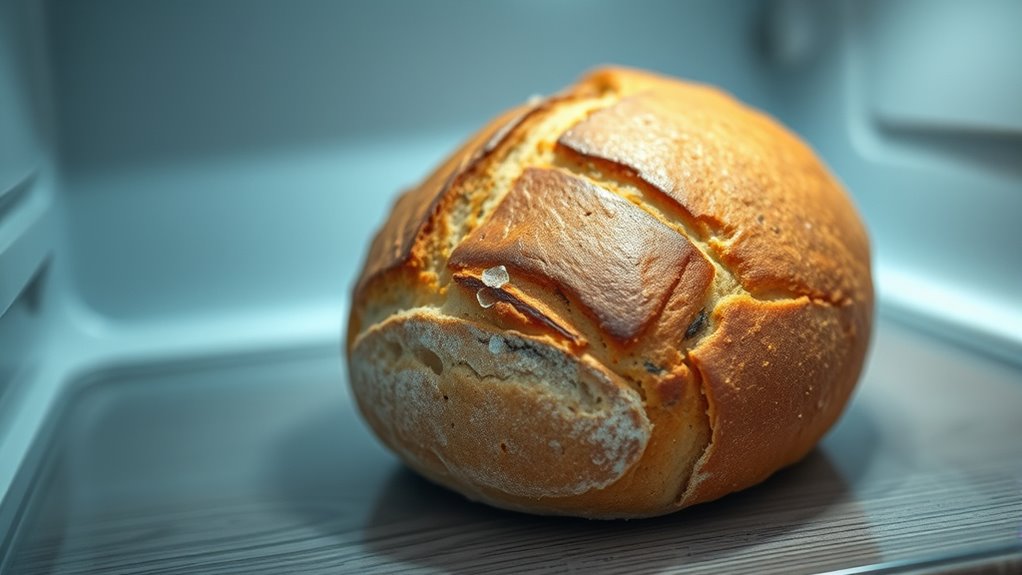
Refrigeration considerably alters bread’s flavor chemistry by slowing down fermentation and enzyme activity, which affects how flavors develop. Lower temperatures suppress yeast behavior, leading to a delayed but more complex flavor profile. This slowdown impacts key processes:
Refrigeration slows fermentation and enzyme activity, leading to delayed yet more complex bread flavors.
- Flavor compound formation: Reduced enzyme activity limits the creation of aromatic molecules, resulting in a milder taste. Additionally, the temperature-sensitive enzymes involved in flavor development are less active, further influencing taste profiles.
- Acid development: Cooler temps slow lactic and acetic acid production, altering tanginess.
- Staling and freshness: Enzymatic changes influence moisture retention and staling rate, impacting overall flavor perception. Furthermore, refrigeration can modify fermentation dynamics, resulting in different flavor maturation pathways.
Understanding these temperature effects helps you appreciate how cold storage modifies bread’s taste. By controlling refrigeration conditions, you can manipulate flavor development and achieve different taste profiles suited to your preferences.
As an affiliate, we earn on qualifying purchases.
Why Do Cold Temperatures Slow Yeast Fermentation?
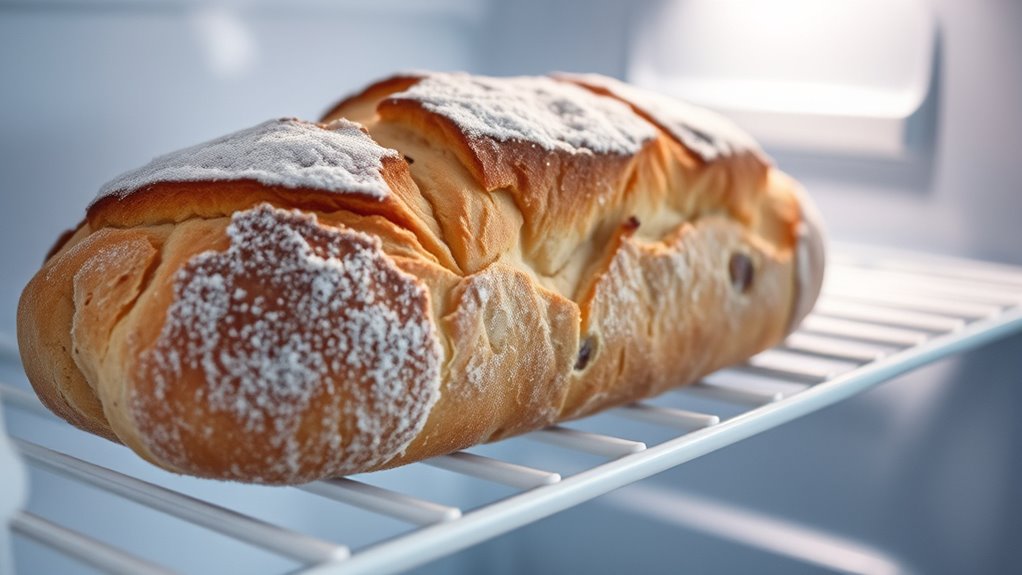
Cold temperatures slow yeast fermentation by reducing yeast activity, making the microorganisms less energetic. As the environment cools, their metabolic processes decrease markedly, leading to a slower fermentation process. This temperature effect explains why refrigeration delays bread rising and how it can be used to control fermentation timing. Additionally, understanding hydrotherapy principles can help in managing temperature effects on yeast activity during bread proofing. Incorporating proper temperature control techniques can optimize fermentation and improve bread quality. Recognizing how water temperature influences yeast performance can further refine proofing strategies for consistent results. Understanding how yeast behavior varies with temperature can assist bakers in achieving desired bread textures and flavors.
Cold Temperature Effects
When temperatures drop, yeast activity slows down markedly because cold conditions inhibit the enzymes responsible for fermentation. This slowdown directly affects fermentation timing, lengthening the process and allowing flavors to develop more subtly. Cold temperatures also influence how flavors mature, often resulting in a more complex taste profile. To understand this better, consider these points: 1. Enzyme activity reduction limits the rapid breakdown of sugars, extending fermentation. 2. Slower gas production affects dough rise, impacting texture and structure. 3. Controlled fermentation at low temperatures promotes gradual flavor development, enhancing bread’s taste complexity. Additionally, maintaining proper fridge proofing conditions ensures optimal flavor enhancement while preventing undesirable microbial growth, which can compromise bread quality. Implementing temperature control techniques is essential to achieve consistent results and preserve bread quality.
Yeast Activity Reduction
As temperatures drop, yeast cells become less active because the enzymes that drive fermentation slow down considerably. This reduction in yeast activity means fermentation progresses more slowly, giving flavors more time to develop and deepen. Cold temperatures inhibit the enzymes responsible for converting sugars into carbon dioxide and alcohol, which are key to rising dough and flavor formation. As a result, fermentation’s pace is slowed, allowing complex flavor chemistry to unfold more gradually. The cooler environment doesn’t stop yeast entirely but tempers its activity, leading to a more nuanced taste profile. You’ll notice that cold-retarded bread often has a richer, more developed flavor, as the extended fermentation enhances the complexity of the final product. This delicate balance is what makes fridge proofing a valuable technique for bread bakers. Enzyme activity plays a crucial role in how flavors develop during fermentation, and understanding this process helps bakers control the final taste.
Slowed Fermentation Process
Lower temperatures slow down yeast fermentation because they reduce the activity of the enzymes responsible for converting sugars into carbon dioxide and alcohol. This slowdown impacts fermentation speed, allowing the dough to ferment more gradually. As a result, the fermentation process becomes more controlled, which influences flavor development. When fermentation is prolonged, yeast produces more complex byproducts, enhancing taste. Additionally, using herbal infusion machines can help control fermentation conditions more precisely, leading to more consistent flavor profiles. Temperature regulation is crucial for controlled fermentation, which directly affects the final flavor of bread. Proper temperature control is essential for optimal fermentation conditions, which maximize flavor development and dough quality. The enzymatic activity involved in fermentation is sensitive to temperature, making precise control important for desired outcomes. For example, maintaining consistent temperatures prevents unwanted fermentation fluctuations, ensuring a predictable flavor profile. Consider these effects:
- Extended fermentation leads to richer, more developed flavors.
- Slower fermentation improves dough extensibility and texture.
- Reduced fermentation speed can result in a more balanced aroma and taste profile.
As an affiliate, we earn on qualifying purchases.
How Cold Retard Affects Bread Aroma and Flavor Notes?

Cold retardation slows fermentation, which markedly influences bread’s aroma and flavor development. By extending fermentation timing, cold proofing allows more complex aroma compounds to form, enhancing depth and richness. The cooler environment helps preserve delicate volatile compounds responsible for aroma, preventing their quick loss. As a result, bread develops a more nuanced scent profile, often with hints of nuttiness or fruitiness. Additionally, cold retardation suppresses unwanted fermentation byproducts that can cause off-flavors, ensuring a cleaner taste. The slow fermentation process also encourages the breakdown of starches into sweeter-tasting sugars, subtly amplifying flavor notes. Proper temperature control during cold retardation is essential for achieving optimal flavor development and consistency, ensuring each loaf is up to standard. Maintaining a consistent temperature helps ensure that the delicate aroma and flavor compounds develop evenly throughout the bread. Understanding how fermentation enzymes function during cold proofing can further enhance flavor complexity and improve baking results.
How Cold Proofing Changes Gluten Structure and Texture?

When you cold proof your bread, the gluten development slows down, leading to a chewier texture. This process also helps improve the crumb structure, making it more open and even. As a result, your bread becomes both more satisfying to chew and better in texture.
Gluten Development Slows
As you refrigerate dough for proofing, the cold temperature slows down gluten development, leading to a different texture in your bread. This slowdown affects the fermentation duration, allowing flavors to develop more deeply over time. The extended fermentation enhances flavor complexity without overworking the gluten network.
Consider these key points:
- Slowed gluten formation results in a more tender crumb.
- Longer fermentation allows for better flavor enhancement.
- The dough’s structure remains softer, contributing to a unique bite.
Texture Becomes Chewier
Have you noticed that bread baked from refrigerated dough often feels chewier? Cold proofing causes the gluten network to tighten, giving the bread a denser, more substantial bite. The longer, slow fermentation enhances the development of flavors, creating a sweet aroma that deepens with time. As the dough chills, the crust coloration becomes richer and more appealing, thanks to the extended proofing process. This colder environment encourages gluten strands to align more tightly, resulting in a firmer texture. The chewy quality isn’t a flaw but a result of the stronger gluten structure formed during cold retarding. You’ll find that refrigerated dough produces a more satisfying, hearty chew, balancing the bread’s flavor complexity with its tactile richness.
Crumb Structure Improves
Cold proofing refines the crumb structure by allowing gluten strands to develop more evenly and align more tightly. This results in a bread with improved crumb density and a more uniform texture. As a result, you’ll notice a finer, more delicate interior that holds together better. Additionally, the increased gluten development contributes to a thinner, more consistent crust thickness, reducing overall chewiness. To understand how this works, consider these points:
- Slower fermentation enhances gluten network formation, leading to a tighter crumb.
- More even gluten alignment prevents large air pockets, creating a smoother texture.
- Thinner crust forms due to reduced oven spring, complementing the refined crumb.
This process produces bread with a more refined crumb structure, offering a balance between moistness, density, and crust quality.
Why Longer Cold Fermentation Boosts Flavor Complexity?
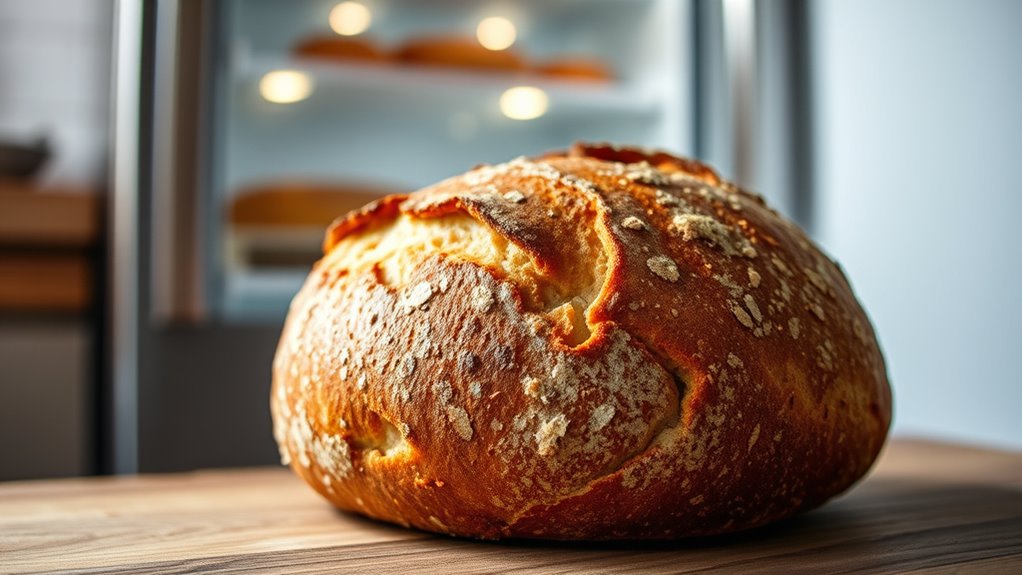
When bread undergoes longer cold fermentation, its flavor becomes especially more complex. The extended fermentation duration allows enzymes and yeast to break down starches and proteins more thoroughly, releasing a wider range of aromatic compounds. This process promotes flavor layering, where subtle nuances develop over time, creating a richer taste profile. As the dough chills, fermentation slows, giving enzymes ample opportunity to produce organic acids, esters, and other flavor molecules. These compounds meld, enhancing depth and complexity. Longer cold fermentation also reduces the raw grain taste, resulting in a more refined flavor. By controlling fermentation duration through fridge proofing, you access a more nuanced, sophisticated bread flavor that improves with patience and time.
What Are Common Flavor Profiles of Cold-Retarded Bread?
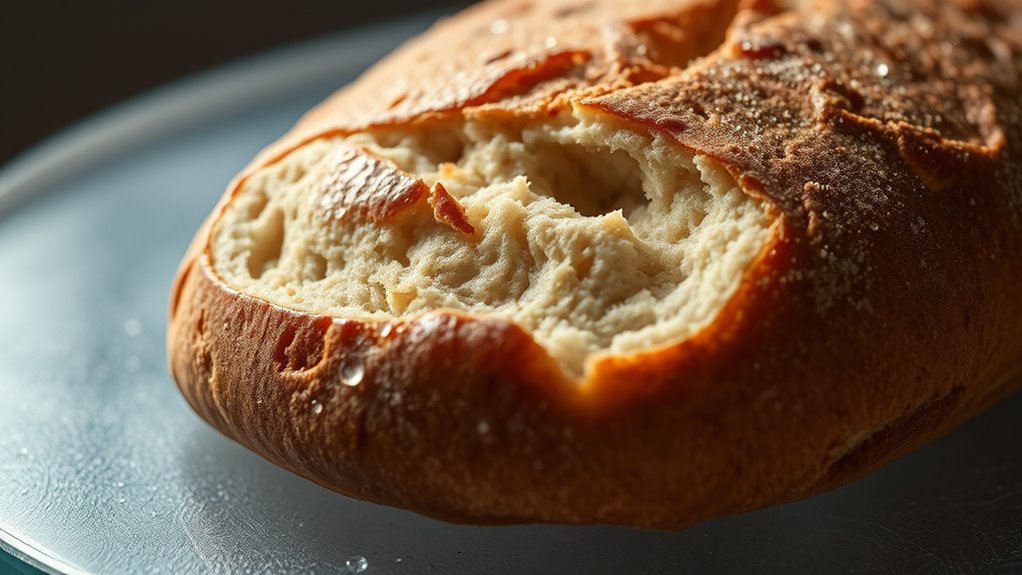
What flavors emerge from the slow, cold fermentation process? Cold-retarded bread develops a distinctive profile shaped by extended fermentation. You’ll notice subtle sour notes that add brightness and complexity, making each bite lively. Additionally, nutty undertones infuse the bread with a toasted richness, enhancing its depth. The flavor profile is often more nuanced than freshly baked bread, showcasing the fermentation’s influence. Here are some common flavor notes you’ll encounter:
- Tangy, sour notes that deepen with time
- Nutty, toasted undertones that add warmth
- Complex, layered flavors resulting from prolonged fermentation
These profiles make cold-retarded bread uniquely satisfying, offering a sophisticated taste experience rooted in the slow fermentation process.
How Can You Maximize Flavor When Using Cold Retard?
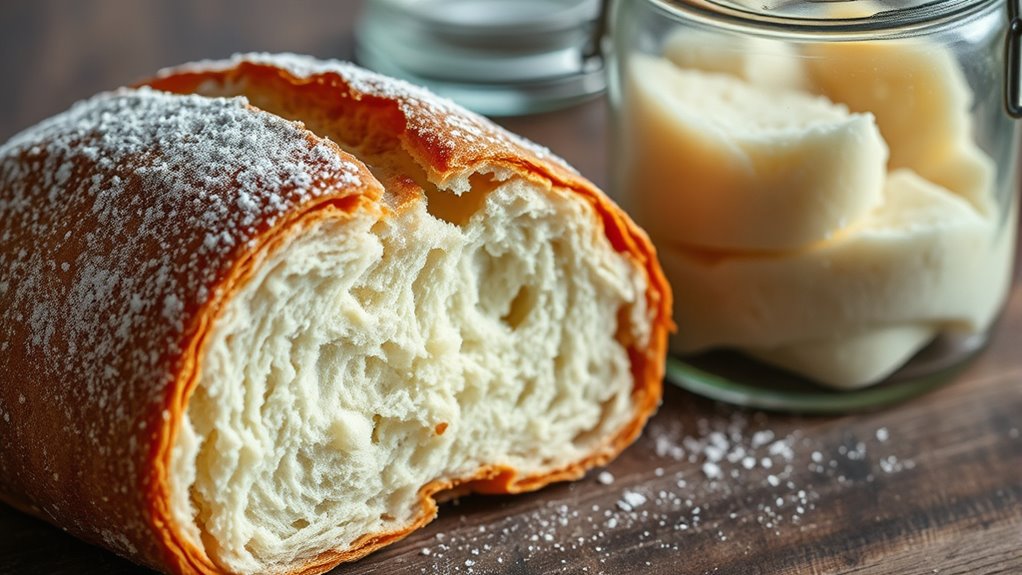
To maximize the flavor of your cold-retarded bread, focus on controlling fermentation conditions and ingredient quality. Proper fermentation allows natural flavors to develop fully, so monitor dough temperature and fermentation time carefully. Using high-quality flour and fresh yeast enhances flavor complexity and provides a better base for flavor enhancement during cold proofing. Keep your dough at the right temperature to slow fermentation without halting it completely, which preserves the bread’s aroma and taste. Additionally, taking care not to over-refrigerate helps maintain ideal texture preservation, ensuring your bread remains tender and well-structured. By balancing fermentation and ingredient quality, you’ll reveal richer flavors and achieve a superior, more flavorful loaf with appealing texture.
What Are the Risks of Over-Refrigerating Bread?
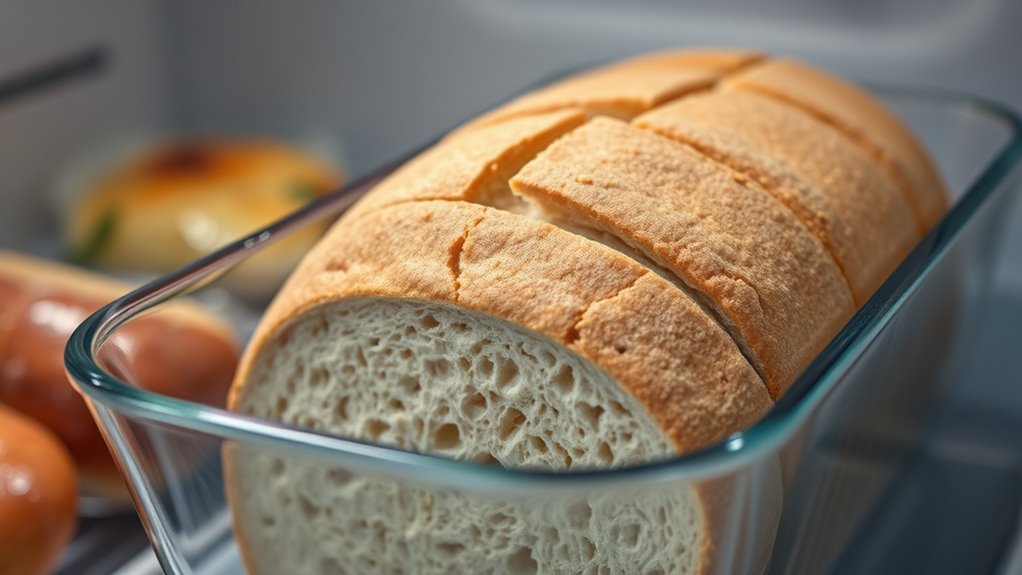
Over-refrigerating bread can lead to moisture loss, making it dry and stale faster. It may also cause the texture to deteriorate, resulting in a crumbly or tough loaf. Additionally, excessive cold storage can alter the bread’s flavor, diminishing its freshness and appeal.
Moisture Loss Risks
Refrigerating bread can help extend its freshness, but doing so excessively can lead to moisture loss that makes the bread dry and crumbly. The temperature impact on bread’s moisture preservation is significant; lower temperatures cause moisture to escape more quickly. When over-refrigerating, you risk dehydrating the bread, which diminishes its softness and flavor.
To avoid this, keep these points in mind:
- Store bread in airtight containers to limit moisture loss.
- Use the fridge only for short-term preservation, ideally no more than a few days.
- Be aware that prolonged refrigeration accelerates moisture evaporation, resulting in a dry texture.
Balancing fridge use with proper storage techniques preserves moisture and keeps your bread fresh longer.
Texture Deterioration Concerns
While refrigerating bread can help keep it fresh longer, excessive cooling can cause noticeable changes in its texture. Over-refrigerating can lead to staling, making bread crumbly and dry. This happens because refrigeration techniques slow down the starch retrogradation process, but too long in the fridge accelerates moisture loss and firmness. If you store bread improperly or leave it in the fridge too long, it can develop a dense, rubbery crust and a crumb that feels stiff or gritty. To avoid these issues, use airtight containers and limit refrigeration time. Proper bread preservation balances cold storage benefits with the risk of texture deterioration, ensuring your bread retains its softness and freshness without becoming tough or crumbly.
Flavor Alteration Issues
Although refrigerating bread can extend its freshness, leaving it in the fridge too long can cause noticeable changes in flavor. Over-refrigeration disrupts fermentation timing, which impacts flavor depth and overall taste. When bread spends too much time chilled, the cold slows enzyme activity, dulling complex flavors. This can lead to a flat, less vibrant taste profile. To avoid these issues, consider these points:
- Excessive cold can cause staling without proper packaging, diminishing flavor richness.
- Extended refrigeration may promote staling compounds, affecting flavor integrity.
- Properly timed fridge proofing preserves fermentation nuances, maintaining flavor depth.
How Does Cold Retard Compare to Other Fermentation Methods for Flavor?
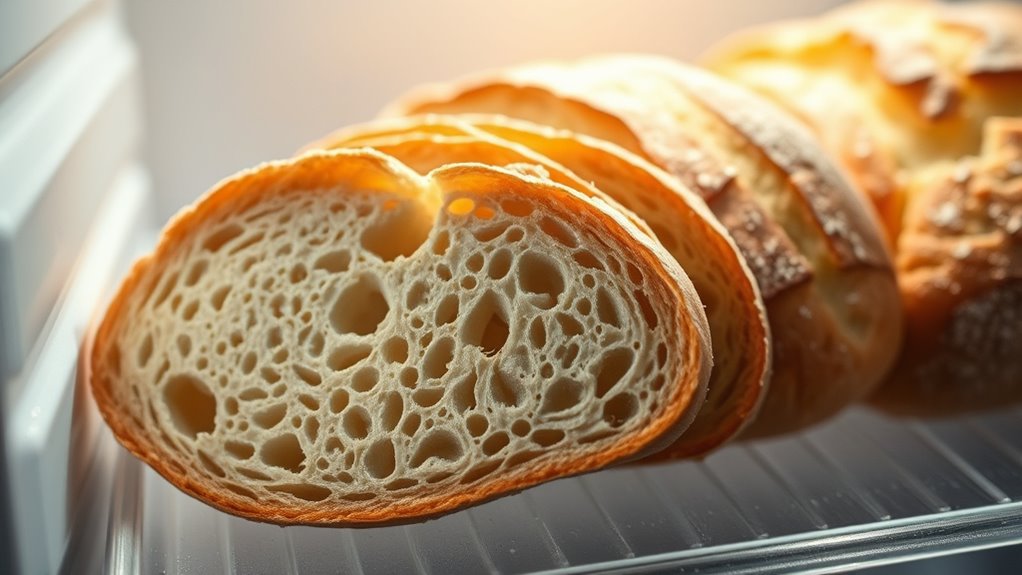
Cold retardation enhances bread flavor by allowing fermentation to develop slowly at low temperatures, which fosters complex aroma compounds. Compared to bulk fermentation at room temperature, cold retarding slows fermentation speed, giving you more control over flavor development. This method produces a richer, more nuanced taste because the extended fermentation allows yeast and bacteria to work gradually, creating deeper flavors. Unlike quick traditional methods, cold retardation minimizes overproofing risks and improves dough extensibility. While warm fermentation speeds up the process, it often results in simpler flavors and less aroma complexity. Overall, cold retardation offers a more refined flavor profile, making it ideal if you want to maximize taste without sacrificing dough stability. It’s a precise, controlled way to deepen your bread’s flavor.
Frequently Asked Questions
How Does Cold Retard Influence Bread Shelf Life?
Cold retard markedly extends your bread’s shelf life by slowing down fermentation, which prevents over-proofing and staling. This process allows you to keep your dough in the fridge longer without compromising quality. Additionally, it enhances flavor as the fermentation develops more complex notes over time. By using cold retard, you give your bread a fresher taste and longer-lasting freshness, making it perfect for planning ahead and reducing waste.
Can Cold Retarding Cause Undesirable Mold Growth?
Cold retarding won’t turn your bread into a mold haven, but improper storage techniques can lead to undesirable mold growth. You might think it’s a mold explosion, but sticking to mold prevention tips like wrapping bread tightly and keeping it at consistent, cool temperatures helps. Always check your bread regularly, and if you see mold, discard it immediately. Proper storage techniques are your best defense against mold’s sneaky invasion.
Is There a Temperature Threshold for Optimal Flavor Development?
Yes, there is a temperature threshold for ideal flavor development, typically around 38-40°F (3-4°C). Maintaining precise temperature control during fridge proofing enhances flavor by slowing fermentation while allowing complex flavors to develop. If you go too cold, it can inhibit fermentation, and if it’s too warm, you risk over-proofing. Keep your fridge steady within this range to maximize flavor enhancement and achieve the best bread taste.
How Does Cold Proofing Affect Bread Crust Coloration?
Cold proofing slows down crust browning and color development, resulting in a paler crust. You’ll notice less caramelization because the lower temperature reduces the Maillard reaction, which is responsible for browning. As a result, your bread may have a softer, less glossy crust. If you want a darker, more flavorful crust, consider baking at a higher temperature or finishing with a quick oven boost to enhance crust coloration.
Are Certain Bread Types Better Suited for Cold Fermentation?
You’ll find that sourdough and rustic loaves are especially suited for cold fermentation. The slower fermentation rate allows yeast activity to develop complex flavors without over-proofing. As coincidence would have it, these bread types benefit from extended fermentation, enhancing texture and taste. Other delicate bread styles, like brioche, may not fare as well, since their yeast activity is more sensitive to temperature changes, risking underdevelopment or inconsistent rise.
Conclusion
By embracing cold retard, you open richer flavors and better texture in your bread. It’s no coincidence that many bakers turn to fridge proofing for superior taste—slowing fermentation allows complex aromas to develop naturally. Just remember, over-refrigerating can dull those subtle notes you’re after. So, experiment with your fridge’s timing, and you’ll find that perfect balance where flavor and texture harmonize beautifully, making every loaf a delightful surprise.
Fall Picks
fall essentials
As an affiliate, we earn on qualifying purchases.