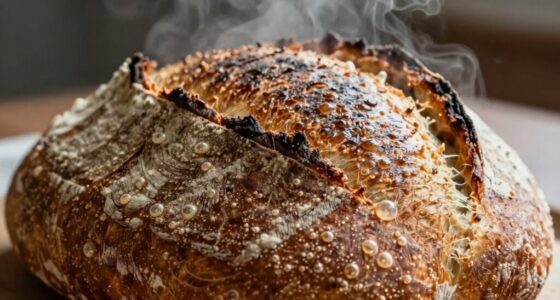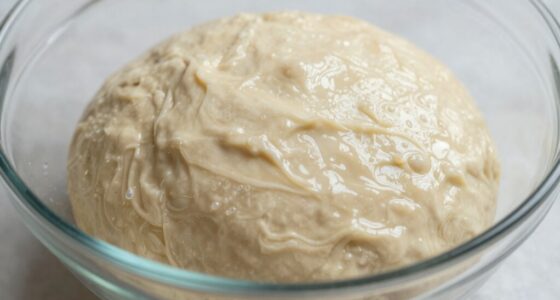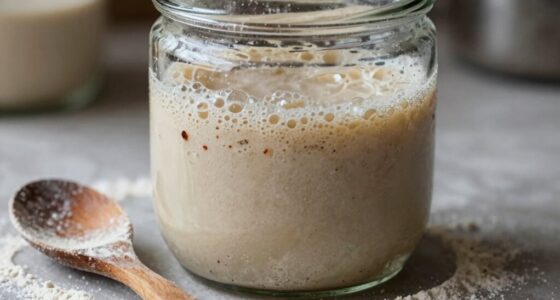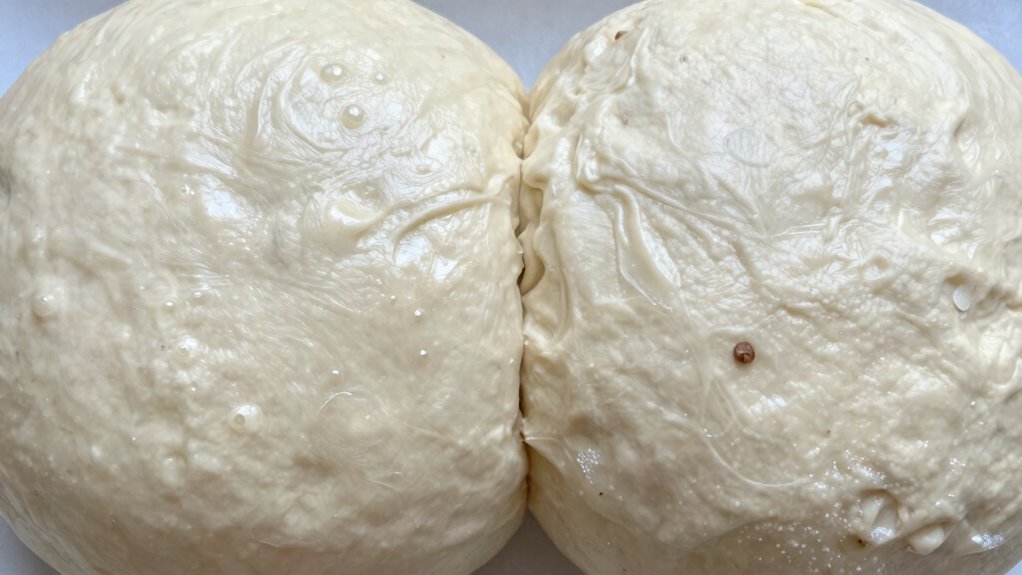

Autolyse and fermentolyse both influence dough feel by controlling hydration timing and enzyme activity. With autolyse, you mix flour and water first, letting enzymes improve gluten and dough extensibility during rest. Fermentolyse combines hydration with early fermentation, boosting enzyme action and dough strength over time. These techniques change how your dough develops, affecting elasticity, flavor, and handling. Understanding their differences helps you tweak dough texture—and there’s more to uncover if you keep exploring.

Get baking supplies delivered free with Prime
- Fast, free delivery on millions of items
- Prime Video, Amazon Music and more included
- Member-only deals all year
Key Takeaways
- Autolyse involves pre-mixing flour and water to enhance gluten development and dough extensibility before adding salt and yeast.
- Fermentolyse combines autolyse with early fermentation, promoting enzyme activity during hydration and improving dough strength.
- Hydration timing in autolyse allows enzyme activity without compromising dough structure, while fermentolyse integrates hydration into fermentation for deeper enzyme effects.
- Autolyse generally results in quicker gluten development and better dough handling, whereas fermentolyse enhances flavor and fermentation qualities.
- Managing hydration timing and technique choice directly influences dough feel, elasticity, flavor, and overall bread quality.
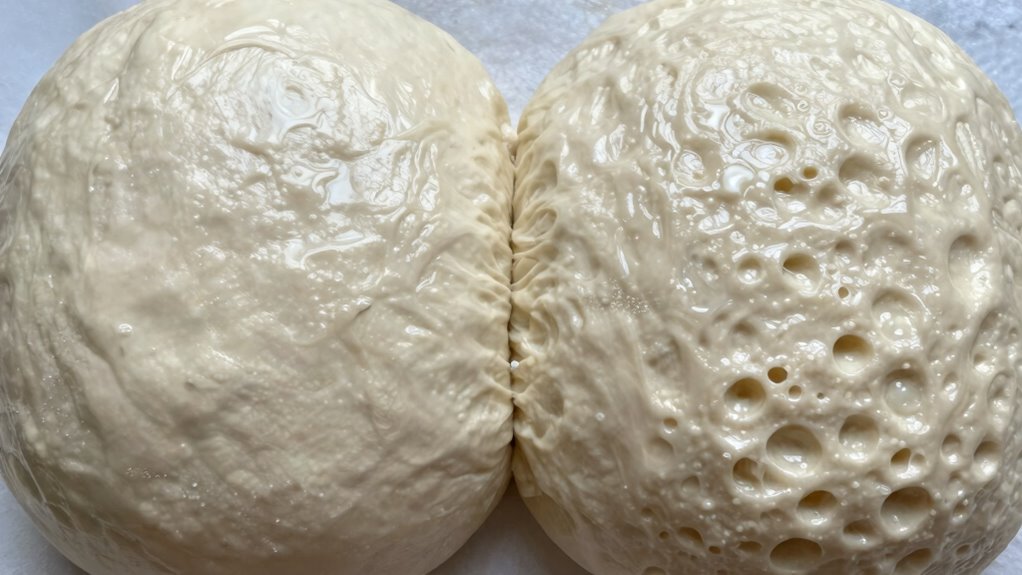
Have you ever wondered how different pre-fermentation techniques influence bread quality? When you’re working with autolyse and fermentolyse, these methods can considerably impact your dough’s texture, flavor, and overall performance. A key factor in this process is hydration timing, which determines how much water you add and when, affecting enzyme activity within the dough. With autolyse, you typically mix flour and water first, letting them rest before adding salt and yeast. This rest period allows enzymes naturally present in the flour to become active, breaking down starches and proteins. The result is improved gluten development and better dough extensibility. By controlling hydration timing during autolyse, you give enzymes enough time to work efficiently without overhydrating the flour, which could weaken the structure. The enzyme activity facilitated here boosts fermentation potential, helping you achieve a more elastic dough with enhanced flavor. Additionally, understanding enzyme activity is crucial for optimizing fermentation and dough quality.
On the other hand, fermentolyse involves incorporating a portion of the fermentation process into the dough early on, often combining autolyse with a short fermentation phase before shaping. This method emphasizes the timing of hydration and fermentation to optimize enzyme activity further. When you add water during fermentolyse, you’re allowing enzymes to actively break down sugars and proteins as fermentation progresses. This ongoing enzyme activity during the early fermentation stages improves dough strength and fermentation characteristics. The timing of hydration in fermentolyse is vital because it influences how enzymes interact with the dough components. Properly timed hydration ensures that enzyme activity remains high without compromising dough stability. You’ll notice that fermentolyse tends to produce doughs with better extensibility and flavor complexity, thanks to the extended enzymatic activity.
Understanding these techniques and how hydration timing influences enzyme activity helps you fine-tune your bread-making process. Autolyse is more about giving enzymes a head start by resting flour and water together, leading to quicker gluten development and improved dough handling. Fermentolyse, meanwhile, involves a more integrated approach, where hydration timing and fermentation are carefully coordinated to maximize enzyme activity throughout the process. By mastering these nuances, you can craft bread with superior texture, flavor, and strength. The key lies in controlling when and how much water you add and allowing enzymes to act at just the right moments. This knowledge empowers you to adapt your technique based on the desired dough qualities, making your bread baking more precise and satisfying.
As an affiliate, we earn on qualifying purchases.
Frequently Asked Questions
Can Autolyse or Fermentolyse Be Skipped Entirely?
Yes, you can skip autolyse or fermentolyse, but doing so limits ingredient flexibility and flavor enhancement. Skipping autolyse may result in a less extensible dough and a denser crumb, while skipping fermentolyse might reduce the development of complex flavors. Though it’s possible, incorporating these steps generally improves dough texture and taste, giving you more control over the final product. For the best results, consider including them whenever you can.
Which Technique Is Better for Gluten Development?
They say “practice makes perfect,” and when it comes to gluten development, fermentolyse is your best bet. It actively encourages gluten structure and dough elasticity by allowing enzymes to work longer, strengthening the dough. Autolyse helps hydrate flour and kickstart gluten development, but fermentolyse takes it further. If you want a dough with superior gluten structure and elasticity, opt for fermentolyse—it truly makes a difference in your bread’s texture.
How Do Temperature Variations Affect Each Process?
Temperature variations substantially impact each process by influencing microbial activity and enzymatic reactions. In autolyse, warmer temperatures accelerate enzyme activity, improving gluten development and dough extensibility. For fermentolyse, moderate temperatures foster ideal microbial activity, enhancing flavor and dough strength. Too high or low temperatures can hinder these processes, leading to less desirable dough qualities. You should carefully control temperature to maximize benefits and guarantee consistent, high-quality results in both techniques.
Are Certain Flours Better Suited for One Method?
Think of flour types as your dough’s personality—some are more adaptable than others. High-protein flours, like bread flour, excel in autolyse because they develop gluten strength, giving your dough structure. Lower-protein flours, such as cake flour, work better for fermentolyse, where gentler fermentation preserves tenderness. Choosing the right flour type based on protein content helps you tailor each method, resulting in better dough feel and final bread quality.
How Long Can Autolyse or Fermentolyse Be Extended?
You can extend autolyse or fermentolyse for up to 30 minutes to several hours, depending on your dough’s needs and desired flavor. Extended fermentation allows for better gluten development and complex flavors, but timing adjustments are key to avoid over-fermentation. Keep an eye on dough texture and rise; if it becomes too slack or sour, it’s a sign to stop and proceed. Adjust your timing based on temperature and ingredients.
fermentolyse bread fermentation set
As an affiliate, we earn on qualifying purchases.
As an affiliate, we earn on qualifying purchases.
Conclusion
Understanding the difference between autolyse and fermentolyse can truly transform your bread-making. Did you know that bakers using autolyse report a 20% improvement in dough extensibility? By incorporating these techniques, you’ll notice a better dough feel and improved bread texture. So, experiment with both methods to find what works best for you. Mastering these steps can elevate your baking game and lead to consistently delicious results.
As an affiliate, we earn on qualifying purchases.
artisan bread baking accessories
As an affiliate, we earn on qualifying purchases.
As an affiliate, we earn on qualifying purchases.
Fall Picks
fall essentials
As an affiliate, we earn on qualifying purchases.