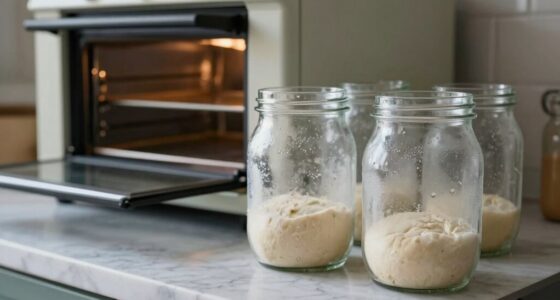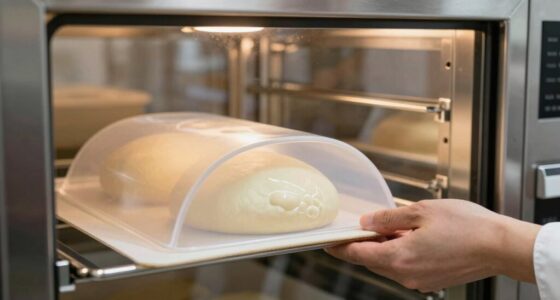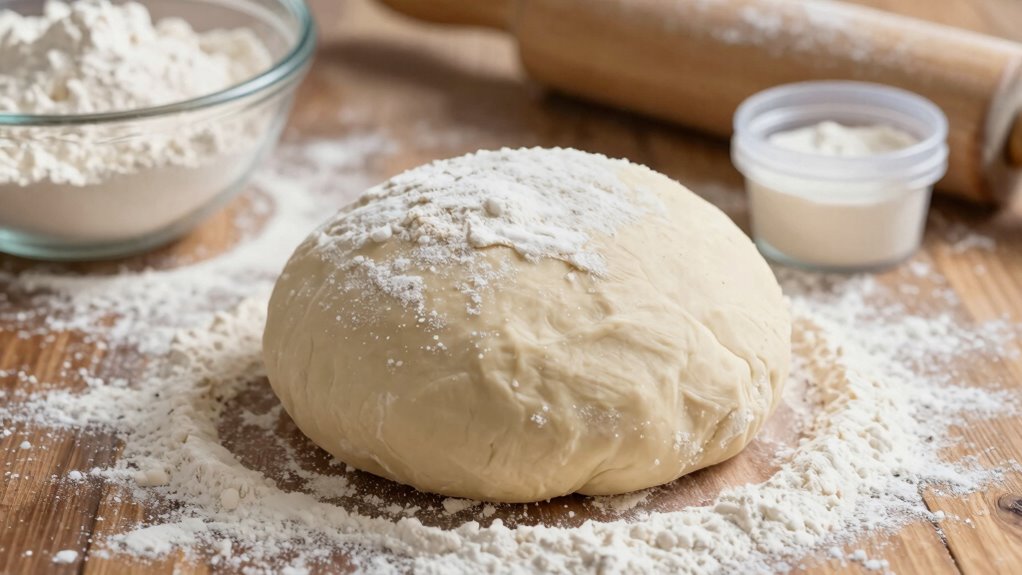

To freeze dough without losing performance, make sure your yeast is fresh and active before freezing by proofing it first. Knead the dough well to develop gluten and shape it into a ball or loaf. Wrap it tightly in plastic wrap or store in airtight containers, then label and freeze in small portions for easy use later. When you’re ready, thaw it slowly in the fridge. Staying consistent with these steps helps maintain rise and texture, and you’ll discover even more tips if you keep going.

Get baking supplies delivered free with Prime
- Fast, free delivery on millions of items
- Prime Video, Amazon Music and more included
- Member-only deals all year
Key Takeaways
- Properly activate and proof yeast before freezing to ensure vitality and good rise after thawing.
- Develop strong gluten structure through thorough kneading and fermentation prior to freezing.
- Shape dough into portions, wrap tightly, and use airtight containers to prevent freezer burn.
- Thaw dough slowly in the fridge overnight to maintain texture and yeast activity.
- Label frozen dough with date and use within recommended storage time for optimal performance.
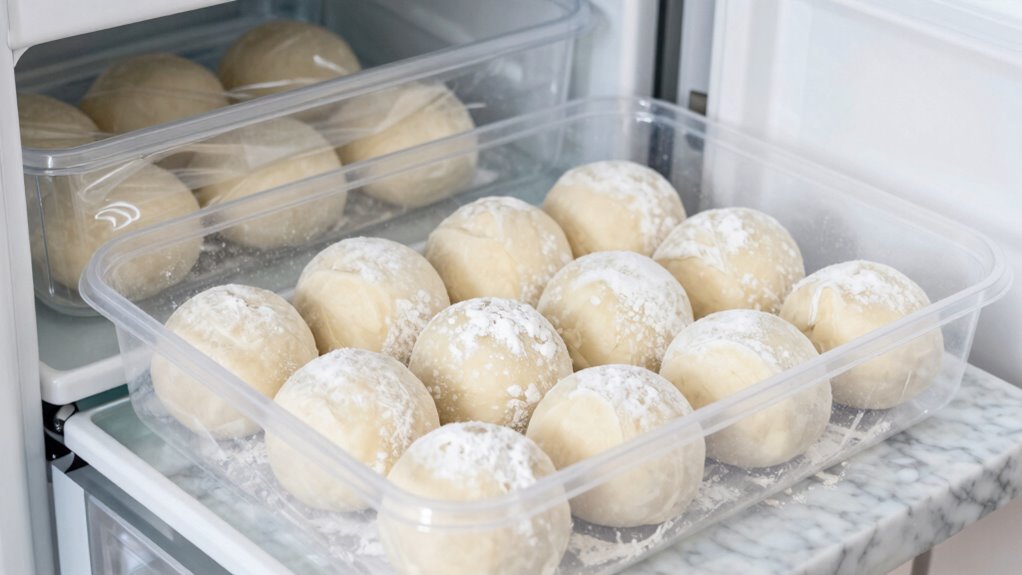
Freezing dough is a simple way to save time and reduce waste, but knowing the right techniques guarantees your baked goods turn out perfect later on. One of the most important steps is ensuring proper yeast activation. Before freezing, make sure your yeast is fresh and active. If you’re working with dry yeast, proof it by dissolving a small amount in warm water with a pinch of sugar. If it bubbles and foams within five to ten minutes, you know it’s active and ready. This step is crucial because inactive yeast won’t rise properly after freezing, which affects the final texture of your baked goods. If you’re using fresh yeast, crumble it into warm water and sugar to check for foaming, and only proceed if it’s lively. Proper yeast activation guarantees your dough will rise well after thawing, maintaining its lightness and fluffiness. Additionally, controlling the dough’s temperature during proofing helps maintain yeast vitality and ensures consistent results. Using the correct temperature range during proofing supports optimal fermentation and yeast activity. Ensuring the dough is proofed at the right temperature also helps prevent over-proofing, which can affect the dough’s ability to rise after freezing. Incorporating proper fermentation techniques can further enhance the dough’s resilience to freezing and thawing. For example, allowing the dough to ferment thoroughly before freezing helps develop the gluten structure, which is essential for maintaining dough integrity during storage. Next, pay attention to flour selection. The type of flour you use impacts how your dough will freeze and thaw. The best results are achieved with high-protein bread flour or all-purpose flour, which provide good gluten development, helping your dough retain its structure after freezing. Avoid low-protein or pastry flours, as they lack the elasticity needed for a good rise. When preparing your dough for freezing, knead it thoroughly to develop gluten, which helps it hold its shape and rise evenly after thawing. Well-developed gluten networks trap gases produced by yeast, ensuring your baked product remains airy and tender. Proper gluten development is essential for maintaining the dough’s structure during freezing and baking. When you’re ready to freeze, shape your dough into a ball or loaf, and wrap it tightly in plastic wrap to prevent freezer burn. For added protection, place the wrapped dough in a resealable freezer bag or an airtight container. Label it with the date, so you know how long it’s been frozen. Freezing dough in small portions or individual pieces can make it easier to thaw only what you need later. To thaw, transfer the dough to the fridge overnight, allowing it to slowly come to temperature. Avoid using the microwave, as rapid thawing can kill yeast cells and compromise the dough’s rise. Proper storage and handling during freezing are vital to maintain the yeast’s vitality and ensure your dough performs well upon thawing.
As an affiliate, we earn on qualifying purchases.
Frequently Asked Questions
Can I Freeze All Types of Dough?
You can freeze most types of dough, but some respond better to freezing than others. For effective dough storage, use proper freezing techniques like wrapping tightly or placing in airtight containers to prevent freezer burn. Yeast-based doughs like bread or pizza freeze well, while delicate pastry doughs might lose texture. Always label your frozen dough with date and type, and thaw in the fridge before use for best results.
How Long Can Dough Be Frozen Without Quality Loss?
Dough can stay fresh and fantastic for up to three months when you master proper preservation. For peak performance, use precise freezing techniques—wrap tightly, minimize air exposure, and label clearly. After this period, dough may lose its leavening power or become less pliable. By practicing diligent dough preservation and freezing techniques, you guarantee your dough remains delicious and ready whenever you crave baked brilliance.
Should I Thaw Dough Before Baking?
Yes, you should thaw dough before baking to guarantee even cooking and good texture. Use gentle thawing methods like refrigerating overnight or letting it sit at room temperature until it softens. If you’re looking for freezing alternatives, consider refrigerating dough for short-term storage instead. Thawing properly helps restore the dough’s performance, preventing issues like uneven rising or dense results. Always plan ahead for best baking outcomes.
Does Freezing Affect Dough’s Rise and Texture?
Freezing dough is like hitting pause on a lively dance—some steps might slow down, but the rhythm stays. Freezing effects can temporarily diminish dough elasticity, making it less springy initially. However, with proper thawing, the dough usually regains its original bounce and texture. So, while freezing might slightly alter the dough’s rise, it generally preserves its performance, allowing you to enjoy fresh baking later.
Can I Freeze Dough Multiple Times?
You can freeze dough multiple times, but it’s better to minimize how often you do it. Proper dough storage and freezing techniques help maintain quality. Each freeze-thaw cycle can affect texture and rise, so label your dough with dates and try to use it within a few months. Wrap it tightly in plastic wrap and place it in an airtight container to prevent freezer burn, ensuring peak performance when you bake.
airtight plastic containers for freezing dough
As an affiliate, we earn on qualifying purchases.
As an affiliate, we earn on qualifying purchases.
Conclusion
Freezing dough is like tucking a precious gift into a safe box—you want to preserve its freshness and texture. When done correctly, your dough stays just as lively as it was fresh, ready to rise and bake into delicious treats. Remember to wrap it tightly and label it clearly. With these simple steps, you’ll always have perfect dough on hand, ready to turn any day into a baking celebration.
As an affiliate, we earn on qualifying purchases.
As an affiliate, we earn on qualifying purchases.
Halloween Picks
halloween
As an affiliate, we earn on qualifying purchases.