If your bread tastes flat and has little rise, the main mistake is likely improper fermentation caused by yeast not activating correctly. This often happens if the yeast wasn’t given the right warm water temperature (105-110°F) or if the dough was kept too cold or too hot during fermentation. When yeast doesn’t activate properly, it won’t produce enough carbon dioxide to lift the dough. Keep an eye on temperature and fermentation times for better results—more details await to help you perfect your bread.
Key Takeaways
- Using water that is too cool or too hot can hinder yeast activation, leading to flat bread.
- Insufficient fermentation time prevents proper gas development, resulting in a dense, flat loaf.
- Improper dough temperature (too cold or too hot) slows yeast activity and affects flavor and rise.
- Failing to properly activate yeast with warm water and sugar can cause flatness and poor fermentation.
- Inconsistent temperature control during fermentation can suppress yeast activity, making bread taste flat.
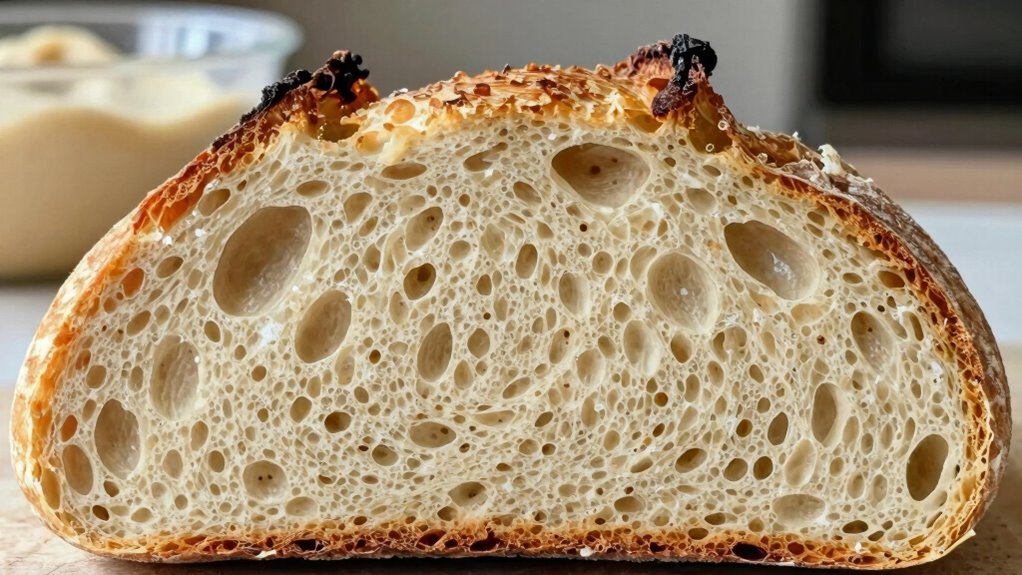
Have you ever wondered why your bread didn’t turn out as expected despite following the recipe? One common reason is a fermentation mistake that leaves your bread tasting flat and lacking the usual rise. This often happens because of issues with yeast activation and dough temperature, which are crucial steps in the process. If the yeast doesn’t activate properly, your dough won’t develop the necessary gases to create that light, airy texture you’re aiming for.
Yeast activation is a delicate process. It requires warm, not hot, water and a touch of sugar to kick-start fermentation. If the water is too cool, the yeast becomes sluggish or dormant, delaying activation. Conversely, if it’s too hot, it can kill the yeast altogether. Ensuring the water temperature is around 105-110°F (40-43°C) helps the yeast come to life without risking damage. When yeast activates properly, it produces carbon dioxide, which causes the dough to rise and develop flavor. If activation fails or is incomplete, your dough won’t produce enough gas, resulting in a flat, dense loaf.
Proper yeast activation requires warm water (105-110°F) and a touch of sugar for optimal fermentation.
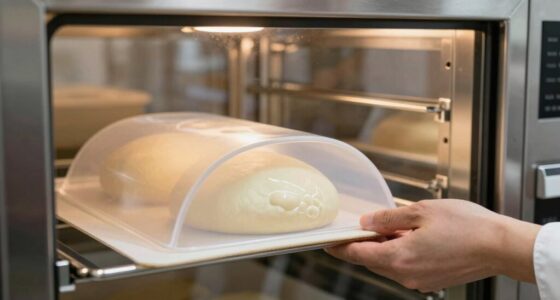
Dough temperature plays an equally vital role. Even if your yeast is healthy, if the dough is too cold, fermentation slows down considerably, leading to insufficient rise. On the other hand, if the dough is too hot, it can cause overproofing or kill the yeast. The ideal dough temperature for fermentation is generally around 75-80°F (24-27°C). At this temperature, yeast activity is optimized, allowing the dough to ferment evenly and develop good flavor. Using a kitchen thermometer can help you monitor the dough’s temperature and maintain the right environment. If your dough feels too cold, warm it slightly by placing it in a warm spot or covering it with a damp towel. If it’s too hot, move it to a cooler area to prevent overfermentation. Proper temperature control is essential for consistent fermentation, and understanding the effects of temperature fluctuations can help you troubleshoot issues more effectively. Additionally, timing can influence how well the yeast develops gases and flavors, as rushing or rushing the process can hinder fermentation. Being aware of the fermentation timeline can help you plan better and achieve the perfect loaf.
instant read kitchen thermometer
As an affiliate, we earn on qualifying purchases.
As an affiliate, we earn on qualifying purchases.
Frequently Asked Questions
Can Using Cold Water Affect Fermentation Quality?
Using cold water can slow down fermentation because water temperature directly impacts yeast activity. When you use cold water, yeast becomes less active, leading to a slower rise and potentially flat-tasting bread. To guarantee proper fermentation, aim for lukewarm water, around 75-80°F. This temperature optimizes yeast activity, helping your dough rise well and develop good flavor, avoiding the flat taste caused by sluggish fermentation.
How Does Overproofing Influence Bread Flavor?
Ever wonder what happens when you overproof bread? Overproofing extends fermentation timing, causing yeast activity to peak and then decline. This results in a bread with a sour, overly yeasty flavor and a dense texture. When fermentation goes too long, the gluten structure weakens, compromising the bread’s rise. To avoid this, keep a close eye on yeast activity and proof just enough to develop flavor without overdoing it.
What Role Does Salt Play in Fermentation?
Salt plays a vital role in fermentation by controlling salt concentration, which influences fermentation speed. When you add the right amount, it slows down yeast activity, preventing overproofing and ensuring balanced flavor development. Too little salt speeds fermentation, risking flat or bland bread, while too much can inhibit yeast altogether. Adjusting salt carefully helps you achieve the perfect rise, flavor, and texture in your bread.
Can Homemade Yeast Impact Fermentation Results?
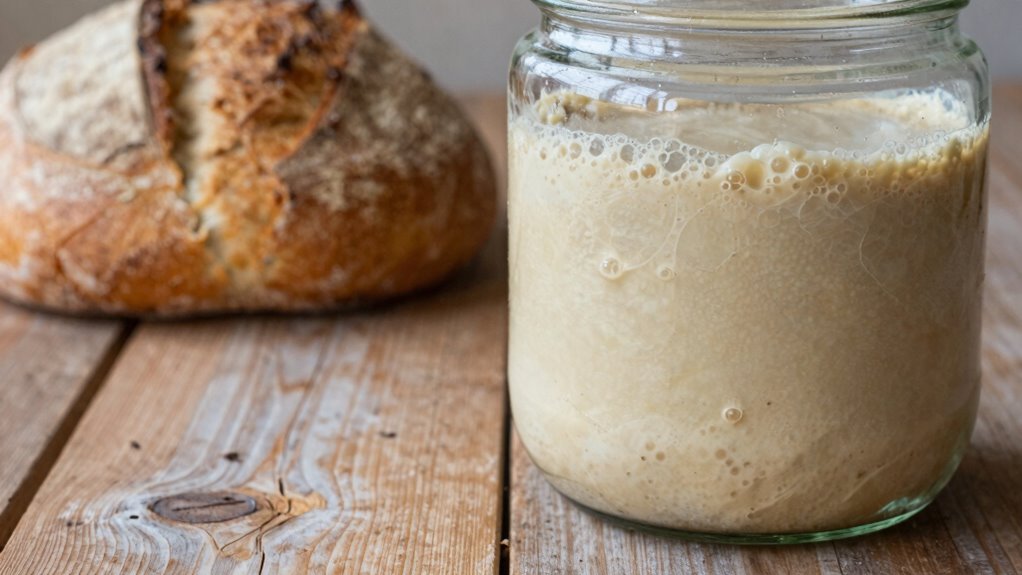
Surprisingly, your homemade yeast can profoundly impact fermentation results. Different yeast strains influence fermentation speed and flavor, so choosing the right one matters. While you might think homemade yeast is just as good as store-bought, it can introduce variability, leading to inconsistent rise and taste. Ironically, the very yeast you craft yourself could be the reason your bread’s flavor is flat or uneven, highlighting the importance of reliable, high-quality yeast strains.
How Does Altitude Affect Bread Fermentation?
At higher altitudes, you need to make altitude adjustments because the thinner air speeds up yeast activity. This causes dough to ferment faster, so you should reduce the amount of yeast and shorten fermentation times to prevent over-proofing. Additionally, adjusting liquids and adding a bit more salt can help control yeast activity, ensuring your bread develops the right flavor and texture despite the altitude.
As an affiliate, we earn on qualifying purchases.
Conclusion
So, next time you blame the yeast or blame the flour, remember it might just be your own fermentation mistake that’s flattening your bread’s flavor. Ironically, in trying to perfect your dough, you might be the one dulling its taste. Sometimes, the biggest flaw is the one we overlook — ourselves. So, give your fermentation process a little more attention; your taste buds might thank you for it, even if your loaf doesn’t.
As an affiliate, we earn on qualifying purchases.
dough fermentation temperature controller
As an affiliate, we earn on qualifying purchases.
As an affiliate, we earn on qualifying purchases.