Controlling water activity directly influences your food’s shelf life by limiting microbial growth and slowing down enzyme and chemical reactions that cause spoilage. When water activity is high, microbes like bacteria and molds thrive, shortening freshness. Lowering it through drying or adding salts and sugars keeps food safe longer. If you want to understand more about how managing water activity can help preserve your foods, keep exploring this essential preservation concept.

Get baking supplies delivered free with Prime
- Fast, free delivery on millions of items
- Prime Video, Amazon Music and more included
- Member-only deals all year
Key Takeaways
- Lower water activity inhibits microbial growth, directly extending the shelf life of food products.
- Managing water activity slows enzymatic and chemical reactions that cause spoilage.
- Techniques like drying or adding sugars bind free water, enhancing product stability over time.
- High water activity environments promote microbial proliferation, leading to faster spoilage.
- Precise control of water activity allows for safer, longer-lasting food preservation.
Have you ever wondered why some foods stay fresh longer than others? The answer often lies in water activity, a essential factor influencing how quickly food spoils. Water activity measures the availability of free water in a product, which directly impacts microbial growth and, consequently, product stability. When water activity is high, microbes like bacteria, yeasts, and molds find an ideal environment to thrive, accelerating spoilage. Conversely, lowering water activity restricts microbial growth, helping your food stay fresh longer.
Understanding water activity can help you better grasp how it affects shelf life. Microbial growth is a primary driver of food deterioration, and it depends heavily on the amount of free water present. Even if a food looks dry, it can still contain enough unbound water to support microorganisms. When water activity is reduced—say, through drying, adding salts, or sugars—you create an environment that’s less hospitable to these microbes. This reduction in microbial activity enhances product stability, keeping food safe and desirable for extended periods. Additionally, controlling water activity is crucial for maintaining the nutritional quality of preserved foods. Proper management of water activity can also prevent the development of undesirable flavors caused by microbial or enzymatic activity, further improving food quality.
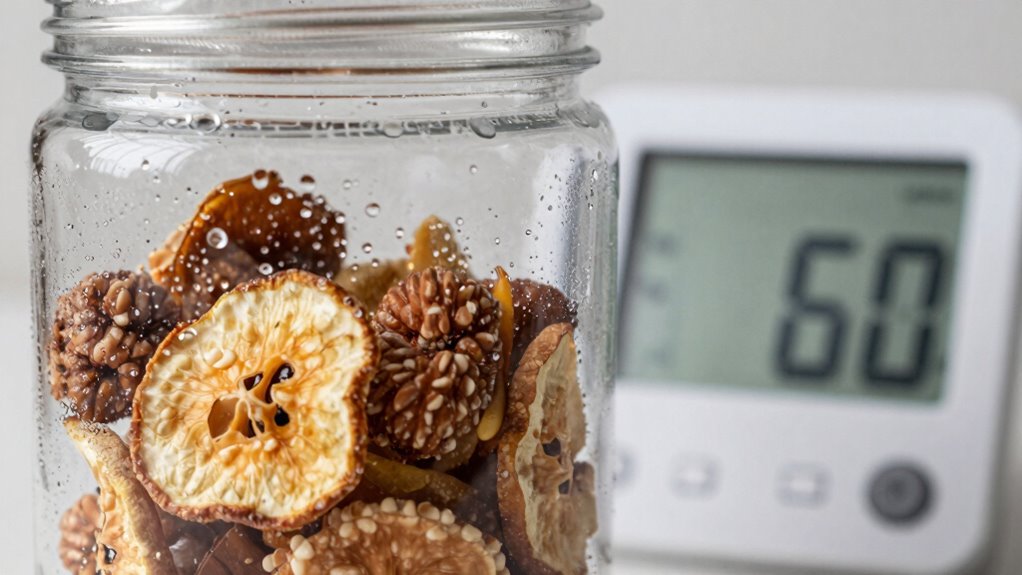
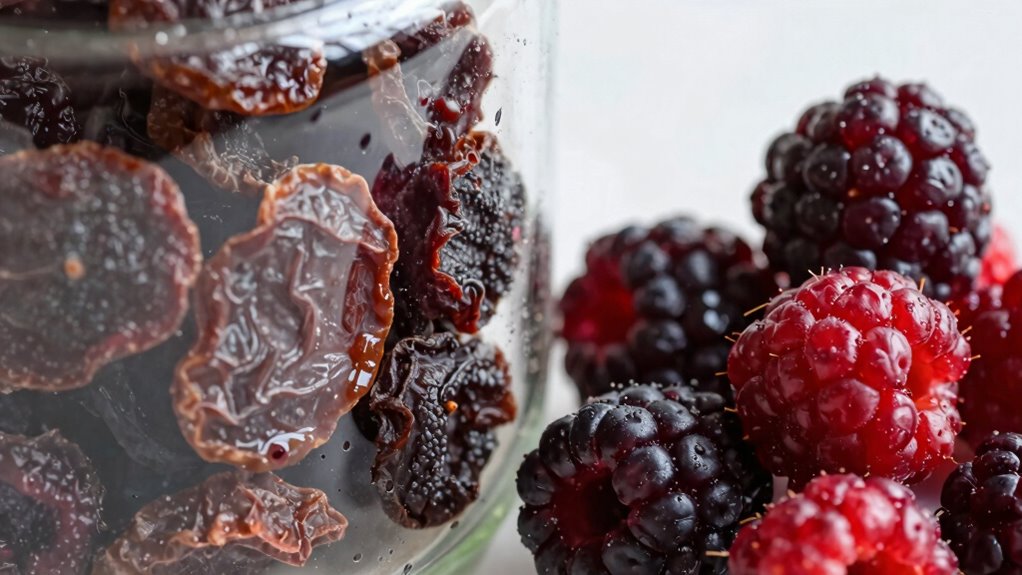
In practical terms, controlling water activity is a common method to extend shelf life. For example, dried fruits have low water activity, which limits microbial growth and preserves their texture and flavor over time. Similarly, jams and jellies contain high sugar concentrations that bind free water, preventing bacteria from multiplying. These techniques don’t necessarily eliminate all microbes but inhibit their ability to grow, delaying spoilage and maintaining quality. Techniques like water activity control are integral to commercial food preservation, ensuring products remain safe and appealing. Advances in preservation technology continue to develop methods for more precise manipulation of water activity, further extending shelf life.
It’s important to note that water activity doesn’t only influence microbial growth; it also affects enzymatic reactions and chemical stability. When water activity is high, enzymes that cause browning or off-flavors can become more active, further reducing shelf life. By managing water activity, you can slow down these processes, ensuring your food retains its fresh taste and appearance longer. Understanding water activity also helps in designing effective preservation methods that align with natural systems of biodiversity and conservation.
In essence, water activity acts as a key control point in food preservation. By reducing free water, you limit microbial growth and other degradation pathways, boosting product stability and shelf life. Whether through drying, adding preservatives, or packaging techniques, manipulating water activity is a powerful strategy to keep foods safe, tasty, and appealing for as long as possible. So next time you’re pondering how to extend the freshness of your favorite snacks or ingredients, consider how water activity plays a fundamental role behind the scenes.
Products Worth Considering

De'Longhi Linea Classic Espresso Machine with Adjustable Milk Frother

Breville Bambino Espresso Machine, Brushed Stainless Steel

De’Longhi Classic Matte Black Espresso Machine with Milk Frother
As an affiliate, we earn on qualifying purchases.
Frequently Asked Questions
How Is Water Activity Measured Accurately in Different Foods?
You measure water activity accurately in different foods using specialized instruments called water activity meters. These devices assess food moisture by determining the ratio of vapor pressure in the sample compared to pure water. By calibrating the meter properly, you can obtain precise water measurement, which helps you understand how the food’s moisture level influences shelf life and safety. This method guarantees consistent, reliable results across various food types.
Can Water Activity Be Intentionally Altered During Food Processing?
Like setting a trap with a flick of a switch in a sci-fi novel, you can intentionally alter water activity during food processing. By applying food drying techniques or adding humectants, you manipulate water activity to extend shelf life or preserve textures. This water activity manipulation is a strategic move, making your products less inviting to microbial growth and spoilage, ultimately ensuring better quality and longer-lasting foods.
Does Water Activity Affect Microbial Growth Differently in Various Food Types?
Water activity influences microbial growth differently across food types because various microbes have distinct spoilage mechanisms and microbial diversity. In high water activity foods, bacteria thrive and cause rapid spoilage, while fungi and molds dominate in lower water activity foods. You’ll notice that controlling water activity helps prevent specific microbial growth, ultimately extending shelf life. Understanding these differences lets you better manage food preservation, tailored to each food’s unique microbial profile.
Are There Industry Standards for Optimal Water Activity Levels?
Yes, industry standards for ideal water activity levels exist to guarantee food safety and quality. Packaging innovation plays a key role in maintaining these levels by controlling moisture and preventing microbial growth. Proper storage conditions are equally essential; they help preserve the desired water activity. By following these standards, you can extend shelf life and reduce spoilage, ensuring your products remain safe and fresh for consumers.
How Does Water Activity Influence Food Texture and Flavor Stability?
You’ll notice that water activity directly impacts food texture and flavor stability. When water activity is too high, moisture migration can cause spoilage and texture loss, making products soggy or stale. Conversely, low water activity helps preserve texture and prevents flavor deterioration. Maintaining a desirable level ensures moisture stays balanced, which is essential for texture preservation and flavor stability, ultimately extending shelf life and ensuring product quality.
Conclusion
Understanding water activity is like managing a busy party; when you keep the guests (microorganisms) at bay, the party (shelf life) lasts longer. For example, lowering water activity in dried fruits prevents spoilage, much like adding a door keeps uninvited guests out. By controlling water activity, you’re fundamentally setting the rules of the game, ensuring your products stay fresh and safe longer. Remember, a little control goes a long way in extending shelf life.