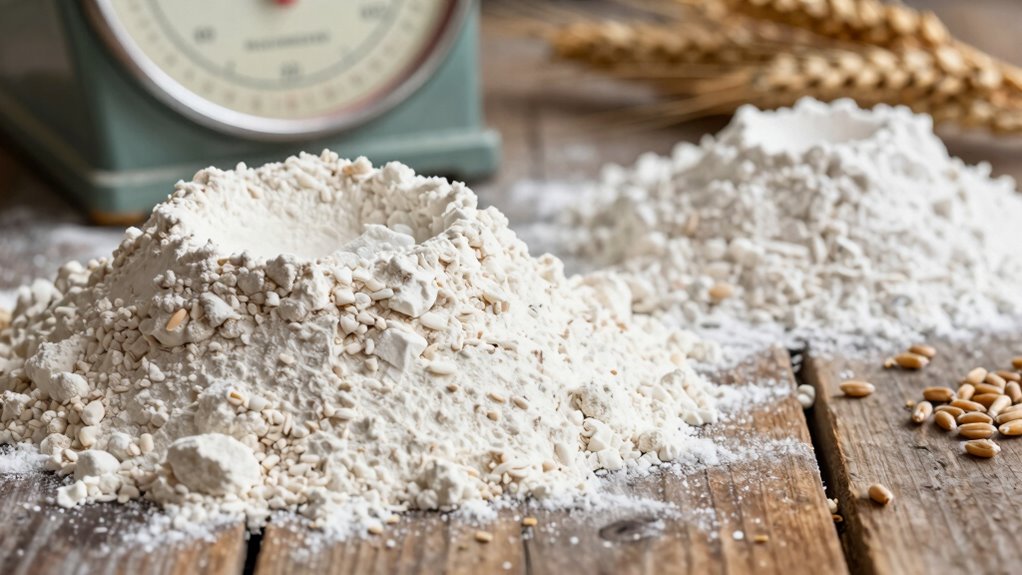

As flour ages, its gluten-forming proteins weaken, which reduces the dough’s elasticity and its ability to trap gases for rising. Fresh flour has higher moisture content and stronger enzymes, making it better for light, fluffy baked goods. Over time, moisture escapes, and enzymes break down starches and proteins, leading to denser results. Proper storage slows these changes, but understanding how age affects flour can help you adjust baking techniques for consistently great results. Keep exploring to learn more.

Get baking supplies delivered free with Prime
- Fast, free delivery on millions of items
- Prime Video, Amazon Music and more included
- Member-only deals all year
Key Takeaways
- Fresh flour has higher moisture and gluten activity, resulting in more elastic dough and better gas retention for rising.
- Over time, moisture loss and enzyme activity weaken gluten, leading to denser baked goods and reduced rise.
- Aging alters flavor and texture, affecting how flour interacts with other ingredients in recipes.
- Proper storage conditions slow aging, maintaining gluten strength and shelf stability.
- Bakers may need to adjust techniques based on flour age to achieve consistent, high-quality results.
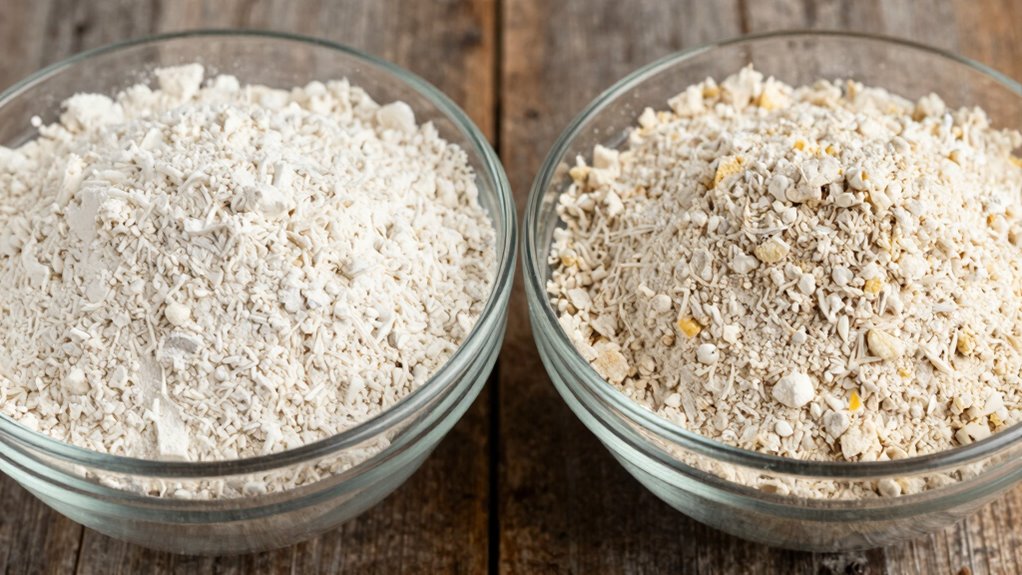
When it comes to baking, the age of your flour can make a noticeable difference in your results. Fresh flour tends to produce a different texture and structure compared to older flour, mainly because its gluten development potential and shelf stability change over time. As flour ages, the proteins responsible for gluten formation undergo subtle transformations, which can influence how well your baked goods rise and hold their shape. Younger flour generally has a higher moisture content and more active gluten-forming proteins, leading to a more elastic dough that can trap gases more effectively, resulting in lighter, fluffier baked items. Conversely, older flour may have a weaker gluten structure because some proteins degrade or become less active over time, which might cause denser baked goods or items that don’t rise as well.
Shelf stability is another key factor affected by flour age. When flour is fresh, it has a higher moisture content and a more vibrant enzyme activity, both of which can influence how it interacts with liquids and other ingredients. As the flour ages, moisture slowly escapes, and enzymes can continue breaking down starches and proteins, leading to changes in how the flour behaves during mixing and baking. This reduction in moisture and enzyme activity can make older flour less predictable, sometimes causing inconsistent results. However, in some cases, aged flour can develop a slightly different flavor profile, which might be desirable for certain recipes, like pie crusts or biscuit doughs, where a less elastic gluten network is preferred. Additionally, understanding the proteins responsible for gluten formation can help bakers adjust their techniques based on flour age. To further optimize baking outcomes, some bakers choose to test their flour before committing to a full batch, especially when using older supplies.
Using flour storage conditions such as airtight containers and cool, dark places can slow down the aging process and help maintain quality over time. You might notice that older flour tends to be more shelf-stable, meaning it’s less prone to spoilage or mold, which is why many bakers keep flour stored for extended periods. Still, it’s important to recognize that as flour ages, its gluten development potential diminishes, making it less ideal for recipes that require strong gluten networks, like bread. To get the best results, you should pay attention to how long your flour has been stored. If it’s been sitting for a year or more, consider testing it with a small batch to see how it performs. You may find that fresh flour gives you a lighter crumb, whereas older flour might produce denser results. Ultimately, understanding how flour age impacts gluten development and shelf stability helps you adapt your baking techniques to achieve consistent, high-quality baked goods every time.
flour storage container airtight
As an affiliate, we earn on qualifying purchases.
As an affiliate, we earn on qualifying purchases.
Frequently Asked Questions
How Does Storage Temperature Affect Flour Aging?
Storing flour at different temperatures impacts its aging process by influencing grain enzyme activity and moisture absorption. Cooler temperatures slow enzyme activity, preserving freshness and delaying aging, while warmer temperatures speed up enzyme activity, leading to quicker starch breakdown and flavor changes. Additionally, warmer environments increase moisture absorption, which can cause clumping and spoilage. To maintain ideal baking performance, store flour in a cool, dry place, and avoid fluctuating temperatures.
Does Flour Age Differently in Humid Environments?
In humid environments, flour ages faster, reacts more to humidity effects, and changes more quickly due to moisture absorption. Humidity impacts storage conditions, causing flour to clump, spoil, or lose its freshness sooner. You’ll notice this by a change in texture, smell, or baking performance. To keep flour fresh longer, you should store it in airtight containers, in cool, dry places, away from humidity effects.
Can You Tell if Flour Has Aged by Smell?
Yes, you can often tell if flour has aged by smell. When flour ages, it undergoes flavor deterioration and aroma change, typically developing a stale or musty scent. If you notice a dull or off-putting aroma, it’s a sign that the flour has lost freshness. Fresh flour should have a light, neutral smell, while aged flour’s aroma may be more pronounced with a less appealing, sour, or rancid note.
How Long Is Optimal Flour Freshness for Baking?
You’ll want to use flour within its freshness window for perfect baking. Typically, fresh flour’s shelf life is about 6 to 8 months if stored properly, but freshness indicators like a subtle smell or a light, powdery texture help you judge. After that, it starts losing its power, so don’t wait too long—otherwise, your baked goods might turn out dense or flat. Keep an eye on shelf life considerations for the best results.
Does Aging Impact Gluten Development in Flour?
Aging does impact gluten development in flour. As flour ages, the gluten strength increases, leading to better dough elasticity. This process allows the gluten proteins to fully hydrate and form stronger networks, making your dough more resilient and easier to handle. With aged flour, you’ll notice improved structure and chewiness in baked goods, especially in bread. So, letting flour rest for a few days can markedly enhance its gluten-forming capabilities.
bread flour with high gluten content
As an affiliate, we earn on qualifying purchases.
As an affiliate, we earn on qualifying purchases.
Conclusion
Think of flour as a fine wine—its true character unfolds with age. As flour matures, its proteins and starches change, influencing how your baked goods rise and develop texture. Fresh flour is like a sprightly dancer, quick to perform, while aged flour is more like a seasoned performer, offering depth and stability. By understanding these changes, you can better choreograph your baking, ensuring each loaf or cake hits the perfect note every time.
baking flour for bread and pastries
As an affiliate, we earn on qualifying purchases.
As an affiliate, we earn on qualifying purchases.
As an affiliate, we earn on qualifying purchases.
Fall Picks
fall essentials
As an affiliate, we earn on qualifying purchases.