Granulated sugar isn’t always the best choice because different recipes call for specific sugar types to achieve the right flavor, texture, and appearance. For example, brown sugar adds moisture and depth, while superfine sugar dissolves faster for smooth sauces. Using the wrong type can affect how your baked goods turn out or how a dish tastes. To get the best results, understanding these differences helps you choose the perfect sugar—discover more if you keep going.

Get baking supplies delivered free with Prime
- Fast, free delivery on millions of items
- Prime Video, Amazon Music and more included
- Member-only deals all year
Key Takeaways
- Different sugar types have unique textures and solubility, affecting their suitability for specific recipes.
- Granulated sugar may not dissolve well in certain applications like sauces or delicate baked goods.
- Alternative sugars like brown or powdered sugar provide specific flavors and textures that granulated sugar cannot achieve.
- Some sugars, such as superfine or caster sugar, dissolve faster, making them better choices for certain culinary uses.
- Using the right sugar type enhances flavor, texture, and appearance, ensuring optimal cooking and baking results.
Products Worth Considering

De'Longhi Dinamica Plus Fully Automatic Espresso Machine

Vitamix Propel Series 750 Professional-Grade Blender, 4 Programs, Black
Vitamix Ascent X3 Professional-Grade Blender, 3 Programs, Shadow Black
As an affiliate, we earn on qualifying purchases.
What Is Sugar? A Simple Explanation of the Basics
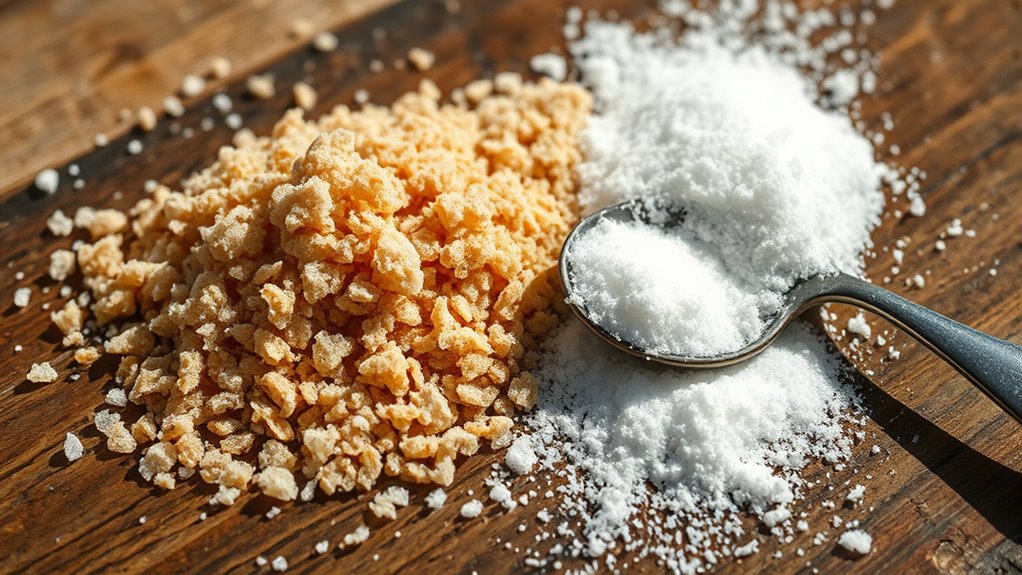
Have you ever wondered what sugar really is? It’s a natural carbohydrate that comes from plants like sugarcane and sugar beet. During sugar processing, these plants are harvested and crushed to extract juice, which is then filtered and purified. To produce the familiar crystalline form, the juice undergoes sugar crystallization, where sugar molecules naturally form into crystals as water is removed. This process involves boiling the juice to evaporate water and promote crystallization, resulting in raw sugar. Further refining removes impurities, creating the white, granulated sugar we use daily. Understanding this process reveals how sugar transforms from plant juice into the sweet crystals on your table, highlighting its natural origins and the complex steps involved to produce it. Additionally, the sugar crystallization process is carefully controlled to ensure consistent quality and texture of the final product. The use of advanced manufacturing techniques has significantly improved the efficiency and quality of sugar production over time. Modern innovations in sugar refining processes continue to enhance purity and sustainability in production methods. For example, new methods like vacuum evaporation help conserve energy during production while maintaining product quality. Incorporating quality control measures further ensures that each batch meets safety and purity standards.
What Are the Common Types of Sugar and How Do You Use Them?
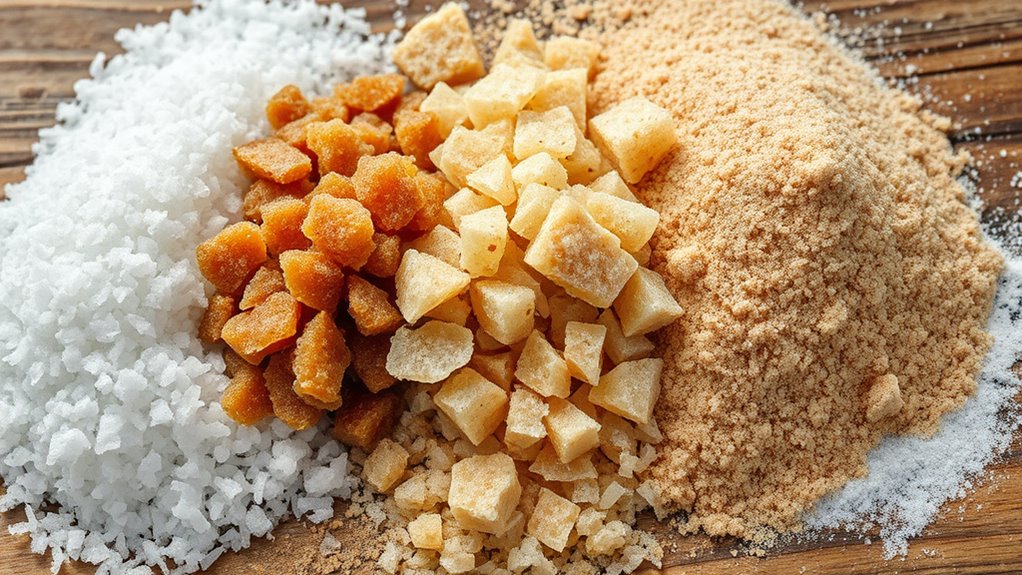
You probably already use various types of sugar in your cooking, like granulated, powdered, or brown sugar. Each one has unique qualities that make them ideal for different recipes, from baking to sweetening beverages. Understanding these common varieties helps you choose the right sugar for every dish you make. For example, sugar alternatives can also be used in certain recipes to reduce calorie intake or cater to dietary restrictions. Additionally, knowing the types of sugar and their properties can improve your baking results and flavor profile, especially when considering the chemical composition that influences sweetness and texture. Recognizing the granulated sugar’s role in recipes can lead to better consistency in your baked goods and desserts. Being familiar with sugar characteristics allows for more precise adjustments in recipes to achieve desired outcomes.
Common Sugar Varieties
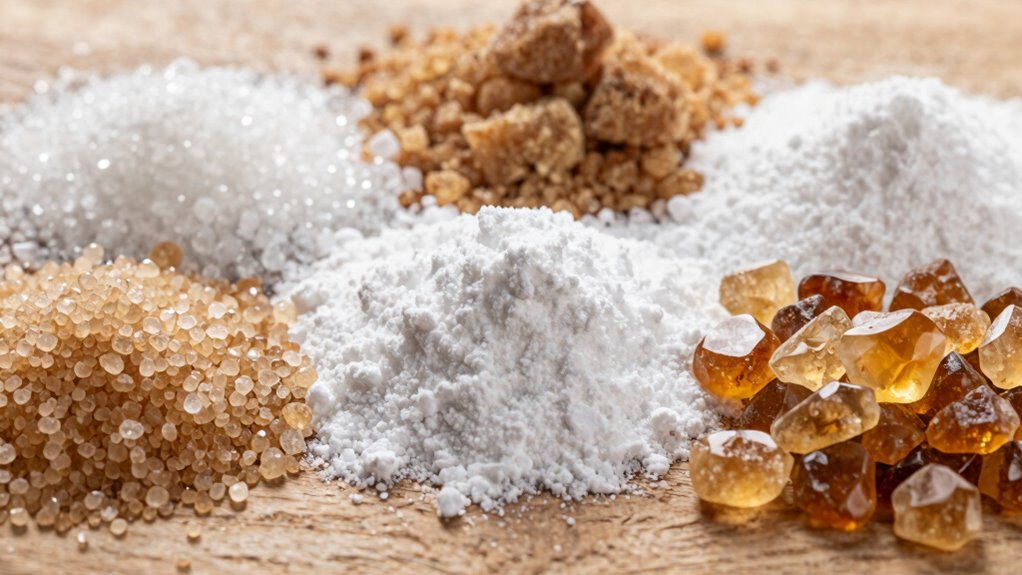
When baking or cooking, choosing the right type of sugar can make a significant difference in the final result. Common sugar varieties include granulated, powdered, and brown sugar. Granulated sugar is versatile, but it’s also prone to sugar crystallization, which can affect texture in candies and confections. Powdered sugar dissolves quickly, making it ideal for frostings and dustings. Brown sugar contains molasses, adding moisture and a rich flavor, perfect for baking and caramelizing. Some recipes rely on sugar fermentation, where specific sugars break down during fermentation, impacting flavor and texture. Knowing these varieties helps you select the best sugar for your recipe, ensuring the desired consistency, flavor, and appearance. Each type has unique properties that influence the final outcome of your culinary creations. Additionally, understanding the different sugar types can help you choose the most suitable one for various cooking techniques and desired results, especially since sugar crystallization can change the texture of your dishes.
Best Uses in Cooking
Are you wondering which type of sugar works best for your cooking or baking needs? Different sugars play unique roles in recipes, especially when it comes to sugar crystallization and sugar caramelization. Granulated sugar is versatile, ideal for sweetening beverages and baking cookies, as it dissolves quickly and promotes even crystallization. Powdered sugar is perfect for smooth icings and dusting baked goods because it dissolves easily. Brown sugar adds moisture and depth to sauces and desserts, thanks to its molasses content. For caramel sauces or candies, superfine or caster sugar melts evenly, producing consistent caramelization without crystallization issues. Additionally, understanding the different types of sugar can help you select the best one for specific cooking techniques. Recognizing how each sugar type interacts during cooking processes is essential for achieving the desired results. Understanding these differences helps you choose the right sugar for each recipe, ensuring the best texture, flavor, and appearance in your cooking and baking projects.
How Do Sugar Types Differ in Flavor and Texture?
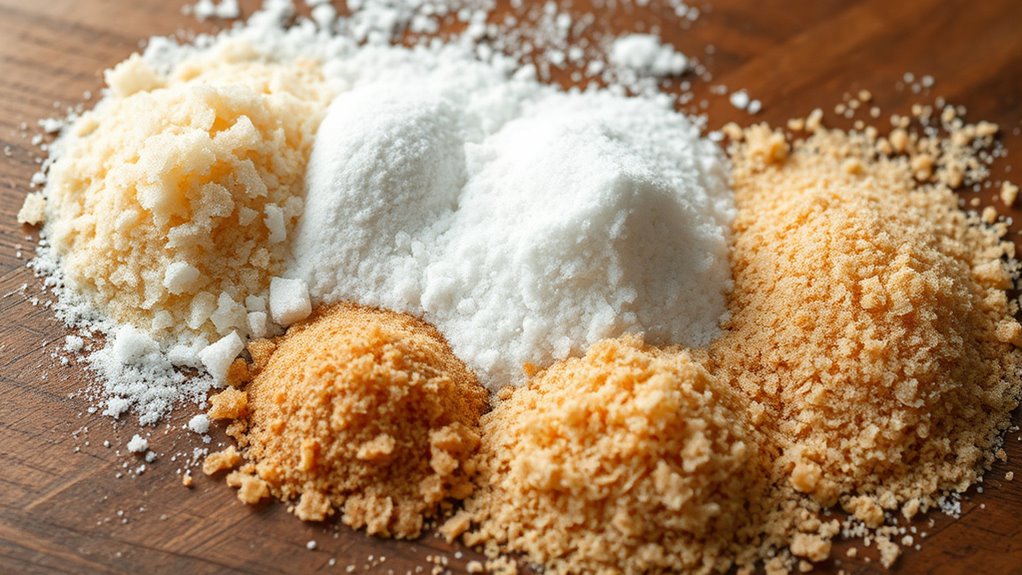
Different sugar types bring distinct flavors, from mellow and caramel-like to sharp and tangy, which can change the taste of your recipes. Their textures also vary, affecting how they dissolve and contribute to the final product’s consistency. Understanding these differences helps you choose the right sugar for perfect baking results. Incorporating knowledge about auditory processing skills can also improve your ability to identify subtle flavor nuances through sensory perception. Recognizing the variety of dog beds available can inform your choices for comfort and support, much like selecting the appropriate sugar enhances your culinary creations.
Flavor Profiles Vary Significantly
Have you ever noticed how some sugars taste richer or feel crunchier than others? That’s because different sugar types offer distinct flavor profiles and natural sweetness levels. For example, raw or unrefined sugars like turbinado have a more complex, caramel-like flavor due to their molasses content, creating a richer taste. In contrast, refined white sugar delivers a clean, neutral sweetness with minimal flavor variation. Brown sugar, with its molasses, adds depth and moisture, enhancing baked goods’ flavor. Even among similar types, subtle differences in processing influence flavor profiles. These variations can considerably impact your recipes, affecting not just sweetness but also aroma and overall taste. Understanding how sugar types differ helps you select the perfect one for every culinary need.
Texture Influences Baking Outcomes
The texture of sugar plays a crucial role in shaping the outcome of your baked goods. Different sugar types influence how sugar crystallization occurs, affecting the final texture—whether it’s smooth or grainy. For example, superfine sugar dissolves quickly, promoting even sugar caramelization, which leads to a rich, glossy finish in caramel sauces and baked desserts. Conversely, coarser sugars like turbinado or raw sugar may crystallize more easily, adding crunch or a sparkly appearance. The rate of sugar caramelization also varies with texture: finer sugars caramelize faster, giving you more control over color and flavor. Choosing the right sugar texture ensures consistent results, whether you want a delicate crumb or a crisp crust, ultimately defining your baked goods’ quality and appeal.
How Do Different Sugars Function in Your Recipes?

Ever wondered how various sugars impact your recipes? Different sugars influence texture, sweetness, and appearance, thanks to their unique properties. For example, granulated sugar promotes sugar crystallization, giving a crisp finish, while honey adds moisture and a distinct flavor. The molecular sweetness varies too; some sugars, like fructose, taste sweeter than sucrose. Recognizing sugar crystallization can help you achieve the desired textures in your baked goods. It’s also important to understand sugar functions to select the best type for your specific needs. Here’s a quick comparison:
| Sugar Type | Function in Recipes | Notable Property |
|---|---|---|
| Granulated | Sweetening, structure, crystallization | Creates crisp textures |
| Honey | Moisture, flavor, browning | High molecular sweetness |
| Brown Sugar | Moisture, caramel flavor | Adds richness |
| Maple Syrup | Flavor, moisture | Unique aromatic qualities |
Understanding these differences helps you choose the right sugar for perfect results. Selecting the appropriate sugar can significantly impact your baking outcomes and overall dish quality.
What Are the Health and Dietary Effects of Various Sugars?
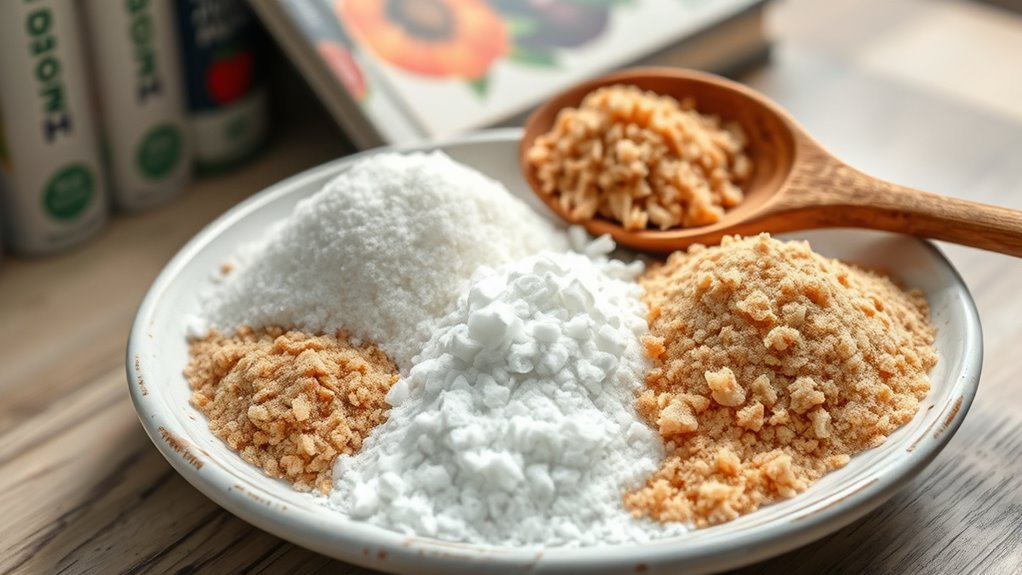
Different types of sugars can considerably affect your health and dietary choices. Some sugars are quickly absorbed, impacting sugar metabolism and causing spikes in blood sugar levels, which can challenge your dietary restrictions. For example, refined sugars like sucrose and high-fructose corn syrup may lead to weight gain, insulin resistance, and increased risk of chronic conditions. Natural sugars found in fruit, however, come with fiber that slows absorption and benefits your health. Being aware of these effects helps you make better choices.
- Refined sugars may cause energy crashes and cravings.
- Natural sugars in fruit support digestion and provide essential nutrients.
- Excess sugar intake can lead to metabolic issues, especially if you have dietary restrictions.
- Monitoring sugar types helps maintain balanced blood sugar levels and overall health.
What Are Good Alternatives When Granulated Sugar Isn’t Enough?
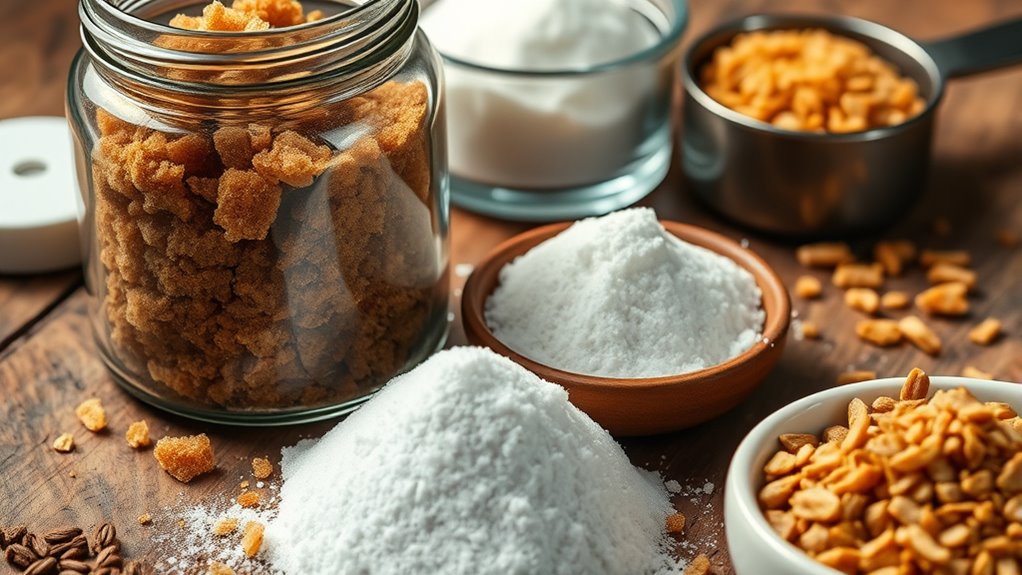
When you need more sweetness than granulated sugar provides, choosing the right alternative can enhance your recipes and dietary goals. Natural sweeteners like honey, maple syrup, and agave nectar offer rich flavors and are often less processed, making them good options for those seeking healthier sugar substitutes. Stevia and monk fruit extract are popular zero-calorie sugar substitutes that don’t spike blood sugar levels, ideal for low-carb or diabetic diets. Coconut sugar provides a more natural, minimally processed option with a lower glycemic index. Each alternative has unique properties, so consider the recipe and your health goals. Using these options can satisfy your sweet tooth while aligning with your nutritional preferences. Always remember to adjust quantities, as some sweeteners are sweeter than sugar.
Frequently Asked Questions
How Can I Substitute Different Sugars in Baking Recipes Effectively?
To substitute different sugars in baking recipes effectively, you should consider natural sweeteners and sugar substitutes’ sweetness levels, as they vary from regular sugar. You can swap honey or maple syrup for granulated sugar by reducing liquids in the recipe. For artificial sweeteners, use according to package instructions, and always taste-test your batter to guarantee the desired sweetness. Adjust baking times if needed to get perfect results with your chosen sweetener.
Are Some Sugars Better for Specific Dietary Restrictions or Allergies?
Some sugars suit specific dietary needs better, especially for gluten-free or allergen-sensitive individuals. You might choose coconut sugar or maple syrup, which are often gluten-free and allergen-free options, avoiding common allergens like soy or dairy. These alternatives can help you bake safely without sacrificing sweetness. Always check labels to verify they meet your dietary restrictions, and consider how their flavors might influence your recipes.
Which Sugar Types Are Best for Low Glycemic Index Diets?
For low glycemic index diets, you should opt for natural sweeteners like stevia, monk fruit, or erythritol. These sugar alternatives don’t spike your blood sugar levels and provide sweetness without the drawbacks of traditional sugars. You can use these natural sweeteners in cooking or baking, making them ideal sugar alternatives that support your health goals while satisfying your sweet tooth.
How Does Processing Affect the Nutritional Value of Various Sugars?
Processing methods markedly impact the nutritional value of sugars. When sugars undergo extensive processing, such as refining or bleaching, they lose essential nutrients and natural preservatives, reducing sugar preservation and overall health benefits. For example, brown sugar retains more minerals than white, unrefined varieties. By understanding how processing affects sugars, you can choose options that better preserve nutrients and support your dietary goals.
Can Certain Sugars Impact Cooking Times or Textures Differently?
Certain sugars can considerably impact cooking time and texture. For example, brown sugar melts more slowly, extending cooking time and adding moisture, which affects texture. Conversely, superfine sugar dissolves quickly, reducing cooking time and creating a smoother texture. You’ll notice these differences when baking or caramelizing, as choosing the right sugar influences not just taste, but also how your dish develops in consistency and speed.
Conclusion
Think of sugar like a toolbox—you wouldn’t use a hammer to screw in a bolt. Just as each tool has its purpose, different sugars bring unique flavors and textures to your recipes. Choosing the right type can turn a good dish into a great one. So next time you’re baking, remember: selecting the proper sugar isn’t just about sweetness, it’s about crafting perfection—like finding the perfect tool for the job.