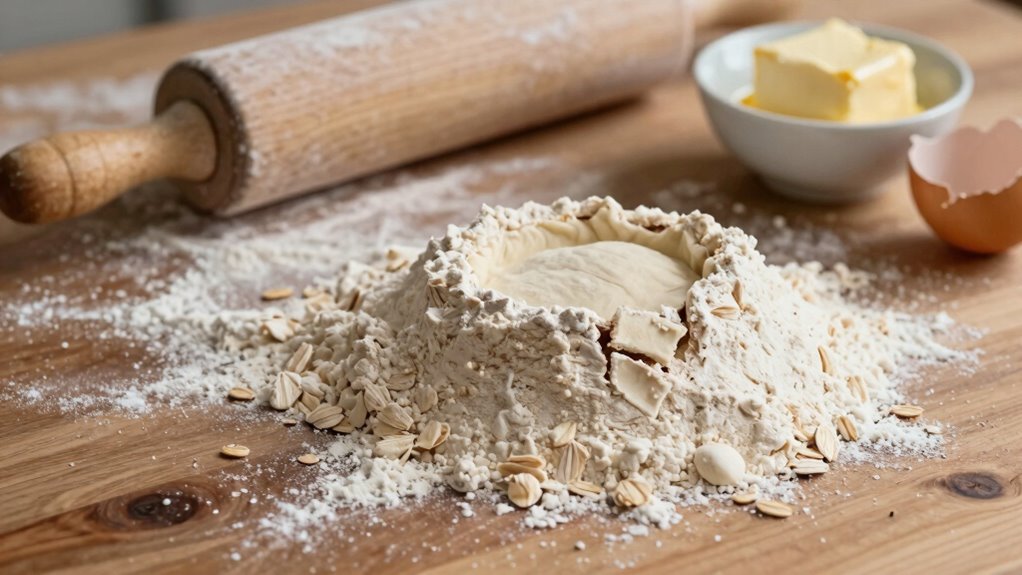
Oat flour works best in baked goods like muffins, pancakes, and quick breads where extra moisture and gentle flavor are welcome. It’s ideal when you want a tender texture and added nutrition. However, it can cause recipes that need elasticity—like bread or chewy treats—to turn out crumbly or dense if used alone. To succeed, you’ll often need to blend it with other flours or add binders. Keep exploring to discover how to make the most of oat flour.
Key Takeaways
- Oat flour works best in muffins, pancakes, and quick breads that benefit from moisture and flavor.
- It may fail in recipes requiring elasticity, like bread or bagels, due to lack of gluten.
- Adjust liquid amounts carefully, as oat flour absorbs more moisture than wheat flour.
- Combining oat flour with binders (eggs, xanthan gum) improves structure in baked goods.
- Use oat flour thoughtfully, mainly where a tender, moist crumb and nutty flavor are desired.
If you’re new to baking with oat flour, you’ll find it’s a versatile and nutritious alternative to traditional wheat flour. Many bakers turn to oat flour as a gluten free substitution, especially for those with gluten sensitivities or celiac disease. Its naturally mild, slightly sweet flavor makes it a popular choice for cookies, muffins, pancakes, and more. However, understanding when oat flour works best and when it might fall short is essential to achieving successful baked goods.
Oat flour is a nutritious, gluten-free alternative perfect for cookies, muffins, and pancakes.
Oat flour’s ability to enhance flavor is one of its biggest advantages. It adds a subtle, nutty richness that can elevate your recipes without overpowering other ingredients. This flavor enhancement can make your baked goods taste more wholesome and satisfying. But keep in mind, because oat flour lacks gluten, it doesn’t provide the same structure and elasticity as wheat flour. This means baked goods made solely with oat flour might be crumbly or dense unless you adjust your recipe accordingly.
When using oat flour as a gluten free substitution, it’s often necessary to combine it with other gluten-free flours like tapioca, rice, or potato starch. These blends help improve the texture and hold of your baked items, preventing them from falling apart. Also, incorporating binders such as eggs, xanthan gum, or flaxseed can mimic gluten’s role in providing structure. If you skip these adjustments, your baked goods might not hold together as well as you’d like, especially in recipes that rely heavily on gluten for their structure, like bread or pizza dough.
Oat flour works best in recipes that benefit from its flavor and moisture-retaining qualities. For example, muffins, pancakes, and quick breads often turn out beautifully because oat flour keeps them moist and tender. However, it might not be the best choice for recipes that require a chewy or elastic texture, like bagels or certain types of bread. In these cases, oat flour alone won’t provide the necessary structure, and you’ll likely end up with dense or crumbly results.
Additionally, because oat flour absorbs more liquid than wheat flour, you may need to adjust your recipe’s liquid content. Too much or too little liquid can affect the texture and rise of your baked goods. Experimentation is key: start with small changes, and you’ll learn how oat flour behaves in different recipes. Understanding oat flour’s absorption is essential for successful baking, as it helps you perfect the balance of liquids and dry ingredients. When used thoughtfully, oat flour can be a wonderful ingredient that adds flavor, nutrition, and a healthy twist to your baking. But knowing when it works and when it doesn’t will help you avoid common pitfalls and create consistently delicious treats.
gluten free oat flour baking mix
As an affiliate, we earn on qualifying purchases.
As an affiliate, we earn on qualifying purchases.
Frequently Asked Questions
Can Oat Flour Be Used as a Direct Substitute for Wheat Flour?
You can’t use oat flour as a direct substitute for wheat flour because of its lower gluten content. Typically, you should replace wheat flour with about 25-30% oat flour, adjusting the substitution ratio accordingly. Oat flour works best in recipes that don’t rely heavily on gluten structure, like muffins or pancakes. Keep in mind, you might need to add binding agents like eggs to improve texture and consistency.
How Does Oat Flour Affect the Texture of Baked Goods?
Oat flour gives baked goods a tender, slightly crumbly texture, resulting in pleasant texture variation. It also helps improve moisture retention, keeping treats soft longer. You might notice a denser crumb or a coarser mouthfeel compared to wheat flour. Incorporating oat flour creates a hearty, moist bite, but it may require adjustments in liquids or binding agents to balance the texture and prevent crumbliness.
Is Oat Flour Suitable for Gluten-Free Baking?
Yes, oat flour is suitable for gluten-free baking, but you need to choose certified gluten-free options to avoid cross-contamination risks. It’s a great gluten-free alternative that adds a mild, nutty flavor to your baked goods. Keep in mind, however, that oat flour alone may not provide the same structure as wheat flour, so consider combining it with other gluten-free flours or binders for best results.
What Are Common Mistakes When Baking With Oat Flour?
You might stumble over measuring inaccuracies or improper mixing, which are common mistakes when baking with oat flour. Imagine pouring the flour, only to find your measurements slightly off—your batter becomes dense or crumbly. If you don’t mix thoroughly, the flour clumps or doesn’t blend well, affecting texture and rise. Pay close attention to precise measurements and mix evenly; these small steps make a big difference in your baking success.
How Should I Store Oat Flour to Maintain Freshness?
To keep your oat flour fresh, store it in an airtight container in a cool, dark place, like your pantry. For longer shelf life, consider refrigeration or freezing, which helps preserve its freshness and prevents rancidity. Use airtight storage tips to minimize exposure to moisture and air, maintaining its quality. Always check for any off smells or signs of spoilage before using, ensuring your baked goods stay flavorful and fresh.
xanthan gum for gluten free baking
As an affiliate, we earn on qualifying purchases.
As an affiliate, we earn on qualifying purchases.
Conclusion
So, now you’re armed with the secrets of oat flour baking. When you get it right, your baked goods will rise like a skyscraper—fluffy, moist, and utterly irresistible. But remember, even the best bakers face setbacks; don’t get discouraged if things fall flat sometimes. Keep experimenting and tweaking your recipes. Before you know it, you’ll be turning out perfect treats that make even professional bakeries jealous. Happy baking!
As an affiliate, we earn on qualifying purchases.
As an affiliate, we earn on qualifying purchases.