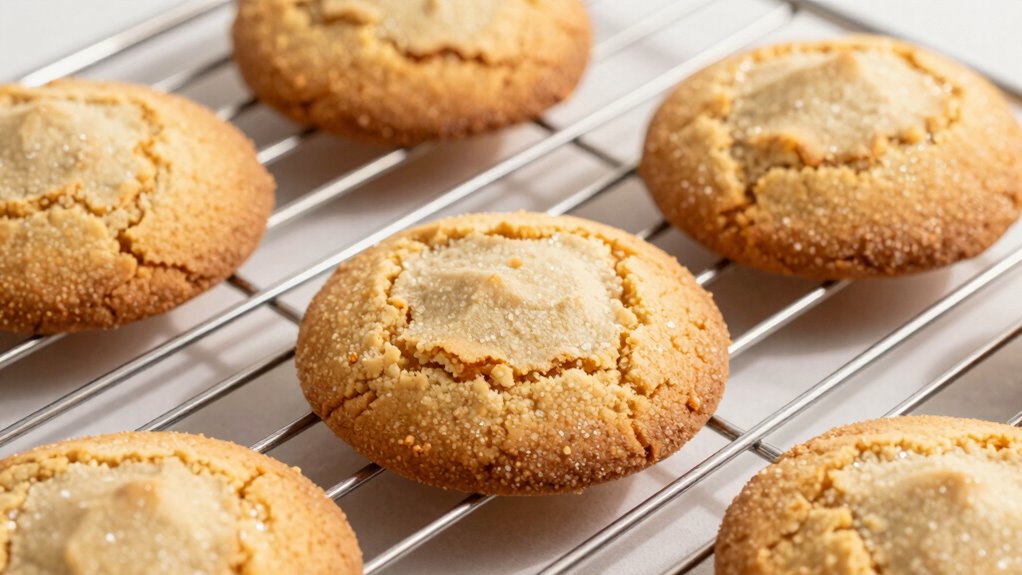

When you cool cookies on a rack with airflow, it affects how moisture escapes. Good airflow speeds up moisture loss, making cookies crisper, while restricted airflow traps moisture, keeping them softer or even soggy. Environmental factors and rack placement also play a role. Controlling airflow helps you achieve the texture you want, whether chewy or crunchy. Keep exploring to find out more about the best ways to manage cooling conditions for perfect cookies.

Get baking supplies delivered free with Prime
- Fast, free delivery on millions of items
- Prime Video, Amazon Music and more included
- Member-only deals all year
Key Takeaways
- Increased airflow accelerates moisture evaporation, resulting in crisper, crunchier cookies.
- Restricted airflow traps moisture, leading to softer or potentially soggy cookies.
- The placement of the cooling rack in drafty areas enhances moisture loss and crispness.
- Ambient temperature and humidity impact how airflow affects cookie moisture content.
- Ingredient composition influences how airflow during cooling modifies cookie texture.
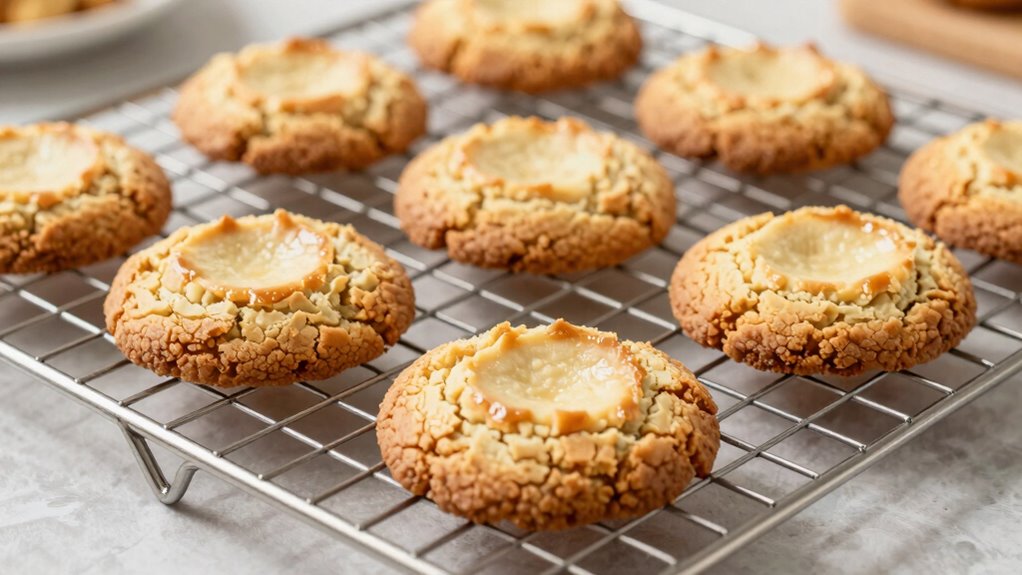
When you transfer freshly baked cookies to a cooling rack, the airflow around them plays a crucial role in determining their final texture. The way air circulates influences how quickly moisture escapes the cookies’ surface, affecting whether they end up chewy, crispy, or somewhere in between. If the airflow is too restricted, moisture may stay trapped, keeping the cookies soft and possibly causing them to become soggy. Conversely, if air moves freely around the cookies, moisture evaporates more rapidly, leading to a crisper exterior. Your choice of oven temperature during baking also impacts how these textures develop, as higher temperatures often produce a more pronounced crust, which then interacts with airflow during cooling. Additionally, the moisture content of the cookies can significantly influence how they respond to airflow during cooling, with higher moisture levels requiring more careful ventilation to prevent sogginess. Different ingredient variations can alter how cookies respond to airflow as well. For example, cookies made with higher fat content tend to spread more and may develop a delicate, tender crumb that’s sensitive to moisture loss. If these cookies cool too quickly due to strong airflow, they might become overly dry or brittle. On the other hand, cookies with more moisture-rich ingredients, like fruits or certain types of chocolate, are more prone to staying chewy if cooled in a less ventilated environment. Understanding the impact of airflow can help you better control cookie texture during cooling. Properly managing airflow during cooling can make a significant difference in the final cookie outcome. In addition, ambient conditions such as temperature and humidity can influence how quickly moisture escapes from the cookies, further affecting their texture. The key is understanding how these ingredient differences influence moisture content and how airflow can either preserve or diminish that moisture during cooling. The temperature you set in your oven not only affects how cookies bake but also influences their final structure and how they respond once cooled. Baking at a higher oven temperature often results in a quicker set and a firmer crust, which can resist moisture loss better during cooling. Lower temperatures produce softer, more delicate cookies that can become overly moist if airflow isn’t properly managed. When you’re cooling cookies, the position of the cooling rack also matters; placing it in a drafty spot accelerates moisture evaporation, which can intensify crispness. To prevent excessive drying, it’s helpful to consider the environmental conditions around your cooling setup, as ambient temperature and humidity levels also influence moisture loss. If you want your cookies to stay chewy, you might opt for a more insulated spot or even cover them loosely to slow down airflow.
As an affiliate, we earn on qualifying purchases.
Frequently Asked Questions
Does the Material of the Cooling Rack Affect Airflow?
Yes, the material of your cooling rack affects airflow. Metal racks, especially those made of durable stainless steel or aluminum, promote better airflow, helping cookies cool evenly and maintain their texture. They also offer good durability and aesthetic appeal, making them a practical choice. Plastic racks, on the other hand, may restrict airflow and are less durable. Choosing the right material guarantees your cookies cool properly, preserving their ideal texture and appearance.
How Does Humidity Influence Cookie Cooling on a Rack?
Humidity impacts cookie cooling by increasing surface moisture, which can make cookies feel damp or sticky. When humidity is high, moisture from the air condenses on the cookie surface, slowing down the cooling process and possibly altering texture. To prevent this, you should cool cookies in a well-ventilated area, and consider using a cooling rack with good airflow. This helps moisture escape, keeping your cookies crisp and delicious.
Can Stacking Cookies on a Rack Change Airflow?
Stacking cookies on a rack can definitely change airflow, leading to airflow disruption. When you pile cookies on top of each other, it blocks the natural circulation of air around each one. This can cause uneven cooling, making some cookies soggy or overly crisp. To prevent this, keep cookies separated on the rack, allowing airflow to move freely. Proper spacing guarantees even cooling and maintains the ideal cookie texture.
What’s the Ideal Cooling Time for Different Cookie Types?
Did you know that letting cookies cool for 10-15 minutes can improve their texture? For most cookies, transfer them from the baking sheet to a cooling rack immediately after baking to prevent sogginess. For storage, make sure cookies are fully cooled before sealing to avoid moisture buildup. Thinner cookies need less cooling time, around 10 minutes, while thicker cookies may require up to 15 minutes for the best texture.
Do Cookies Cool Faster on a Wire Rack or Paper Towels?
You’ll find cookies cool faster on a wire rack than paper towels because of better airflow, especially if you avoid cookie stacking. The rack material matters too; metal wire racks promote even cooling by allowing air to circulate all around the cookies, preventing sogginess. Paper towels can trap moisture, making cookies softer and slowing cooling. So, for quicker, crisp cooling, use a wire rack with minimal stacking.
baking cooling rack with airflow
As an affiliate, we earn on qualifying purchases.
As an affiliate, we earn on qualifying purchases.
Conclusion
Understanding how cooling rack airflow impacts cookie texture helps you achieve perfect results every time. Imagine placing a batch of cookies on a well-ventilated rack, allowing air to circulate evenly, resulting in crisp edges and chewy centers. Conversely, blocking airflow can make cookies soggy or overly crispy. By adjusting your cooling setup, you control the outcome—like a baker fine-tuning a recipe. Master this, and your cookies will always turn out just the way you want.
cookie cooling rack adjustable height
As an affiliate, we earn on qualifying purchases.
As an affiliate, we earn on qualifying purchases.
non-stick cooling rack for baking
As an affiliate, we earn on qualifying purchases.
As an affiliate, we earn on qualifying purchases.
Evergreen bestsellers Picks
bestsellers
As an affiliate, we earn on qualifying purchases.