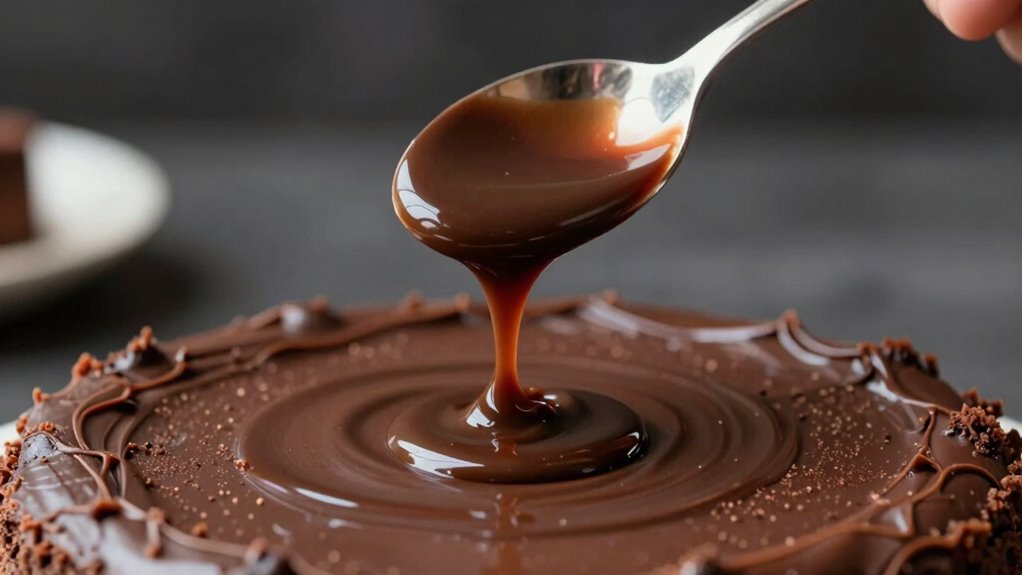
Your success with ganache drips depends more on timing than ingredient ratios. Pouring too early when the ganache is still warm makes it too runny, while waiting too long causes it to firm up, preventing smooth drips. Maintaining the right temperature and patience guarantees even, glossy drips. If you want to perfect your technique, understanding the importance of timing and temperature control will make all the difference. Keep exploring to get the best results.

Get baking supplies delivered free with Prime
- Fast, free delivery on millions of items
- Prime Video, Amazon Music and more included
- Member-only deals all year
Key Takeaways
- Incorrect timing affects ganache’s temperature and consistency more than ingredient proportions.
- Pouring too early or too late disrupts the ideal flow and gloss of the drips.
- Proper timing ensures ganache is at the right temperature for smooth, controlled drips.
- Temperature fluctuations during application hinder the ganache’s ability to set correctly.
- Patience and precise timing are crucial for achieving even, glossy, professional-looking drips.
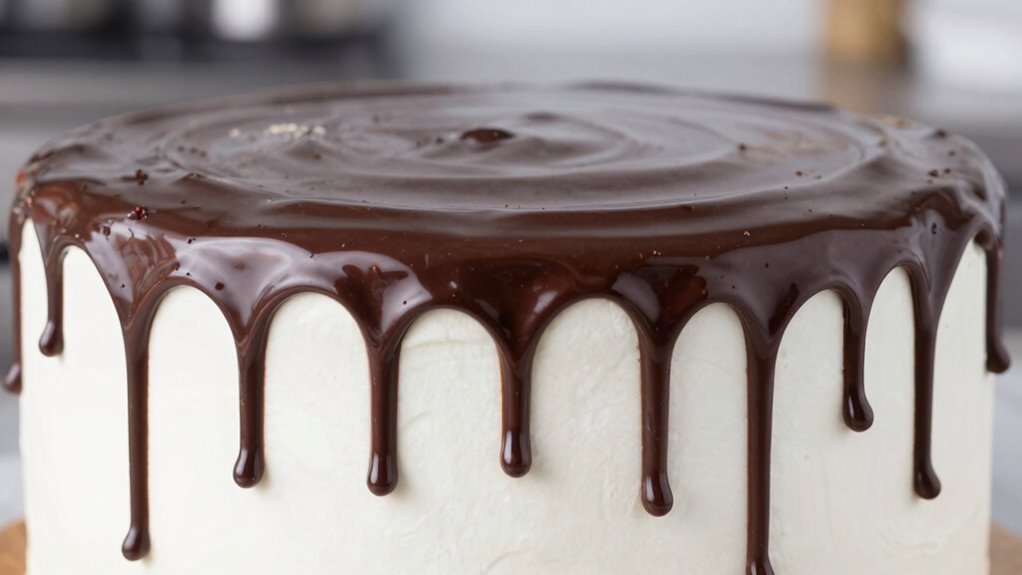
Many bakers find that ganache drip failures are more often caused by timing issues than the ratio of ingredients. When you’re working with ganache, especially for drips, timing becomes your best friend—and your worst enemy. If you pour the ganache too early, it might be too warm and runny, causing uneven drips or drips that slide right off the sides of your cake. Wait too long, and it could firm up too much, making it difficult to spread smoothly or get the desired drip effect. Achieving the perfect consistency involves carefully monitoring the temperature and texture of your ganache, rather than obsessing solely over the ingredient ratios. Proper temperature control is key to ensuring your ganache flows just right and sets beautifully. Chocolate tempering plays an essential role in this process. When you properly temper your chocolate before making ganache, you stabilize the cocoa butter crystals, resulting in a glossy finish, a firm texture, and a smooth pour. Proper tempering ensures that your ganache will set just right—neither too runny nor too stiff—allowing for a controlled drip that clings beautifully to your cake. If your ganache is not tempered correctly, even with the perfect timing, you might experience dullness, a dull matte finish, or uneven drips that don’t look professional. Tempering helps you control the flow, giving you a better chance at achieving those flawless, even drips you’re aiming for. Additionally, temperature consistency throughout the process helps prevent sudden changes that can impact the final appearance. Maintaining a consistent temperature is crucial for achieving a smooth and professional result. Ensuring uniformity in temperature also helps prevent the formation of undesirable crystals that can affect the texture. Properly managing the chocolate’s crystalline structure is essential for consistent results and a beautiful finish. Timing also impacts flavor enhancement. When your ganache is at the right temperature, the flavors meld perfectly, resulting in a more balanced, rich taste. If you rush and pour it too hot, you might burn off delicate flavors or cause an overly sweet, greasy texture. Conversely, if it’s too cool, flavors can become muted, and the ganache may not flow smoothly. The key is to wait until the ganache reaches a specific temperature—usually around 86°F to 90°F (30°C to 32°C)—where it’s fluid enough to drip but still holds its shape once it sets. This precise timing allows your chocolate’s rich flavor to shine through, making your cake not only visually stunning but also delicious. In the end, mastering ganache drips hinges on understanding that timing is more vital than the precise ratios of cream to chocolate. By paying close attention to the temperature, properly tempering your chocolate, and allowing the ganache to reach the right consistency before pouring, you set yourself up for success. This approach guarantees your drips are even, glossy, and perfectly timed to enhance both the appearance and flavor of your cake. Trust the process, and remember that patience and precision make all the difference in achieving those professional-looking ganache drips.
Products Worth Considering

Ninja Luxe Café Premier 3-in-1 Espresso Machine, Drip Coffee & Cold Brew

Vitamix Propel Series 750 Professional-Grade Blender, 4 Programs, Black

Vitamix Propel Series 510 Professional-Grade Blender, 3 Programs, Black
As an affiliate, we earn on qualifying purchases.
Frequently Asked Questions
How Do Ambient Temperature and Humidity Affect Ganache Drips?
Ambient temperature and humidity considerably impact ganache drips because of temperature sensitivity and humidity effects. Higher temperatures can cause the ganache to soften or melt, making drips run uncontrollably, while low temperatures may harden it prematurely. Humidity effects include moisture absorption, which can alter consistency and cause uneven drips. To get perfect drips, keep your environment cool and dry, adjusting timing based on these factors.
What Tools Are Best for Controlling Drip Consistency?
You should use a digital thermometer and a timing device to control drip consistency, ensuring the ganache’s temperature and drip speed stay steady. A small spatula or piping bag helps manage drip placement without disturbing the surface. Maintaining good color contrast allows you to see the drip progress clearly, and adjusting the drip speed helps prevent over or under-dripping, resulting in a more uniform, professional look.
Can Refrigeration Improve Drip Success Rates?
Refrigeration can greatly boost your drip success rates, turning a struggle into a cake decorating miracle. By chilling your ganache, you slow down its flow, giving you better control over drip timing and consistency. This enhances your presentation techniques and opens up new flavor pairing possibilities, making your desserts look stunning and taste divine. Just remember, patience is key—don’t rush, and your ganache drips will become flawless works of art.
How Do Different Cake Surfaces Impact Drip Timing?
Your cake’s surface texture and shape considerably impact drip timing. Smooth, even surfaces allow the ganache to flow consistently, making timing easier. If your cake has a rough or uneven surface, the drip may delay or unevenly fall, requiring adjustments in timing. Similarly, a tall or irregular cake shape can cause uneven drip flow, so you might need to tweak your ganache’s consistency or wait longer before applying it to achieve a perfect drip.
Is There an Ideal Ganache Thickness for Drips?
You should aim for a ganache with moderate viscosity for perfect drips. If it’s too thick, the drip speed slows, making it hard to control and causing uneven drips. If it’s too thin, the drips run quickly and can overflow. A good thickness allows for steady drip speed, giving you clean, consistent drips. Typically, a slightly pourable but still viscous ganache works best for achieving ideal drip effects.
Conclusion
In the end, mastering timing is key to perfect ganache drips. For example, if you pour the ganache too soon after heating, it’s too runny and won’t set properly, no matter the ratio. Conversely, waiting too long makes it too thick to drip smoothly. So, pay close attention to the temperature and consistency, rather than just the ingredient amounts. With practice, you’ll find that timing often makes all the difference between a flawless drip and a messy mess.