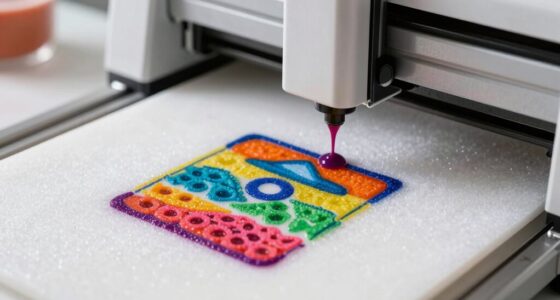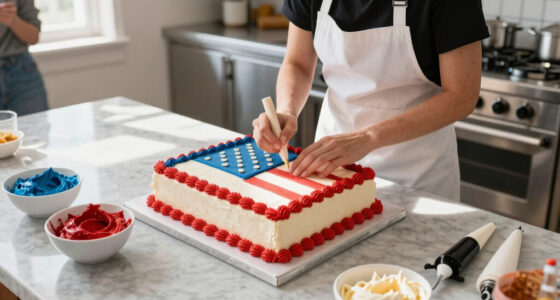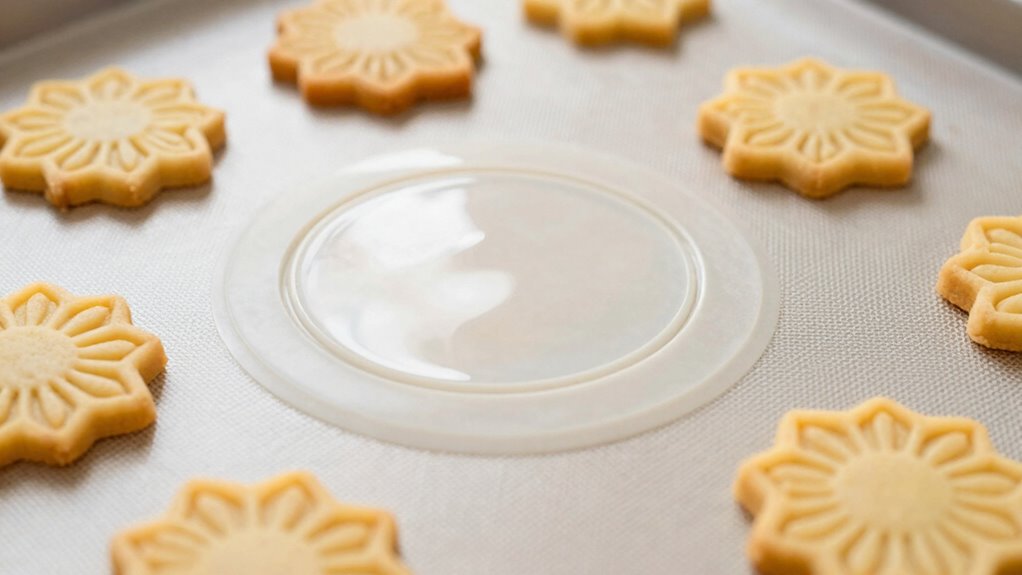
To make cookie printing easier, choose a flat, smooth, non-porous surface like a silicone baking mat or laminated countertop. These surfaces prevent wobbling and help you apply even pressure, which results in cleaner, more precise designs. They also stay stable during decorating and are easy to clean. By selecting the right surface, you’ll find icing application smoother and shapes sharper. Keep exploring to discover even more tips for perfect cookie printing.
Key Takeaways
- Use a flat, even surface to prevent wobbling and ensure uniform pressure during icing and printing.
- Choose non-porous materials like silicone mats or laminated countertops for stability and easy cleaning.
- Opt for smooth surfaces to avoid shifting cookie cutters and maintain design clarity.
- Select surfaces that resist moisture absorption to keep the workspace hygienic and prevent sogginess.
- Use cooler surfaces to help icing set faster and improve detail sharpness in cookie printing.
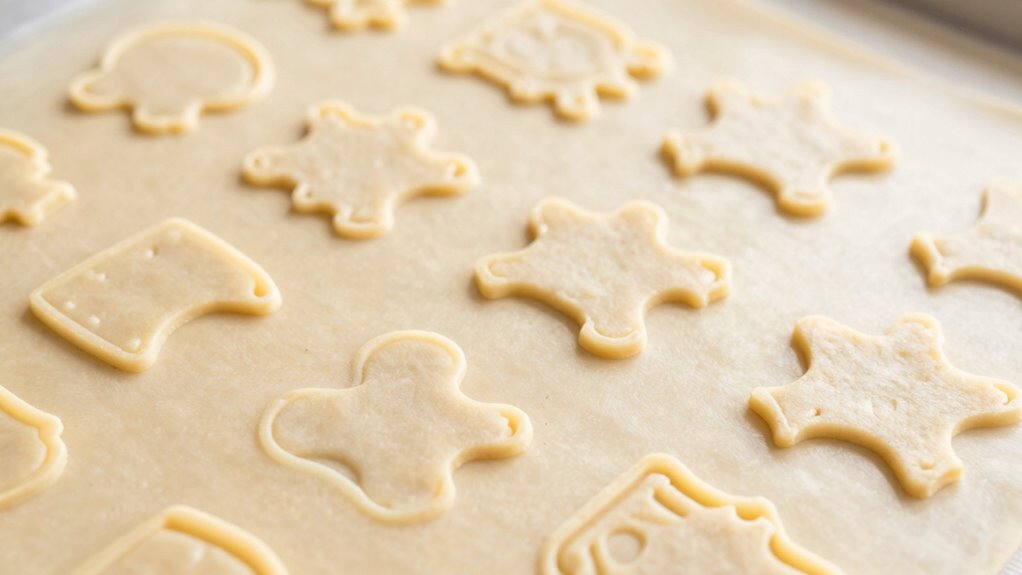
Are you struggling to get clean, crisp cookie prints? The surface you choose plays an essential role in achieving those professional-looking designs. When working with decorative icing and cookie cutters, the surface acts as the foundation for your work, influencing how smoothly your icing flows and how well your designs hold. A flat, even surface is vital to prevent any wobbling or uneven pressure that can distort your cookie prints. It’s best to work on a sturdy, non-porous material that won’t absorb moisture or cause your icing to bleed or smudge.
Many bakers swear by a smooth, silicone baking mat or a clean, laminated countertop. These surfaces provide a solid base that stays still as you pipe decorative icing onto your cookies. If you’re using cookie cutters, it’s important that the surface allows you to press evenly without slipping. A textured or uneven surface can cause your cookie cutter to shift or create uneven edges, which compromises the clarity of your design. When your surface is stable and smooth, you can apply consistent pressure, ensuring your cookie cutter leaves a clean, well-defined shape every time.
A smooth, stable surface ensures clean, well-defined cookie cutter shapes every time.
Another key factor is how the surface interacts with the icing. A non-porous surface prevents moisture absorption, which can cause your decorative icing to become soggy or lose its shape. If you’re working on a porous material like wood or uncoated paper, moisture can seep in and distort your design. Instead, opt for a surface that’s easy to wipe clean and won’t stain or retain oils from your hands or ingredients. This way, you can maintain a tidy workspace and avoid contaminating your icing. Using a surface with moisture-resistant properties can further enhance your decorating experience. Additionally, selecting a surface with consistent temperature can improve your icing’s behavior and help you achieve more precise details. Incorporating a cooler surface can also assist in setting your icing quickly, especially when working with royal icing or delicate piping, leading to cleaner, sharper designs.
silicone baking mat for cookie decorating
As an affiliate, we earn on qualifying purchases.
As an affiliate, we earn on qualifying purchases.
Frequently Asked Questions
Can I Use Paper Instead of a Cookie Surface?
You can use edible paper for cookie printing, but it’s not the best substitute for cookie sheets. Edible paper works well for decorating cookies or making edible images, but it doesn’t provide the same sturdy, flat surface needed for baking. For best results, print your designs on edible paper first, then place them on a cookie sheet to bake. Avoid using regular paper, as it’s not food-safe and can be dangerous.
What Materials Are Best for Non-Stick Cookie Surfaces?
Silicone baking mats and parchment paper are your best options for non-stick cookie surfaces. Unlike a standard cookie sheet, these materials prevent sticking without extra butter or oil. Silicone mats, with their durable non-stick coating, offer excellent reuse and easy cleanup, while parchment paper provides a simple, disposable barrier. Both options are ideal for achieving perfectly printed cookies, combining practicality with the non-stick qualities you need for smooth, successful baking.
How Does Surface Texture Affect Cookie Printing Quality?
Surface texture greatly impacts cookie printing quality by affecting surface grip and texture consistency. A smooth surface provides better grip, preventing smudging and ensuring crisp, clear prints. Conversely, a rough or uneven texture can cause inconsistencies, leading to blurred or distorted designs. For best results, choose a surface with a consistent, slightly textured feel that enhances grip without compromising the cookie’s shape and detail.
Is a Silicone Mat Suitable for Cookie Printing?
Yes, a silicone mat is suitable for cookie printing because of its surface elasticity, which helps in creating smooth, even prints. Silicone’s durability allows it to withstand repeated use without tearing or losing shape. Its flexibility makes it easy to handle and clean, guaranteeing consistent results. Just make sure you choose a high-quality silicone mat to maximize its durability and maintain a smooth surface for ideal cookie printing.
Can I Reuse the Same Surface Multiple Times?
They say “practice makes perfect,” and that’s true for cookie printing! You can reuse the same surface multiple times if it’s durable enough. Look for a surface with good surface durability to maintain printing consistency. Silicone mats are a popular choice because they’re flexible and easy to clean, allowing repeated use without losing quality. Just make sure you clean it thoroughly between uses to keep your prints consistent and professional.
laminated countertop for baking
As an affiliate, we earn on qualifying purchases.
As an affiliate, we earn on qualifying purchases.
Conclusion
Choosing the right surface for cookie printing is like finding the perfect canvas for a masterpiece—you want it smooth, stable, and forgiving. When you select a non-stick or silicone mat, it’s as if you’ve given your cookie sheets a secret weapon, making your designs crisp and clean every time. So, next time you get ready to print, remember: a good surface isn’t just an accessory, it’s the foundation of your cookie art success.
non-porous baking surface
As an affiliate, we earn on qualifying purchases.
As an affiliate, we earn on qualifying purchases.
cookie decorating work surface
As an affiliate, we earn on qualifying purchases.
As an affiliate, we earn on qualifying purchases.