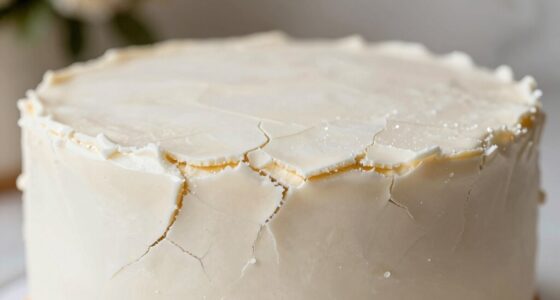
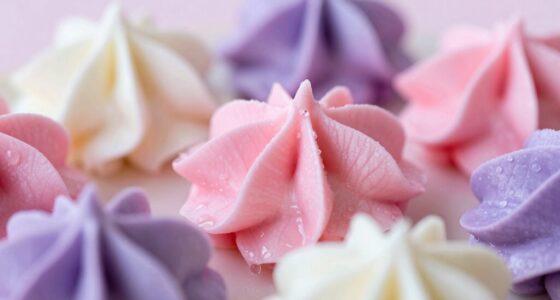
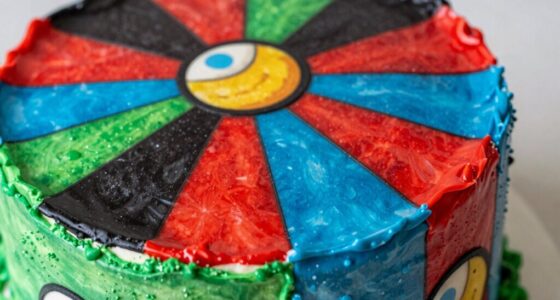
To prevent frosting from sliding off your cake, start with proper surface prep by cleaning and drying the cake thoroughly, then apply a thin crusting agent for better adhesion. Use fondant smoothing techniques to create an even, bubble-free surface. Keep your workspace cool and chill the cake beforehand to help the frosting set firmly. Controlling room temperature and humidity is crucial, and handling the cake gently during transportation also matters. For more tips, you’ll find additional strategies that can make your cake perfect.

Get baking supplies delivered free with Prime
- Fast, free delivery on millions of items
- Prime Video, Amazon Music and more included
- Member-only deals all year
Key Takeaways
- Properly clean and dry the cake surface before applying frosting to ensure good adhesion.
- Use a thin crusting layer or fondant smoother to create an even, bubble-free surface.
- Keep the cake and frosting at the right temperature, chilling as needed to set the frosting firmly.
- Control room humidity and temperature to prevent softening or sliding of the frosting.
- Handle and transport the cake in a cool environment to maintain frosting stability and prevent slipping.

Frosting sliding off a cake can be frustrating, but with the right techniques, you can keep it securely in place. The key starts with proper preparation and applies to how you handle the frosting during application. One vital step is fondant smoothing if you’re using fondant, as it creates a sleek, even surface that adheres better to the cake. When smoothing fondant, use a fondant smoother to press gently and remove air bubbles, ensuring it bonds well with the icing underneath. This not only improves appearance but also minimizes the chance of the frosting slipping off later. Additionally, understanding cake surface preparation can significantly impact how well the frosting stays put. Proper surface preparation includes cleaning and sometimes applying a thin layer of butter or a crusting agent to help the frosting adhere better. Ensuring the cake surface is completely dry before applying frosting is also crucial, as moisture can weaken the bond between the cake and the frosting. Also, controlling temperature and humidity in your workspace can help maintain the ideal environment for frosting to set properly.
Temperature control is essential for preventing frosting from sliding. If your kitchen is too warm, the frosting may become too soft and lose its grip on the cake. Before applying any frosting, make sure your cake is chilled—preferably refrigerated for at least an hour. Cold cakes help the frosting set faster and stick better. Similarly, keep your frosting at the right consistency: not too soft or runny. If your frosting is too warm or overly soft, chill it for a few minutes before spreading it onto the cake. This helps it maintain stability, reducing the risk of sliding or slipping off. Proper frosting consistency can make all the difference in how well the frosting adheres and stays in place.
Additionally, consider the environment where you’re decorating. Keep the room cool and avoid direct sunlight or heat sources. If you’re decorating in a warm space, place the cake in a cooler area or even in the fridge briefly between steps. This consistent temperature helps the frosting stay firm and adheres better to the cake surface. When you’re finished frosting the cake, give it a final chill before serving. This guarantees everything is set, and the frosting stays put during transportation and handling. Proper environmental control, such as room temperature, can make a significant difference in preventing frosting from sliding off.
fondant smoother for cake decorating
As an affiliate, we earn on qualifying purchases.
As an affiliate, we earn on qualifying purchases.
Frequently Asked Questions
Can Temperature Affect Frosting Adhesion?
Yes, temperature can affect frosting adhesion. If the environment is too warm, your frosting may become too soft, making it slide off the cake. To prevent this, make certain your frosting has the right consistency—neither too runny nor too stiff—and prepare the surface properly by smoothing it thoroughly before applying. Keeping the cake cool during frosting application also helps maintain proper adhesion, reducing the risk of frosting sliding off.
What Types of Frosting Are Less Prone to Sliding?
Did you know buttercream is the most popular frosting, and it’s less prone to sliding? For decorating techniques, opt for buttercream or cream cheese frosting, as their thicker consistency holds better. These frostings are less likely to slide when properly chilled, especially if you use a stable recipe with the right sugar-to-fat ratio. Adjusting frosting consistency—making it thicker—also helps keep it in place, ensuring a beautiful finish.
Does Cake Texture Influence Frosting Stability?
Yes, cake texture considerably influences frosting stability. When your cake crumb is tender and moist, it provides a good surface for the frosting to grip, reducing slipping. Additionally, frosting thickness matters—thicker frosting adheres better and is less prone to sliding. If your cake is too crumbly or your frosting is too thin, it can cause sliding. Ensuring a stable crumb and proper frosting thickness helps keep your decoration intact.
How Does Humidity Impact Frosting Adherence?
Humidity effects can markedly impact frosting bonding, especially in high humidity environments. When the air is humid, moisture can weaken the frosting’s structure, causing it to slide or slide off the cake surface. To counteract this, you should use a stable frosting recipe, chill the cake thoroughly, and work in a cooler, less humid space. These steps help maintain frosting adhesion and prevent it from slipping due to humidity effects.
Are There Specific Tools to Prevent Frosting Sliding?
Think of your tools as the steady hands of a sculptor—they help keep frosting in place. Using decorating techniques like piping bags with tips and crumb coats, plus ensuring your frosting consistency is just right, can dramatically reduce sliding. A turntable is especially helpful, providing stability as you work. These tools and techniques act like a firm grip, making sure your frosting stays put and your cake looks perfect.
As an affiliate, we earn on qualifying purchases.
Conclusion
To keep your frosting from sliding off, think of your cake as a sturdy dance floor and the frosting as a confident dancer. When the surface is smooth and cool, it’s like a well-polished stage, giving the frosting a firm grip. Use the right consistency, keep it chilled, and work patiently—like a gentle choreographer guiding a dancer to stay in step. With these tips, your cake will stay beautifully dressed, ready to impress at any celebration.
As an affiliate, we earn on qualifying purchases.
As an affiliate, we earn on qualifying purchases.
Halloween Picks
halloween
As an affiliate, we earn on qualifying purchases.