To prevent bread from welding to the base, make sure you store it in a well-ventilated space like a bread box or paper bag that allows moisture to escape. Avoid airtight containers and plastic bags, which trap humidity and cause sticking. Let the bread cool completely before storing and consider dusting the crust lightly with flour or cornmeal to reduce sticking. If you want to keep your bread fresh and prevent welding, some simple tips can make all the difference.

Get baking supplies delivered free — and shop member deals
- Fast, free delivery on millions of items
- Access to Prime Big Deal Days deals on October 6–7
- Prime Video, Amazon Music and more included
Key Takeaways
- Use a bread box with proper ventilation to prevent excess moisture buildup underneath the bread.
- Allow the bread to cool completely before placing it on a surface to reduce surface moisture.
- Place a paper towel or parchment paper underneath the bread to create a moisture barrier.
- Avoid storing bread directly on a damp or non-ventilated surface.
- Keep storage environment dry and consistent to prevent condensation and sticking.
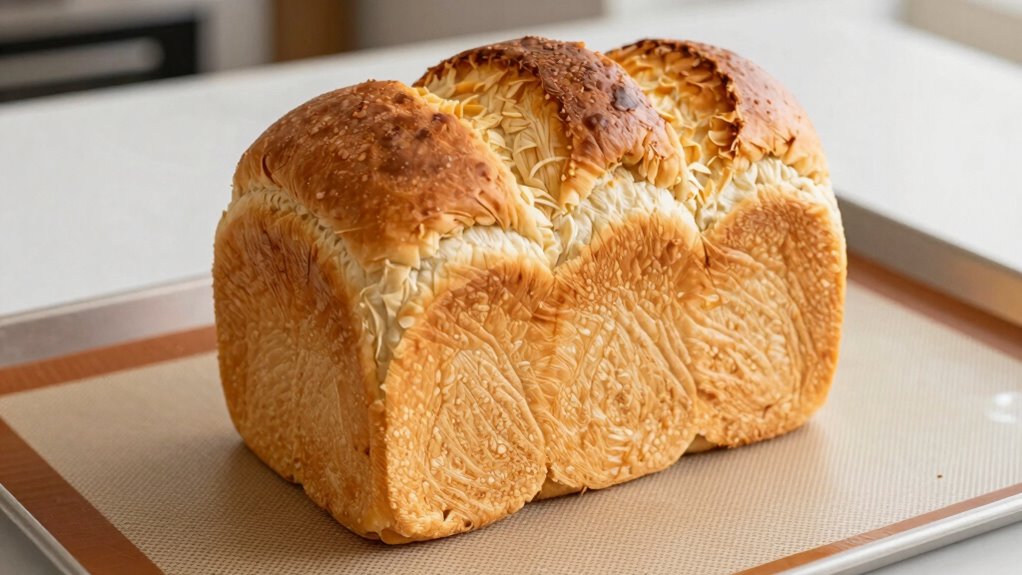
Have you ever opened your breadbox only to find your loaf stuck to the base? It’s frustrating, especially when you’re enthusiastic to enjoy fresh bread. The good news is that preventing bread from welding to the base isn’t complicated, once you understand the right bread storage and baking techniques. The key is to keep your bread from becoming overly moist or sticky, which often causes it to cling to surfaces. Proper storage methods and a few simple habits can make a big difference.
Start by choosing the right bread storage. Instead of keeping bread in a plastic bag that traps moisture, consider using a paper bag or a bread box with ventilation. These options allow excess moisture to escape, keeping the crust crisp and preventing the loaf from becoming soggy. If you prefer storing bread in the freezer, wrap it tightly in plastic wrap or aluminum foil before placing it in a resealable bag. This helps prevent ice crystals that can make the loaf sticky once thawed. Avoid storing bread directly on the base of your breadbox or in airtight containers that trap humidity, as this creates the perfect environment for bread to become tacky and stick. Additionally, ensuring proper ventilation can significantly reduce the likelihood of the bread sticking. Proper humidity control in storage areas is also essential for maintaining bread quality and preventing it from welding to surfaces. To further prevent sticking, consider applying a light dusting of flour or cornmeal on the crust before storing. Using appropriate storage containers can also help regulate moisture levels and prevent unwanted adhesion. Maintaining consistent storage conditions is important because fluctuations in temperature and humidity can cause condensation, which increases the risk of bread sticking.
Use breathable storage like paper bags or ventilated bread boxes to keep crust crisp and prevent sogginess.
Baking techniques also play a role in preventing bread from welding to the base. When baking your own bread, make sure to use the right oven temperature and baking time. Overbaking or underbaking can impact the crust and moisture content, making it more prone to sticking. Let your bread cool completely on a wire rack before storing. Cooling allows moisture to escape from the crumb, reducing the chances of it becoming sticky and adhering to surfaces later. Additionally, when slicing bread, use a serrated knife and avoid pressing too hard, which can compress the loaf and make the surface stickier during storage.
If you’re dealing with pre-sliced bread, consider separating slices with parchment paper or wax paper before stacking them in a bag or container. This extra layer prevents slices from sticking together and to the container’s surface, making it easier to retrieve individual slices without tearing or sticking. Remember, maintaining a consistent humidity level in your storage area is crucial. Too much moisture encourages bread to become tacky, while too little can dry out the crust and make it brittle. Proper storage techniques and attention to detail can help keep your bread fresh and free from unwanted adhesion. Regularly checking and adjusting storage conditions can also prevent unexpected sticking issues. Using a bread box with ventilation or adjusting the environment’s humidity can further improve storage outcomes and prevent the loaf from welding to the base.
In essence, proper bread storage combined with good baking techniques keeps your loaf fresh and prevents it from welding to the base. By controlling moisture and ventilation, you’ll preserve the quality of your bread and avoid that frustrating moment when it’s glued to the bottom of your breadbox.
As an affiliate, we earn on qualifying purchases.
Frequently Asked Questions
Can Using Different Types of Bread Affect Sticking?
Yes, different bread textures can affect sticking. Thick or dense bread might stick more because of its moisture and crumb structure, while lighter, airy types tend to stick less. Your baking techniques also play a role—using proper flour or non-stick sprays helps prevent adhesion. Choosing the right bread texture and applying effective baking methods guarantees your bread releases easily, avoiding welding to the base regardless of the type you use.
Does the Thickness of the Bread Influence Welding?
A stitch in time saves nine, and in this case, thicker bread can influence welding. When bread’s thickness varies, its texture and baking temperature affect how likely it is to stick. Thicker slices may require higher baking temperatures, which can increase bonding to the base. To prevent sticking, guarantee even baking and consider adjusting temperature based on bread thickness, because consistency keeps everything in check.
Are There Specific Baking Pans Better for Preventing Sticking?
Yes, certain baking pans are better at preventing sticking, especially those with non-stick coatings. Look for pans with high-quality non-stick surfaces, as they create a smooth baking surface that minimizes bread from welding to the base. Additionally, silicone baking mats or parchment paper can greatly improve your results. Using the right non-stick coating and a proper baking surface makes it easier to remove bread without it sticking or welding to the pan.
How Does Humidity Impact Bread Sticking to the Base?
Humidity impacts bread sticking by affecting moisture levels during baking. If humidity is high, moisture management becomes critical, as excess moisture can make the bread stick more easily to the base. Conversely, low humidity helps control moisture, reducing sticking. You should focus on humidity control in your environment and adjust baking conditions accordingly. Proper airflow and using non-stick surfaces also aid in preventing bread from welding to the base.
Can Pre-Treating the Bread Prevent It From Welding?
Pre-treating bread can definitely prevent welding, especially if you focus on the bread’s texture and baking temperature. By applying a light coating of oil or water, you create a barrier that reduces sticking. Adjust the baking temperature to guarantee the bread’s exterior isn’t too moist or too dry, which helps prevent welding. This simple step ensures smooth separation, saving time and reducing frustration during baking.
As an affiliate, we earn on qualifying purchases.
Conclusion
If you follow these simple tips, you’ll never have to face the nightmare of bread welding to the base again. Imagine a world where your bread slides off effortlessly, like magic, every single time. With just a little care, you’ll be able to enjoy perfectly toasted slices without breaking a sweat or risking a kitchen catastrophe. Say goodbye to sticky, glued-together bread, and hello to smooth, hassle-free toasting—your kitchen deserves this miracle!
As an affiliate, we earn on qualifying purchases.
As an affiliate, we earn on qualifying purchases.
Fall Picks
fall essentials
As an affiliate, we earn on qualifying purchases.