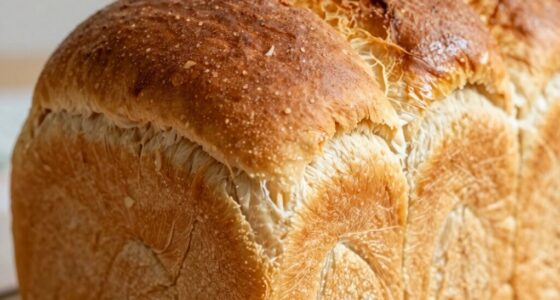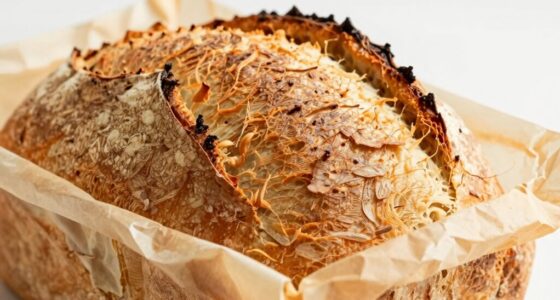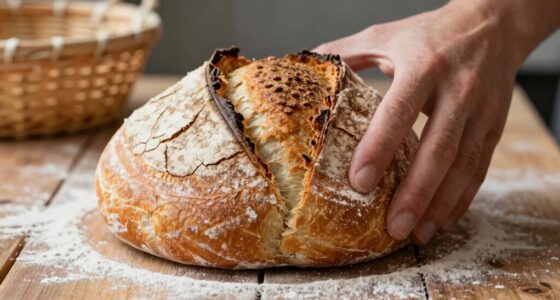
The shape of your proofing container plays a surprising role in shaping your bread’s final look and texture. It guides how your dough expands, affects airflow, and influences moisture retention. For instance, round containers promote even expansion for a nice crust, while rectangular ones shape loaves perfectly for sandwiches. Choosing the right container impacts crust color, crumb softness, and overall appearance. Keep going to discover how different shapes can transform your baking成果 and elevate your bread game.

Get baking supplies delivered free with Prime
- Fast, free delivery on millions of items
- Prime Video, Amazon Music and more included
- Member-only deals all year
Key Takeaways
- Container shape directs dough expansion, influencing final loaf shape and crust appearance.
- Curved or round containers promote even proofing and crust development through better airflow.
- Rectangular baskets shape dough for specific bread types, affecting texture and presentation.
- Shape and material impact moisture retention, altering fermentation and crust crispness.
- Proper container design supports optimal oven spring and overall bread aesthetics.
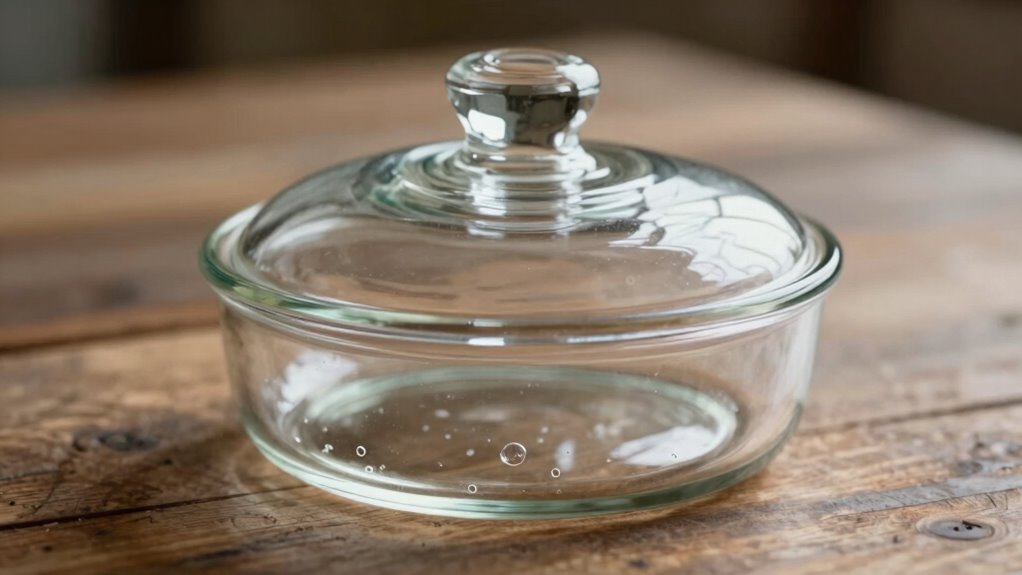
Have you ever wondered how the shape of your proofing container influences the final bread? The answer lies in how the fermentation vessel shapes your dough’s environment during proofing. The container you choose isn’t just a passive holder; it actively shapes the proofing environment, affecting how your dough expands, develops gluten, and forms its final structure.
Different fermentation vessels create distinct proofing environments that influence dough behavior. For example, a round banneton basket encourages the dough to expand evenly outward, promoting a beautifully rounded crust. Its curved sides provide gentle guidance, helping the dough maintain a consistent shape as it rises. Conversely, a rectangular proofing basket presses the dough into a more rectangular shape, which is ideal for sandwich loaves. The shape of your proofing environment determines where the dough pushes against the sides, affecting its final form and oven spring.
The material of your fermentation vessel also plays a role. Banneton baskets are often made of rattan or cane, which allow some moisture to escape and help form a crisp crust. Glass or plastic containers trap moisture, creating a more humid proofing environment that encourages a soft, tender crumb. These subtle differences can influence the dough’s fermentation process, as moisture and airflow impact yeast activity and gluten development. Understanding proofing environment can help you optimize your bread’s texture and crust. Additionally, the material of the vessel can influence how much moisture is retained or lost during proofing, further impacting bread quality. Proper airflow management around the dough also plays a significant role in achieving the ideal crust.
The size of your fermentation vessel matters too. A small container confines the dough tightly, which can lead to a denser crumb if the dough doesn’t have enough space to expand fully. On the other hand, a larger container gives the dough room to rise freely, promoting a lighter texture. Choosing the right proofing environment means balancing the container size with the dough’s volume and the desired final loaf.
Container shape also affects how easily you can handle and score the dough before baking. A well-shaped proofing vessel helps the dough retain its shape after proofing, making scoring and transferring to the oven smoother. If the shape isn’t suited to your dough, you might end up with uneven expansion or a misshapen loaf. The shape of your proofing environment can even influence the crust’s appearance and texture, as the dough’s contact points with the container impact browning and crust formation. Additionally, container shape can influence the airflow around the dough, which affects fermentation and crust development. Proper airflow management during proofing is essential for achieving the desired crust qualities. The right environment can also enhance the aesthetic appeal of your loaf, making it more attractive once baked.
In essence, your proofing environment is a crucial part of bread-making, and its shape influences every stage of fermentation. By choosing the right fermentation vessel, you’re shaping the final loaf — from its rise to its crust. The next time you proof your dough, consider how the shape of your container is guiding its transformation into bread, making all the difference in the final product.
As an affiliate, we earn on qualifying purchases.
Frequently Asked Questions
Does Container Shape Affect Dough Fermentation Speed?
Yes, container shape affects dough fermentation speed. You’ll notice it influences fermentation consistency because certain shapes promote even heat distribution. Shape-induced airflow also plays a role, as it helps regulate humidity and yeast activity. When you choose the right container, you guarantee consistent fermentation, leading to better dough rise and texture. So, pay attention to container shape to optimize your proofing process and achieve perfect results every time.
Can Container Shape Influence the Bread’s Final Texture?
Like a sculptor shaping clay, you can influence your bread’s final texture through container shape. A tall, narrow container encourages dough elasticity and shape retention, resulting in a denser crumb. Conversely, a wide, shallow container promotes open crumb development, making the bread lighter. The shape guides how the dough expands and retains its form during proofing, ultimately shaping the bread’s final texture and mouthfeel.
Are There Specific Shapes Best for Different Bread Types?
Yes, certain shapes are better suited for specific bread types. For example, a banneton basket creates a round loaf, while a loaf pan is perfect for sandwich bread. You can experiment with custom container designs to achieve unique shapes, and using innovative proofing methods enhances these effects. Tailoring the container shape to the bread type helps develop the crust and crumb, ensuring your baked goods look and taste their best.
How Does Container Material Interact With Shape During Proofing?
Container material influences how shape aesthetics and ergonomics perform during proofing. You’ll notice that non-stick surfaces like silicone or glass allow the dough to retain its shape, enhancing visual appeal, while metal containers promote even fermentation. The material’s properties interact with the shape, affecting dough expansion and crust development. By choosing the right material, you optimize proofing conditions, ensuring your bread maintains its intended form and texture.
Is There an Optimal Container Shape for Preventing Dough Sticking?
Yes, an oval or tapered container helps prevent dough sticking by accommodating dough elasticity and encouraging even expansion. These shapes allow the dough to move without sticking, thanks to better airflow and insulation. The container’s insulation maintains consistent temperature, aiding proofing. Choosing a container with smooth, non-stick surfaces also minimizes sticking. Overall, a shape that supports dough flexibility and offers insulation optimizes proofing without sticking.
As an affiliate, we earn on qualifying purchases.
Conclusion
Don’t overlook the shape of your proofing container—it’s more influential than you might think. While some believe any container works, choosing the right shape can improve dough expansion and final texture. Even if you’re short on options, simple changes, like switching from a round to a rectangular container, can make a difference. So, give it a try; your bread’s rise and crumb will thank you for it.
rectangular bread proofing container
As an affiliate, we earn on qualifying purchases.
As an affiliate, we earn on qualifying purchases.
As an affiliate, we earn on qualifying purchases.
Halloween Picks
halloween
As an affiliate, we earn on qualifying purchases.