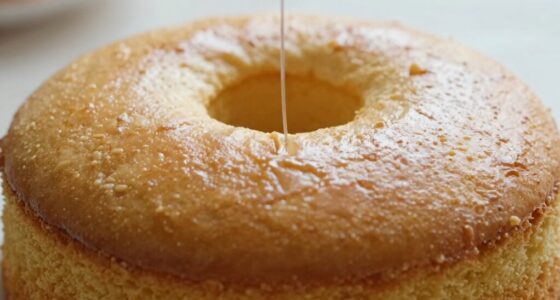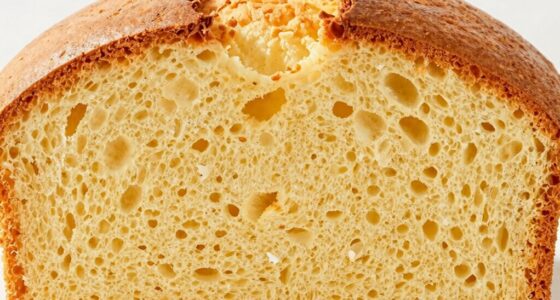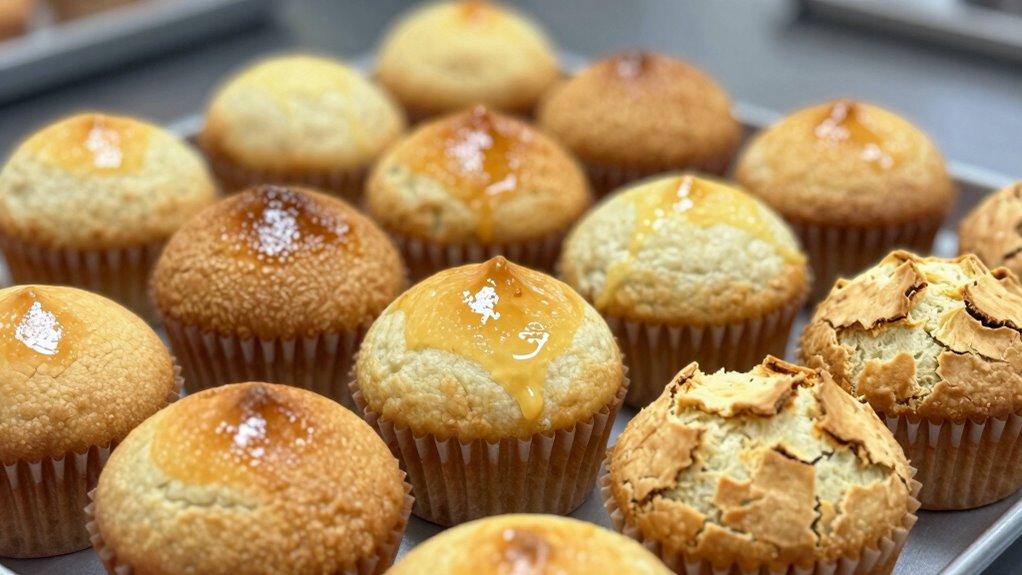

Your cupcakes dome when the batter is properly aerated and baked at the right temperature, allowing them to rise evenly. Cracks often happen if the oven is too hot, causing the outside to set quickly while the inside warms up and expands too fast. Overmixing batter can lead to dense textures prone to cracking, while underbaking results in flat tops. Ensuring correct oven heat and batter preparation can help you achieve perfect, smooth cupcakes every time. Keep exploring for more tips to perfect your baking!
Key Takeaways
- Overmixing batter reduces aeration, leading to dense cupcakes prone to cracking and uneven domes.
- Excessive oven heat causes rapid batter expansion, resulting in cracks and uneven rise.
- Insufficient cooling before icing can cause cracks due to temperature shock.
- Batter that is too thick or lacks proper elasticity hampers smooth rising and dome formation.
- Inconsistent oven temperature or lack of preheating affects batter expansion, causing flat or cracked cupcakes.
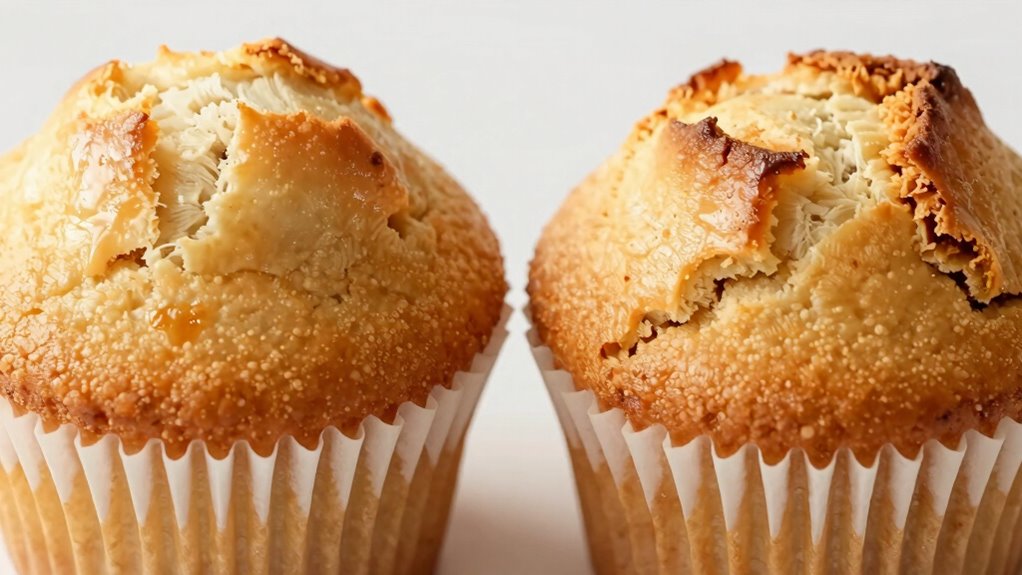
If you’ve ever baked cupcakes only to find their domes crack or collapse, you’re not alone. It can be frustrating to see your efforts result in uneven, unattractive cupcakes, but understanding what causes these issues is the first step toward fixing them. One key factor is oven temperature. If your oven runs too hot, the outside of the cupcake will set too quickly while the inside remains undercooked, causing the dome to crack as the batter expands rapidly. Conversely, if the oven isn’t hot enough, the cupcakes may not rise properly, leading to a flat top or an uneven surface. To avoid these problems, always preheat your oven and use an oven thermometer to guarantee you’re baking at the recommended temperature, usually around 350°F (175°C). Adjust your oven if you notice consistent problems with dome formation or cracking.
Another common culprit is how you apply icing techniques. When you add icing too early or unevenly, it can put uneven pressure on the cupcake’s surface, especially if the dome hasn’t fully set. This can cause cracks or even collapse of the cupcake’s top. Make certain your cupcakes are completely cooled before applying any icing; hot cupcakes are more prone to cracking when iced because the temperature differential causes expansion and contraction. Additionally, if you’re using thick or heavily piped icing, it might be pulling on the cupcake’s surface, exacerbating cracks. Using smooth, gentle icing techniques, like spreading with a spatula or piping in a controlled manner, helps preserve the cupcake’s structure. Proper batter consistency is also vital, as a batter that’s too thick or overmixed can develop excess gluten, making cupcakes dense and more prone to cracks. Achieving the right batter elasticity is essential for a good rise and smooth top. Ensuring your ingredients are at room temperature can help achieve a more consistent batter texture and a better rise. Proper mixing techniques and understanding the importance of batter aeration will further improve your cupcake’s overall appearance and texture. Additionally, incorporating a gentle folding technique can help maintain the batter’s air content and promote a smooth, even rise.
Allow cupcakes to fully cool before icing to prevent cracks and maintain their perfect shape.
In essence, controlling your oven temperature, practicing careful icing techniques, and preparing your batter thoughtfully will drastically reduce the chances of cracked or collapsed cupcakes. It’s often a combination of these factors that determines the final look, so paying close attention to each step will help you achieve those perfect, rounded cupcakes every time.
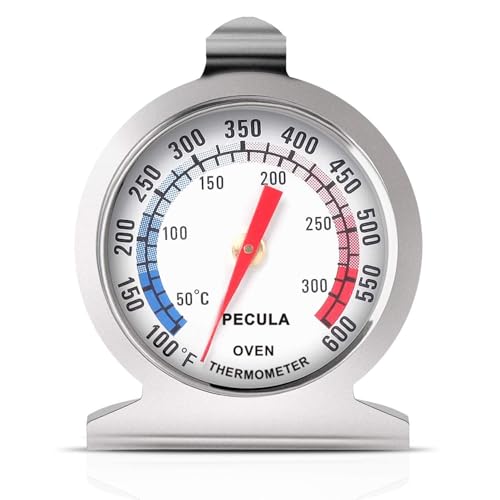
Stainless Steel Oven Thermometer 50-300°C/100-600°F, Analog Instant Read, Battery-Free Kitchen Cooking Thermometer, Hook & Stand Design Food Thermometer for Oven, Grill, Smoker, Fryer
Clear Dial Display: PECULA's analog oven thermometer delivers precise, instant readings from 50–300°C / 100–600°F. Its dial features…
As an affiliate, we earn on qualifying purchases.
As an affiliate, we earn on qualifying purchases.
Frequently Asked Questions
How Does Oven Temperature Affect Cupcake Doming and Cracking?
Your oven temperature directly impacts cupcake doming and cracking. If it’s too hot, the cupcakes rise quickly, causing cracks or excessive doming. A consistent, moderate oven temperature helps them rise evenly. After baking, use cooling techniques like placing cupcakes in a slightly cooler environment to prevent cracks. Ingredient substitutions, such as using cake flour instead of all-purpose, can also improve texture and reduce cracking, ensuring a smooth, well-formed dome.
Can the Type of Flour Influence Cupcake Surface Cracks?
Yes, the type of flour influences cupcake surface cracks. Flour with high protein content creates a stronger gluten network, which can lead to more cracks as the cupcake rises and cools. Bleached flour has weaker gluten, resulting in a softer crumb and fewer cracks. So, choosing the right flour with appropriate protein levels and considering whether it’s bleached or unbleached can help you control surface cracks and achieve a smoother cupcake top.
Does Altitude Impact Cupcake Doming or Cracking?
Altitude effects can considerably influence your cupcake results, causing doming or cracking. At higher elevations, the air pressure drops, and ingredient interactions change, making baked goods rise faster and sometimes unevenly. About 75% of bakers notice more cracking or doming above 3,000 feet. To counter this, you can adjust your recipe—using less leavening or increasing oven temperature—to help your cupcakes rise evenly and avoid cracks.
What Role Does Cupcake Batter Consistency Play?
Your cupcake batter consistency plays a vital role in doming or cracking. If the batter is too thick, it can cause uneven rising, leading to cracks, while a too-thin batter may result in flat cupcakes. To prevent this, adjust your frosting techniques and avoid overmixing. Proper cupcake storage after baking also helps maintain moisture, reducing cracks and keeping domes intact, ensuring your cupcakes look as good as they taste.
How Does Baking Time Influence Cupcake Surface Appearance?
Baking time directly affects your cupcake’s surface appearance, especially when you’re adding decorative frosting or icing techniques. If you bake too long, cupcakes can become dry and develop cracks or domes, making it tricky to apply smooth icing. Conversely, underbaking can result in a sunken center. To achieve a flawless finish, monitor baking time carefully, ensuring cupcakes are just done, so your decorative frosting sits perfectly without cracks or uneven domes.

MDLJG Cake Cream Spatula 5 Pieces, Stainless Steel Cake Apatula with Frosting Icing decorating Knife Art Painting Baking Pastry Tool Palette Knife for Cake Fondant Chocolate (5 Pcs)
Various sizes: The overall thickness of the spatula is uniform, the knife body is exquisitely designed, the blade…
As an affiliate, we earn on qualifying purchases.
As an affiliate, we earn on qualifying purchases.
Conclusion
Understanding why cupcakes dome or crack is like mastering a delicate dance with your oven’s whims. When you tweak ingredients or baking times, you’re tuning the harmony between heat and batter. With patience and practice, you’ll craft cupcakes that rise like gentle hills, smooth and flawless, rather than jagged mountain peaks. Embrace each baking misstep as a step closer to perfect cupcakes—your sweet symphony in the oven’s grand performance.

Geesta 2/3/4-Tier Upgraded Collapsible Cooling Rack with Adjustable 3 Setting Design Stackable Roasting Cooking Drying Wire Cooling Rack for Cookies Baking Gifts for Women
【Collapsible 4 tier Cooling Rack】 Features a sturdy construction with a collapsible & adjustable design. Geesta wire cooling…
As an affiliate, we earn on qualifying purchases.
As an affiliate, we earn on qualifying purchases.

9PCS Large Piping Tips Set, Stainless Steel Cake Decorating Tips, Pastry Cake Decorating Tips Baking Tools for Baking Cupcakes, Cake Decorating
Unique Decorating Piping Tip Set : This Large decorating piping tip set includes a variety of cake decorating…
As an affiliate, we earn on qualifying purchases.
As an affiliate, we earn on qualifying purchases.