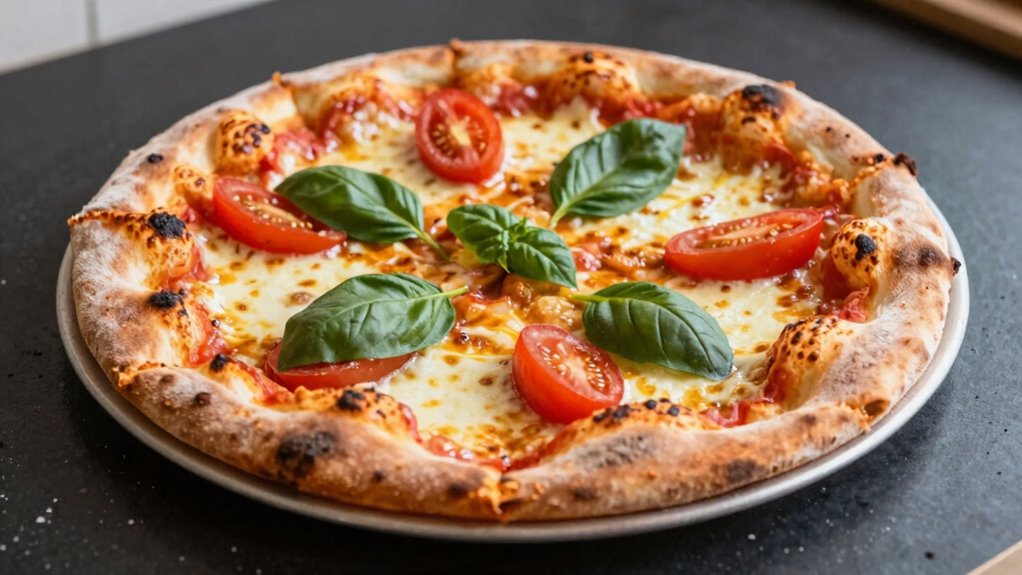
To avoid bitter, burnt flour on your pizza steel, keep flour dusting to a minimum during shaping—use just enough to prevent sticking. Properly season and maintain your steel with light oil and high-temperature baking to create a natural non-stick surface, reducing the need for flour. Clean residual flour thoroughly after each use to prevent buildup that burns during baking. Managing oven temperature and short baking times also help prevent burning. Continue exploring these techniques to perfect your results.

Get baking supplies delivered free with Prime
- Fast, free delivery on millions of items
- Prime Video, Amazon Music and more included
- Member-only deals all year
Key Takeaways
- Season your steel properly with oil and high heat to create a non-stick, burn-resistant surface.
- Use minimal flour during shaping to prevent excess residue that burns and causes bitterness.
- Clean and dry the steel thoroughly after each use to remove residual flour buildup.
- Preheat the oven and steel adequately to ensure even heat distribution and reduce burning.
- Avoid overbaking; monitor temperature and bake times to prevent flour from reaching its burning point.
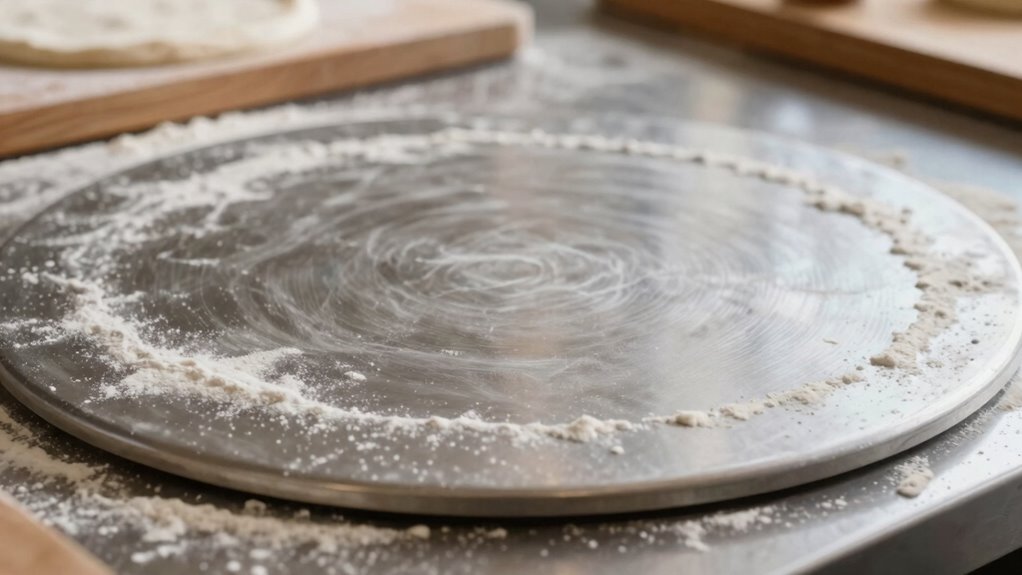
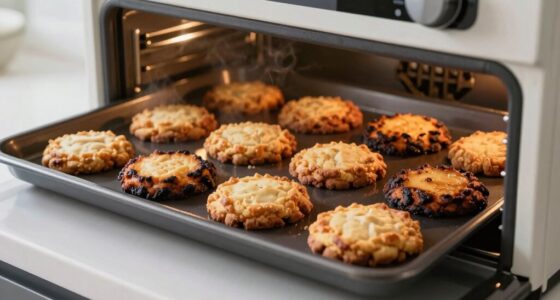
If you’ve noticed a bitter, burnt flavor on your pizza steel, it’s likely due to improper handling of the flour used for shaping your dough. Flour residue can burn when exposed to high heat, creating that undesirable burnt taste. To prevent this, understanding pizza dough hydration is essential. Higher hydration dough tends to be stickier and more elastic, which makes shaping easier and reduces the need for excessive flour dusting. When you use just enough flour to prevent sticking, you’re less likely to leave a thick layer on the steel that can burn and produce bitterness. Keep your dough hydrated enough so it’s manageable but not overly sticky, and always dust lightly when shaping your pizza. This balance minimizes flour residue that could char during baking. Proper flour handling techniques can also significantly reduce excess flour application and burning. Steel seasoning techniques also play a vital role in avoiding burnt flour flavors. Properly seasoned steel develops a natural non-stick surface that reduces the need for excess flour. When you first use your steel, lightly oil it and bake it at a high temperature to build up a seasoned layer. Over time, this creates a barrier that helps prevent flour from directly contacting the hot surface and burning. Regularly maintaining your steel with appropriate seasoning techniques ensures it remains smooth and non-stick, which means you won’t have to rely on excessive flour dusting that can burn during high-temperature baking. Additionally, it’s important to clean your pizza steel properly after each use. Residual flour buildup can burn the next time you heat the steel, contributing to that bitter flavor. Use a stiff brush or scraper to remove loose flour and avoid soap, which can leave residues that burn. After cleaning, dry the steel thoroughly and apply a thin layer of oil before storing or reheating. This ongoing steel seasoning process enhances the surface and helps prevent flour from sticking and burning, keeping your pizza tasting fresh and free from bitterness. Proper temperature control during baking is also crucial, as high heat can accelerate the burning process of residual flour. Additionally, adjusting your baking techniques can help control how quickly flour residues burn, ensuring a better flavor. Using a thermal management approach to monitor oven heat can further optimize baking conditions. Finally, consider your baking temperature and duration. Very high heat can cause even small amounts of flour to burn quickly. Preheat your oven and steel thoroughly, and monitor your baking process. Shorter bake times at the right temperature can help prevent flour from reaching its burning point. By combining proper dough hydration, steel seasoning techniques, diligent cleaning, and mindful baking, you’ll markedly reduce the chances of ending up with that bitter burnt flour flavor on your pizza steel.
As an affiliate, we earn on qualifying purchases.
Frequently Asked Questions
Can Using Parchment Paper Prevent Burnt Flour on Pizza Steels?
Using parchment paper can help prevent burnt flour on pizza steels by acting as a barrier, reducing direct contact between the flour and the hot surface. Instead of traditional flour, you might consider flour alternatives like cornmeal or rice flour, which are less prone to burning. Incorporate proper baking techniques, such as preheating the steel and applying a light dusting, to keep your crust perfect and avoid bitterness.
Does the Type of Flour Affect Burning on Pizza Steels?
Did you know that whole wheat flour burns 30% faster than white flour? The type of flour you choose definitely impacts burning on pizza steels because of heat retention differences. Low-protein flours like cake flour tend to burn less easily, while high-protein flours like bread flour can withstand higher temperatures, reducing bitterness. Choosing the right flour type helps prevent burnt flour, keeping your pizza tasting perfect and ensuring your steel stays in great shape.
How Does Humidity Impact Flour Burning on Pizza Surfaces?
Humidity influence profoundly impacts how flour burns on pizza surfaces. When moisture levels are high, flour absorbs more humidity, which helps prevent it from burning quickly. Conversely, in dry environments, flour’s low moisture content makes it more prone to burning and creating bitter flavors. To avoid bitterness, store your flour properly, and consider adjusting your flour application based on the ambient humidity, ensuring a smoother, less burnt crust.
Is It Necessary to Preheat Pizza Steels Before Use?
Sure, preheating your pizza steel isn’t just a fancy step; it’s essential. You want the steel temperature to match the oven’s heat, ensuring a crispy crust without burning the flour. Preheating importance lies in regulating steel temperature, preventing uneven cooking and burnt bits. Skip this step, and your pizza risks sticking, undercooking, or turning into a charred disaster—so yes, always preheat to get that perfect bake every time!
Can Oiling the Steel Reduce Burnt Flour Issues?
Oiling the steel with proper techniques can help reduce burnt flour issues. Use a thin layer of high-smoke point oil, like vegetable or canola, and spread it evenly with a cloth or paper towel. Applying oil after removing excess flour creates a barrier, preventing the flour from burning during heating. This flour coating and oiling techniques work together to minimize bitterness and protect your pizza steel, ensuring a better baking experience.
As an affiliate, we earn on qualifying purchases.
Conclusion
So, next time you’re tempted to sprinkle copious flour on your pizza steel, remember: a little goes a long way. Ironically, the very flour meant to prevent sticking can turn your masterpiece into a bitter, burnt mess. Sometimes, the simplest solution is to trust your instincts and keep it light—after all, a perfect pizza isn’t about excess, but about respecting the heat and your ingredients. Less flour, more flavor—who knew?
high temperature oven thermometer
As an affiliate, we earn on qualifying purchases.
As an affiliate, we earn on qualifying purchases.
As an affiliate, we earn on qualifying purchases.
Fall Picks
fall essentials
As an affiliate, we earn on qualifying purchases.