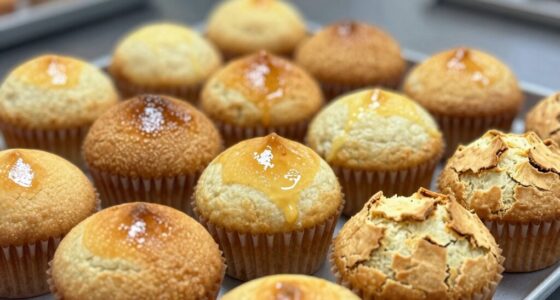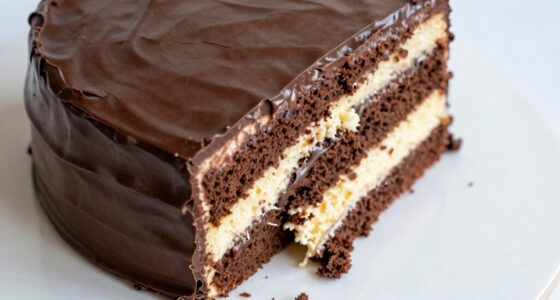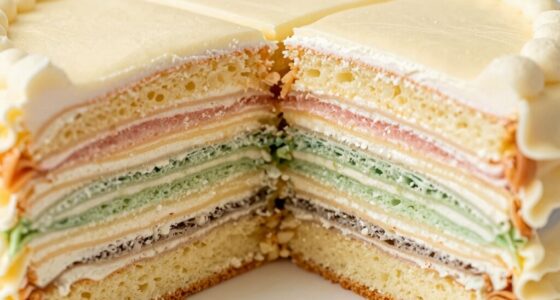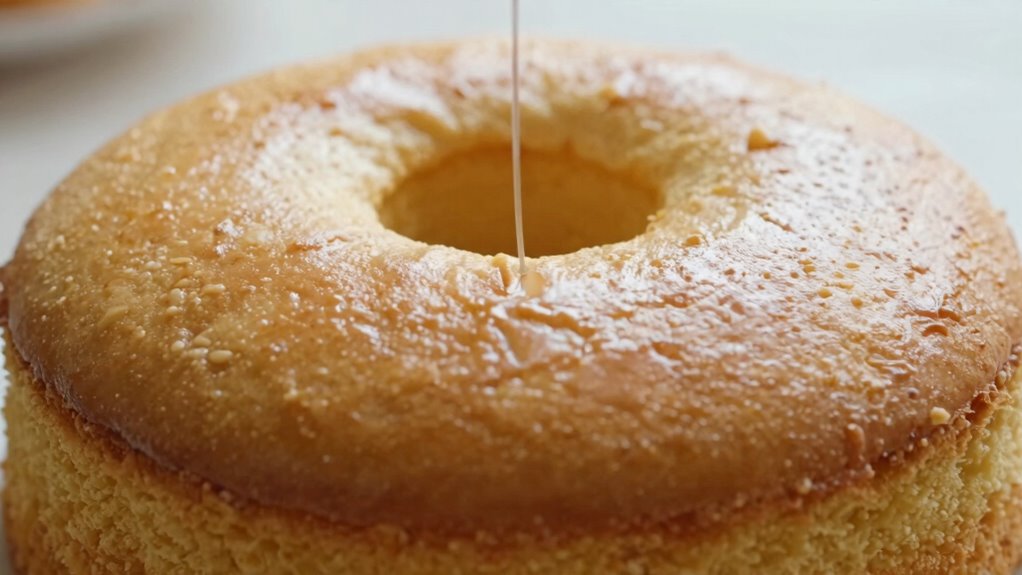
The clearest sign your cake is fully set in the center is when the surface feels firm to the touch and bounces back gently when pressed. If it still feels soft or leaves an indentation, it needs more baking. You can also check that the sides slightly pull away from the pan. These tactile cues are reliable, and understanding them will help you verify perfect results every time—there’s more to master in baking success.
Key Takeaways
- The cake’s surface feels firm to the touch and slightly bounce-back when pressed in the center.
- A toothpick inserted into the center comes out clean with few moist crumbs.
- Edges pulling away slightly from the pan indicate the cake is set.
- The surface develops a light golden color, signaling proper doneness.
- Persistent indentation or sinkage suggests the cake needs more baking time.
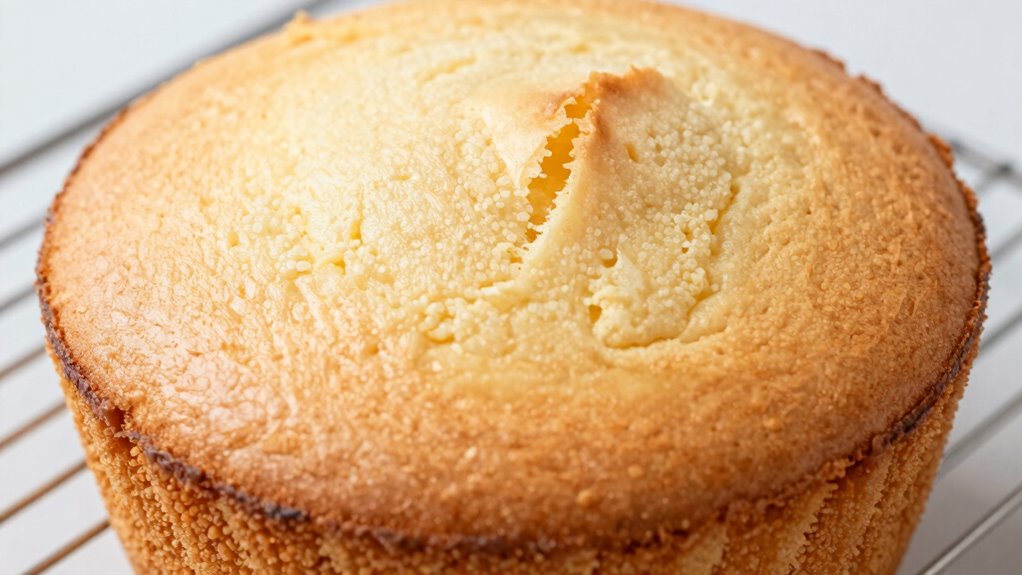
Ever wondered how to tell if your cake is perfectly baked and set in the center? It’s a common question, and the answer lies in understanding a few key baking techniques and the significance of temperature monitoring. When you’re baking, the goal is to achieve a uniform doneness, especially in the middle, since underbaking can leave your cake gooey and overbaking can make it dry. The secret cue that your cake is ready is a combination of visual cues and a gentle test, but mastering these relies heavily on precise baking techniques and careful temperature monitoring.
First, pay close attention to the edges of your cake. As it bakes, the sides will often pull away slightly from the pan, signaling that the batter has set. However, this isn’t always a foolproof indicator of doneness in the center. To be certain, you need to incorporate a simple but effective baking technique: the toothpick test. Insert a toothpick or cake tester into the center of the cake. If it comes out clean or with just a few moist crumbs clinging to it, your cake is likely done. If it’s wet or sticky, it needs more time. Remember, every oven behaves differently, which is why temperature monitoring becomes vital. Using an oven thermometer guarantees your oven hits and maintains the right temperature, preventing over- or under-baking. Additionally, understanding your oven’s heat distribution can help you make adjustments and avoid uneven baking.
You also want to keep an eye on the cake’s surface. A lightly golden top is a good sign, but don’t rely solely on appearance. The real cue is how the cake feels when you gently press the center with your finger. It should bounce back slightly, indicating the structure has set. If it remains indented, it likely needs more baking time. This tactile check, combined with temperature monitoring, helps you develop a feel for when your cake is just right.
Another baking technique involves understanding your oven’s heat distribution. Rotate the cake halfway through baking if necessary, ensuring even heat exposure. This reduces the risk of uneven baking and helps you achieve a perfectly set center. The more you familiarize yourself with your oven’s quirks and bakeware, the better you’ll get at gauging when your cake is done without overdoing it. Being aware of baking science principles can further refine your baking skills and improve consistency.
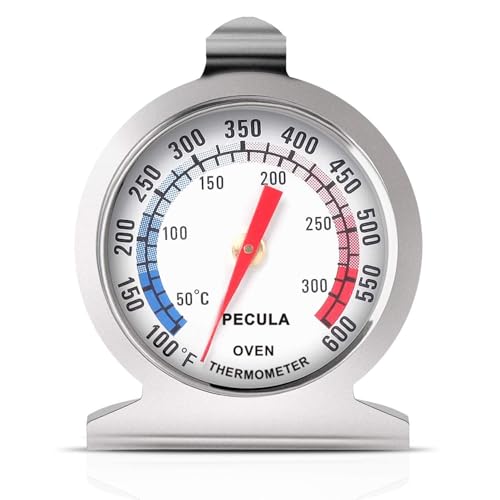
Stainless Steel Oven Thermometer 50-300°C/100-600°F, Analog Instant Read, Battery-Free Kitchen Cooking Thermometer, Hook & Stand Design Food Thermometer for Oven, Grill, Smoker, Fryer
- Precise Temperature Range: 50–300°C / 100–600°F
- Clear Dual-Color Dial: Blue and red indicators for easy reading
- Flexible Placement Options: Hook and stand for hanging or standing
As an affiliate, we earn on qualifying purchases.
As an affiliate, we earn on qualifying purchases.
Frequently Asked Questions
How Can I Tell if the Cake Is Overbaked?
You can tell if your cake is overbaked by checking for a dry, crumbly texture and a darkened crust. Overbaking can cause fondant issues, making it difficult to achieve a smooth, polished cake presentation. Insert a toothpick into the center; if it comes out completely dry or overly browned, it’s overdone. To prevent this, monitor baking time closely and adjust oven temperature as needed.
What Tools Are Best for Checking Cake Doneness?
You should use a toothpick or cake tester to check doneness, inserting it into the center of the cake. If it comes out clean, your cake is ready. For more accurate results, especially when trying different flavor variations or cake decorating styles, a digital thermometer can also help guarantee the internal temperature is perfect. These tools give you confidence, ensuring your cake is baked just right without overbaking.
Does Cake Type Affect the Setting Cue?
Yes, cake type affects the setting cue because different textures and baking temperatures influence how the cake sets. For instance, a dense pound cake requires a higher baking temperature and may need longer to set in the center, while a light sponge cake signals doneness sooner with a slight bounce. Pay attention to the cake’s texture and adjust baking times accordingly, ensuring it’s fully baked without overdoing it.
How Long Should I Let the Cake Cool Before Testing?
Think of cooling your cake as giving it a gentle pause in a busy day—you should wait at least 10-15 minutes before testing. This allows the baking temperature to settle and the ingredient freshness to stabilize, preventing breakage. Rushing to cut too soon can ruin its texture. Patience lets the flavors meld and the structure set, ensuring every bite’s as delicious as you hoped.
Can the Center Be Undercooked Even if the Edges Are Done?
Yes, the center can be undercooked even if the edges are done. This often happens if your cake’s baking temperature is too high or uneven, causing the edges to cook faster. To avoid this, make sure you bake at the correct temperature and check for doneness using a toothpick or cake tester. Remember, a properly baked cake should have a consistent texture from the center to the edges.
As an affiliate, we earn on qualifying purchases.
Conclusion
When you watch for the telltale tug—that gentle, slight shift—you’ll tell if your cake’s in the center and perfectly set. This subtle sign shows your sweet success is near, saving you from soggy or sagging surprises. So, stay steady and stay sharp, because spotting this small, subtle signal guarantees your cake’s center stays superbly set, satisfying your sweet tooth and sealing your baking success. Trust this tip, and triumph in your tasty endeavors!

Novery 9.5" Non-Stick Carbon Steel Fluted Tube Cake Pan
- Size: 9.5-inch outer diameter, 9-inch inner diameter
- Material: Heavy-duty carbon steel construction
- Design: Narrow base with straight sides
As an affiliate, we earn on qualifying purchases.
As an affiliate, we earn on qualifying purchases.
As an affiliate, we earn on qualifying purchases.