
Even after your oven says it’s ready, preheating longer allows the temperature to stabilize fully, ensuring even heat distribution. This helps prevent hot or cold spots that can spoil your baked goods, giving you consistent results every time. Rushing this step might lead to uneven cooking, coloring, and textures. Taking a little extra time makes a big difference in the final quality — keep going to find out how to get the best from your oven.
Key Takeaways
- Oven indicators may not reflect actual internal temperature, which can fluctuate after preheating.
- Residual heat may cause uneven cooking if the oven hasn’t stabilized fully.
- Proper preheating ensures consistent heat distribution throughout the baking process.
- Temperature fluctuations after preheating can affect the texture and color of baked goods.
- Maintaining the oven at a stable temperature prevents recipe failures and ensures predictable results.
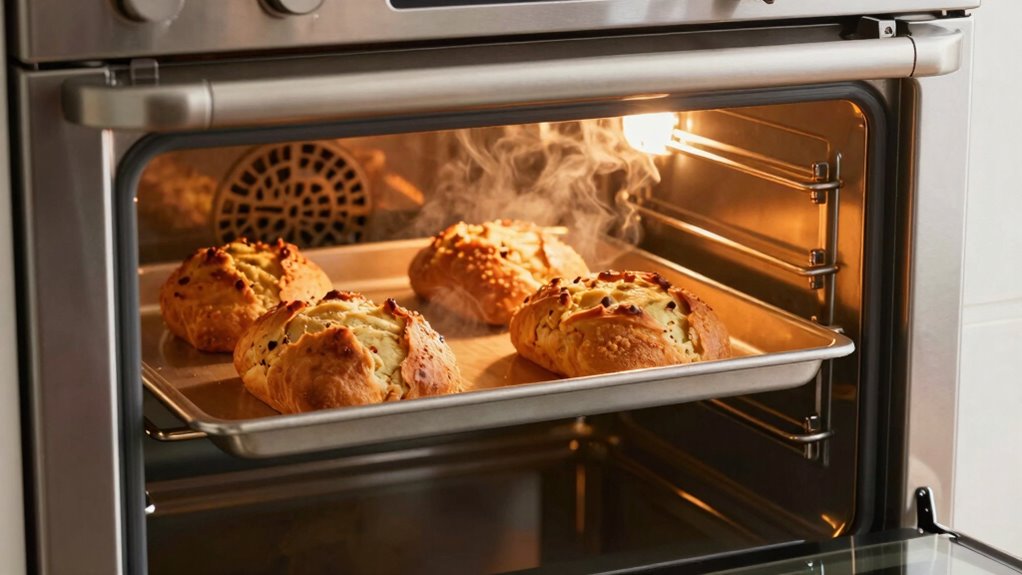
You might think your oven is ready once it hits the target temperature, but preheating’s importance extends well beyond that moment. When you’re baking, the goal isn’t just to reach a certain temperature; it’s to guarantee consistent results every time. Proper preheating helps establish baking consistency, so your cookies turn out perfectly, your bread rises evenly, and your casseroles cook through without hot spots. If you skip or rush this step, you risk uneven baking, which can ruin even the most carefully prepared recipes.
Preheating ensures consistent baking results and prevents uneven cooking or ruined recipes.
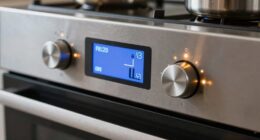
One common mistake is assuming that once the oven shows it’s at the correct temperature, it’s truly ready. The oven’s internal thermostat might be slightly off, or the temperature sensors may need calibration. That’s where oven calibration comes into play. Regularly checking and adjusting your oven’s calibration ensures the displayed temperature matches the actual heat inside. Without proper calibration, preheating might give you a false sense of readiness, and your baked goods could suffer from inconsistent heat distribution.
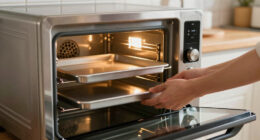
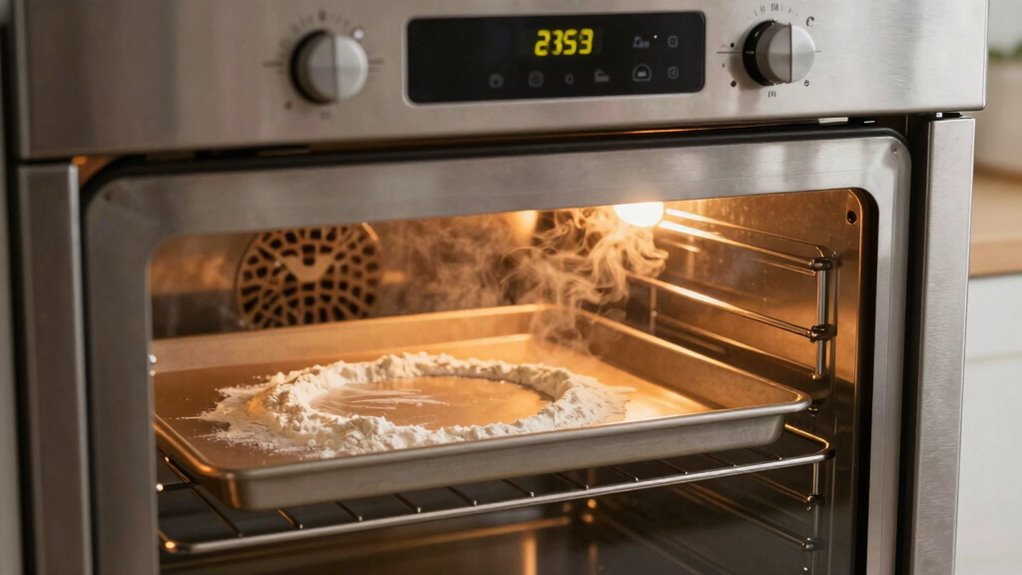
Even if your oven’s temperature gauge seems accurate, preheating allows the oven’s heating elements to stabilize and reach an even temperature throughout the cavity. This process helps eliminate hot and cold spots, which can cause uneven baking. When you insert your food too early—before the oven has fully stabilized—you might notice that some areas cook faster than others, leading to uneven textures and colors. Patience during preheating ensures the entire oven interior reaches a uniform temperature, making your baking more predictable. Additionally, proper preheating practices can help prevent unnecessary wear on your oven’s components, ensuring it functions optimally over time. Understanding how oven temperature stability impacts cooking can help you troubleshoot issues and improve your baking results, especially since proper oven calibration is essential for maintaining accurate temperatures.

AcuRite 00620A2 Stainless Steel Oven Thermometer (150°F to 600°F)
Oven and grill safe for leave-in use while cooking
As an affiliate, we earn on qualifying purchases.
As an affiliate, we earn on qualifying purchases.
Frequently Asked Questions
How Long Should I Preheat My Oven for Optimal Results?
You should preheat your oven for about 15 to 20 minutes for ideal results. This guarantees preheating consistency, allowing the oven to reach and maintain the desired temperature. Keep in mind, oven calibration varies, so periodically check your oven’s actual temperature with an oven thermometer. Proper preheating and calibration help you achieve even cooking and perfect baked goods, avoiding under or overcooking caused by inaccurate oven readings.
Does Preheating Affect Different Types of Baked Goods Equally?
Preheating impacts different baked goods uniquely, like a conductor guiding an orchestra. You see, ingredient interactions and baking chemistry vary, affecting how each item responds to heat. For delicate cakes, preheating guarantees a gentle rise; for crusty bread, it creates the perfect crust. So, while all benefit from preheating, understanding your baked goods helps you tailor the process, making sure each turns out just right.
Can I Skip Preheating for Quick Recipes?
You can skip preheating for quick recipes if you’re in a rush, especially when using microwave shortcuts or stove alternatives. While preheating helps guarantee even cooking, quick recipes often don’t require it because they cook faster and at lower temperatures. Just keep an eye on your dish, and consider adjusting cooking times slightly. However, for more consistent results, preheating remains recommended, even in fast-paced cooking scenarios.
How Does Preheating Influence Oven Temperature Stability?
You might think preheating isn’t essential, but it actually stabilizes the oven temperature, reducing fluctuations caused by poor oven calibration. When you preheat, the oven reaches and maintains a consistent temperature, ensuring your food cooks evenly. Without preheating, the oven struggles to stay steady, leading to uneven results. So, even if your oven seems ready, preheating helps maintain accurate, stable temperatures for perfect cooking every time.
What Are Signs That My Oven Isn’t Maintaining Proper Heat?
You’ll notice signs like uneven cooking, inconsistent browning, or food taking longer than usual to cook, indicating your oven isn’t maintaining proper heat. Temperature fluctuations are common signs, often caused by poor oven calibration or faulty heating elements. If these issues persist, it’s a good idea to have your oven calibrated or checked by a professional to make sure it heats accurately, helping your dishes turn out just right every time.
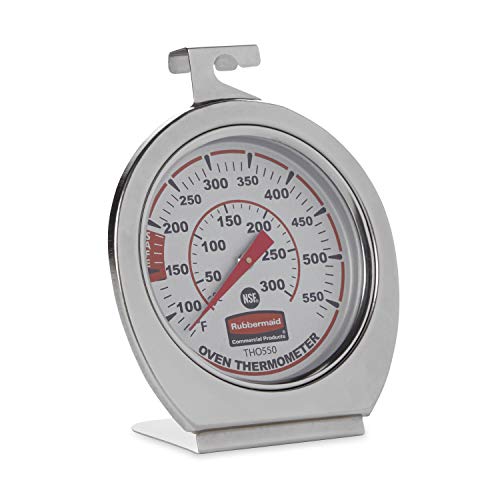
Rubbermaid Commercial Products Stainless Steel Monitoring Thermometer, Safe for Inside Oven/Grill/Smoker, 60-580°F Range, Easy to Read Food Thermometer For Food Resturant/Home Cooking
FOOD SAFETY: Thermometer displays true oven temperature instantly to ensure safe food preparation
As an affiliate, we earn on qualifying purchases.
As an affiliate, we earn on qualifying purchases.
Conclusion
Remember, preheating isn’t just about hitting a number on the dial; it’s about ensuring your food cooks evenly and thoroughly. Skipping this step can lead to undercooked meals or inconsistent results. Did you know that recipes often recommend a specific preheat time because oven temperature can be off by up to 25%? That means, even if your oven says it’s ready, it might still be playing catch-up — so patience really does pay off in the kitchen.

Hotloop Digital Oven Thermometer Heat Resistant up to 572°F/300°C, LCD
EASY READING: you can see the actual temperature that your oven is registering with the digital LCD display,…
As an affiliate, we earn on qualifying purchases.
As an affiliate, we earn on qualifying purchases.

LDEXIN 60 Minutes Time Switch, Delay Timer Switch Time Controller for Electronic Microwave Oven Cooker, AC 120V-15A 250V-16A, Round Shaft
It is a 60 minutes electronic oven timer, which can set time from 1 to 60 minutes.
As an affiliate, we earn on qualifying purchases.
As an affiliate, we earn on qualifying purchases.