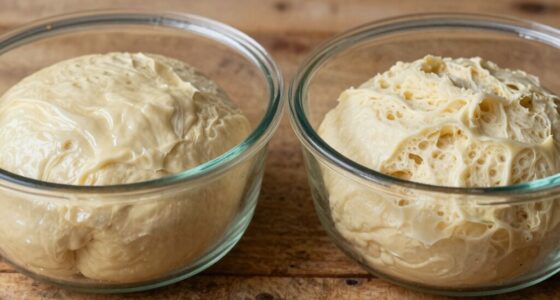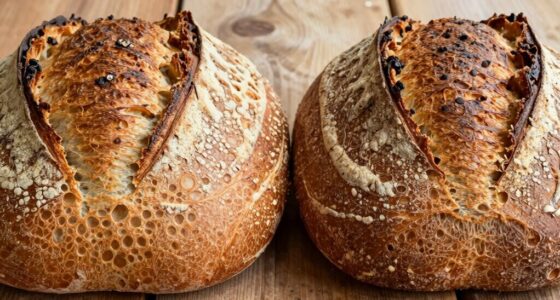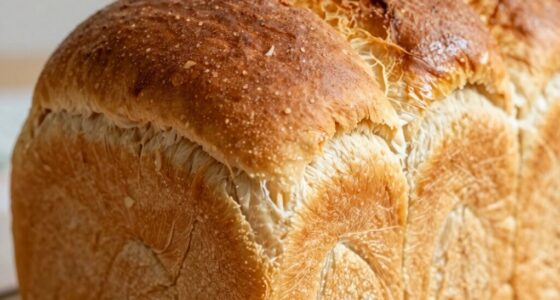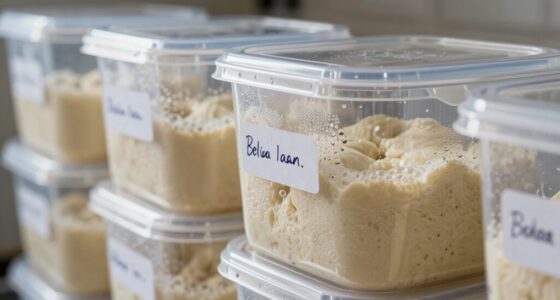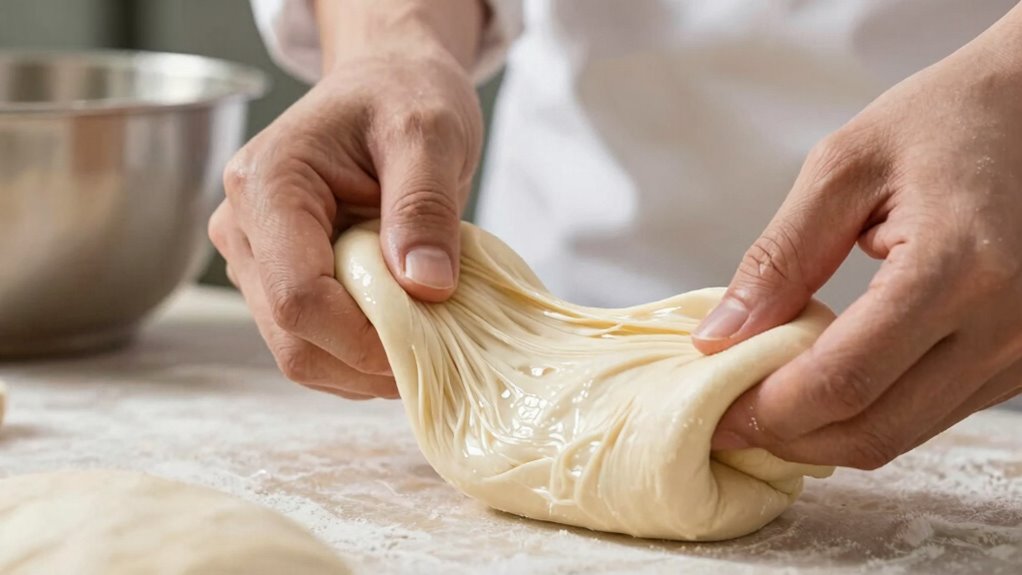
Shaping tension directly influences your bread’s final crumb by controlling how well the dough retains gases and expands during baking. While mixing develops gluten for dough strength, shaping creates a taut surface that guides oven spring and determines lightness. Proper tension during shaping helps lock in gases, resulting in an airy, even crumb. If you keep exploring, you’ll uncover how mastering tension impacts your bread’s texture even more than mixing alone.
Key Takeaways
- Shaping tension directly influences surface tension, guiding dough expansion and creating an open, airy crumb structure.
- Proper tension during shaping retains gas pockets, enhancing crumb openness more than initial mixing.
- Over- or under-tensioning during shaping affects gluten stretch, impacting crumb density and texture.
- Mixing develops gluten network, but shaping determines how effectively that network holds gases for crumb quality.
- Tension control during shaping ensures optimal oven spring, resulting in a lighter, more refined crumb than mixing alone.
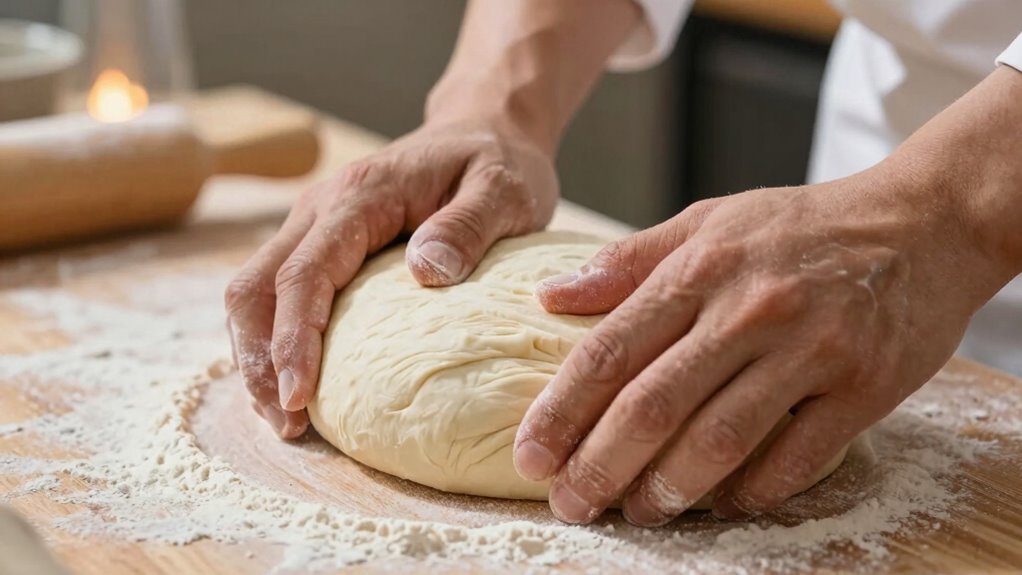
Have you ever wondered how bakers achieve that perfect balance between a taut crust and an airy crumb? The secret often lies in how you shape the dough. While mixing is essential for developing gluten and ensuring a consistent dough, it’s the shaping process that truly influences the crumb’s final texture. Specifically, shaping imparts tension to the dough, which has a direct impact on dough elasticity and how the dough responds during fermentation and baking. When you shape with intention, you’re not just forming the loaf’s shape—you’re creating a network of surface tension that guides how the dough expands and retains gas. Developing dough elasticity is crucial because it determines how well the dough will hold its shape and gas during proofing and baking. Dough elasticity, the ability of the dough to stretch without tearing, is vital here. Proper shaping helps develop surface tension by stretching the outer layer just enough to create a taut surface. This tension acts like a skin that holds the gases produced during fermentation, allowing the dough to rise upwards rather than spreading out flat. If you don’t develop enough tension during shaping, the dough tends to be loose, resulting in a dense crumb and a flatter loaf. Conversely, over-tensioning can tear the dough, disrupting the gluten network and leading to uneven oven spring. The key is to find that delicate balance, which only proper shaping can achieve. Achieving this balance depends on understanding how gluten development impacts the dough’s ability to stretch and hold tension, highlighting the importance of both mixing and shaping techniques. Additionally, understanding the role of fermentation in enhancing dough strength highlights how crucial this process is for optimal results. Proper fermentation helps improve gluten structure, making the dough more resilient and capable of holding tension during shaping. The impact of fermentation also plays a significant role. During fermentation, yeast produces carbon dioxide, which inflates the dough’s internal structure. When you shape with tension, you’re effectively locking in this gas, giving the crumb a more open, airy texture. Proper tension helps control how the dough expands during baking, ensuring the crumb remains light and well-structured. The role of gluten development during mixing and fermentation impacts how well the dough can stretch and hold tension, making it an essential part of the process. If the dough isn’t shaped with enough tension, gases escape more easily, resulting in a denser, less open crumb. On the other hand, over-tensioning can restrict expansion, preventing the loaf from achieving its full oven spring.
As an affiliate, we earn on qualifying purchases.
Frequently Asked Questions
How Does Shaping Tension Affect Bread Flavor?
Shaping tension impacts bread flavor by influencing fermentation and gluten development. When you create proper tension, you trap gases efficiently, promoting even fermentation and enhancing flavor complexity. This process allows organic acids and fermentation byproducts to develop fully, enriching the bread’s taste. Additionally, well-shaped dough develops stronger gluten, which improves texture and allows flavors to mature more deeply during baking, resulting in a more flavorful, well-rounded loaf.
Can Shaping Tension Improve Crust Texture?
Shaping tension can considerably improve your crust texture. When you create more gluten development and boost dough elasticity during shaping, you help form a resilient surface that crisps perfectly. Imagine a crust that crackles with each bite, like a thin glass. By tightening the dough’s surface through proper tension, you promote even heat distribution, resulting in a beautifully crisp, well-structured crust that’s both appealing and satisfying.
What Tools Are Best for Controlling Shaping Tension?
You can control shaping tension effectively with tools like dough scrapers and bench knives, which help you handle the dough gently without over-stretching. Using your hands, you can feel the dough’s gluten development and elasticity, allowing you to adjust tension accordingly. Proper tension ensures even shaping and influences the crumb. These tools let you maintain consistent gluten development, helping you achieve the desired dough elasticity for ideal bread texture.
Does Shaping Tension Influence Bread Shelf Life?
Shaping tension can influence bread shelf life by affecting fiber development and the gluten network’s strength. When you create proper tension, you promote a tighter gluten structure, which helps retain moisture longer. This, in turn, slows staling and mold growth. By carefully controlling shaping tension, you enhance the bread’s durability, keeping it fresher for longer, and improving overall shelf life through better fiber development and a resilient gluten network.
How Does Shaping Tension Differ Across Bread Types?
You’ll notice shaping tension varies across bread types because of differences in dough elasticity and fermentation control. For example, baguettes require high tension to create a tight skin, while softer bread like brioche needs gentle shaping to preserve its tender crumb. Adjusting shaping tension influences the final structure, helping you control crumb quality and crust development, making each bread type unique through tailored tension management.
As an affiliate, we earn on qualifying purchases.
Conclusion
Think of your dough as a delicate musical instrument. When you shape it with gentle tension, you’re tuning its strings, allowing the cake’s crumb to sing softly and evenly. Over-mixing is like pounding the strings—it dulls the melody. By mastering shaping tension, you’re conducting a symphony where each crumb note resonates perfectly. Remember, it’s not just the ingredients, but how you handle your dough, that creates the sweetest harmony in your bread.
As an affiliate, we earn on qualifying purchases.
As an affiliate, we earn on qualifying purchases.