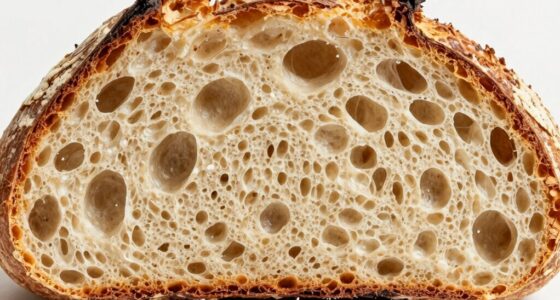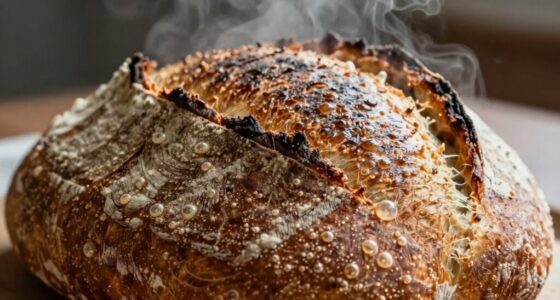
Using steam during baking creates a moist environment that allows your bread to expand fully and develop a shiny, crisp crust. It slows crust formation early on, giving gluten time to strengthen and improving oven spring. Without steam, the crust hardens quickly, leading to a denser loaf and dull crust. To perfect your bread’s texture and appearance, understanding how steam influences the process will help you achieve bakery-quality results.

Get baking supplies delivered free — and shop member deals
- Fast, free delivery on millions of items
- Access to Prime Big Deal Days deals on October 6–7
- Prime Video, Amazon Music and more included
Key Takeaways
- Steam creates a moist environment that delays crust formation, allowing better oven spring and a lighter crumb.
- It strengthens the gluten network and promotes starch gelatinization, improving dough elasticity and bread texture.
- Steam leads to a shiny, crackly crust with even browning, enhancing bread’s visual appeal and flavor.
- Without steam, crust forms too quickly, resulting in a dull, thicker crust and denser, less attractive bread.
- Using steam supports bakery-quality crust development, while skipping it can produce a more natural, rustic loaf.
As an affiliate, we earn on qualifying purchases.
What Does Steam Actually Do for Bread Crust?
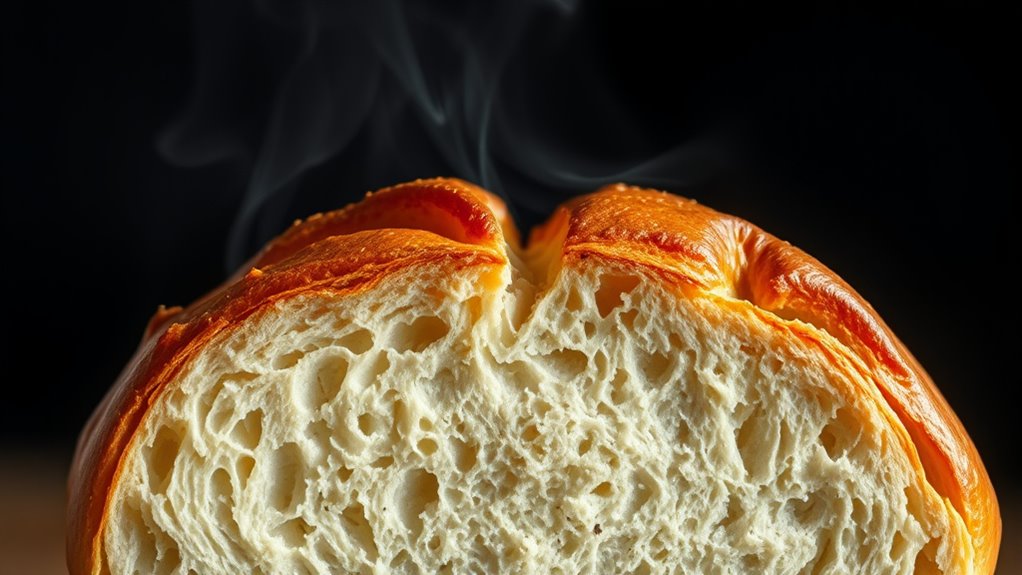
Have you ever wondered how steam transforms a simple loaf into a crusty masterpiece? When you add steam during baking, it creates a moist environment that promotes a better oven spring, helping your bread rise more vigorously. The steam keeps the dough’s surface moist, delaying the formation of a thick crust early in baking. This allows the bread to expand fully before the crust hardens. As a result, you get a lighter, more open crumb and a crust with the ideal thickness—crisp but not overly thick. Without steam, the crust forms too quickly, limiting oven spring and producing a denser loaf with a thinner, less appealing crust. Steam is essential for achieving that perfect balance of rise and crust texture. Incorporating energy-efficient baking techniques can further enhance the baking process by reducing energy consumption while maintaining quality. Proper steam management is crucial for consistent results and optimal crust development. Proper handling of steam can also influence the overall baking time and the final appearance of your bread.
As an affiliate, we earn on qualifying purchases.
How Does Steam Change the Crust’s Formation and Color?
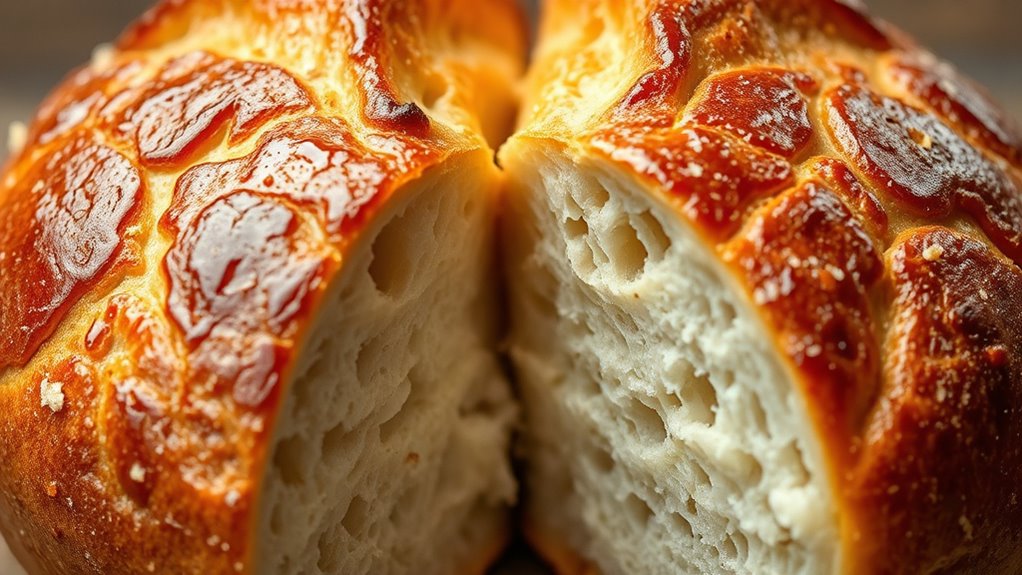
Steam plays a crucial role in shaping the crust’s formation and color by influencing how heat interacts with the dough’s surface. When steam is present, it keeps the surface moist longer, delaying crust formation and allowing heat to penetrate more evenly. This process promotes crust caramelization, where sugars develop a rich, golden hue, and enhances the Maillard reaction, creating complex, flavorful browning. Without steam, the crust tends to form faster and may brown unevenly, resulting in a darker, thicker crust. Steam also helps distribute heat more uniformly, ensuring a more attractive, glossy crust. Additionally, moisture retention during baking is vital for achieving a tender crumb alongside a crisp crust. Properly managing heat transfer is essential for controlling crust development and achieving the desired texture and color. Incorporating baking environment factors such as humidity levels can further optimize crust quality and appearance. Understanding the baking process can help bakers better control these effects and produce consistently excellent results. Moreover, controlling humidity levels enhances the overall baking environment, leading to better crust outcomes.
professional bread oven with steam
As an affiliate, we earn on qualifying purchases.
As an affiliate, we earn on qualifying purchases.
How Does Steaming Affect Gluten and Dough Development?
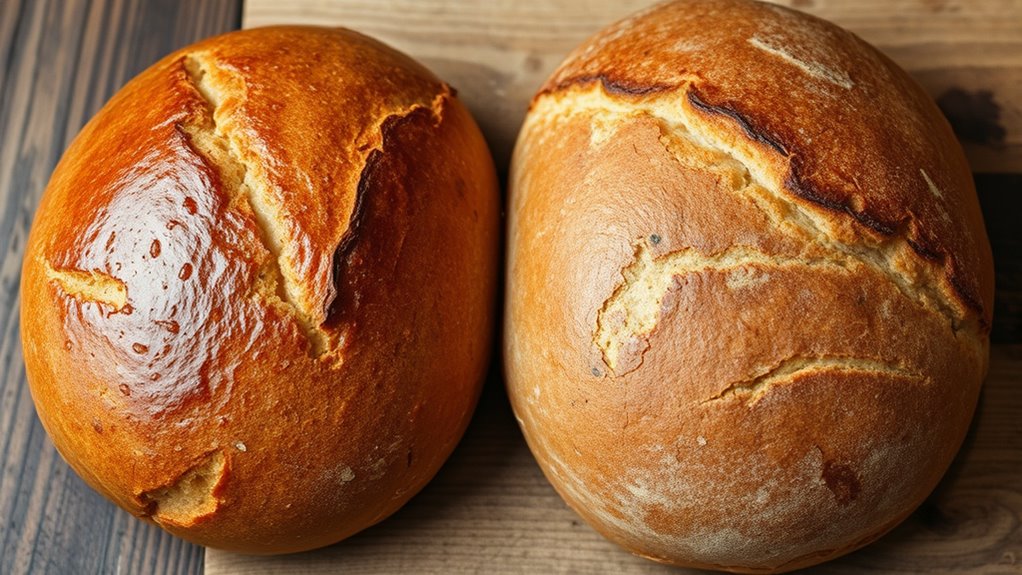
When you add steam to your baking process, it helps strengthen the gluten network in your dough. This extra moisture promotes better hydration and gelatinization, resulting in a more elastic and resilient dough. As a result, your bread can develop a finer crumb and a more uniform structure. Additionally, the presence of steam can improve the crust quality, yielding a more desirable, crispy exterior. The hydration process facilitated by steam also encourages starch gelatinization, which contributes to the overall texture of the bread. Using steam effectively can also influence exposure to heat, helping to create a better rise and a more appealing crust. Furthermore, steam can impact microstructure development within the dough, leading to improved dough elasticity and gas retention. Proper steaming can also help control the oven spring, resulting in a more open crumb and better oven performance.
Steaming Strengthens Gluten Network
Steaming during bread baking initiates a chemical process that enhances gluten development, resulting in a stronger and more elastic dough network. The moisture from steam interacts with gluten proteins, allowing them to bond more effectively and create a resilient gluten network. This process improves dough elasticity, making it easier to shape and maintain structure during baking. Here’s a visual overview:
| Effect of Steaming | Result |
|---|---|
| Moisture addition | Strengthens gluten network |
| Protein interaction | Increases dough elasticity |
| Heat transfer | Facilitates gluten bonding |
| Steam environment | Promotes uniform development |
| Dough structure | Becomes more resilient |
| Heat transfer enhances gluten bonding, making the process more efficient. Additionally, controlling the steam environment can influence the final crust texture and bread volume. Furthermore, understanding the gluten network is crucial for achieving the perfect bread texture and structure.
By optimizing steam exposure, bakers can better regulate crust formation and overall bread quality.
Dough Hydration and Gelatinization
As heat and moisture interact during baking, steam substantially influences gluten behavior and dough development. Increased dough hydration from steaming keeps the dough moist, allowing gluten strands to continue developing smoothly. This enhanced moisture also supports proper gluten formation, ensuring the dough maintains elasticity and strength. This moisture facilitates gelatinization, where starch granules absorb water and swell, creating a tender crumb and enhancing dough structure. Steam prevents the surface from drying out too quickly, giving the dough time to fully hydrate and for proteins to form a stronger network. This process results in a more elastic dough that can expand better during oven spring. Without steam, the dough may dry out prematurely, hindering gluten development and limiting gelatinization. Additionally, maintaining proper dough consistency through steaming helps achieve a more uniform and desirable crust texture. Proper steaming also supports moisture retention, ensuring the bread remains soft and well-structured after baking. Incorporating steam during baking can also influence the crust formation, leading to a crispier and more flavorful crust. Overall, steaming promotes ideal dough hydration and starch gelatinization, leading to a bread with better crumb and crust qualities.
bread crust shine and crunch tools
As an affiliate, we earn on qualifying purchases.
As an affiliate, we earn on qualifying purchases.
What Are the Visual and Textural Differences Between Breads Baked With and Without Steam?
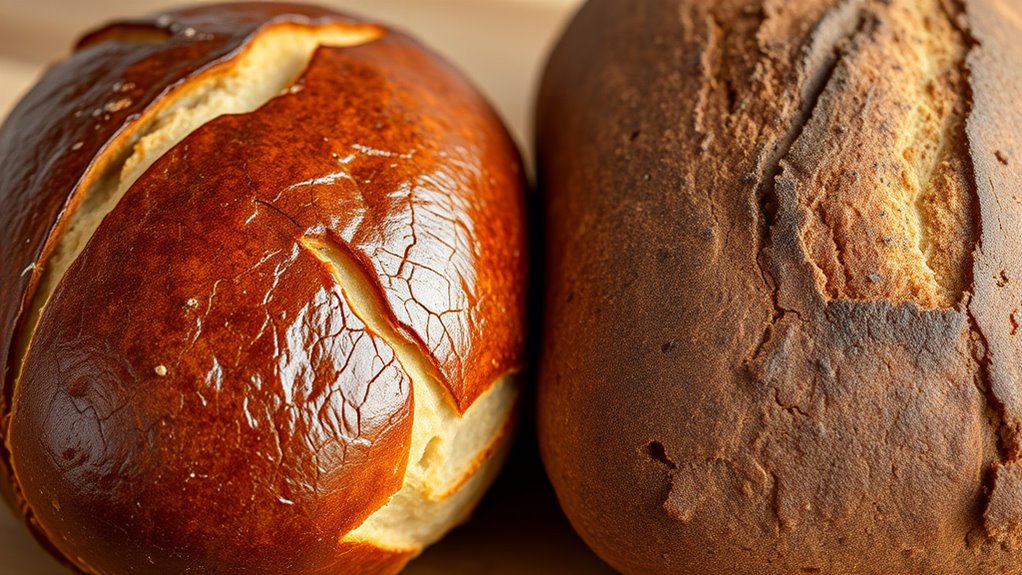
Baking bread with steam creates notable visual and textural differences compared to baking without it. With steam, your bread develops a beautifully glossy crust that catches the light and invites a satisfying crackle. You’ll notice an impressive oven spring, where the dough expands rapidly, resulting in a lighter, airier crumb. The crust’s glossiness signals a perfect gelatinized surface, giving your bread an appealing shine and professional look. Without steam, the crust tends to be duller, thicker, and less elastic, which can hinder oven spring and leave the crumb denser. The contrast in textures is striking—steam-baked bread offers a delicate, crisp exterior with a tender interior. These visual cues and textural differences can elevate your baking experience and final presentation.
How Can You Add Steam to Your Bread in Practical Ways?
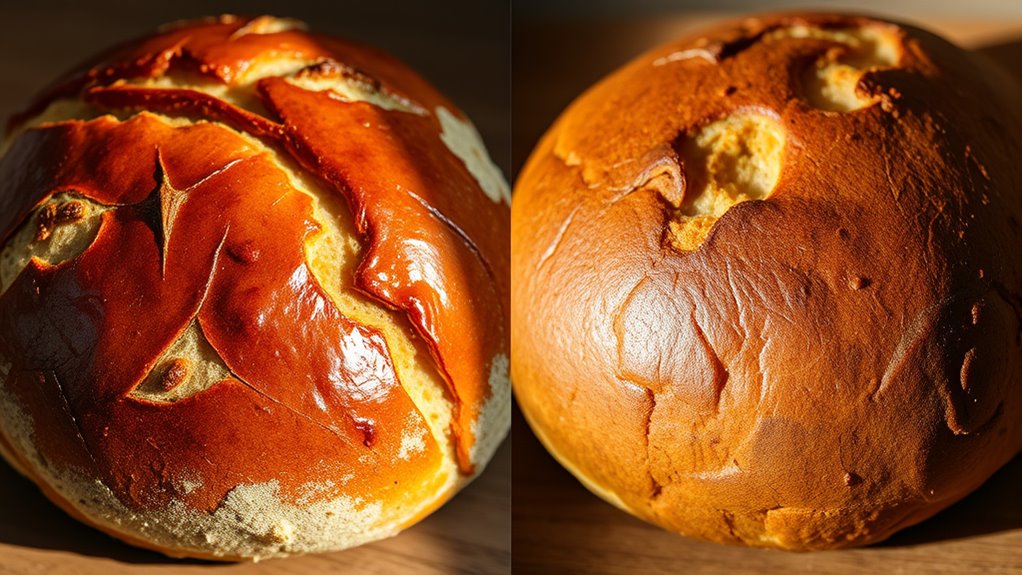
Ever wondered how to introduce steam into your oven without fancy equipment? You can create steam by using simple techniques. For example, preheat your oven and place a metal pan on the bottom rack. Just before baking, pour a cup of hot water into the pan to generate steam. Adjust your oven temperature as needed, typically around 450°F (232°C), and monitor baking time closely to prevent overbaking. Here’s a quick guide:
| Method | Key Point |
|---|---|
| Hot Water in Pan | Creates initial vapor |
| Spraying Water | Adds moisture during baking |
| Covering with Foil | Traps steam temporarily |
| Dutch Oven Use | Encloses vapor naturally |
Using these methods helps develop a crust with ideal oven temperature and baking time. Incorporating baking techniques can further optimize crust development and achieve a bakery-quality result.
When and Why Should You Skip Using Steam in Bread Baking?
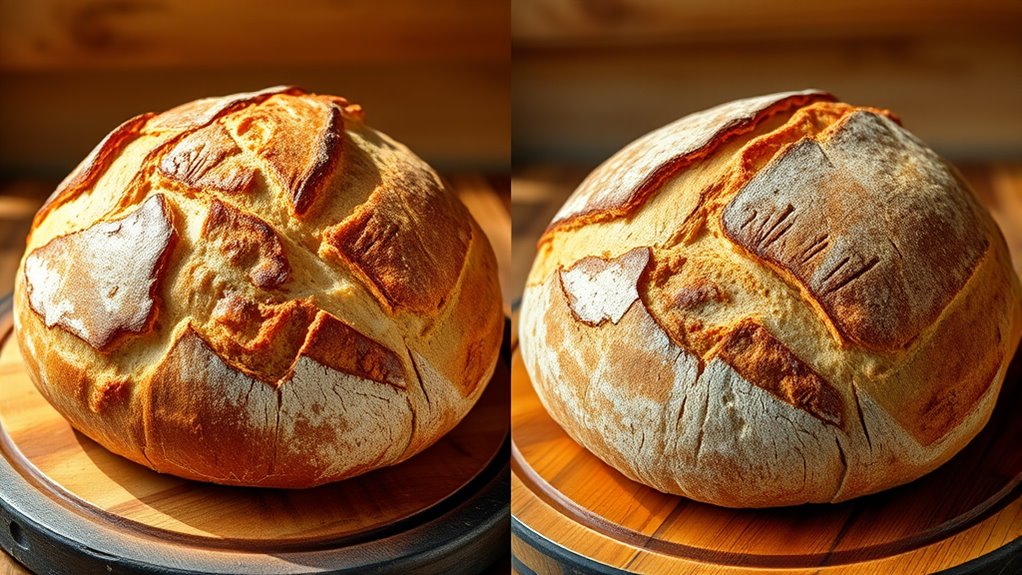
While adding steam can improve bread crust, there are times when skipping it makes sense. If you’re aiming for a more natural, artisanal crust without an artificial crust effect, skipping steam can help. Sometimes, you want a crust that emphasizes the bread’s true flavor impact, which can be overwhelmed by excessive moisture. Additionally, if you’re working with delicate doughs or recipes that don’t benefit from extra moisture, avoiding steam preserves their unique texture. Free Floating techniques can also influence whether steam is necessary or beneficial during baking. Understanding the baking process and how moisture dynamics affect crust development can help you decide when steam will enhance your bread and when it might detract from the desired result.
Frequently Asked Questions
Does Steam Impact the Nutritional Content of Bread Crust?
Steam doesn’t impact the nutritional content of bread crust substantially. It helps create a better crust by promoting moisture retention and browning, but the crust’s nutrient levels remain mostly preserved. You’ll find that the crust nutrient profile stays intact, ensuring you get the same nutritional benefits. So, using steam enhances texture and appearance without compromising the nutritional preservation of the crust.
Can You Use Steam in All Types of Bread Recipes?
You can use steam in most bread recipes, especially those that benefit from a crispy crust. Steam application helps promote crust development by delaying surface drying and creating a moist environment. However, some delicate or quick bread recipes may not need steam, as it could interfere with their texture. Always consider your bread type and desired crust when deciding whether to incorporate steam for ideal results.
How Does Steam Influence the Aroma of Freshly Baked Bread?
Steam acts like a magic wand, revealing deeper aroma layers in your bread. It enhances aroma development by keeping the crust moist early on, allowing the Maillard reaction to thrive. This process intensifies the bread’s fragrance, making each bite more inviting. As a result, you notice a richer, more complex aroma that elevates your baking experience, turning simple ingredients into a symphony of enticing flavors.
Is Steam Necessary for Achieving a Thick Crust?
Steam isn’t necessary for achieving a thick crust, but it does influence crust texture and development. Using baking techniques that include steam early in baking helps create a crisp, well-rounded crust, but for a thicker crust, focus on longer baking times and higher heat. Adjusting your baking methods, such as using a Dutch oven or preheating your oven thoroughly, can also help you get the crust thickness you desire.
How Does the Type of Oven Affect Steam Baking Effectiveness?
Did you know that certain oven types can boost steam efficiency by up to 50%? Your oven’s design considerably influences how well steam interacts with your bread. Conventional ovens with steam injection or Dutch ovens trap moisture more effectively, creating a thick, crispy crust. In contrast, some newer ovens may have less ideal steam distribution, reducing crust quality. So, choosing the right oven type directly impacts your bread’s crust perfection.
Conclusion
By using steam, you unveil the secret to a crust so irresistibly crunchy and deeply caramelized, it’s like turning your bread into a masterpiece of bakery magic. Without it, your loaf may fall flat, missing that stunning shine and perfect texture. Whether you choose to embrace or skip steam, understanding its power helps you craft bread that can elevate your baking game from good to legendary—your taste buds will thank you for it!
Halloween Picks
halloween
As an affiliate, we earn on qualifying purchases.