
To prevent scratches and warping, handle bakeware carefully by supporting heavy pieces and letting hot items cool before storage. Use soft liners or padding when stacking to avoid surface damage. Store similar items together in organized, dry spaces, and prevent tight stacking. Regularly check for damage and follow manufacturer instructions for cleaning and handling. Proper storage and gentle handling protect your bakeware long-term—discover more tips if you want to keep your bakeware in top shape.

Get baking supplies delivered free with Prime
- Fast, free delivery on millions of items
- Prime Video, Amazon Music and more included
- Member-only deals all year
Key Takeaways
- Support large bakeware with both hands during handling and avoid sudden temperature changes to prevent warping.
- Use soft padding, cloth, or silicone liners when stacking to prevent scratches and surface damage.
- Store bakeware in a dry, cool space with proper organization, separating items to avoid unnecessary handling.
- Let hot pans cool gradually before washing or stacking to avoid thermal shock and warping.
- Regularly inspect and replace damaged pieces, and follow manufacturer care instructions for optimal longevity.
As an affiliate, we earn on qualifying purchases.
What Causes Damage to Bakeware?
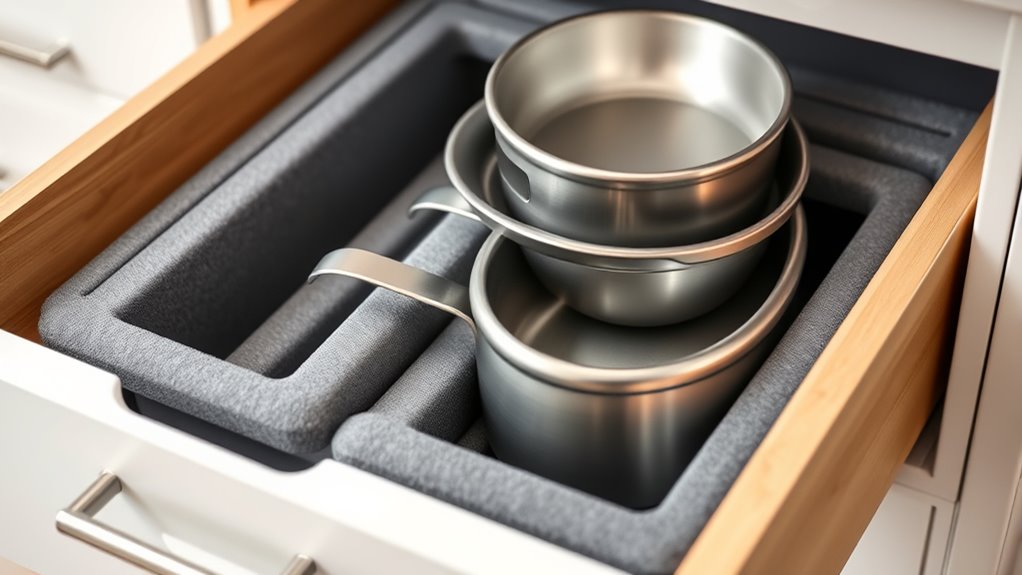
Damage to bakeware often occurs when you expose it to sudden temperature changes, such as placing a hot pan directly into cold water or transferring it from the oven to a cold surface. This thermal shock can cause warping or cracking. Additionally, improper bakeware stacking can lead to scratches or dents if heavy items are placed on delicate pieces. To prevent damage, handle bakeware carefully and avoid stacking items too tightly, which can cause scratches or chips. Use soft cloths or padding between pans to protect surfaces. Always let hot bakeware cool gradually before washing or stacking. Following these handling tips helps preserve your bakeware’s integrity and prolongs its lifespan, preventing unnecessary warping or damage caused by careless storage. Incorporating proper storage techniques can further minimize the risk of warping and scratches.
As an affiliate, we earn on qualifying purchases.
How to Choose the Best Bakeware Storage Solutions
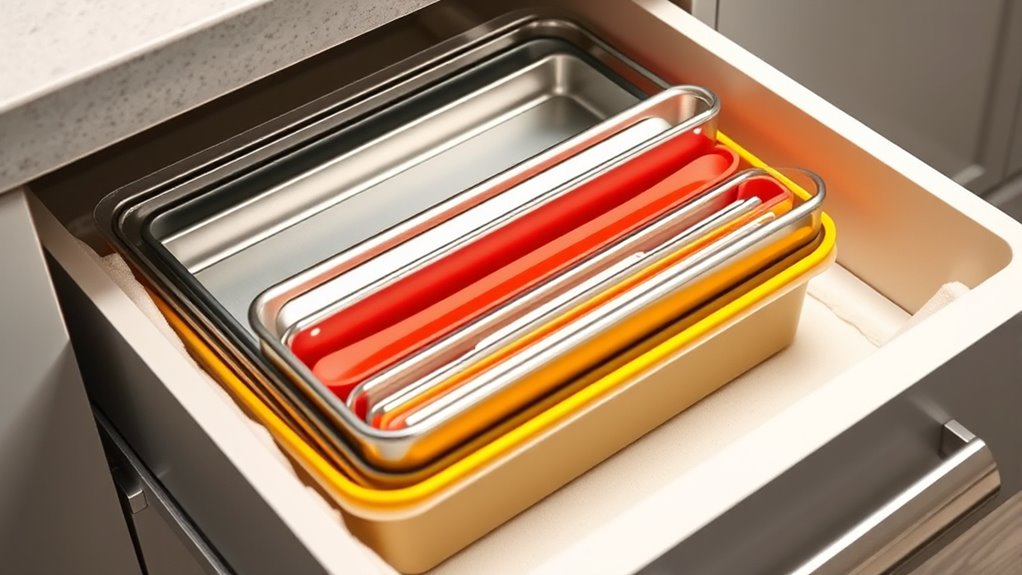
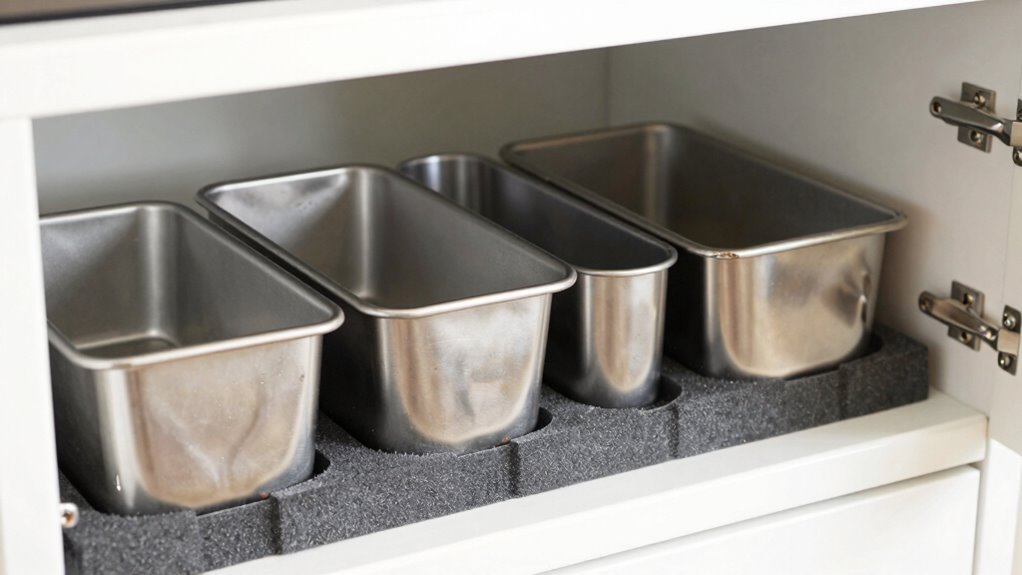
When selecting bakeware storage, consider material compatibility to prevent damage and make certain of longevity. Look for space-efficient organization ideas that keep your bakeware accessible without cluttering your kitchen. By focusing on these points, you can create a functional and protective storage system tailored to your needs. Additionally, choosing storage solutions that incorporate cushioned compartments can help safeguard delicate surfaces from scratches and warping over time. Incorporating adjustable and customizable features can further optimize space and accommodate different bakeware sizes and shapes. Opting for modular organizers with flexible configurations can enhance your storage’s adaptability to your evolving collection. Utilizing material compatibility principles ensures your storage choices do not inadvertently cause damage, extending the lifespan of your bakeware. Incorporating local automation features, such as adjustable shelving or modular organizers, can enhance flexibility and efficiency in your storage setup.
Material Compatibility Tips
Choosing the right bakeware storage solution starts with paying attention to material compatibility. You want storage that won’t compromise material safety or damage your bakeware. Avoid storing metal pans directly on rough or abrasive surfaces that can scratch or warp them. Instead, opt for storage materials like silicone or soft cloth liners that protect the finish and preserve your bakeware’s integrity. Consider aesthetic compatibility as well; matching storage containers or racks to your kitchen decor creates a cohesive look. Check that storage options are non-reactive and food-safe, especially if you plan to store items long-term. By selecting materials compatible with your bakeware’s composition, you guarantee safety and maintain the appearance of your collection for years to come. Additionally, understanding material compatibility helps prevent damage caused by incompatible storage environments, ensuring your bakeware stays in optimal condition over time. Using proper storage materials also minimizes the risk of cross-contamination and extends the lifespan of your bakeware investments. Being aware of storage environment factors can further help you choose the best solutions for preserving your bakeware’s quality. Incorporating appropriate storage techniques can also contribute to better organization and easier access when you need to use your bakeware.
Space-efficient Organization Ideas
Maximizing storage space for your bakeware starts with selecting solutions that fit your available area while keeping your collection accessible. Use bakeware stacking to save vertical space, but make certain items are stable and won’t slip or scratch. Stack similar pieces carefully, placing heavier items at the bottom. Incorporate label identification by attaching labels or using clear storage containers, so you can quickly find what you need without rummaging through stacks. Consider pull-out drawers or tiered racks to maximize cabinet space and improve organization. Adjustable racks also allow flexibility for different bakeware sizes. By combining efficient stacking methods with clear labels, you create a tidy, space-efficient setup that’s easy to maintain and access, reducing clutter and preventing damage. Additionally, safe installation practices ensure your storage solutions remain secure and avoid accidental damage to your bakeware. Employing proper storage techniques can further extend the lifespan of your bakeware by preventing warping and scratches, ensuring your collection stays in prime condition for years to come. Using space‑saving methods that are tailored to your storage area can optimize organization and protect your bakeware from damage over time. Incorporating seasonal checklists can also help you regularly review and reorganize your storage to maintain optimal conditions. Implementing these strategies can also help you prevent scratches and warping, keeping your bakeware in excellent shape for all your baking adventures.
non-abrasive bakeware storage containers
As an affiliate, we earn on qualifying purchases.
As an affiliate, we earn on qualifying purchases.
How to Handle and Load Bakeware Properly
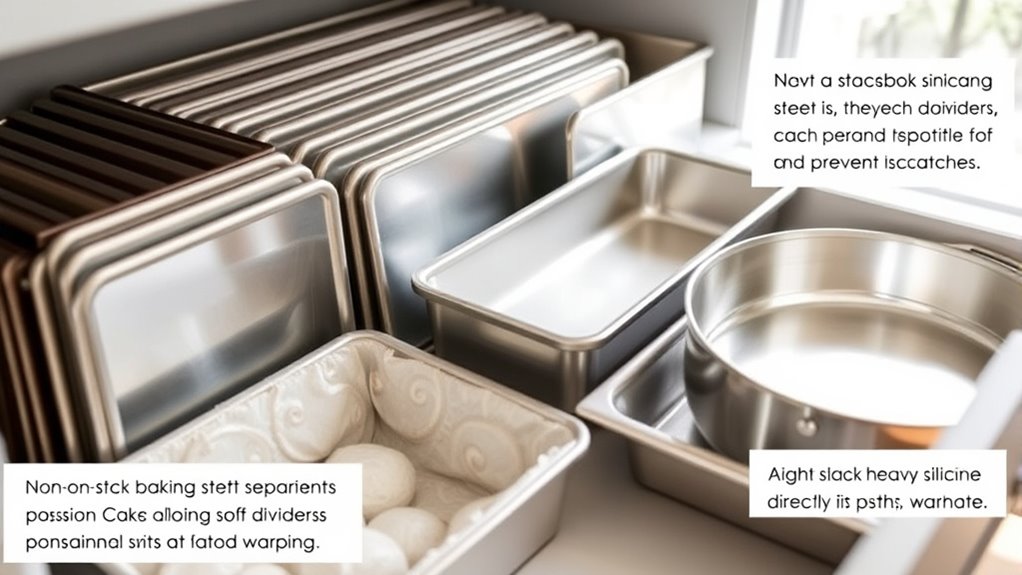
Handling and loading bakeware properly makes certain your items stay in good condition and perform well during baking. Always prioritize oven safety by placing bakeware carefully to prevent spills or accidents. When loading, avoid forcing pans into tight spots, which can cause warping or scratches. Use both hands to support larger pieces, ensuring even weight distribution. Check that your bakeware is cool before handling to prevent warping from sudden temperature changes. When inserting or removing from the oven, set the baking temperature correctly and avoid sudden temperature shifts that could damage the material. Proper loading also means avoiding stacking heavy items directly on delicate bakeware, preventing scratches. Additionally, understanding the material properties of your bakeware helps in choosing the right handling techniques to prevent warping or damage. For example, knowing whether your bakeware is ceramic or metal can influence how you handle and load it to maintain its integrity. Being aware of the thermal shock resistance of your bakeware can further help in avoiding accidental damage during temperature transitions. To further protect your bakeware, consider consulting the manufacturer’s care instructions for specific handling guidelines and longevity tips. Incorporating curiosity about material durability can also guide you in selecting the best practices for your specific bakeware type.
As an affiliate, we earn on qualifying purchases.
Organize Your Bakeware to Prevent Damage
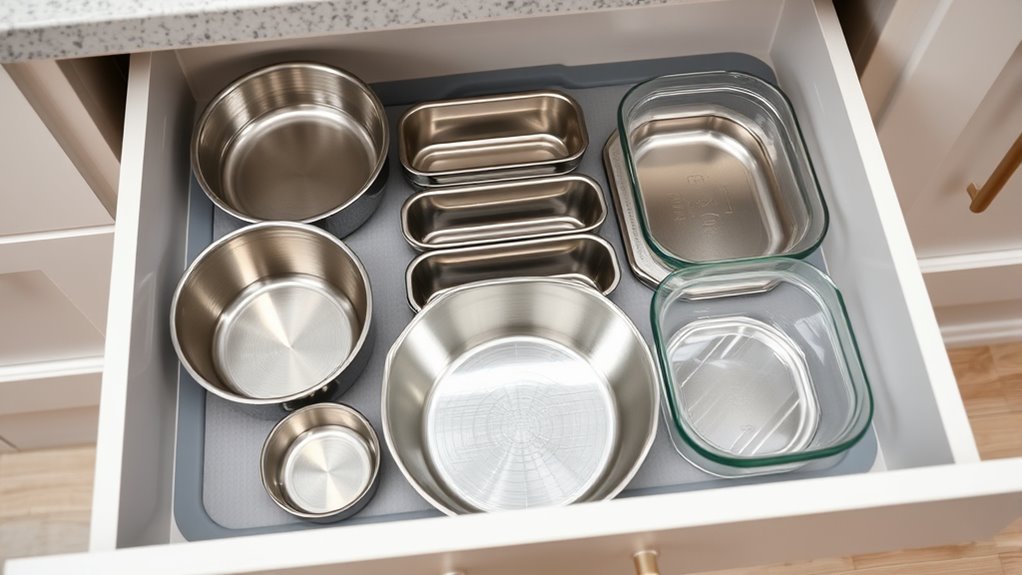
Properly organizing your bakeware is key to preventing damage and extending its lifespan. Use stacking techniques carefully, placing heavier pans at the bottom and lighter ones on top to avoid warping or scratches. When stacking, consider placing soft materials like cloth or felt between pieces to prevent scratches and reduce noise. Label labeling can help you quickly identify specific bakeware, especially if you have a large collection. Use clear labels or tags on storage bins or racks to keep everything organized and accessible. Keep similar items together, such as cookie sheets or cake pans, to minimize unnecessary handling. Additionally, understanding water chemistry and proper storage conditions can help preserve the integrity of your bakeware over time. Implementing proper storage techniques for free floating items can also prevent accidental damage and make your kitchen more efficient. Ensuring proper airless spray techniques during storage can prevent paint residue buildup that might damage surfaces or materials. Proper storage conditions also help prevent warping and corrosion, extending the life of your bakeware. By implementing these strategies, you protect your bakeware from damage and make your kitchen more efficient. Proper organization ensures your bakeware stays in top shape for years to come.
Maintenance Tips to Keep Bakeware in Top Shape
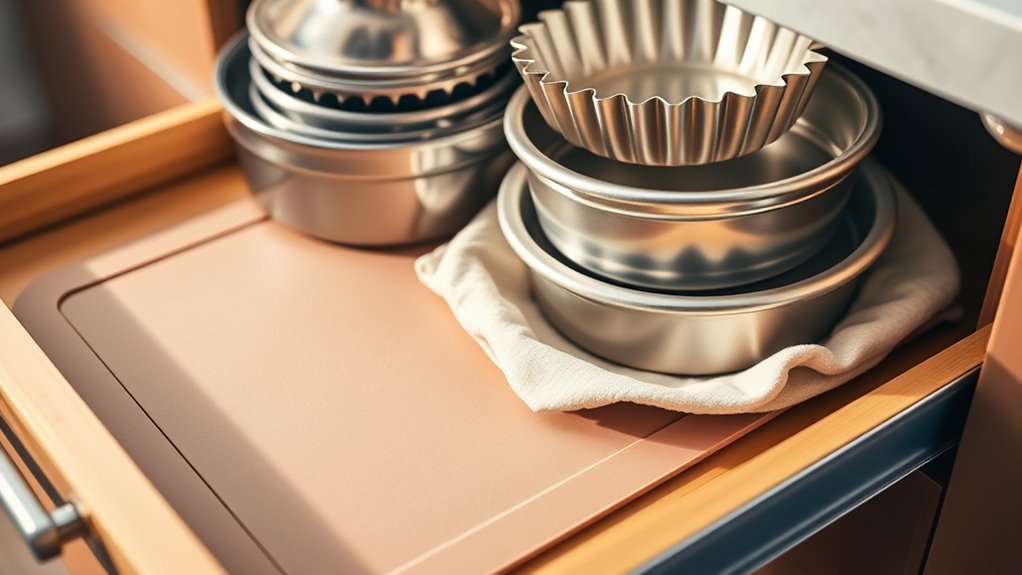
To keep your bakeware in great condition, it’s important to use proper cleaning techniques that prevent damage. Make sure you store your bakeware correctly to avoid warping or scratches. Paying attention to these maintenance tips will help your bakeware last longer and perform better. Additionally, avoiding the use of abrasive cleaning tools can help preserve the surface quality of your bakeware and prevent scratches.
Proper Cleaning Techniques
Cleaning your bakeware promptly after use helps prevent stubborn stains and baked-on residue from setting in. Use gentle cleaning agents like non-abrasive sponges and mild dish soap to preserve the surface. For baked-on messes, soak the bakeware in warm, soapy water before scrubbing. Check if your bakeware is dishwasher safe; if so, place it on the top rack to avoid warping or scratches. Avoid harsh chemicals or abrasive scrubbers that can damage the non-stick coating or finish. Rinse thoroughly to remove any soap residue, and dry completely to prevent rust or water spots. Proper cleaning not only keeps your bakeware looking new but also extends its lifespan, making future baking sessions more successful.
Correct Storage Methods
Ever wondered how to keep your bakeware in top shape for years to come? Proper storage is key. Use baking tips like stacking bakeware with soft cloths or shelf liners between pieces to prevent scratches and warping. Avoid overcrowding your cabinets to reduce pressure that can cause warping. Keep bakeware away from high heat sources and moisture, which can damage coatings and materials. When storing, ensure oven safety by not stacking heavy items on delicate pieces, and always dry bakeware thoroughly before putting it away. Use hooks or racks for items like baking sheets to prevent bending. Regularly inspect your bakeware for signs of damage, replacing any compromised pieces. Following these correct storage methods preserves your bakeware’s integrity and prolongs its lifespan.
Extra Tips for Preserving Your Bakeware Long-Term
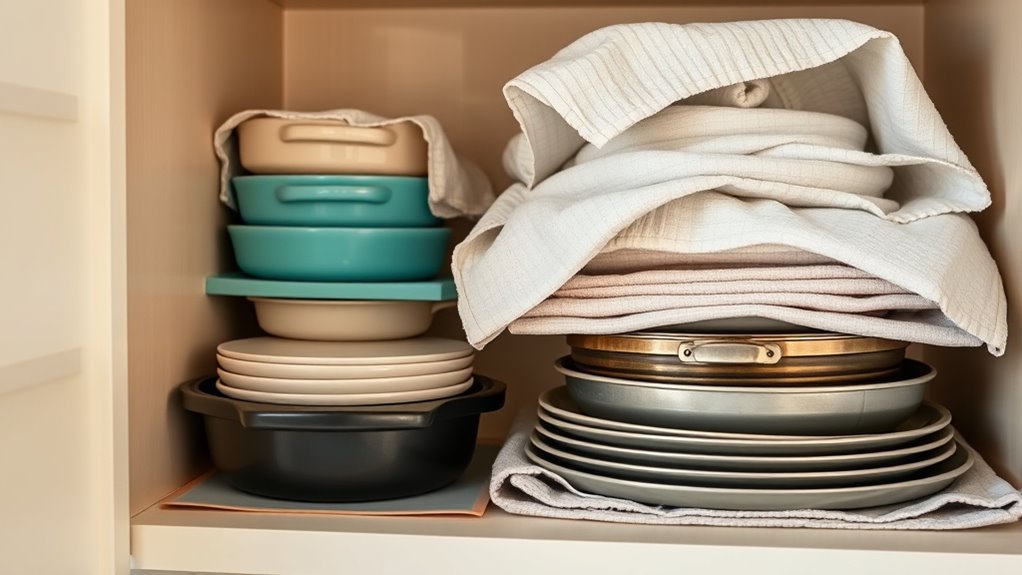
Properly preserving your bakeware over the long term requires a few simple but effective strategies. First, avoid seasoning baked goods directly onto your pans, as this can cause buildup and damage. Instead, use parchment paper or non-stick sprays to prevent sticking and scratches. Regularly clean your bakeware with gentle, non-abrasive tools to prevent surface damage. Incorporate baking safety tips by letting pans cool before washing to prevent warping. Store bakeware in a dry, organized space to avoid unnecessary scratches and warping. If stacking, place soft cloths or separators between pans to prevent surface scratches. Following these extra tips will help maintain your bakeware’s quality, ensuring it stays in great condition for years to come.
Frequently Asked Questions
Can Certain Materials Be Stored Together Without Damage?
Yes, you can store certain materials together without damage by following proper material compatibility and storage principles. For example, avoid stacking heavy or rough items directly on delicate bakeware to prevent scratches or warping. Use soft cloths or separators when storing different materials. By understanding which materials are compatible and applying good storage principles, you protect your bakeware and keep it in top condition for longer.
Is It Safe to Stack Bakeware Directly on Top of Each Other?
Stacking bakeware directly on top of each other isn’t always safe, as it can cause scratches or warping. To guarantee stacking safety, you should consider material compatibility; for example, avoid stacking glass or ceramic bakeware with heavy metal pans without protection. Use soft layers like cloth or paper towels between items to prevent damage, and always check manufacturer recommendations for your specific bakeware.
How Often Should I Replace Damaged or Warped Bakeware?
You should replace damaged or warped bakeware as soon as you notice signs of damage, like cracks, warping, or chipping, since these affect the bakeware’s lifespan and safety. Regularly inspect your bakeware and don’t use it if it’s compromised. Using damaged bakeware can lead to uneven baking or potential safety hazards, so staying vigilant guarantees your kitchen remains safe and your baked goods turn out perfectly every time.
What Are the Best Cleaning Methods to Prevent Scratches?
To prevent scratches on your bakeware, use gentle scrubbing with non-abrasive cleaning techniques. Avoid steel wool or harsh scrub brushes; instead, opt for soft sponges or cloths. You can also sprinkle baking soda or use a mixture of mild dish soap and warm water for extra protection. Always dry your bakeware thoroughly after cleaning to prevent any surface damage, ensuring it stays smooth and scratch-free for longer.
Are There Specific Storage Solutions for Fragile or Specialty Bakeware?
Yes, you should consider custom storage solutions for fragile or specialty bakeware. Use protective liners like felt or foam to cushion items and prevent scratches. You can also create dedicated compartments or racks that fit your bakeware perfectly, avoiding unnecessary movement. These methods help safeguard delicate pieces from damage and warping, ensuring your bakeware stays in excellent condition for years to come.
Conclusion
By giving your bakeware a gentle touch and thoughtful care, you’ll keep it looking beautiful and performing at its best. With simple storage habits and regular upkeep, you create a cozy home for your favorite pieces. Think of it as nurturing your kitchen treasures—each careful step adds to their story. Enjoy the process of preserving your bakeware, and it’ll reward you with countless delightful baking moments for years to come.
Fall Picks
fall essentials
As an affiliate, we earn on qualifying purchases.