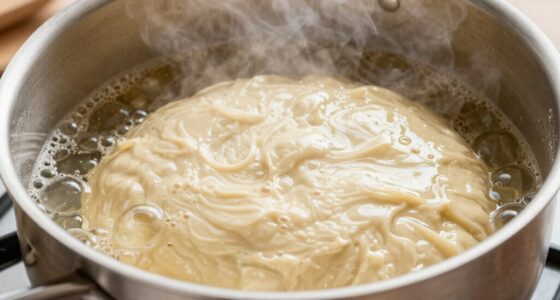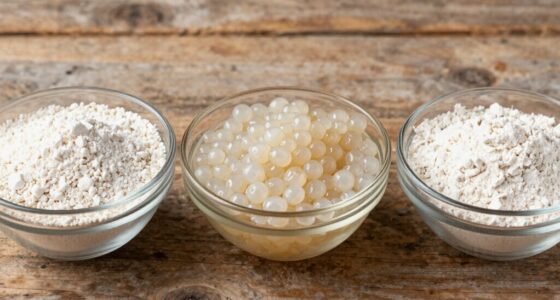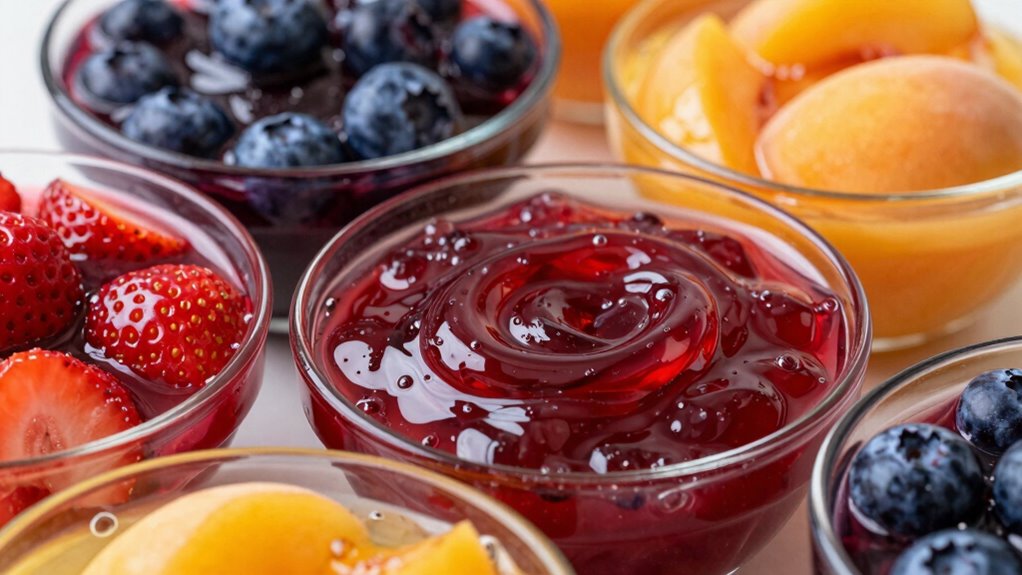

Starches like cornstarch, tapioca, and arrowroot are essential for thickening fruit pie fillings. When heated, these starches absorb liquid, swell, and form a gel that holds the fruit juices together, giving your filling the right consistency. Cornstarch thickens quickly, while arrowroot works at lower temperatures, making it great for delicate fruits. If you want to master creating the perfect filling, learn how different starches work and how to combine them properly.
Key Takeaways
- Starches like cornstarch, tapioca, and arrowroot absorb liquids during cooking, swelling to create a gel that thickens the filling.
- Heating activates starch granules, causing them to swell and form a smooth, cohesive consistency that binds the fruit juices.
- Cornstarch thickens quickly and is added near the end of cooking, while arrowroot thickens at lower temperatures, ideal for delicate fruits.
- Combining starch with sugar or sweeteners prevents clumping and enhances flavor, contributing to an even, desirable thickness.
- Proper starch choice and amount ensure the filling isn’t too runny or too gloopy, resulting in a perfect, sliceable fruit pie.
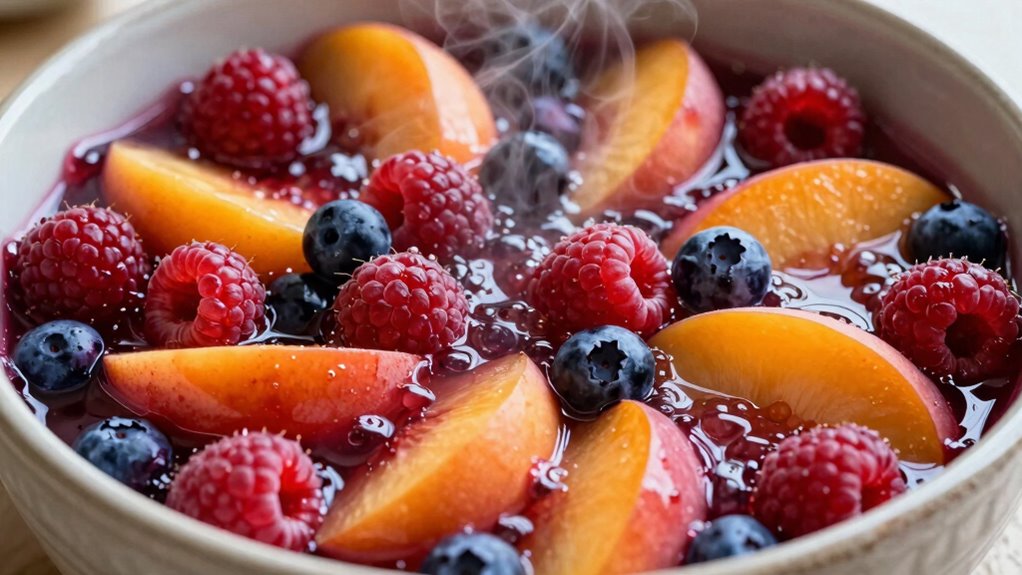
Fruit pie fillings are the heart of a delicious homemade pie, providing both flavor and texture. When you’re crafting your filling, understanding how starches thicken the mixture is key to achieving that perfect consistency. Starches act as the glue holding the juices and fruit together, transforming a runny mess into a luscious, sliceable filling. Common options include cornstarch, tapioca starch, and arrowroot powder, each with its own advantages. Using the right starch guarantees your filling isn’t too watery or too thick, giving your pie that ideal, smooth finish.
Many bakers prefer natural sweeteners like honey, maple syrup, or agave to enhance flavor while maintaining a more wholesome profile. These natural alternatives not only add subtle complexity but can also contribute to a slightly thicker consistency when combined with starches. For those seeking gluten-free options, tapioca starch and arrowroot powder are excellent choices because they are naturally gluten-free and produce clear, glossy fillings. These options are particularly popular among gluten-sensitive bakers, as they work just as well as traditional wheat-based thickeners.
When preparing your fruit filling, it’s important to mix your chosen starch with sugar or natural sweeteners before adding it to the fruit mixture. This helps prevent clumping and ensures an even distribution of thickening power. As the filling heats, the starch granules absorb liquid, swell, and create a gel-like consistency that holds the fruit together. Keep in mind that different starches thicken at varying rates and temperatures. For example, cornstarch thickens quickly and is best added during the final stages of cooking, while arrowroot thickens at a lower temperature, making it suitable for delicate fruits like berries.
If you’re aiming for a gluten-free, health-conscious filling, experimenting with natural sweeteners combined with gluten-free starches can yield fantastic results. Just remember that some starches, like tapioca, tend to give a shiny, translucent appearance, making for a visually appealing pie. Additionally, adjusting the amount of starch allows you to fine-tune the thickness; too much can result in a gloopy filling, while too little might leave it runny.
Ultimately, mastering how starches thicken fruit fillings empowers you to create pies that are both flavorful and perfectly textured. Whether you prefer using natural sweeteners or gluten-free options, understanding the role of these ingredients helps you achieve consistent, delicious results. With a little practice, you’ll be able to tailor your fillings to suit your taste and dietary needs—delivering a homemade pie that’s just right every time.

Clear Jel by Medley hills farm 1.75 Lbs. in Reusable Container – Great Clear Jel for canning Pie Filling – Gluten-Free – Non-GMO – Made in USA
- Package Size: 1.75 lbs in reusable container
- Product Type: Clear Jel for canning and baking
- Main Ingredient: Modified cornstarch
As an affiliate, we earn on qualifying purchases.
As an affiliate, we earn on qualifying purchases.
Frequently Asked Questions
Can I Use Alternative Thickeners Instead of Starch?
Yes, you can use alternative thickeners instead of starch. Natural sweeteners like honey or maple syrup can help thicken fruit pie fillings, especially when combined with fruit acidity. Some options include chia seeds, which absorb liquid and create a gel-like consistency, or pureed cooked fruit for added thickness. Just keep in mind that these alternatives may alter the flavor and texture slightly, so experiment to find what works best.
How Do Different Fruit Types Affect Starch Thickening?
Different fruit types impact starch thickening due to their acidity and pectin content. You’ll find that highly acidic fruits, like berries, can interfere with starch’s ability to thicken, making your filling thinner. Conversely, fruits rich in pectin, such as apples or quinces, naturally help thicken the filling, working synergistically with starches. Adjust your recipe accordingly, perhaps adding a bit more starch for low-pectin fruits or balancing acidity for ideal thickening.
What Is the Best Way to Prevent a Pie Filling From Becoming Too Thick?
To prevent your pie filling from becoming too thick, you should monitor the cooking time and temperature carefully. Use fruit juice instead of water to control thickening and avoid overcooking, which can cause sugar crystallization and excess firmness. Stir gently and regularly to guarantee even thickening. Also, add a bit of lemon juice to balance sweetness and acidity, helping you achieve a perfect, pourable consistency without overdoing it.
How Does Cooking Time Influence Starch Thickening?
If you want perfectly thickened pie filling, you must master cooking duration and temperature control. As you cook, the starches activate, thickening your filling. But if you pull it off the heat too soon, they won’t fully develop, leaving you with a runny filling. Conversely, overcooking can break down the starches, thinning your filling again. Watch the clock carefully, and maintain steady heat for that ideal, luscious texture.
Are There Gluten-Free Starch Options Suitable for Thickening?
Yes, there are gluten-free alternatives suitable for thickening fruit pie fillings. You can use natural thickening options like cornstarch, arrowroot powder, or tapioca starch, which work well without gluten. These options help achieve a smooth, consistent texture and are easy to incorporate into your filling. Just remember to cook them long enough to activate their thickening properties, ensuring a perfect, gluten-free pie every time.

Anthony's Organic Tapioca Flour Starch, 2.5 lb, Gluten Free, Non GMO
- Organic USDA Certified Tapioca Flour: USDA Organic Tapioca Flour / Starch
- Gluten-Free Verified: Batch Tested and Verified Gluten Free
- Vegan and Non-GMO: Organic, Vegan, Non-GMO, No Additives
As an affiliate, we earn on qualifying purchases.
As an affiliate, we earn on qualifying purchases.
Conclusion
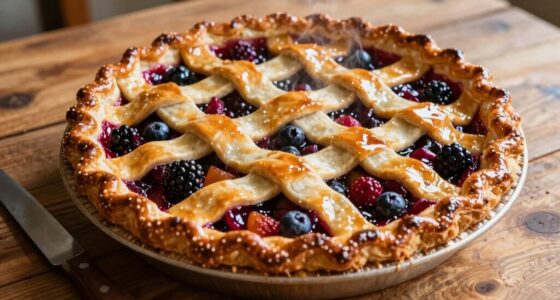
Now that you understand how starches thicken fruit pie fillings, you can picture the glossy, syrupy fruit sitting beneath a golden, flaky crust. The vibrant juices, once thin and runny, transform into a luscious, cohesive filling, holding its shape like a jewel. With the right starch, your pie becomes both a visual delight and a delicious treat—proof that simple ingredients can turn a messy fruit medley into a perfectly polished masterpiece.

It's Just – Arrowroot Powder, 8oz, Natural Thickener, Gluten-Free, Dairy-Free, Non-GMO, Cornstarch Substitute
- Pure Arrowroot Powder: Single ingredient, non-GMO, food grade
- Gluten-Free & Grain-Free: Suitable for paleo, vegan, keto diets
- Versatile Thickener: Use in sauces, jellies, biscuits
As an affiliate, we earn on qualifying purchases.
As an affiliate, we earn on qualifying purchases.

Potato starch gluten free by Medley hills farm 1.5 lbs. in Reusable Container – No Artificial Ingredients or Preservatives, Great for Thickening, Cooking and Baking – Gluten Free – Kosher
- Package Size: 1.5 lbs in reusable container
- Versatile Uses: Great for thickening, baking, cooking
- Natural Ingredients: No artificial ingredients or preservatives
As an affiliate, we earn on qualifying purchases.
As an affiliate, we earn on qualifying purchases.