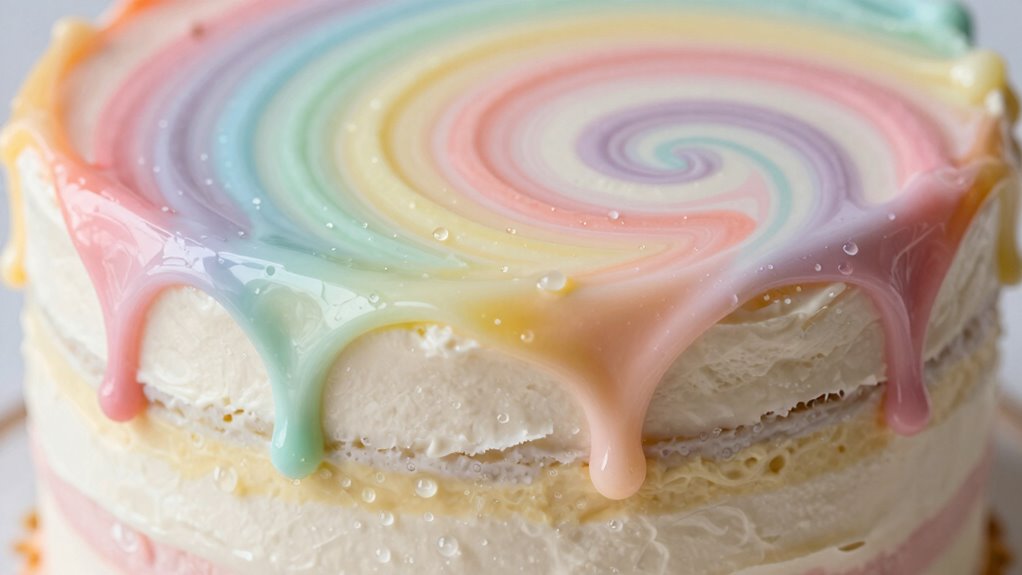

When warm, moist air hits your cold cake, condensation forms droplets that can cause colors to run or bleed. This happens because the moisture weakens dyes and spreads on the surface, especially if the cake is exposed to high humidity or sudden temperature changes. To keep colors vibrant, you need proper storage and handling techniques. Continue exploring to learn how to prevent and fix these common cake decorating issues effectively.
Key Takeaways
- Condensation occurs when warm, moist air contacts cold cake surfaces, causing water droplets to form.
- Moisture migration from condensation can cause colors in frosting or decorations to bleed or fade.
- Sudden temperature changes or high humidity exacerbate condensation and color run issues.
- Proper sealing, controlled environment, and gradual warming prevent moisture buildup and color bleeding.
- Using moisture-resistant decorations and stabilizers helps maintain color integrity on cold cakes.

VIVOSUN 62% RH Two-Way Humidity Control Packs, Size 8g, 10 Packs
- Two-Way Humidity Control: Absorbs or releases moisture to maintain 62% RH
- Extends Food Freshness: Prevents spoilage and drying for up to four months
- Safe and Eco-Friendly: Made from natural, compostable materials safe for food contact
As an affiliate, we earn on qualifying purchases.
As an affiliate, we earn on qualifying purchases.
What Is Condensation and Why Does It Happen on Cold Cakes?

Condensation occurs when warm, moist air comes into contact with a cold surface, causing the moisture in the air to change into liquid droplets. This process often happens on cold cakes, especially if humidity control isn’t managed properly. When you take a cake out of the fridge, the cold surface cools the surrounding air, leading to condensation. To prevent this, maintaining proper humidity levels is essential, helping you avoid excess moisture that can cause frosting stability issues. If humidity is too high, condensation forms more easily, making your cake look wet and compromising the frosting’s appearance. Proper humidity management is crucial in preventing unwanted moisture buildup and ensuring your cake stays visually appealing. Controlling humidity not only reduces unwanted moisture but also helps keep your frosting intact and visually appealing, ensuring your cake remains fresh and beautiful for longer. Additionally, implementing energy-efficient climate controls can help optimize humidity and temperature levels in storage areas, further reducing condensation risks. Proper ventilation techniques also play a vital role in managing indoor humidity and preventing moisture accumulation on your cakes. Using climate control systems designed for humidity regulation can provide a consistent environment, reducing the likelihood of condensation.

CAKESAFE – 2-4.25” Clear ¼” Acrylic Disks – Perfect Icing Tool to Smooth the Buttercream on Your Cakes
- Includes two 4.25-inch acrylic disks: Durable, high-quality clear acrylic disks
- Easy-to-follow instructions included: Color photos and step-by-step guidance
- Designed for smooth, level frosting: Perfect for buttercream and ganache edges
As an affiliate, we earn on qualifying purchases.
As an affiliate, we earn on qualifying purchases.
How Does Temperature Change Cause Condensation on Your Cake?

When your cake experiences a sudden temperature change, the surface cools quickly while the surrounding air remains warmer, causing moisture in the air to condense onto the cold surface. This process depends on several factors:
- Temperature difference: A larger gap between the cake’s surface and the air increases condensation. Additionally, air circulation can influence how moisture accumulates on the cake’s surface.
- Humidity levels: Higher humidity means more moisture in the air, making condensation more likely.
- Cake composition: Moist cakes or those with fruit fillings attract more condensation.
- Food pairing and cake flavor: Light, fruity flavors may enhance the visual appeal, but condensation can cause color bleeding. Understanding these factors helps you enjoy your cake without unwanted moisture, ensuring your dessert remains as beautiful as it is delicious. Additionally, proper storage techniques can help minimize condensation and preserve your cake’s appearance and flavor.

14 PCS Flower Cake Toppers Butterfly Cake Decorations Happy Birthday Cake Toppers with Artificial Pink Rose Flowers Eucalyptus Butterflies for Birthday Wedding Supplies (Pink)
- Choking hazard warning: Not for children under 8
- Package contents: Includes flowers, butterflies, and topper
- Safe, durable materials: Silk, plastic, paper, acrylic
As an affiliate, we earn on qualifying purchases.
As an affiliate, we earn on qualifying purchases.
Why Do Frosting Colors Bleed When a Cake Is Cold?
When your cake is cold, moisture can transfer from the frosting to the cake, causing colors to bleed. Temperature affects how dyes behave, making some colors more prone to spreading or fading. Understanding these factors helps you prevent unwanted color bleed and keeps your cake looking vibrant. Additionally, proper storage and handling can minimize air quality concerns that might influence frosting stability. Ensuring good ventilation can also help control humidity levels that contribute to condensation issues. Using the right appliance and storage conditions can further reduce the risk of condensation forming on your frosting. Being aware of humidity levels in your environment is crucial for maintaining frosting integrity over time. Moreover, understanding cybersecurity measures can help protect your online data from breaches related to digital storage of recipes and personal information.
Moisture Transfer Effects
Frosting colors often bleed on cold cakes because moisture moves from the cake to the frosting, disrupting the color stability. This process involves moisture migration, which happens due to temperature regulation issues. When a cake is chilled, the cold surface causes condensation, leading to excess moisture. This moisture then transfers into the frosting, weakening the dyes and causing bleeding. To minimize this, you should:
- Allow the cake to reach room temperature before applying frosting.
- Use a stable, well-set frosting that resists moisture absorption.
- Avoid stacking or refrigerating the cake immediately after frosting.
- Keep the environment dry and controlled to prevent excess humidity.
- Understanding the moisture transfer effects can help you prevent color bleeding and keep your cake visually appealing. Additionally, choosing frostings with moisture-resistant properties can further reduce the risk of bleeding.
Temperature and Dye Behavior
Cold temperatures cause frosting colors to bleed because the chilled surface triggers condensation, creating excess moisture on the cake’s exterior. This moisture weakens color stability, causing dyes to run or blur. Additionally, low temperatures can impair frosting adhesion, making colors less vibrant and more prone to bleeding. To visualize this, consider the following:
| Temperature Effect | Result |
|---|---|
| Cold surface | Condensation forms, moisture buildup |
| Moisture presence | Colors bleed, lose definition |
| Proper temperature | Better color stability, less bleeding |
| Warm surface | Enhanced frosting adhesion, vivid colors |
Maintaining appropriate temperatures ensures your frosting stays intact and colors remain sharp, preventing bleeding and preserving the overall appearance of your cake. Proper handling and understanding of dye behavior can help you achieve the best results in cake decorating.

Cake Carrier with lid and Handle – Multipurpose Cake Stand with Lid for 10” Cake, Pie, Cupcakes – Cake Holder & Lid, Plastic Cake Container, Round Cake Cover for Transport & Storage (Seafoam Green)
- Portable with Handles: Double strong handles for easy transport
- Versatile Storage: Holds cakes, pies, cupcakes, and cookies
- Cupcake Insert: Includes insert for 10 cupcakes
As an affiliate, we earn on qualifying purchases.
As an affiliate, we earn on qualifying purchases.
When Do Cold Cakes Usually Develop Condensation?
You’ll often see condensation form on cold cakes when they’re stored in humid conditions or exposed to sudden temperature changes. If you take a cake from the fridge into a warm room quickly, droplets can appear on its surface. Knowing these triggers helps you prevent unwanted moisture buildup. Additionally, proper storage in airtight containers can minimize condensation formation. Using desiccants in storage containers can further reduce moisture exposure and prevent condensation. Implementing smart‑storage solutions can also help monitor humidity levels and maintain optimal conditions for your baked goods. Being aware of environmental factors such as humidity and temperature fluctuations is key to keeping your cakes dry and freshness maintenance.
Cold Storage Conditions
Condensation on cold cakes typically occurs when they are removed from a cold storage environment into a warmer, more humid setting. If your cake is stored in a fridge or freezer with high humidity, condensation is more likely to form upon removal. To prevent this, consider these storage tips:
- Keep cakes in a tightly sealed container to control moisture exposure.
- Allow the cake to come to room temperature gradually before serving.
- Choose frosting techniques that create a barrier, like buttercream, to reduce moisture absorption.
- Select cake flavors that hold up well against moisture, such as dense chocolate or fruit-based varieties.
- Proper storage conditions are essential for preventing unwanted color runs and maintaining cake quality. Additionally, understanding water quality can help identify humidity issues that may affect your storage environment. Maintaining proper cold storage conditions helps preserve your cake’s appearance and flavor, preventing undesirable color runs caused by excess condensation. Recognizing the role of humidity control in your storage environment is crucial for consistent results. Proper temperature regulation can further minimize condensation and protect your cake’s visual appeal, especially when combined with effective air circulation to reduce excess moisture buildup.
Sudden Temperature Drops
When a cake stored in a cold environment is suddenly exposed to warmer air, condensation can quickly form on its surface. This often happens when the storage environment has a lower temperature than the cake’s baking temperature, causing moisture to condense as the cake warms up. If you take a chilled cake out of the fridge or cold storage and expose it to an indoor temperature spike, droplets may appear within minutes. Sudden temperature drops are especially problematic in humid conditions, where moisture in the air finds it easier to condense on colder surfaces. To prevent this, give your cake time to gradually warm to room temperature or cover it loosely to minimize rapid temperature changes that trigger condensation. Proper storage techniques are essential to maintain the cake’s appearance and quality, especially when dealing with temperature fluctuations.
How Does Humidity Affect Your Cake’s Surface and Decorations?

High humidity levels can profoundly impact the appearance of your cake’s surface and decorations. Humidity effects often cause surface moisture to accumulate, leading to issues like sticky fondant or smudged icing. To prevent problems, consider these tips:
High humidity can cause sticky fondant and smudged icing; control moisture with dehumidifiers and protective coatings.
- Monitor humidity levels to anticipate moisture buildup.
- Use dehumidifiers or air conditioning to control ambient moisture.
- Apply a thin layer of crusting or sealing glaze to protect decorations.
- Avoid exposing your cake to humid environments during and after decorating.
How to Store and Refrigerate Cakes Without Causing Condensation?
Storing and refrigerating cakes properly can help prevent unwanted moisture buildup that leads to condensation. To avoid affecting cake textures and preserving flavor, let your cake cool completely before refrigerating. Wrap it tightly in plastic wrap or store it in an airtight container to prevent humidity exposure. When bringing the cake back to room temperature, do so gradually to minimize condensation. Use the following table to understand key storage tips:
| Tip | Reason |
|---|---|
| Cool cakes thoroughly before chilling | Prevents initial condensation buildup |
| Wrap airtight | Maintains moisture, prevents drying |
| Use a cake box or container | Protects from external humidity |
| Avoid frequent temperature changes | Stops moisture fluctuations |
| Store in the coldest part of fridge | Controls condensation risk |
This approach ensures your cake stays fresh, maintaining ideal textures and flavor.
What Are Simple Ways to Prevent Color Bleeding in Cold Cakes?
To prevent color bleeding in cold cakes, start by using proper storage techniques to keep colors intact. Incorporating stabilizers into your batter can also help maintain vibrant hues, while cooling the cake thoroughly before decorating prevents smudging. These simple steps make a big difference in achieving clean, colorful results.
Use Proper Storage Techniques
Proper storage is essential to prevent color bleeding in cold cakes. Correct techniques help maintain cake layering integrity and flavor preservation. Here are four simple tips:
- Wrap tightly in plastic wrap or foil to reduce exposure to air and moisture, which can cause colors to run.
- Use airtight containers for added protection, especially if stacking cakes, to prevent cross-contamination of colors.
- Store in a cool, consistent temperature to avoid temperature fluctuations that lead to condensation and color bleeding.
- Separate different colored layers with parchment paper or wax paper when stacking or storing to prevent colors from mixing.
Following these steps helps keep your cold cakes vibrant and delicious, ensuring beautiful presentation and ideal flavor preservation.
Incorporate Stabilizers in Batter
Adding stabilizers to your cake batter can considerably reduce the risk of color bleeding, especially when working with vibrant or layered cakes. Food additives like stabilizer types—such as gelatin, cornstarch, or pectin—help thicken the batter and lock in colors. These stabilizers improve the batter’s structure, preventing moisture migration that causes colors to bleed. When choosing stabilizers, consider their compatibility with your ingredients and desired texture. A small amount of gelatin dissolved in water can reinforce the batter’s stability, while cornstarch can be easily incorporated for a smoother finish. Using stabilizers ensures the colors stay vibrant and separation is minimized, especially during storage or layering. Incorporating these simple food additives into your batter is an effective way to keep your cakes looking fresh and colorful.
Cool Cakes Before Decorating
Cooling cakes thoroughly before decorating is essential to prevent color bleeding, especially with vibrant or layered designs. Proper cooling helps maintain the cake’s texture and preserves its flavor by reducing excess moisture. To guarantee your cake stays perfect:
- Allow the cake to cool completely on a wire rack before applying any frosting or decorations.
- Use a gentle touch to avoid damaging delicate layers or textures.
- Wrap cooled cakes loosely with plastic wrap if you won’t decorate immediately, preventing condensation buildup.
- Chill the cake in the refrigerator for 30 minutes if you’re working with rich or moist fillings, which helps set the texture and minimizes color bleed.
Following these steps keeps your cake’s texture intact and flavor fresh, resulting in a visually appealing, delicious finish.
How Can You Serve Your Cold Cake Without Colors Running?
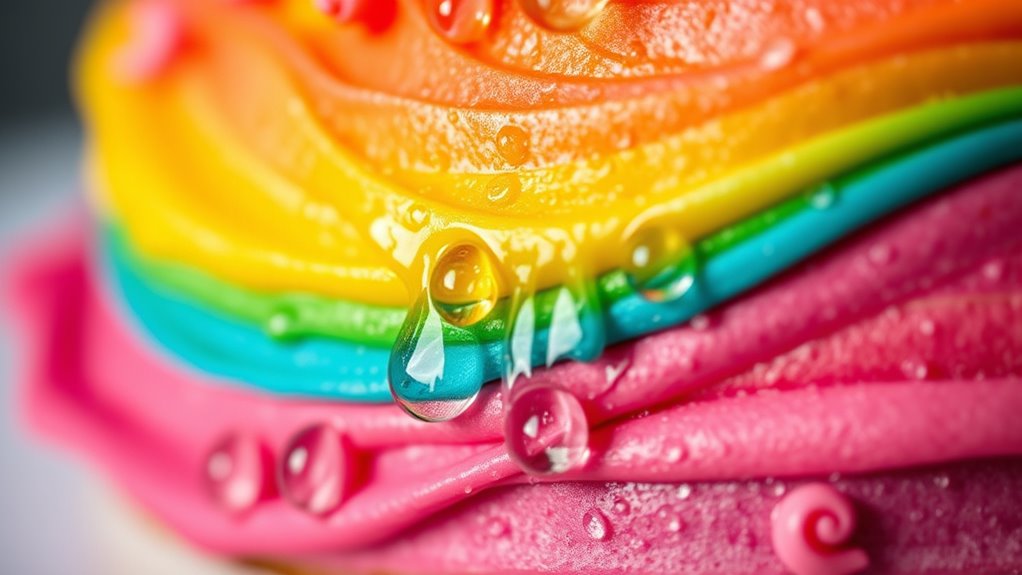
When serving your cold cake, the key to preventing colors from running is to handle it carefully and avoid exposing it to excessive moisture or sudden temperature changes. Keep the cake chilled until just before serving to maintain its structure. When selecting food pairing, choose accompaniments that complement the cake’s flavors without introducing too much moisture, which can cause colors to bleed. Present the cake on a clean, dry plate to minimize condensation. If you need to cut the cake, do so with a sharp, warm knife to create smooth slices without disturbing the surface. Proper cake presentation enhances visual appeal and reduces the risk of color bleeding, ensuring your dessert looks as appealing as it tastes.
What Decorating Techniques Help Minimize Condensation Risks?

Choosing the right decorating techniques can substantially reduce the risk of condensation on your cold cake. To guarantee decorating stability and preserve vibrant colors, consider these methods:
Selecting proper decorating methods helps prevent condensation and keeps your cake vibrant and stable.
- Use a smooth, firm layer of fondant or sturdy buttercream to create a barrier that resists moisture.
- Apply thin, even coats of icing to prevent excess moisture absorption.
- Incorporate stabilizers like gelatin or piping gel to enhance adhesion and reduce sweating.
- Decorate with color-safe, moisture-resistant edible paints or powders to maintain color integrity.
These techniques help keep your decorations intact, prevent colors from bleeding, and minimize condensation. Proper application ensures your cake remains visually appealing, with stable decorations and preserved hues, even in humid or temperature-shifting environments.
How Can You Fix or Restore a Cake After Colors Have Bleed?

If your cake’s colors have bled, don’t panic—quick action can often restore its appearance. To fix color bleeding, gently apply frosting touch-ups to cover the smudges. Use a small spatula or piping bag to carefully refine the edges and hide the unwanted color transfer. For stubborn bleed, consider adding a thin layer of frosting or fondant over the affected area to conceal the damage. Patience is key; take your time to blend the repairs seamlessly. Here’s a simple visual guide:
| Issue | Solution | Tips |
|---|---|---|
| Color bleeding | Frosting touch-ups | Use a small brush or spatula |
| Uneven color | Add a new layer of frosting | Keep it thin for smoothness |
| Smudged edges | Reapply piping or fondant | Work slowly for precision |
| Overall correction | Cover with fondant or icing | Enhances appearance overall |
Frequently Asked Questions
Can Certain Cake Ingredients Influence Condensation Formation?
Yes, certain cake ingredients can influence condensation formation. Ingredients like fruit fillings or high-moisture components affect ingredient interactions and moisture control, making it easier for condensation to form on cold cakes. When moisture isn’t properly managed, it accumulates and causes condensation, which can lead to color bleeding. To prevent this, you should balance ingredients carefully and guarantee proper storage, helping to maintain cake appearance and quality.
Are There Specific Storage Containers That Reduce Condensation?
If you want to reduce condensation, try using airtight containers or insulated boxes. Imagine storing a delicate, freshly frosted cake in an insulated box during a hot summer day—you’ll notice less moisture buildup and better preservation. These containers trap humidity and keep temperature fluctuations minimal, preventing condensation. Investing in high-quality airtight containers or insulated boxes can keep your cakes fresh, vibrant, and free from unwanted moisture.
Does the Type of Frosting Affect Color Bleeding Risks?
Yes, the type of frosting affects color bleeding risks. Frosting compositions like buttercream or cream cheese tend to have higher moisture levels, which can cause food coloring to run more easily, especially if not stabilized properly. To minimize color bleeding, choose frostings with good food coloring stability and avoid overly moist or runny textures. Proper storage and using stabilized frosting can also help keep colors vibrant and intact.
How Long Can a Cake Stay Refrigerated Before Condensation Occurs?
You can typically keep a cake refrigerated for up to 2-3 days before condensation becomes a concern. To minimize humidity control issues and moisture migration, make sure your fridge maintains a consistent temperature and avoid opening it too often. Wrapping the cake tightly with plastic wrap or storing it in an airtight container helps prevent moisture from escaping or entering, reducing the risk of condensation and color bleeding on your cake.
Are There Temperature Settings That Minimize Color Bleeding?
Think of temperature control as a delicate dance—set it just right to keep colors from bleeding. Keep your refrigerator at around 35-40°F (2-4°C) and manage humidity levels to prevent moisture buildup. Using a dedicated cake storage box with a vent can help, too. When you master humidity management and temperature control, your cake stays vibrant, and colors stay put, like stars in a clear night sky.
Conclusion
To prevent color bleeding on cold cakes, always let your cake come to room temperature before decorating or serving. Imagine you spent hours perfecting a vibrant birthday cake, only to see the colors run just before the party—disheartening, right? By understanding condensation and using simple techniques, you can keep your cake looking fresh and beautiful. With a little care, your desserts will impress every time, and you’ll feel proud of your beautiful, intact creations.