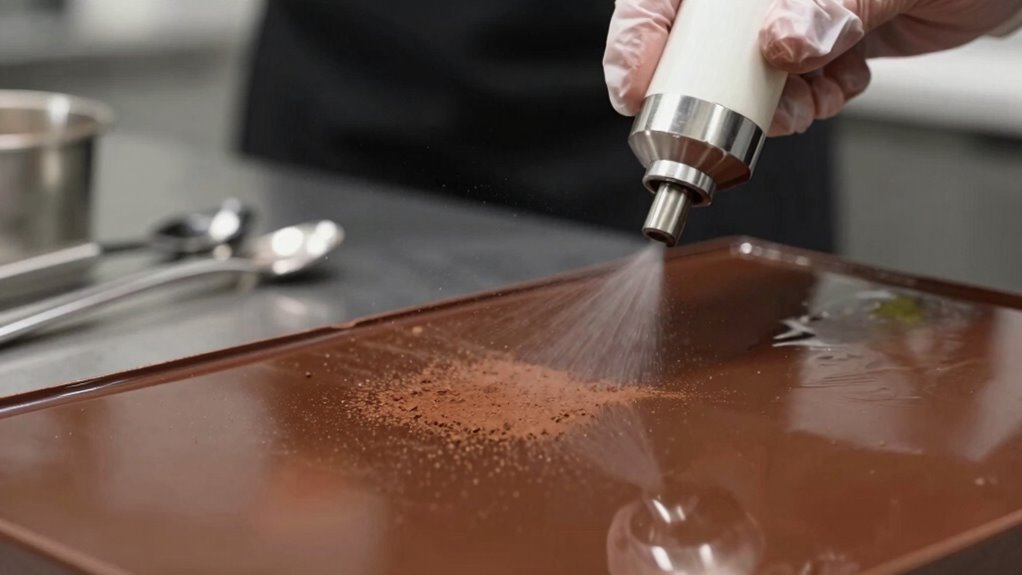
To achieve smooth, glossy coats when spraying cocoa butter, controlling the temperature is essential. Keep your cocoa butter between 86°F and 92°F to guarantee proper flow and crystallization, which prevents rough textures or drips. Use validated equipment and monitor temperatures regularly to maintain consistency. Proper adjustments and technique make a big difference in finish quality. Continue exploring to discover tips that will help you master perfect cocoa butter coatings every time.
Key Takeaways
- Maintain cocoa butter temperature between 86°F–92°F to ensure optimal flow and prevent surface imperfections.
- Use precise thermal regulation systems and regular calibration for consistent temperature control during spraying.
- Monitor temperature in real-time with digital sensors to quickly detect and correct deviations.
- Keep cocoa butter at a stable, uniform temperature to promote smooth, glossy, and even coating finishes.
- Proper temperature management prevents crystallization issues, ensuring a high-quality, streak-free coating surface.
digital cocoa butter temperature sensor
As an affiliate, we earn on qualifying purchases.
As an affiliate, we earn on qualifying purchases.
Why Temperature Matters in Cocoa Butter Spraying

Temperature plays a crucial role in cocoa butter spraying because it directly affects the viscosity and flow of the butter. When the temperature is just right, the cocoa butter maintains a smooth, consistent flow, making spraying easier and more uniform. If temperatures fluctuate, the cocoa butter consistency can change suddenly, causing it to become too thick or too runny. Such inconsistencies can lead to uneven coating and potential blockages in your spray equipment. Maintaining a stable temperature ensures the butter stays within the ideal range, providing predictable flow and better control. By monitoring and controlling temperature fluctuations, you prevent issues that compromise the quality of your coating, ultimately resulting in a smoother, more professional finish.

Pastry Chef's Boutique Symphony Collection Velvet Texture Effect Cocoa Butter Color Spray for Pastry and Cake – 8.4 Oz. (Orange Bliss, 8.45)
- Velvet Texture Finish: Creates luxurious velvet surface on pastries
- Vibrant Color Range: Offers a wide spectrum of bright colors
- Easy Spray Application: Convenient nozzle for precise decorating
As an affiliate, we earn on qualifying purchases.
As an affiliate, we earn on qualifying purchases.
How Cocoa Butter Melts and Sets: The Science Explained

Understanding how cocoa butter melts and sets helps explain why maintaining the right temperature is so important. Cocoa butter crystallization occurs as it cools, forming solid structures that influence the coat’s texture and appearance. The melting point variability among different cocoa butter samples means each type responds uniquely to temperature changes. When heated, cocoa butter shifts from solid to liquid quickly, but the exact melting point can vary, affecting how smoothly it sprays and sets. Proper temperature control ensures uniform melting, preventing unwanted crystallization or uneven setting. If the temperature is too high or too low, crystallization can become irregular, causing a rough or dull finish. Additionally, consistent temperature management is essential to achieve a glossy, smooth coating. This controlled process helps maintain the desired crystal structure, ensuring a high-quality, attractive finish. Understanding the thermal properties of cocoa butter helps you fine-tune your process for the best, most consistent smooth coats. Maintaining the correct temperature also helps prevent phase separation, which can compromise the coating’s appearance and texture. In addition, temperature stability plays a crucial role in maintaining the cocoa butter’s integrity throughout the process.
temperature control spray system for chocolate coating
As an affiliate, we earn on qualifying purchases.
As an affiliate, we earn on qualifying purchases.
What Are the Best Temperature Ranges for Different Cocoa Butters?
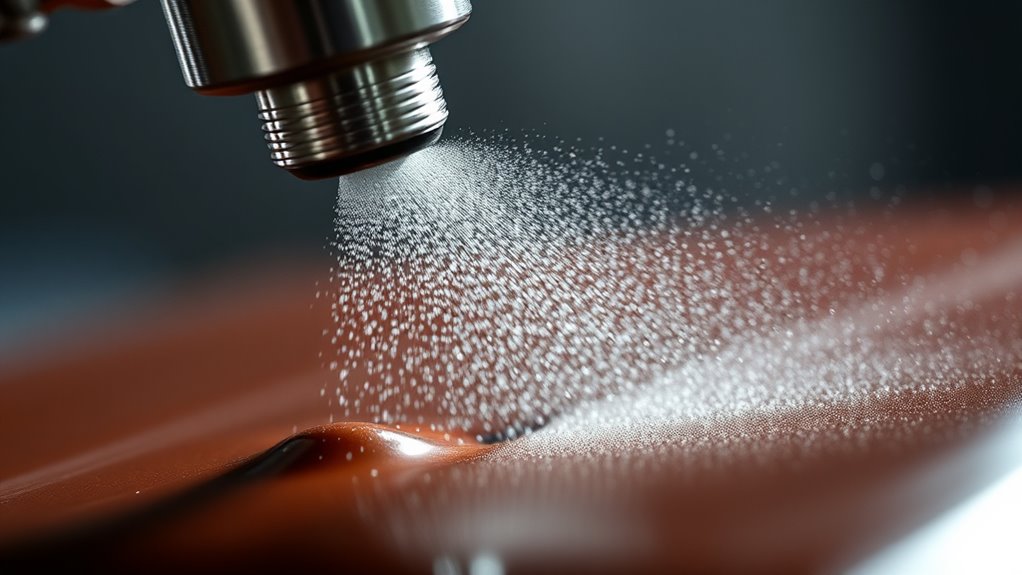
Different types of cocoa butter have specific ideal temperature ranges that guarantee smooth spraying and proper crystallization. Achieving temperature stability is essential to prevent issues like streaks or uneven coats. Generally, refined cocoa butter should be kept between 88°F and 92°F (31°C to 33°C) for optimal flow and crystallization. If you work with cocoa butter containing added ingredients or different fat compositions, you might need slightly adjusted ranges, such as 86°F to 90°F (30°C to 32°C). Understanding cocoa butter properties helps you select the right temperature range to maintain fluidity without compromising crystallization. Staying within these ranges ensures consistent texture, prevents blooming, and delivers a smooth, professional finish. Proper temperature control tailored to each cocoa butter type is key to successful spraying. Temperature control is crucial to achieving a uniform coating and avoiding common issues like streaking or uneven textures. Maintaining consistent temperature ranges also contributes to crystallization stability, ensuring that the cocoa butter sets correctly without developing undesirable appearances. Consistent temperature management also helps prevent the cocoa butter from overheating, which can degrade its quality and affect the final appearance. Additionally, utilizing smart temperature regulation systems can help maintain precise control and adapt to varying environmental conditions, ensuring optimal results.

Vaseline Cocoa Radiant Spray 2-Pack for Dry Skin + Vaseline Lip Therapy Cocoa Butter Lip Balm (3 Piece Set)
- Gift Set Includes: 2-pack Cocoa Radiant Spray and Lip Balm
- Quick-Absorbing Moisturizer: Hydrates dry skin with a non-greasy finish
- Enriched with Cocoa Butter: Nourishes and restores dull, dry skin and lips
As an affiliate, we earn on qualifying purchases.
As an affiliate, we earn on qualifying purchases.
How Do You Adjust Equipment Settings for Consistent Coats?
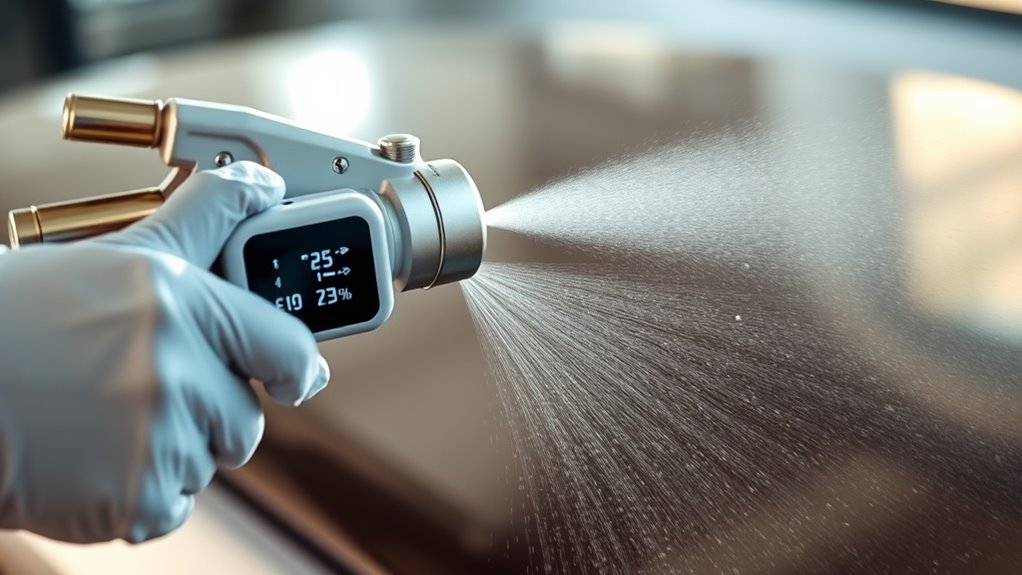
To get consistent coats, you need to adjust your spray pressure properly. Keep an eye on temperature stability, as fluctuations can influence the spray quality. By maintaining steady pressure and temperature, you’ll ensure even, reliable coverage every time. Additionally, monitoring your equipment’s settings helps prevent issues related to support breakfast that could affect the coating process. Consistent equipment calibration is essential for achieving the desired finish and avoiding uneven application. Implementing performance cookies can assist in tracking and optimizing your spray parameters over time. Regularly checking and adjusting these settings based on environmental conditions will further enhance your coating consistency.
Adjust Spray Pressure
Adjusting spray pressure is essential for achieving consistent cocoa butter coatings, as it directly influences the thickness and quality of the spray. Properly calibrated equipment ensures the spray pressure remains steady, preventing uneven layers. To modify, start by checking your equipment calibration, then increase or decrease the pressure in small increments. Too high spray pressure can cause drips, while too low may result in uneven coverage. Use the table below to understand common pressure settings:
| Coating Type | Recommended Spray Pressure | Notes |
|---|---|---|
| Thin coats | 20-30 psi | Fine, light application |
| Thick coats | 40-50 psi | Heavier coverage |
| Delicate items | 15-20 psi | Gentle, controlled spray |
| Large surfaces | 50-60 psi | Faster coverage |
| Precise work | 10-15 psi | Detailed, controlled spray |
Additionally, maintaining a consistent airflow rate helps achieve uniform coats and prevents fluctuations in spray quality. Regularly inspecting equipment calibration ensures the spray remains consistent over time. Proper pressure adjustments are crucial for avoiding over- or under-application, which can affect the final finish. Consistent pressure settings can also prevent material waste and improve overall efficiency. Adjusting spray pressure ensures smooth, uniform coats every time. Consistent application is key to achieving professional results.
Maintain Temperature Consistency
Maintaining a consistent temperature during spraying is crucial to guarantee even cocoa butter coats. To guarantee temperature stability, regularly calibrate your equipment according to manufacturer guidelines. Proper calibration helps your spray gun maintain precise temperature settings, preventing fluctuations that could cause uneven coverage. Always monitor the temperature gauge during operation, making small adjustments as needed to keep the temperature steady. Avoid sudden changes in environment or equipment handling that could disrupt thermal consistency. Consistent temperature control minimizes variations in cocoa butter flow and spray pattern, resulting in smoother, more uniform coats. Additionally, understanding the thermal dynamics of your equipment can help optimize performance and ensure consistent results. Being aware of thermal equilibrium can further assist in maintaining steady conditions during spraying. By routinely calibrating your equipment and paying close attention to temperature stability, you’ll achieve a high-quality finish with each spray, reducing waste and rework. Monitoring thermal fluctuations can also help identify potential issues before they affect the final coat.
How Does Temperature Impact Your Spray Quality and Finish?

Maintaining consistent temperature settings is vital for achieving a smooth, even cocoa butter coating. Fluctuations can cause uneven spray patterns and rough finishes. By controlling temperature, you guarantee your spray quality remains high and your results stay predictable. Proper temperature regulation also helps prevent material separation, ensuring the cocoa butter remains uniform during application. Additionally, understanding market trends can help you anticipate changes that may influence your spraying process. Staying aware of current industry standards can further optimize your technique and outcomes. Being mindful of technology advancements can also provide innovative solutions to enhance temperature control and spray consistency.
Consistent Temperature Settings
Temperature plays a crucial role in determining the quality and finish of your cocoa butter spray. To achieve consistent results, maintaining temperature stability is essential. Fluctuations can lead to uneven coating, affecting both appearance and texture. Regular equipment calibration ensures your spray gun delivers precise, steady temperatures, preventing inconsistencies. When your equipment is properly calibrated, it helps keep the temperature constant throughout each spray, reducing the risk of defects. Keep a close eye on your temperature controls, and make adjustments as needed to avoid sudden shifts. Consistent temperature settings not only improve the spray’s smoothness but also enhance overall quality. By prioritizing temperature stability and routine calibration, you set the foundation for flawless cocoa butter coatings every time.
Effects on Coating Smoothness
When the temperature is just right, your cocoa butter spray results in a smooth, even coating; however, fluctuations can cause uneven finishes and surface imperfections. Temperature directly impacts spray quality and overall appearance. At ideal temperatures, the spray flows smoothly, enhancing texture and creating a polished look. Too cold, and the coating may become rough or streaky, hindering texture enhancement. Too hot, and the spray might dry too quickly, leading to drips or uneven coverage. Consider this table:
| Temperature Range | Effect on Finish | Key Benefit |
|---|---|---|
| Low (below ideal) | Uneven, rough texture | Better control |
| Perfect | Smooth, even coating | Appearance improvement |
| High (above ideal) | Drips, surface imperfections | Enhanced texture |
Maintaining proper temperature ensures better spray quality and a flawless finish.
What Common Issues Are Caused by Incorrect Temperatures, and How Can You Fix Them?

Incorrect temperatures during cocoa butter spraying can lead to several common issues, such as uneven coating, streaks, or a dull finish. Temperature fluctuations cause the spray to behave unpredictably, resulting in inconsistent coverage. If the cocoa butter is too cold, it may solidify too quickly, creating streaks and rough textures. Conversely, if it’s too warm, it can become too thin, causing drips and uneven layers. These problems often stem from equipment calibration issues; ensuring your sprayer is properly calibrated helps maintain a stable temperature. Regularly checking and adjusting your equipment prevents sudden temperature shifts. Correct temperature control ensures a smooth, even coat and a glossy finish, making calibration and consistent temperature management essential for professional results.
How Can You Monitor and Adjust Temperature During Your Spray Session?
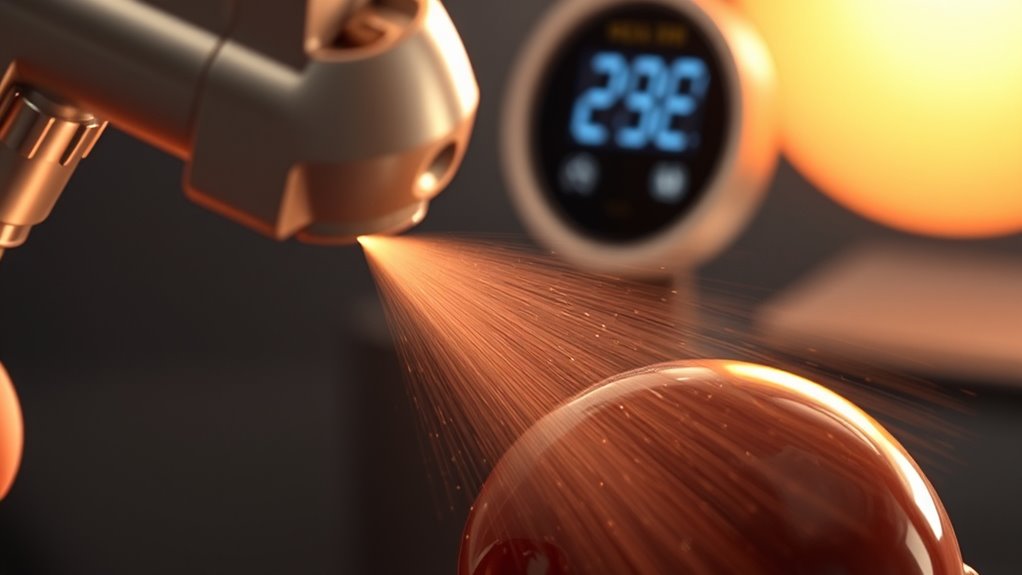
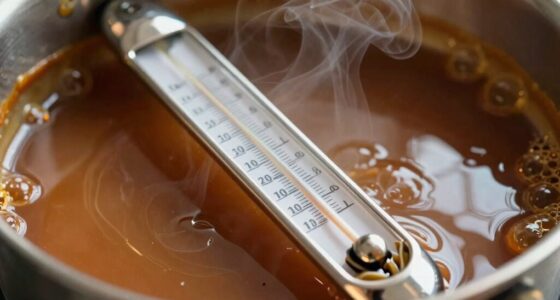
To keep your cocoa butter spraying smooth and even, you need to actively monitor and adjust the temperature throughout your session. Using reliable temperature sensors helps you track real-time data accurately, ensuring consistent spray quality. Regular calibration techniques, like comparing sensor readings with a known temperature standard, keep your measurements precise. Adjust your spray equipment based on sensor feedback to prevent temperature fluctuations that cause uneven coatings.
- Use digital thermometers or infrared sensors for instant readings
- Perform calibration checks before each session for accuracy
- Keep sensors clean and properly positioned for reliable data
- Set predefined temperature ranges to alert you of deviations
Monitoring with precise tools and techniques allows you to maintain ideal cocoa butter flow, ensuring flawless, glossy coatings every time.
What Are Tips for Getting a Smooth, Glossy Cocoa Butter Coating?
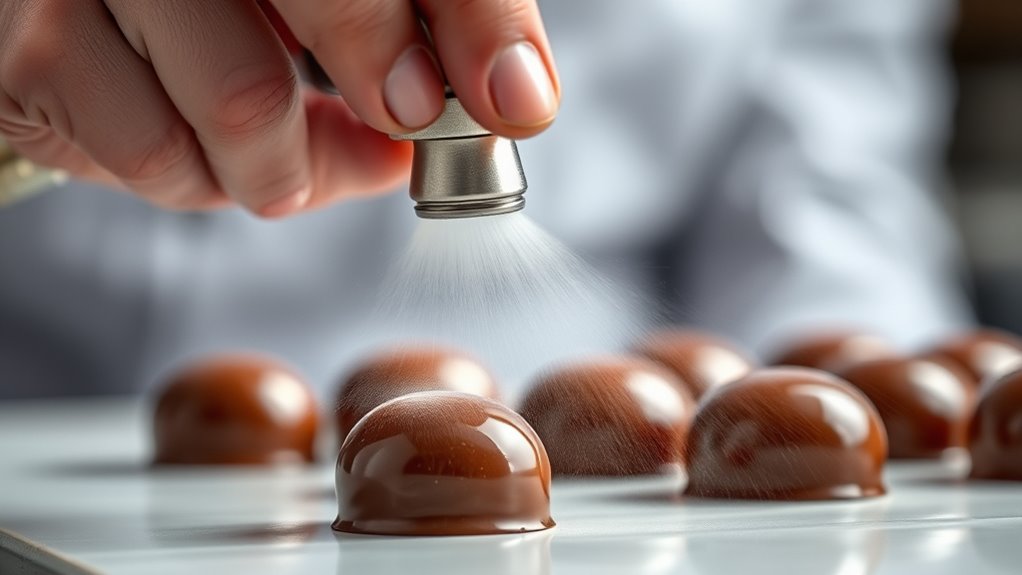
Achieving a smooth, glossy cocoa butter coating depends on proper technique and attention to detail. To enhance texture, guarantee your spray is even and consistent, maintaining a steady hand and appropriate distance from the surface. Proper temperature control helps prevent drips, which can mar the finish and hinder texture enhancement. For color uniformity, keep your cocoa butter at the right temperature so it flows smoothly without clumping or uneven patches. Use a fine mist setting on your spray equipment to achieve a thin, even layer. Keep the surface cool enough to prevent rapid setting that could cause streaks. Regularly check your spray pattern and adjust as needed. With these tips, you’ll create a beautiful, glossy coating that’s visually appealing and perfectly smooth.
How Do You Stay Safe When Handling Hot Cocoa Butter and Equipment?
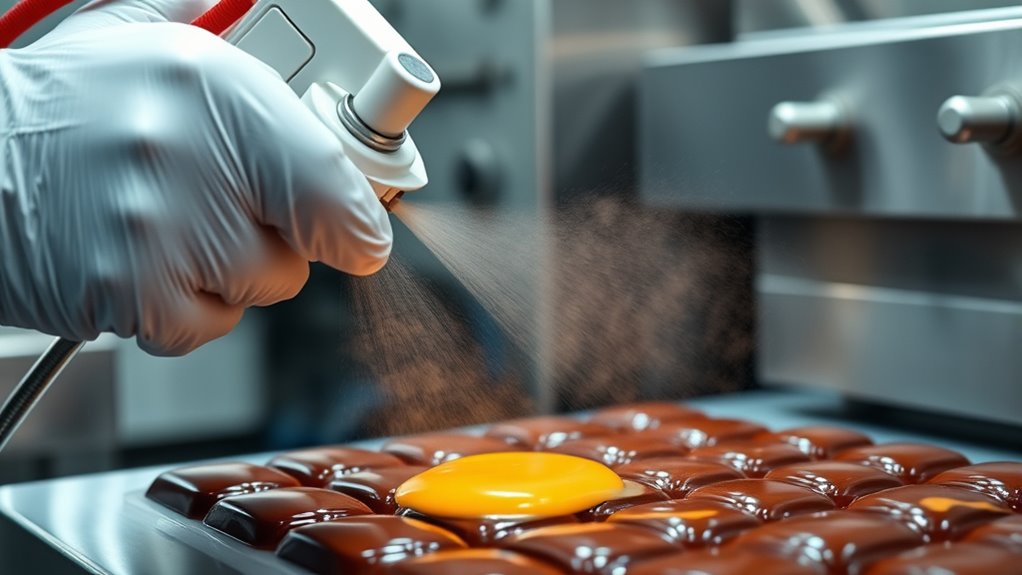
Handling hot cocoa butter and equipment safely is essential to prevent burns and accidents in your workspace. Always wear protective gear like heat-resistant gloves, aprons, and eye protection to shield yourself from splashes and high temperatures. Before starting, verify proper temperature calibration of your spraying equipment to avoid overheating, which can cause dangerous bursts or spills. Keep a fire extinguisher nearby and work in a well-ventilated area to manage fumes. Use tools with insulated handles and handle hot materials with care, avoiding rushed movements. Regularly check your equipment for damage or wear, replacing parts as needed. By following these safety measures, you minimize risks and maintain a safe environment for your cocoa butter spraying process.
Frequently Asked Questions
How Long Should I Wait After Heating Before Spraying Cocoa Butter?
You should wait at least 10 to 15 minutes after heating your cocoa butter, allowing for cooling time and temperature stabilization. This guarantees the cocoa butter isn’t too hot, which can cause uneven spraying or melting. Keep an eye on the temperature with a thermometer, aiming for a smooth, consistent spray. Patience helps achieve a perfect, glossy coat without compromising the quality of your work.
Can Ambient Room Temperature Affect Cocoa Butter Spraying Results?
Absolutely, room temperature can make or break your spray results. When the room’s too warm or cold, it affects the spray consistency, making the cocoa butter either too runny or too thick. You might think it’s just a small detail, but it’s the small things that count. Keep your workspace at a stable room temperature to guarantee smooth, even coats, and avoid surprises when you’re spraying your cocoa butter.
What Temperature Fluctuations Are Acceptable During a Session?
During a session, you should aim for minimal temperature fluctuations, ideally keeping the environment within a 2-3°C range. This stability helps maintain consistent spray results and ensures the cocoa butter coats remain smooth. Sudden shifts can disrupt spray consistency, leading to uneven finishes. Regularly monitor your workspace’s temperature, and if fluctuations occur, pause and stabilize the environment before continuing to achieve the best results.
How Does Humidity Influence Cocoa Butter Spray Quality?
Did you know that humidity levels above 60% can reduce spray consistency by 30%? Humidity greatly influences cocoa butter spray quality, as high moisture content causes the coating to become uneven or dull. To achieve smooth, glossy coats, keep humidity levels between 40-50%. This control minimizes surface imperfections and guarantees a steady, professional finish. Monitoring humidity is key to maintaining ideal spray quality every session.
Are There Specific Temperature Guidelines for Different Cocoa Butter Brands?
Yes, you should follow specific temperature guidelines for each cocoa butter brand to guarantee consistency and ideal application. Different brands may have unique melting points and formulation nuances, affecting spray quality. You need to adjust your spraying temperature accordingly, maintaining a steady heat to promote smooth coats. Proper temperature control helps achieve brand consistency and improves your application techniques, ensuring a flawless, even finish every time.
Conclusion
Now that you know the importance of temperature control, you’ll be armed to conquer the cocoa butter domain. Just imagine your spray equipment as a delicate dance partner—too hot, and you’ll scorch your chances; too cold, and you’ll miss the perfect glide. With steady adjustments and vigilant monitoring, you’ll create a glossy masterpiece instead of a lumpy disaster. So go ahead, master the art, and turn your cocoa butter dreams into a smooth, shiny reality—without melting down!