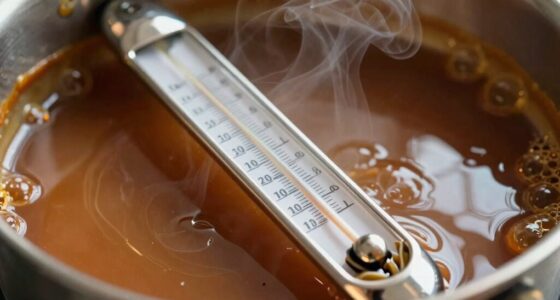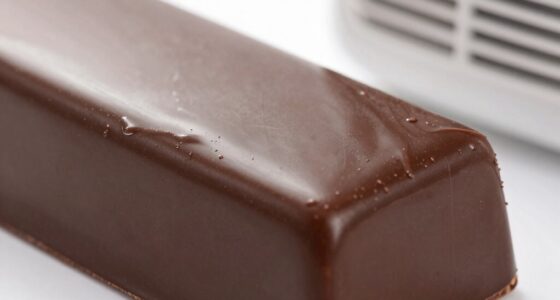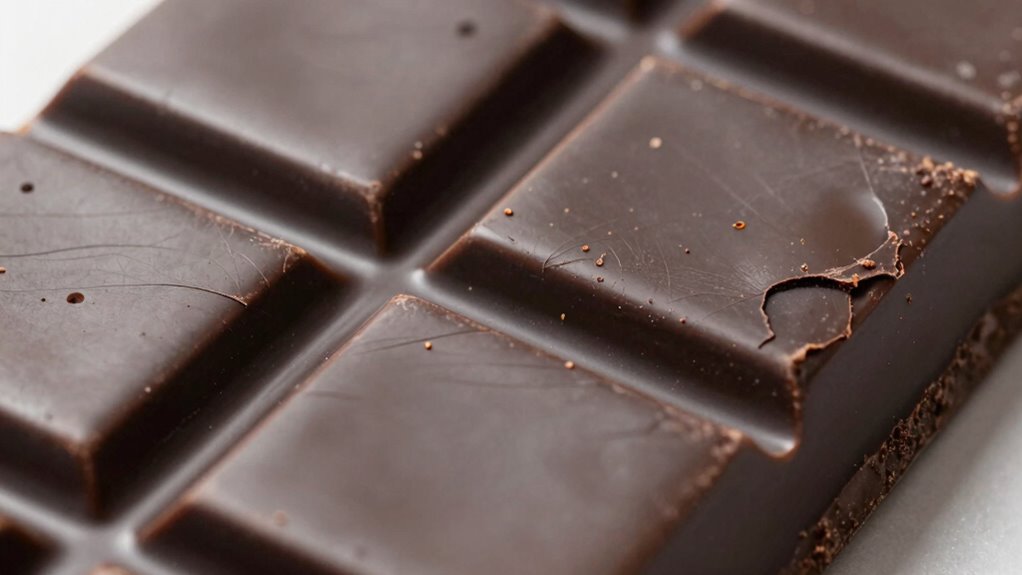
A small heat error during tempering can ruin your chocolate by disrupting the crystal formation, which causes it to lose its glossy shine, develop a grainy texture, or fail to set properly. Overheating can break the cocoa butter crystals, leading to dull and grainy chocolate, while underheating prevents reaching the necessary temperature for stable crystals. Even a slight deviation of just 1-2 degrees can cause big problems. If you keep going, you’ll discover how to prevent these issues and master tempering.

Get baking supplies delivered free with Prime
- Fast, free delivery on millions of items
- Prime Video, Amazon Music and more included
- Member-only deals all year
Key Takeaways
- Overheating by even 1-2°C can cause cocoa butter separation, ruining crystal structure.
- Small heat errors disrupt the formation of stable beta crystals essential for proper temper.
- Excess heat during tempering leads to dull appearance and loss of glossy finish.
- Minor temperature spikes can cause seizing or grainy texture in the chocolate.
- Precise temperature control during each step prevents small heat errors that spoil tempering.
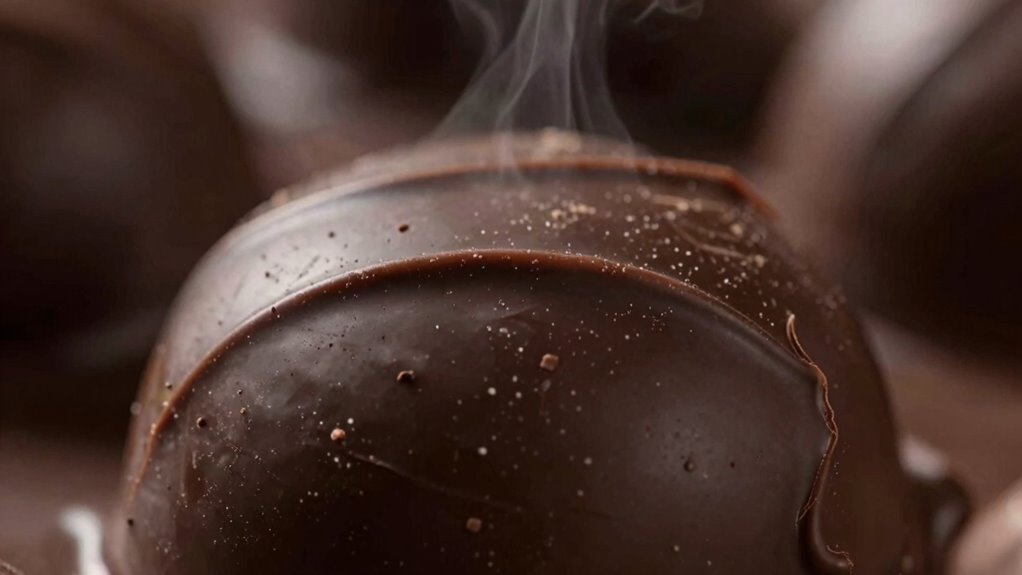
Temperting chocolate requires precise temperature control, but even a small heat error can ruin the entire batch. When you’re working with chocolate, achieving the right temperature is essential for ensuring chocolate stability. If the temperature fluctuates even slightly outside the recommended range, the chocolate can seize, develop a dull appearance, or fail to set properly. That’s why meticulous temperature control is so critical—because chocolate’s delicate structure depends on it.
Precise temperature control is vital; even a slight heat error can ruin perfectly tempered chocolate.
A tiny misstep, like overheating or undercooling, can have significant consequences. Overheating causes the cocoa butter in the chocolate to separate, which disrupts the crystal structure that gives the chocolate its glossy finish and smooth texture. When this happens, the chocolate loses its temper and becomes dull and grainy. On the other hand, if you don’t heat the chocolate enough, it won’t reach the proper temperature needed for forming stable crystals. This results in poor chocolate stability, making it prone to bloom or developing a crumbly texture once it cools. Maintaining consistent temperature stability is crucial to prevent these issues.
Remember, the key to successful tempering is controlling the temperature throughout the process. Using a reliable thermometer isn’t enough—you need to constantly monitor and adjust your heat source. Many tempering techniques involve heating the chocolate to a specific temperature, then cooling it down to a lower range, and finally reheating it slightly. Each of these steps requires careful attention to temperature control to promote the formation of the right cocoa butter crystals. If you miss a temperature target by even a degree or two, it can throw off the entire process. This small heat error might seem insignificant at first, but it can cause your chocolate to lose its glossy sheen and snap, which are signs of proper temper.
In the end, the biggest challenge is maintaining a stable environment. Fluctuations in room temperature, drafts, or inconsistent heat sources can all interfere with your efforts. You need to keep your workspace steady and use tools like infrared thermometers or digital probes to track temperatures accurately. Remember, chocolate stability hinges on your ability to maintain precise temperature control. When you master this, you’ll produce beautifully tempered chocolate every time, with a shiny finish and satisfying snap. But even a tiny heat error—like a single degree—can unravel all your hard work. That’s why vigilance and attention to detail are your best tools for ensuring perfect chocolate tempering. Additionally, understanding how temperature fluctuations impact the crystal structure can help you troubleshoot and refine your technique. Being aware of ambient conditions can further help prevent unexpected temperature variations that compromise your results.
Products Worth Considering

De'Longhi Linea Classic Espresso Machine with Adjustable Milk Frother

Breville Bambino Espresso Machine, Brushed Stainless Steel

De’Longhi Classic Matte Black Espresso Machine with Milk Frother
As an affiliate, we earn on qualifying purchases.
Frequently Asked Questions
Can Small Heat Errors Be Corrected After Tempering?
Yes, small heat errors can often be corrected after tempering. You should gently reheat the chocolate to restore proper heat levels, which helps improve chocolate stability. During this process, manage heat fluctuations carefully to prevent overheating or cooling too quickly. By controlling temperature precisely, you can fix minor issues and guarantee your chocolate maintains that glossy finish and good snap, making it perfect for coating or molding.
What Tools Help Prevent Small Heat Errors?
Tools that tame tempering troubles include precise temperature control devices and specialized heating tools. These tools help you maintain accurate heat levels, preventing small heat errors that lead to tempering troubles. With reliable thermometers and controlled heating equipment, you can carefully monitor and manage temperatures, ensuring your chocolate stays perfectly tempered. Using these tools, you stay steady in your tempering process, avoiding errors and achieving glossy, smooth, and stable chocolate every time.
How Does Humidity Affect Small Heat Errors?
Humidity effects can considerably impact your tempering process by introducing moisture that causes small heat errors. When humidity levels are high, moisture can condense on your chocolate, leading to unwanted bloom or cracking. To prevent this, you need moisture control by working in a dry environment, using desiccants, and keeping your tools and workspace dry. Managing humidity helps you maintain precise temperature control, ensuring a smooth, glossy finish without errors.
Is There a Specific Type of Chocolate More Prone to Heat Errors?
Dark chocolate is more prone to heat errors because it contains less cocoa butter and more cocoa solids, making it sensitive to temperature fluctuations. When storing chocolate, keep it in a cool, consistent environment to prevent heat-related issues. Avoid exposing it to temperature swings, which can cause blooming or melting. Proper chocolate storage and maintaining stable temperatures help guarantee your tempered chocolate stays smooth and shiny.
How Long Does It Take for Small Heat Errors to Appear?
It happens in the blink of an eye—small heat errors can appear within minutes if you’re not careful. Temperature fluctuations strike suddenly, turning your glossy melt into a dull, dull mess. To avoid this, use cooling techniques like gentle, controlled cooling and avoid rapid temperature changes. Keep a close eye on your chocolate, and you’ll catch small heat errors before they ruin your masterpiece, saving your tempering process from disaster.
Conclusion
So, next time you’re tempering chocolate, remember that tiny heat errors can make all the difference. Some believe that subtle temperature fluctuations are just minor glitches, but in reality, they can ruin your perfect finish. It’s worth testing and trusting your thermometer, because precision means success. Don’t dismiss small heat errors—they might just be the secret to achieving that glossy, snap-worthy chocolate you’ve been dreaming of. Keep experimenting, and you’ll master it in no time.