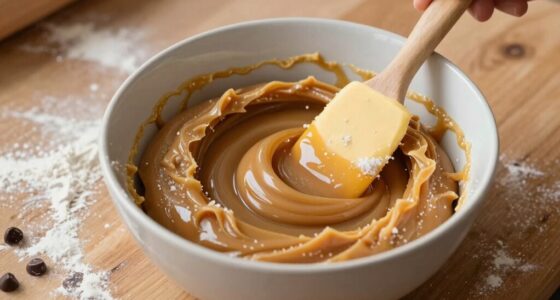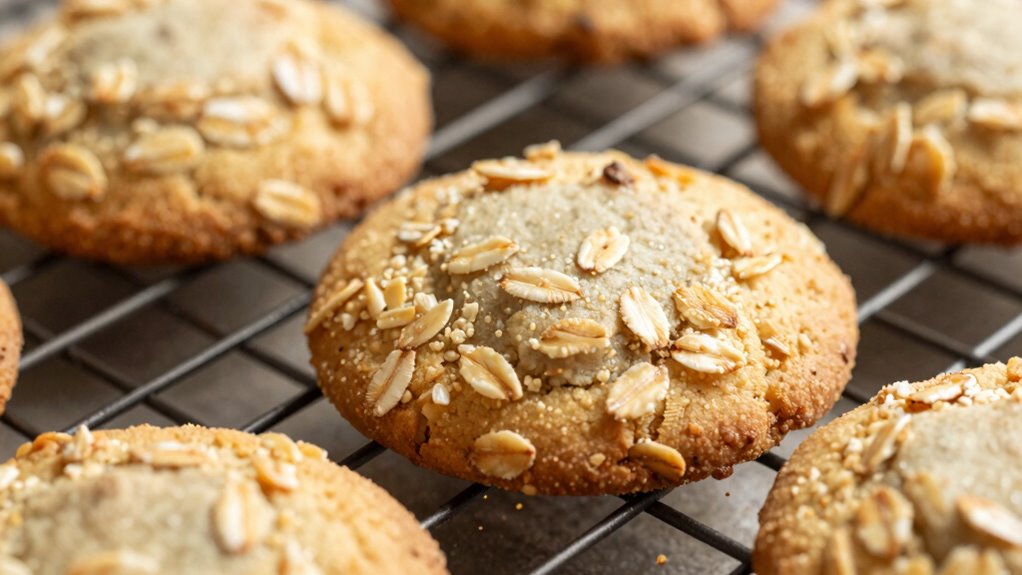
Oats tend to absorb moisture from your cookie dough and the baking environment, which can cause your cookies to turn out dry and crumbly. Quick oats absorb more moisture than rolled oats, making your cookies drier if not adjusted properly. Overbaking also strips away moisture, while too little wet ingredient can leave your cookies dry. If you want soft, chewy cookies, it’s helpful to understand how oats interact with moisture—keep exploring to learn how to keep your cookies moist and delicious.
Key Takeaways
- Quick oats absorb more moisture, leading to drier cookies compared to rolled oats.
- Oats naturally soak up dough moisture, which can reduce softness if not balanced with wet ingredients.
- Overbaking causes oats to lose moisture, resulting in crumbly, dry cookies.
- Using oats that are too finely processed or overmixing can increase dryness.
- Proper storage helps retain oat cookies’ moisture, preventing them from becoming dry over time.
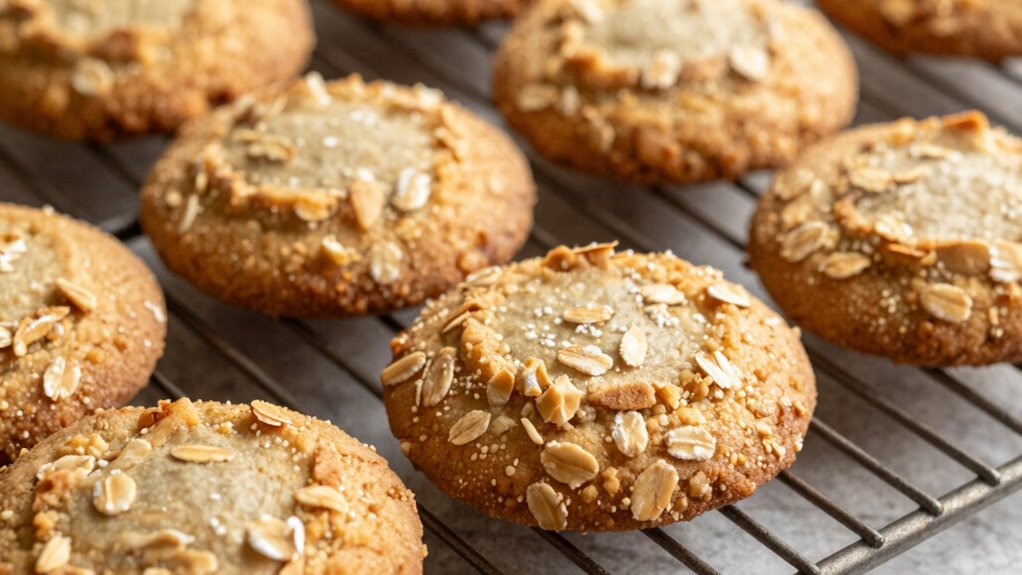
If your oat cookies are turning dry and crumbly, it’s time to troubleshoot what’s going wrong. One common reason is that the oats aren’t helping with moisture retention as they should. Oats are naturally absorbent, which means they can soak up moisture from the dough, leaving your cookies dry once baked. To fix this, consider ingredient substitutions that improve moisture retention. For example, swapping some of the oats for ingredients like mashed bananas, applesauce, or even yogurt can introduce extra moisture into the dough. These substitutions not only help keep your cookies soft but also enhance their flavor and texture, making them more enjoyable to eat.
Another factor that can cause dryness is the type of oats you use. Rolled oats tend to absorb moisture more evenly, while quick oats might absorb too much, leading to a drier result. If you’re using quick oats, try switching to old-fashioned rolled oats, which tend to retain moisture better and give a chewier texture. Additionally, overbaking is a common culprit. Even a minute or two too long in the oven can dry out your cookies considerably. Keep a close eye on your baking time, and always start checking for doneness a few minutes early. Removing the cookies from the oven at just the right moment preserves moisture and prevents them from becoming crumbly.
Using rolled oats instead of quick oats helps keep cookies moist and chewy.
The moisture content in your dough is also affected by the balance of wet and dry ingredients. If your dough seems too dry before baking, consider adding a little more liquid—milk, water, or even a splash of oil—to help bind everything together. This adjustment ensures the oats stay hydrated and the cookies remain tender. When experimenting with ingredient substitutions, start with small amounts—say, a tablespoon of applesauce or yogurt—and adjust based on the dough’s consistency. This way, you prevent over-saturating the dough, which could lead to other issues like spreading too much or a gummy texture.
Furthermore, understanding the water absorption properties of oats can help you better predict how much moisture is needed in your recipe. Finally, store your baked cookies properly. If they’re left exposed to air, they’ll lose moisture and become dry quickly. Keep them in an airtight container or wrap them tightly to preserve their softness. If you notice your cookies drying out over time, placing a slice of bread or a damp paper towel in the container for a day can help restore some moisture. To conclude, addressing moisture retention through ingredient substitutions, choosing the right oats, and careful baking and storage practices will help keep your oat cookies soft and delicious, preventing that undesirable dry, crumbly texture.

King Arthur Baking Company Gluten-Free & Whole Grain Rolled Oats 2lbs.
- High Protein Content: 11g protein per serving
- Versatile Usage: Great for oatmeal, baking, and more
- Gluten-Free & Whole Grain: Suitable for gluten-sensitive diets
As an affiliate, we earn on qualifying purchases.
As an affiliate, we earn on qualifying purchases.
Frequently Asked Questions
Can Adding Moist Ingredients Prevent Dry Oat Cookies?
Yes, adding moist ingredients can help prevent dry oat cookies by improving the oat texture and maintaining moisture balance. Incorporate ingredients like honey, applesauce, or yogurt to keep the cookies tender and moist. These additions boost moisture retention, ensuring your cookies stay soft and chewy. Just be careful not to add too much, as it can alter the overall texture. Adjust accordingly for perfect, moist oat cookies every time.
How Does Oat Type Affect Cookie Moisture Retention?
A wise person once said, “You are what you eat.” The type of oats you choose directly impacts your cookie’s moisture. Steel-cut oats have less oat fiber and absorb less moisture, making cookies drier. Rolled oats, with higher gluten content, retain more moisture, keeping cookies softer. To prevent dryness, select oats that balance oat fiber and gluten, ensuring your cookies stay tender and delicious.
Does Baking Time Influence Cookie Dryness?
Yes, baking time influences cookie dryness. When you bake longer, cookies lose moisture, especially if your baking temperature is high or your oven humidity is low. To keep them moist, monitor your baking temperature carefully and try reducing it slightly or shortening the baking time. Also, guarantee your oven has enough humidity or add a small pan of water nearby to help maintain moisture, preventing your cookies from drying out.
Are There Specific Storage Methods to Keep Oat Cookies Moist?
To keep your oat cookies moist, try moisture lock techniques like wrapping them in plastic wrap or placing them in an airtight storage container. Opt for storage container options such as a resealable plastic bag or a plastic container with a tight seal to prevent air from drying them out. Store the cookies at room temperature, away from direct sunlight, and add a slice of bread or apple to the container for extra moisture retention.
Can Substituting Oats Improve Cookie Moisture?
Substituting oats can improve cookie moisture by enhancing oat texture and flavor. Did you know oats contain natural thickeners that retain moisture? When you swap in different types, like steel-cut or rolled oats, you can boost flavor and keep cookies softer longer. This technique not only improves the oat texture but also intensifies their flavor, making your cookies more delightful and moist with each bite.

Gourmanity Liquid Glucose Syrup for Baking, Kosher, 2.2lb
- Brand: Gourmanity
- Product Type: Glucose Syrup
- Weight: 2.2lb
As an affiliate, we earn on qualifying purchases.
As an affiliate, we earn on qualifying purchases.
Conclusion
If your oat cookies keep drying out, don’t throw in the towel just yet. Sometimes, a simple tweak can turn things around—like adding a touch more moisture or adjusting baking time. Think of it as a little patience paying off. Remember, a stitch in time saves nine, so take proactive steps now. With a few tweaks, you’ll have perfectly moist cookies that hit the spot every time. Keep baking, and don’t give up!

As an affiliate, we earn on qualifying purchases.

Anthony's Organic Whole Grain Oat Flour, 4 lb, Gluten Free, Non GMO, Non Irradiated, Finely Ground, Vegan
- Certified Organic Whole Grain Oat Flour: USDA Organic, Non-GMO, Non-Irradiated
- Gluten-Free and Verified: Batch Tested for Gluten-Free Assurance
- Vegan and Plant-Based: Alternative to Wheat Flour
As an affiliate, we earn on qualifying purchases.
As an affiliate, we earn on qualifying purchases.