Warm kitchens can ruin pastries unexpectedly because hidden heat sources like appliances, sunlight, and even warm utensils raise ambient temperature without you noticing. This excess heat can cause your dough to overproof, lose its structure, or melt, leading to uneven texture and poor rise. If you keep control of these subtle heat factors, your baking will improve. To learn how to avoid these common mistakes and keep your pastries perfect, keep exploring further.
Key Takeaways
- Hidden heat from appliances like ovens, toasters, and microwaves can raise ambient temperature unnoticed, affecting pastry texture.
- Residual warmth from ovens and warm utensils accelerates fermentation or causes uneven baking.
- Sunlight through windows increases room temperature, leading to soggy or melted pastries.
- Poor ventilation traps heat and humidity, compromising dough stability and final pastry quality.
- External heat sources and appliance placement can unintentionally elevate kitchen temperature, ruining pastry results.
How Warm Is Your Kitchen? The Effect of Room Temperature on Pastry Baking
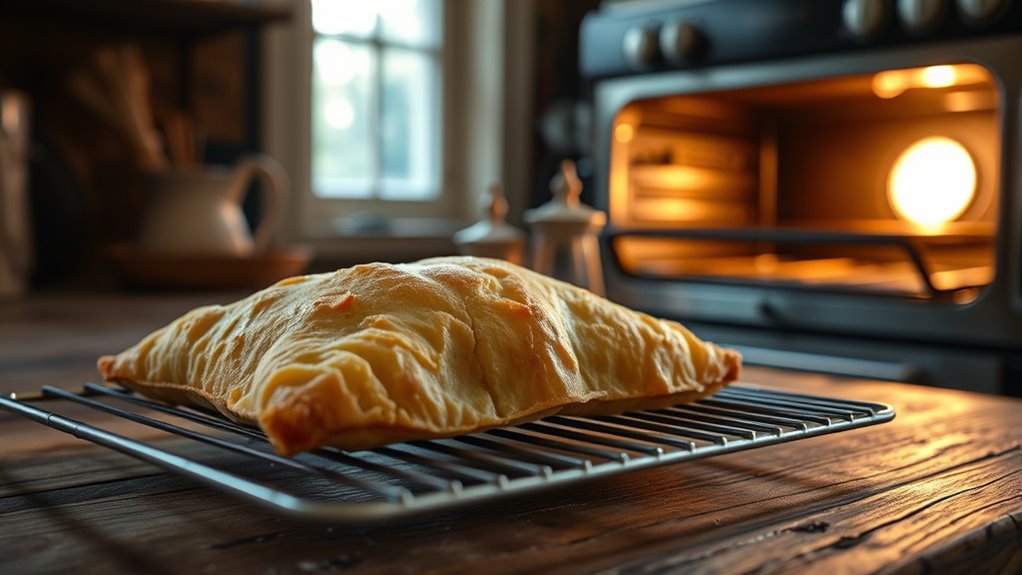
The temperature of your kitchen can considerably impact how your pastries turn out. When the ambient temperature rises, your dough may become too soft or sticky, making it difficult to handle and shaping challenging. Conversely, a cooler room helps dough maintain its structure, guaranteeing better rise and texture. Room temperature plays a crucial role in the fermentation process, affecting how well your dough develops flavor and structure. Proper climate control can prevent unintended dough behavior and improve overall baking success. Additionally, fluctuations in room humidity can alter the moisture content in your ingredients, impacting dough consistency and final pastry quality. Maintaining a consistent environmental conditions can help ensure more predictable and optimal baking results.
How Appliances Unknowingly Warm Your Pastries
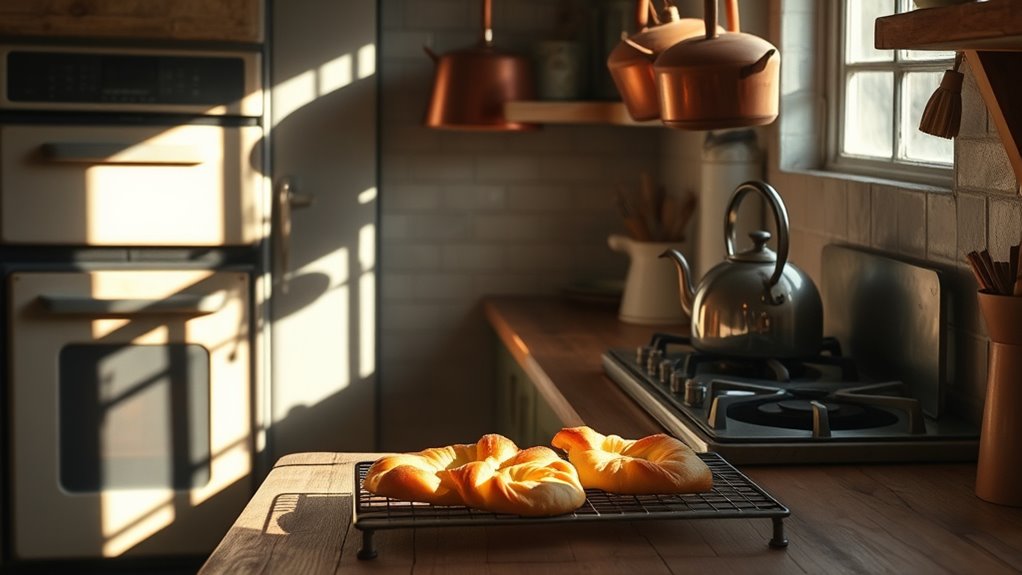
You might not realize that your oven’s exterior or nearby small appliances can add unwanted warmth to your pastries. Even subtle heat from devices like toasters or coffee makers can raise the temperature around your baked goods. Being aware of these hidden heat sources helps you keep your pastries perfectly cool and avoid unintended warming. Incorporating smart appliance technology can help monitor and control ambient temperatures to prevent such issues. Additionally, understanding heat dispersion can guide you in optimizing your kitchen layout to minimize unwanted heat transfer, especially when designing spaces with proper ventilation considerations. Proper energy management techniques can further ensure that heat from appliances does not compromise your baking environment. Recognizing indirect heat transfer is crucial for maintaining ideal pastry conditions.
Hidden Heat From Ovens
Ovens often produce more heat than just what’s visible inside, subtly raising the temperature of nearby pastries without you realizing it. This hidden oven heat can increase the ambient temperature in your kitchen, especially close to the appliance. Even when the oven isn’t actively baking, residual warmth radiates outward, warming the air around it. This unintended heat can cause your pastries to soften or overproof before baking, compromising their texture. It’s easy to overlook how much the oven’s ambient temperature influences your environment. If your kitchen is already warm, this additional heat can push your pastries past ideal conditions. Recognizing the impact of hidden oven heat helps you better control your baking environment and avoid unintentional over-warming of delicate pastries. Additionally, understanding energy-efficient cloud servers highlights the importance of sustainable kitchen appliances that minimize unnecessary heat emissions. Being aware of heat transfer in appliances can further aid in creating optimal baking conditions by managing ambient temperatures more effectively. Using proper kitchen ventilation can help dissipate excess heat and maintain a stable environment for your baked goods. Moreover, considering insulation in kitchen appliances can help limit heat escape and keep your baking area more consistent.
Warmth From Small Appliances
Small appliances like toasters, coffee makers, and warmers can quietly raise the temperature around your pastries without you noticing. These countertop appliances emit small oven heat that can subtly warm your baked goods, leading to unintended softening or overbaking. Even when you’re not actively using them, their residual warmth can influence the environment, especially if they’re left on or plugged in nearby. This constant, low-level heat can cause pastries to lose their crispness or become overly moist. To maintain ideal pastry texture, keep small appliances away from your baking area and turn them off when not in use. Being mindful of how these common countertop appliances generate small oven heat helps you preserve the perfect pastry consistency. Additionally, understanding smart‑home integrations can help you monitor and control device usage remotely, preventing unintended heat buildup. Recognizing thermal insulation in your kitchen setup can further help manage heat flow and protect your baked goods from unwanted warmth. Proper power management can also ensure appliances are used safely and efficiently, reducing the risk of accidental heat exposure. Moreover, paying attention to ventilation can help dissipate residual heat and prevent heat buildup around your baked items.
How Sunlight and Windows Heat Up Your Kitchen
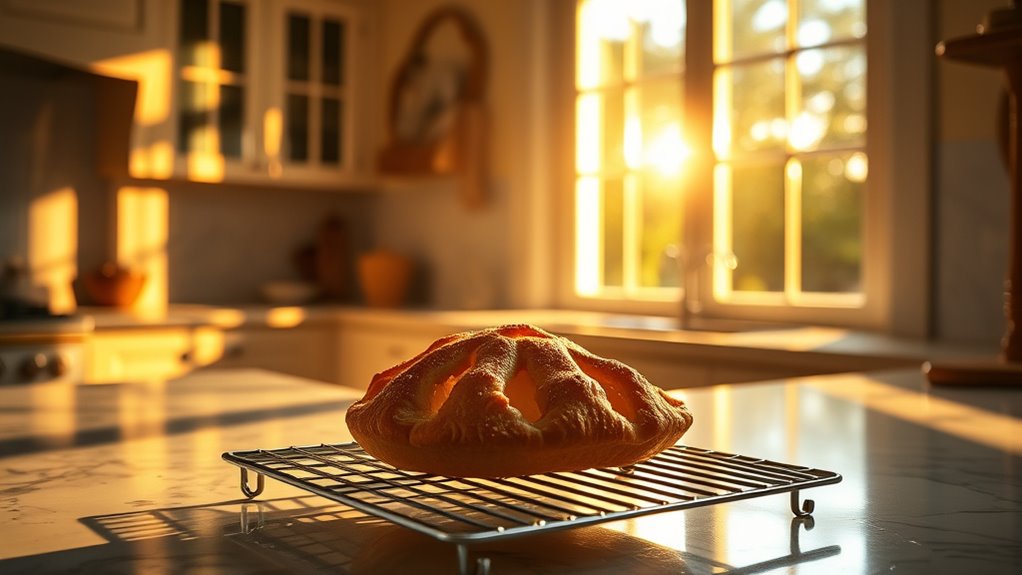
Sunlight streaming through windows can substantially raise the temperature in your kitchen, especially during hot months. This solar gain occurs when sunlight enters through windows, turning into heat that warms the room. Window heat can quickly make your kitchen uncomfortable, even if you’re not actively cooking. Large or south-facing windows are particularly prone to causing these temperature spikes. To minimize this effect, consider using shades, blinds, or reflective window films that block or reduce solar gain. Proper window treatments help keep the heat out and maintain a more stable temperature. Recognizing how sunlight and window heat influence your kitchen’s warmth is key to preventing your pastry from becoming soggy or melting due to overheated conditions. Additionally, understanding solar gain can help you implement more effective strategies to control indoor temperatures and passive cooling techniques. Being aware of window orientation can further assist in managing heat influx through your windows.
How Cooking Stoves and Ovens Warm the Air During Meal Prep
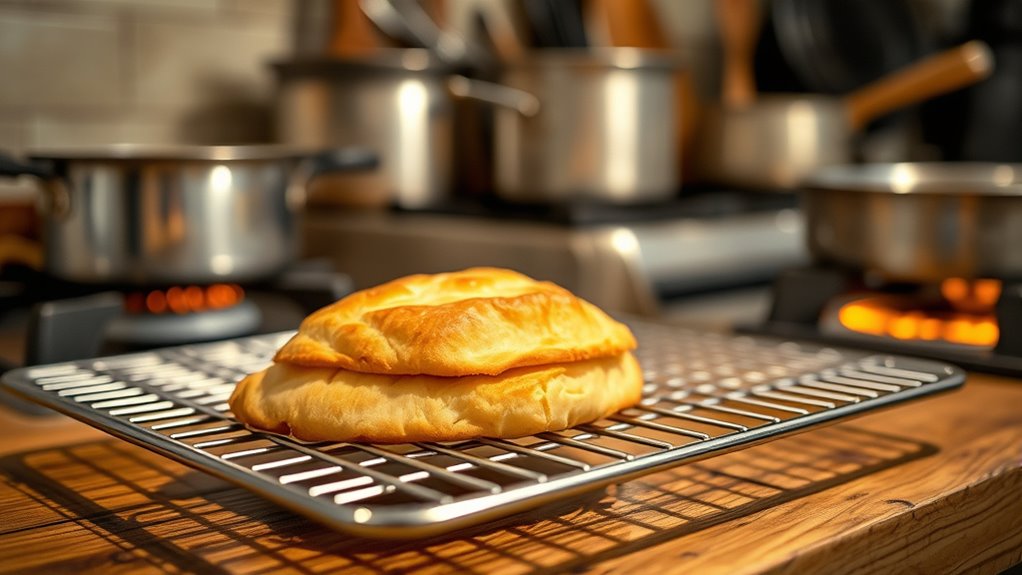
When you cook on a stove or bake in an oven, heat is generated directly into the surrounding air, causing the kitchen temperature to rise quickly. This heat spreads beyond the cooking surface, warming the entire space. Countertop appliances like toasters, slow cookers, and microwaves also add to this heat load, making the kitchen even warmer during meal prep. Poor kitchen insulation can exacerbate the problem, as heat escapes slowly, allowing temperatures to build up. As the air warms, it affects your pastry’s ability to stay cool and flaky. To minimize this heat buildup, consider using smaller appliances, turning off heat sources early, and improving insulation to help control unwanted heat transfer and maintain a more consistent temperature during cooking. Additionally, using ventilation systems like exhaust fans can effectively remove excess heat and moisture, keeping your kitchen cooler and your pastries better preserved. Proper ventilation not only helps with temperature control but also reduces humidity that can affect pastry texture.
How Poor Ventilation and Airflow Hurt Your Pastry Results
Poor ventilation and airflow can substantially compromise your pastry’s quality by disrupting the ideal environment needed for proper baking. When air circulation is poor, kitchen humidity levels fluctuate, affecting how your dough proofs and how pastries develop their texture. Excess humidity can make your pastry soggy, while low humidity can cause them to dry out or crack. Without proper airflow, heat becomes uneven, leading to inconsistent baking results. Poor ventilation traps warm, moist air, creating a humid environment that hampers gluten formation and causes uneven rises. Ensuring good air circulation and managing kitchen humidity helps maintain stable conditions, allowing your pastries to bake evenly and achieve the desired texture and appearance. Proper ventilation is key to consistent pastry success.
Can Electronic Devices Warm Your Dough and Batter?
Electronic devices like warmers, toasters, or even microwaves can unintentionally raise the temperature of your dough and batter if placed too close or used improperly. This accidental device heating creates electronic warmth that can speed up fermentation or cause over-proofing, leading to poor pastry texture. Even subtle heat from these appliances affects the delicate balance needed for proper dough development. For example, microwaves emit electromagnetic radiation that can warm ingredients unevenly or too quickly. To avoid issues, keep electronic devices at a safe distance from your workspace, especially during proofing or resting stages. Remember, the goal is to control ambient temperature, not introduce hidden heat sources that could sabotage your baking process. Proper placement of devices helps maintain consistent temperatures essential for perfect pastry results.
How Warm Utensils and Bakeware Impact Your Pastry Finish
Warm utensils and bakeware can considerably influence the final appearance and texture of your pastry. When your tools are too warm, they transfer heat directly to your dough or filling, causing uneven baking or premature melting. Countertop warmth from nearby appliances or sunlight can raise utensil temperature, making your tools less effective. Using cold or room-temperature bakeware helps guarantee even heat distribution and a crisp, golden finish. Hot pans can cause the outer layer to cook faster than the interior, resulting in uneven textures. Always check the temperature of your utensils before use, especially if they’ve been sitting near warm surfaces. Keeping your tools at a consistent, cool temperature allows better control, helping you achieve a smooth, professional-looking pastry.
Tips to Control Hidden Heat and Bake Perfect Pastries

Controlling hidden heat sources is essential for baking perfect pastries, as subtle warmth can undermine your efforts without you realizing it. To minimize temperature fluctuations, keep your oven door closed during baking and use an oven thermometer for accuracy. Humidity control also plays a key role; too much moisture can soften dough, while too little dries it out. Use a damp cloth inside your storage area to regulate humidity and prevent pastry from becoming too brittle or sticky.
| Tip | Benefit |
|---|---|
| Use an oven thermometer | Maintains consistent temperature |
| Keep oven door closed | Prevents unwanted temperature shifts |
| Control humidity levels | Keeps dough at ideal moisture |
Frequently Asked Questions
Can Ambient Humidity Affect Pastry Quality in Warm Kitchens?
Yes, ambient humidity can affect pastry quality in warm kitchens. Humidity fluctuations influence moisture control, causing pastries to become either too dry or too sticky. When humidity rises, your dough may absorb excess moisture, affecting texture and layering. Conversely, low humidity can dry out your pastry. To maintain consistent results, monitor moisture levels and adjust your ingredients or environment as needed, ensuring your pastry stays perfect every time.
Do Warm Countertops Influence Dough Temperature During Preparation?
Warm countertops can raise your dough temperature by about 2-4°F, impacting its elasticity. They act as insulators, trapping heat and increasing heat retention around the dough. This can cause your pastry to become overworked or lose its delicate texture. To prevent this, consider using countertop insulation, which helps regulate temperature and keeps your dough at ideal warmth, ensuring perfect pastry results every time.
How Does the Placement of Electronic Devices Impact Pastry Cooling?
Placing electronic devices near your pastry can cause electronic interference, which might generate subtle heat or vibrations that affect cooling. Proper device placement is key; keep gadgets away from the cooling area to prevent any heat transfer or disruption. By managing device placement carefully, you guarantee your pastry cools evenly, avoiding unwanted warmth or interference that can compromise texture and quality.
Can Interior Wall Materials Alter the Kitchen’s Heat Distribution?
Yes, interior wall materials can change how heat moves in your kitchen. Wall insulation helps keep heat steady, preventing hot spots that can spoil pastry. Surface reflectivity also matters—shiny or light-colored walls reflect heat, making the space cooler, while darker, matte surfaces absorb more heat, warming the room. Choosing the right materials can help you control temperature fluctuations, ensuring your kitchen stays ideal for baking.
Is There an Ideal Temperature Range for Proofing Dough in Warm Environments?
You should aim for a proofing temperature between 75°F to 80°F for ideal fermentation. This range encourages yeast activity without overproofing, ensuring your dough develops the right structure and flavor. Keep your environment consistent, avoiding temperature fluctuations that can hinder rising. Use a thermometer to monitor the proofing area, and if needed, adjust room temperature or use a proofing box to maintain that perfect range for perfect results.
Conclusion
Next time you bake, keep an eye on your kitchen’s warmth—sometimes, the cozy sunbeam or the silent hum of appliances can sneak in and warm your dough just enough to change everything. That unexpected rise or crust might be a coincidence of your environment. Stay mindful of these hidden heat sources, and you’ll find your pastries turn out perfectly, no matter how quiet or warm your kitchen feels. Sometimes, small details make all the difference.