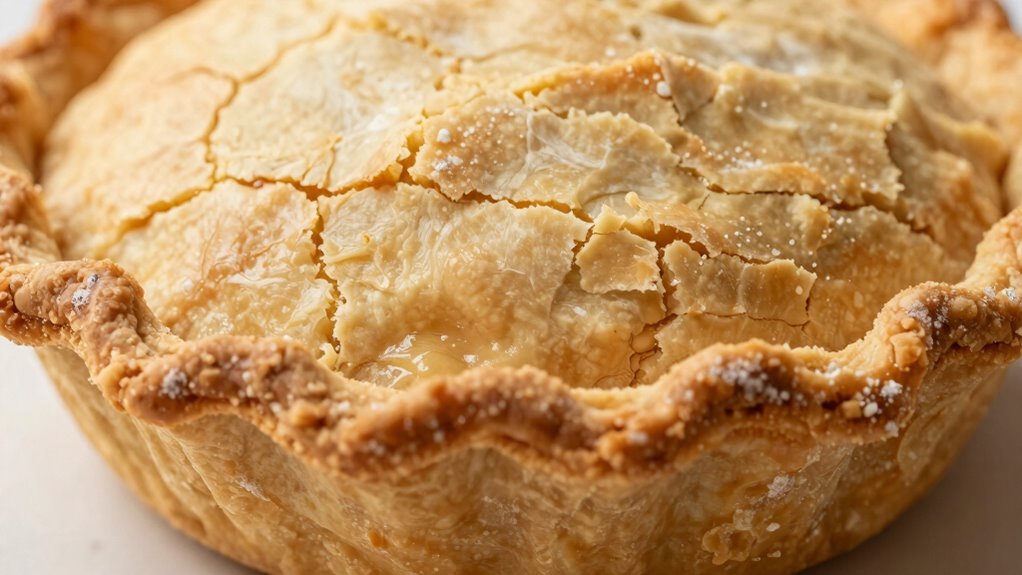

Your pie crust gets tough mainly from overworking the dough, which activates gluten and makes it chewy, and from improper hydration—using too much or too little water can disturb the dough’s balance, resulting in a crumbly or tough crust. Handling the dough gently and adding water gradually helps maintain tenderness and flakiness. If you keep mixing or overhandling, the crust becomes dense. To prevent this, understanding hydration and handling techniques is key—more tips are just ahead.
Key Takeaways
- Overworking the dough activates gluten, making the crust tough and chewy.
- Excessive mixing traps air and develops gluten, reducing tenderness and flakiness.
- Insufficient water causes crumbly dough, leading to a dry, tough crust when baked.
- Too much water makes the dough sticky and difficult to roll, resulting in a dense, tough crust.
- Proper chilling and gentle handling prevent gluten overdevelopment, keeping the crust tender and flaky.

FARBERWARE Classic Wood Rolling Pin, 18-Inch Hardwood Dough Roller for Baking Pizza, Pies, Pastry and Cookies, Ergonomic Handles, Kitchen Essential
PREMIUM HARDWOOD CONSTRUCTION: Built from moisture-resistant hardwood for lasting durability and a smooth rolling surface that delivers consistent…
As an affiliate, we earn on qualifying purchases.
As an affiliate, we earn on qualifying purchases.
What Affects Pie Crust Texture?

The texture of your pie crust depends largely on the ingredients and techniques you use. Pie dough elasticity plays a key role in achieving a tender, flaky crust. When your dough has good elasticity, it stretches easily without cracking, which helps prevent a tough crust. Crust elasticity is influenced by the amount of fat, type of flour, and how you handle the dough. Using cold ingredients and minimal mixing preserves the dough’s structure, resulting in better elasticity. Overworking the dough can reduce its elasticity, making it tough and dense. Conversely, gentle handling keeps the dough tender and easy to work with. Incorporating proper mixing techniques ensures you don’t overdevelop gluten, which can lead to a tougher crust. Additionally, ingredient ratios such as fat to flour impact both elasticity and tenderness. Paying attention to ingredient temperature can further help maintain the dough’s optimal texture. Properly managing dough handling during rolling and shaping also helps preserve its elasticity and prevents toughness. By paying attention to ingredient ratios and handling techniques, you can control the crust’s texture and ensure a perfect, flaky pie every time.

ALLTOP Pastry Shortening Blender Cutter,Stainless Steel Dough Masher for Butter, Biscuit,Baking, Kneading,Dough, Flakier and Fluffier Pie Crusts, Almond – Hand Kitchen Tool (1, Black)
Unrivaled Quality: This Dough & Pastry Blender comes with high-quality, durable metal blades,guaranteeing longevity and top-tier performance. Your…
As an affiliate, we earn on qualifying purchases.
As an affiliate, we earn on qualifying purchases.
How Does Overworking the Dough Make It Tough?

When you overwork the dough, you activate gluten development, which makes the crust tough and chewy. Handling the dough too much also traps air, resulting in a dense texture. To keep your crust tender, mix just until the ingredients come together and avoid excessive kneading. Additionally, proper hydration is essential, as insufficient water can cause the dough to become dry and brittle, leading to a tougher crust. Ensuring the correct ingredient balance helps maintain the dough’s elasticity and softness. Maintaining consistent temperature during mixing can also prevent overdeveloping gluten and ensure a tender crust. Using the right techniques can further improve the texture by avoiding common pitfalls that lead to toughness. Being mindful of mixing speed can also help prevent overworking the dough and preserve its delicate structure.
Gluten Development Causes Toughness
Overworking pie dough activates gluten formation, which can lead to toughness. When you handle the dough too much, you develop more gluten strands, increasing its elasticity. While some gluten helps give structure, too much makes the crust chewy and hard. As gluten develops, the dough becomes more elastic, making it difficult to roll out smoothly. This elasticity can cause the crust to shrink or pull away from the pan later. To prevent this, mix the dough just until it comes together and avoid kneading or excessive handling. Keeping gluten development in check ensures your pie crust remains tender and flaky. Remember, a light touch is key—overworking invites tough, chewy textures instead of a delicate, crisp crust.
Excess Handling Traps Air
As you handle pie dough excessively, you push air into the mixture, which can make the crust tough rather than tender. When you overwork the dough, air pockets form between the ingredients, disrupting its uniform structure. These trapped air bubbles can cause the crust to become chewy or crumbly after baking. Additionally, over-handling decreases dough elasticity, making it less flexible and more prone to tearing. Instead of creating a tender crust, you end up with a dense, tough texture. To avoid this, handle the dough just enough to bring it together, and don’t knead or roll it excessively. Keeping air pockets minimal and maintaining the dough’s natural elasticity helps produce a flaky, tender crust.

Pastry Cutter Tool – Heavy Duty Stainless Steel Pastry Blender, Comfortable Handle, Dishwasher Safe, Perfect Flaky Pie Crust & Biscuits – Blue
BAKE PERFECT FLAKY PIE CRUST: Effortlessly blend butter into flour with our heavy-duty stainless steel pastry cutter, ensuring…
As an affiliate, we earn on qualifying purchases.
As an affiliate, we earn on qualifying purchases.
How Gluten Development Impacts Pie Crust Flakiness
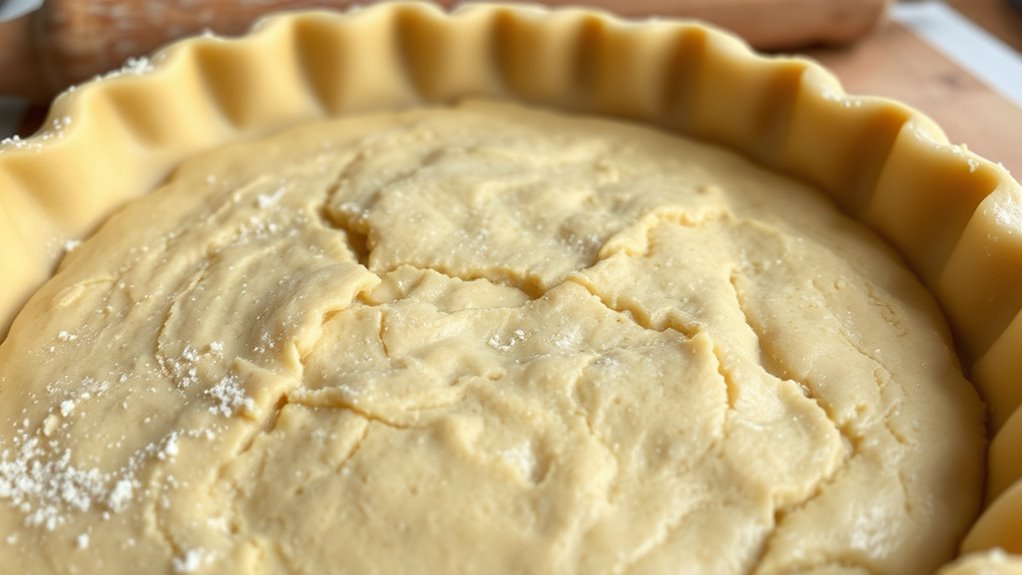
Ever wondered how the development of gluten affects the texture of your pie crust? Gluten formation occurs when the flour’s proteins, gliadin and glutenin, combine with water, creating a network that provides structure. If you overmix, this network becomes too strong, making the crust tough instead of tender. Achieving the right hydration balance is key—too little water results in crumbly dough, while too much encourages excess gluten development. When gluten is overly developed, it traps air and moisture, reducing flakiness. Proper hydration guarantees enough gluten forms for stability without sacrificing the delicate, layered texture that makes a pie crust truly flaky. Additionally, understanding gluten development can help you fine-tune your technique for optimal results. Controlling mixing time and hydration levels helps prevent overworking the dough, which is crucial for maintaining a tender, flaky crust.

Pro Dough Pastry Scraper/Cutter/Chopper Stainless Steel Mirror Polished with Measuring Scale Multipurpose- Cake, Pizza Cutter – Pastry Bread Separator Scale Knife
【Simple and Modern style】Pizz cutter/Dough scraper/Dough Cutter designed to scrape and split bread dough,So it's easy to use…
As an affiliate, we earn on qualifying purchases.
As an affiliate, we earn on qualifying purchases.
Why Water Matters for Perfect Pie Crust Hydration

Water is essential for creating the right texture in your pie crust because it activates the flour’s proteins and binds the dough together. Proper water absorption guarantees your dough reaches the ideal consistency—neither too dry nor too sticky. When you add water gradually, you control how well the flour absorbs it, which directly impacts dough consistency. If you don’t add enough water, your dough may crumble and be difficult to shape. Too much water, and it becomes tough and hard to work with. The key is to find that balance where the dough holds together without becoming sticky. By paying attention to water absorption, you ensure your pie crust will be tender, flaky, and easy to handle, preventing toughness caused by improper hydration. Understanding dough consistency can help you achieve the perfect crust every time. Additionally, monitoring humidity levels in your environment can influence how much water your dough needs for optimal hydration, as environmental conditions affect flour absorption. Being aware of environmental factors can help you adjust water content more precisely for consistently good results. Incorporating hydration control techniques can further improve your pie crust’s texture and tenderness.
How to Spot If You Used Too Little or Too Much Water

Knowing how your dough looks and feels is the best way to tell if you’ve added too little or too much water. If your dough is crumbly and dry, your water measurement was likely too low, resulting in poor dough consistency. You might need to add small amounts of water gradually until it just comes together without sticking excessively. Conversely, if your dough feels sticky and hard to handle, you’ve probably added too much water, making it too wet and difficult to roll out. The key is to observe how the dough responds as you mix. Proper water measurement helps achieve the right dough consistency—firm enough to hold together but tender enough for a flaky crust. Adjust accordingly to prevent tough or crumbly results. Monitoring water content during mixing ensures optimal dough texture and prevents overworking the dough. Being attentive to dough texture can help you identify when the hydration level is just right for a tender, flaky crust. Recognizing dough consistency is essential for consistent baking results and achieving that perfect crust. Additionally, understanding how hydration levels influence dough behavior allows for better control and adjustment during preparation. Paying attention to mixing technique can further improve the overall quality of your dough.
How to Get the Perfect Hydration for Your Pie Crust
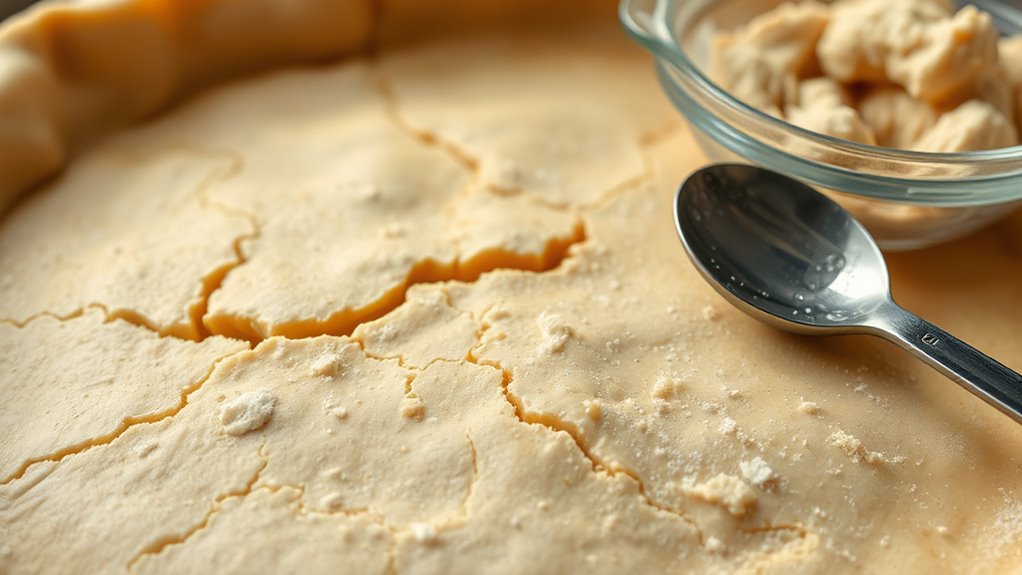
Achieving the perfect hydration for your pie crust involves adding just the right amount of water so the dough holds together without becoming sticky or crumbly. Proper hydration ensures ideal dough elasticity, making it easier to handle without tearing or shrinking during baking. To do this, add water gradually, mixing gently until the dough just comes together. Pay attention to the texture—if it’s too dry, add small amounts of water; if too sticky, sprinkle in a bit more flour. Adequate hydration not only improves elasticity but also helps enhance flavor, as well-hydrated ingredients meld better. Remember, every ingredient absorbs water differently, so adjusting gradually is key to achieving a well-balanced dough that’s easy to work with and flavorful.
How to Keep Your Pie Crust Flaky and Prevent Toughness

To keep your pie crust flaky and tender, handle the dough gently and avoid overworking it. Make sure you add just enough hydration so the dough comes together without becoming tough. Also, chilling the dough before baking helps relax the gluten and results in a crisp, flaky crust. Incorporating techniques from Free Floating landscaping ideas can inspire you to create a relaxed, stress-free baking process that enhances your results. Paying attention to proper hydration ensures the dough remains tender and easy to work with, preventing toughness caused by excess moisture.
Properly Handle Dough
Ever wonder how to keep your pie crust tender and flaky instead of tough and dense? It all comes down to proper handling techniques and dough consistency. When working with dough, handle it gently to avoid overworking, which develops gluten and toughens the crust. Use light, quick motions to mix and roll, and don’t press too hard. Aim for a dough consistency that’s moist but not sticky; it should hold together without feeling wet. Chill the dough if it warms up during handling, as this helps maintain its structure. Avoid overmixing or kneading, and work swiftly to prevent the dough from becoming tough. Properly managing your dough ensures a tender, flaky crust every time, making your pie a delicious success. Understanding gluten development can help you better control the texture of your crust and prevent toughness. Additionally, controlling the dough hydration level is essential for achieving the perfect flaky texture.
Use Adequate Hydration
Using adequate hydration is essential to keeping your pie crust flaky and tender. Proper hydration helps develop dough elasticity, making it easier to handle without becoming tough. Achieving hydration balance ensures your crust isn’t too dry or sticky. When you add just enough water, the dough will come together smoothly and stay pliable during rolling. Too little water results in a crumbly crust, while too much makes it tough. To get it right, start with small amounts of ice water, adding gradually. This way, you control the hydration level and prevent overworking the dough. Remember, a well-hydrated dough maintains elasticity, leading to a flaky, tender crust that’s a delight to eat.
- Use ice-cold water to manage hydration
- Add water gradually, small amounts at a time
- Stop mixing once the dough just comes together
- Feel for a dough that’s moist but not sticky
- Balance water to avoid overworking the dough
Chill Before Baking
Chilling your pie crust before baking helps lock in moisture and relax the gluten strands, which prevents it from becoming tough during baking. When you chill the dough, it lowers the dough temperature, making it easier to handle and roll out smoothly. Use a proper rolling technique by working quickly and turning the dough frequently to maintain an even thickness and prevent overheating. Keeping the dough cold ensures the fats stay solid, contributing to a flaky crust. After shaping, refrigerate the crust for at least 30 minutes before baking. This step solidifies the fats, promoting flakiness while reducing gluten development. Chilling not only improves texture but also helps you achieve a tender, flaky crust that’s less prone to toughness.
Why Does My Pie Crust Turn Tough, and How Can I Fix It?

A tough pie crust often results from overworking the dough or using too much flour, which develops the gluten and makes the crust chewy rather than tender. To fix this, avoid overmixing and handle the dough gently. Incorporate blind baking to prevent soggy bottoms and improve texture. For flavor enhancement, brush the crust with an egg wash or add a touch of sugar. Here are some tips:
- Use just enough flour to prevent sticking
- Handle dough minimally and chill before rolling
- Avoid overworking after adding water
- Blind bake for a crisp, tender crust
- Don’t overmix ingredients, keep it light
Frequently Asked Questions
Can Using Cold Ingredients Prevent Tough Pie Crust?
Using cold ingredients can definitely help prevent tough pie crust. When you start with cold butter and ice-cold water, it keeps the dough temperature low, which minimizes gluten development. This results in a tender, flaky crust. Keep your dough chilled during mixing and handling, and avoid overworking it. Cold ingredients and maintaining a low dough temperature are key to achieving a perfect, tender pie crust every time.
Does Adding Sugar Affect Pie Crust Toughness?
Adding sugar doesn’t make your pie crust tougher; instead, sugar’s effects include tenderizing the crust by interfering with gluten formation. It also helps balance sweetness, enhancing flavor without compromising texture. However, too much sugar can make the crust overly fragile or sticky, so use it in moderation. By carefully incorporating sugar, you achieve a tender, flavorful crust with the right sweetness balance, ensuring a delicious final result.
How Does Altitude Influence Pie Crust Texture?
You’re walking a tightrope with high altitude baking, where humidity effects and thinner air can make pie crust tricky. At high altitudes, the crust tends to be tougher if you don’t adjust the recipe, as lower air pressure and drier conditions dry out the dough faster. To keep it tender, increase hydration slightly and reduce baking time. Think of it as fine-tuning your approach to stay in control amidst changing conditions.
Are There Alternative Flours That Resist Toughness?
Yes, you can choose alternative flours like cake flour, almond flour, or rice flour to resist toughness. These flours have lower gluten development and protein content, which helps keep your pie crust tender. When using them, you’ll notice less elasticity and a more delicate texture. Just remember, adjusting hydration levels might be necessary, as these flours absorb liquids differently than traditional all-purpose flour.
Can Resting the Dough Improve Crust Tenderness?
A stitch in time saves nine—resting your dough definitely helps. When you let it relax, it reduces gluten development and prevents toughness. Resting allows the dough to become more pliable, making it easier to roll out without becoming tough or rubbery. So, after mixing, wrap your dough and let it sit in the fridge for at least 30 minutes. This simple step can make your crust tender and flaky.
Conclusion
To keep your pie crust tender and flaky, handle the dough gently and pay close attention to hydration. Avoid overworking it, and trust your instincts to find the right amount of water. With patience and a light touch, you’ll craft a crust that’s perfectly delicate, inviting every bite. Remember, a little care goes a long way in turning a simple pastry into a delightful masterpiece, one gentle fold at a time.