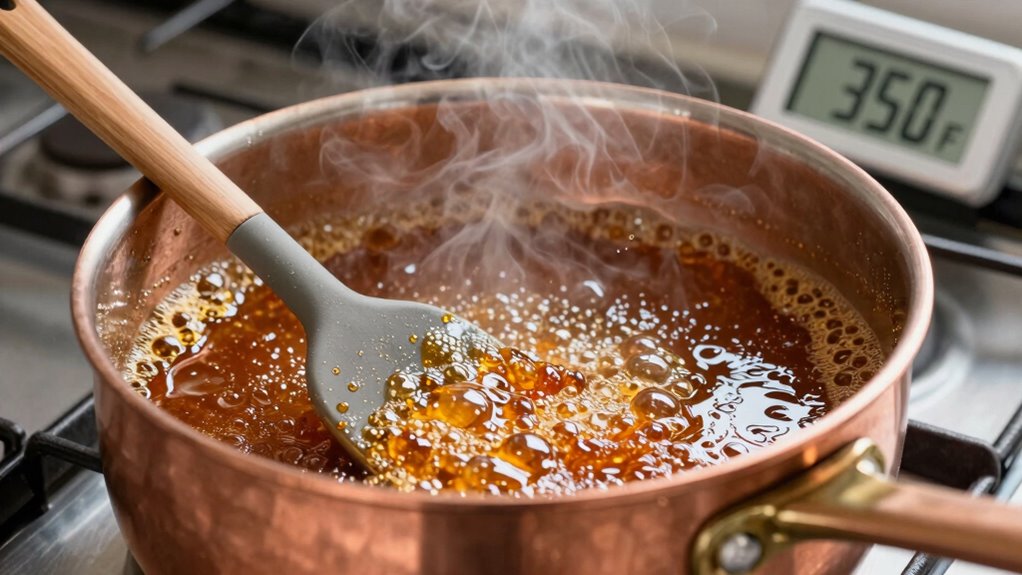
To prevent burnt sugar bitterness, control the heat carefully and use a heavy-bottomed pan to distribute it evenly. Monitor the temperature with a reliable thermometer, aiming for the right caramelization stage without overheating. Avoid rushing, and keep stirring gently only when necessary. Add liquids slowly, stirring constantly to prevent crystallization, and remove the sugar from heat once it reaches a beautiful golden hue. If you want to master smooth, perfect caramel, there’s more to learn ahead.
Key Takeaways
- Use a heavy-bottomed pan for even heat distribution and prevent hot spots that cause burning.
- Monitor the temperature carefully with a candy thermometer, removing sugar at the correct caramelization stage.
- Cook over low to medium heat, avoiding rushing the process to ensure gradual, even caramelization.
- Avoid stirring once sugar starts melting to prevent crystallization and uneven burning.
- Keep the workspace clean and dry, and add liquids slowly to reduce splattering and burning risks.
Why Does Sugar Burn and Turn Bitter?
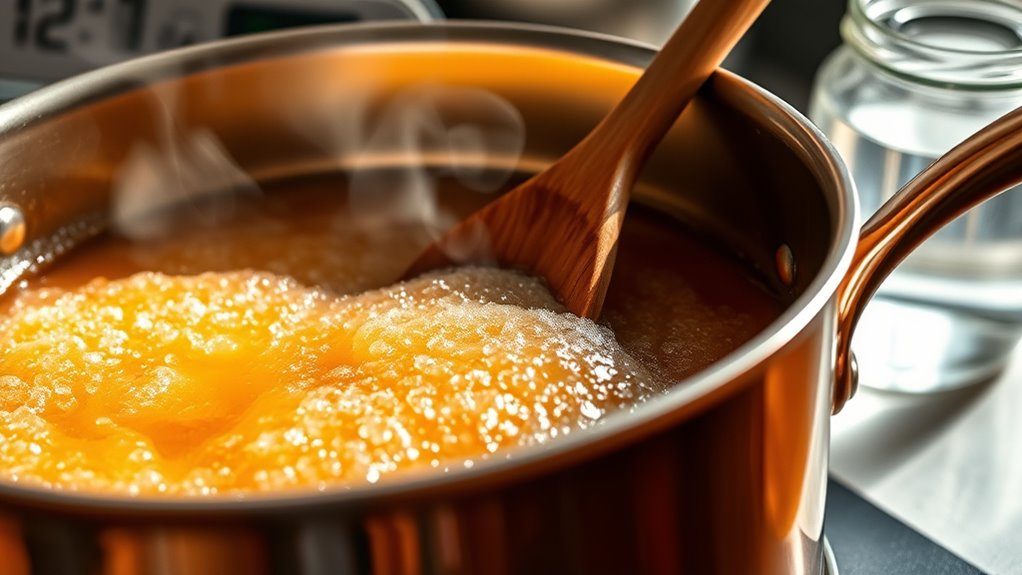
Sugar burns and turns bitter when it’s heated too quickly or to too high a temperature. This happens because rapid heating causes uneven sugar crystallization, leading to burnt spots that develop a harsh, bitter taste. As the temperature rises, sugar begins to break down, altering its natural caramel flavor into a burnt, acrid note. When you rush the process, the sugar doesn’t have time to develop a smooth, rich caramel, resulting in a bitter aftertaste. The key is to heat sugar slowly and evenly, allowing it to reach the right temperature gradually. This controlled heating guarantees a beautiful caramel flavor without the bitterness caused by overheating. Proper attention during heating preserves the sugar’s delicate balance, preventing unwanted bitterness. Additionally, using a sugar thermometer can help monitor the temperature precisely, ensuring perfect caramelization without burning. Controlling the heat source and understanding caramelization stages are essential for achieving the ideal flavor. Being aware of the thermal properties of sugar can also help in managing the heating process effectively, which is crucial for preventing overheating and bitterness. For example, knowing how sugar behaves at different temperature ranges can guide you in timing your heating process more accurately.
What Are the Best Types of Sugar and Tools to Prevent Burning?
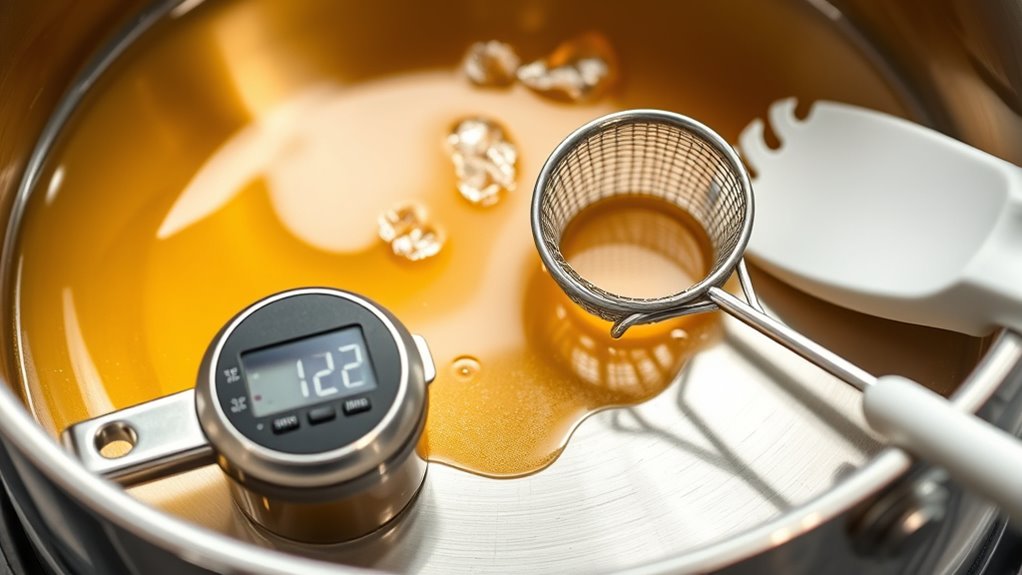
Choosing the right type of sugar and the proper tools is essential for preventing burning and achieving perfect caramel. Standard granulated sugar is the best choice because it melts evenly and heats gradually. If you’re interested in sweet alternatives, honey or maple syrup can work, but they require different techniques to prevent burning. Sugar substitutes like Stevia or erythritol may not caramelize the same way, so use them cautiously. Use a heavy-bottomed pan to distribute heat evenly and prevent hot spots that cause burning. A candy thermometer helps monitor temperature precisely, ensuring you don’t go beyond the caramelization point. Stir gently and constantly when heating to promote even melting. Paying attention to sugar’s melting point and understanding how heat affects caramelization can help you control the process and avoid the bitterness caused by burnt sugar. Additionally, selecting appropriate cooking tools can greatly influence your success in making smooth, evenly caramelized sugar. For example, using a quality saucepan with a thick base can help maintain consistent heat and prevent scorching. Being aware of heat distribution in your cookware can further improve your results and reduce the risk of burning. Proper temperature control is crucial for achieving the desired caramel color without burning.
How Can You Cook Sugar Without Burning It?
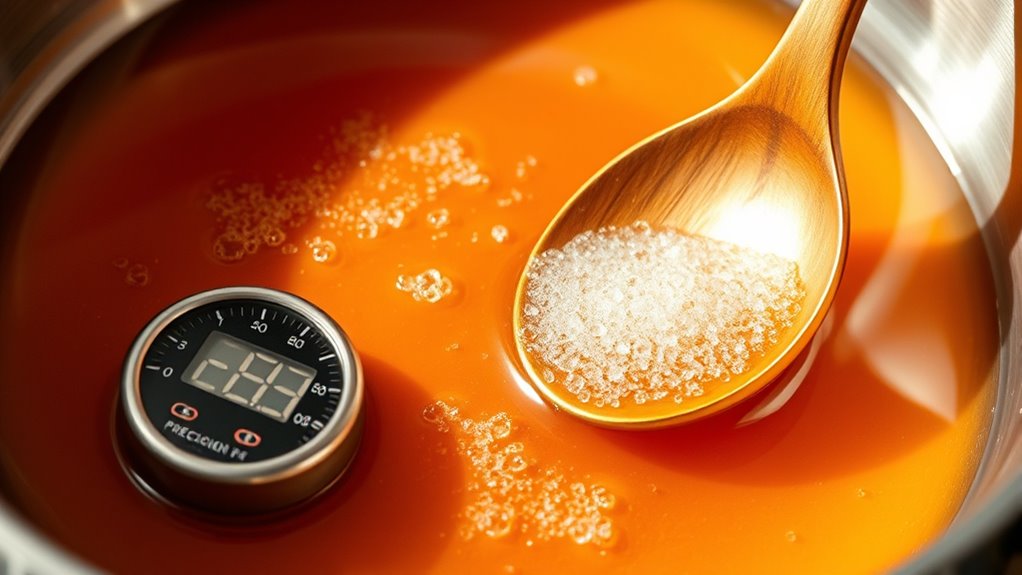
To cook sugar without burning it, you need to pay close attention to heat levels and stirring techniques. Use low to medium heat to prevent rapid caramelization that leads to bitterness. Keep a close eye on the sugar as it melts, stirring gently to distribute heat evenly. In candy making, consistent stirring helps avoid hot spots that can cause burning. Always prioritize kitchen safety by wearing oven mitts and working in a clean, uncluttered space.
- Use a heavy-bottomed saucepan for even heat distribution
- Stir gently and constantly to prevent sticking and burning
- Avoid rushing the process; patience guarantees better control over sugar’s temperature
Following these tips helps you achieve perfectly cooked sugar without bitterness or burnt flavors.
How Do You Monitor and Time Sugar Cooking Properly?
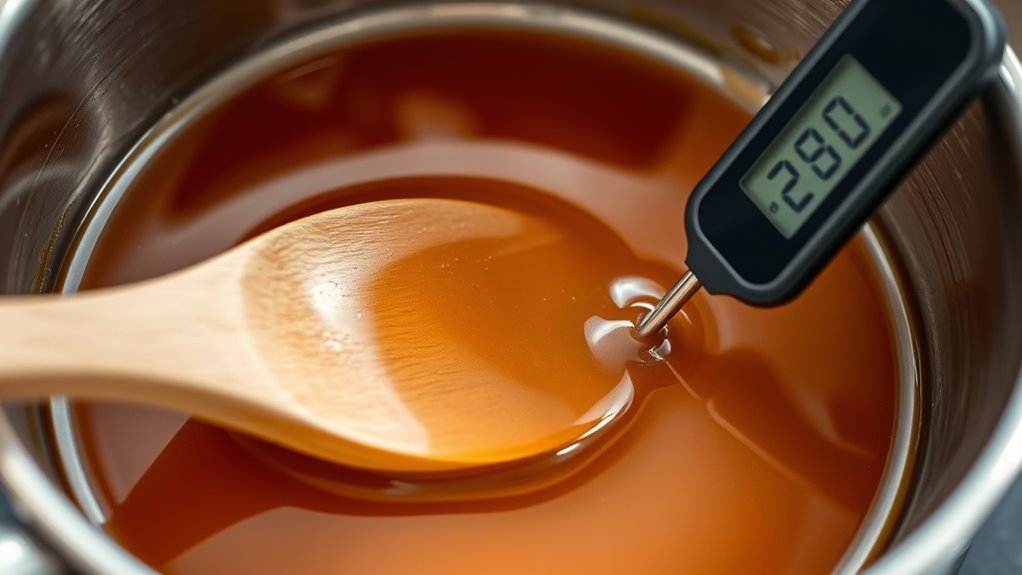
Monitoring and timing your sugar cooking process is essential to prevent burning and achieve the desired caramelization. A reliable candy thermometer helps you track the sugar’s temperature accurately, ensuring you reach the specific stage needed for your recipe. Use precise timing techniques, such as setting a timer once the sugar reaches the target temperature, to avoid overcooking. Keep a close eye on the thermometer as sugar can quickly go from perfect to burnt. Stir gently and consistently to distribute heat evenly. Remember, sugar can change color rapidly, so removing it from heat promptly at the right temperature prevents bitterness. Proper sugar stages selection can also influence heat distribution and finishing results. Being familiar with the different caramelization stages allows for better control during cooking. Understanding heat transfer in sugar can help you achieve more consistent results. By staying attentive with your thermometer and adhering to timing techniques, you’ll master perfect sugar caramelization every time.
How Do You Safely Add Liquids and Ingredients to Hot Sugar?
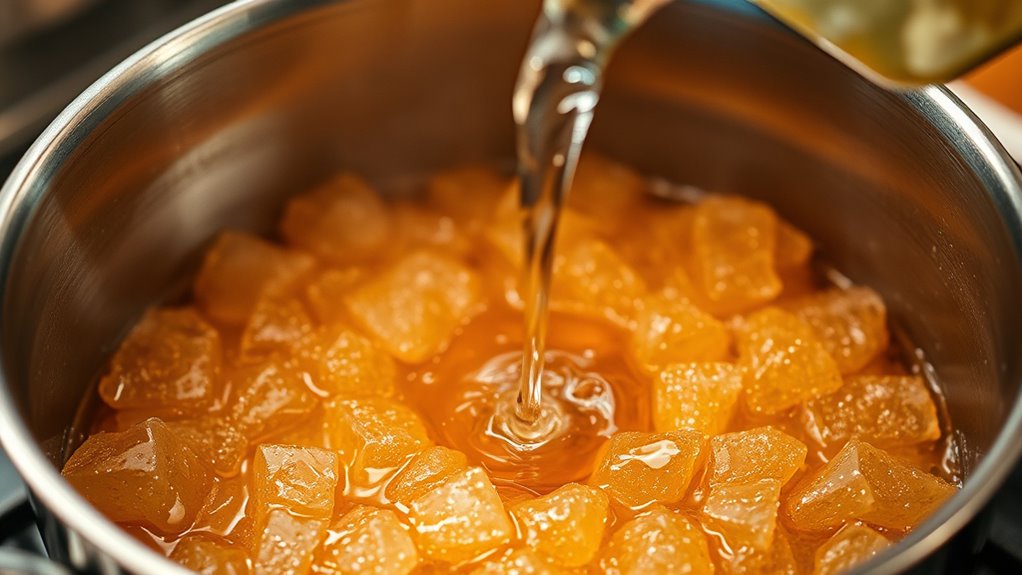
When adding liquids to hot sugar, pour slowly and steadily to prevent splattering. Gradually introduce ingredients to avoid sudden reactions that can cause burns or messes. Always protect yourself with a long-handled spoon or spatula and stand back as you work. Incorporating safety precautions like using heat-resistant tools can further reduce risks and ensure a smoother cooking process. Being aware of free floating techniques can help you maintain control during the process, minimizing accidents.
Use a Slow Pour
Adding liquids or ingredients to hot sugar can cause violent splattering if done too quickly. To prevent this, pour slowly and steadily to avoid disturbing the caramel flavor and triggering sugar crystallization. A slow pour allows the hot sugar to absorb the new ingredients gradually, reducing the risk of burning or bitterness. It also minimizes splatters that can cause burns or messes. When pouring, keep the liquid close to the surface of the sugar and pour in a thin, steady stream. This controlled approach helps maintain the smooth texture of your caramel. Remember, patience is key—rushing can ruin the consistency and flavor of your caramel. Using a precision thermometer can help monitor the temperature and ensure proper caramelization, leading to better results. Practicing a gentle pouring technique can further improve your safety and success in caramel making. Use these tips for a safer, more successful caramel-making process.
Add Liquids Gradually
To safely incorporate liquids or ingredients into hot sugar, it is vital to add them gradually instead of all at once. When you pour liquids too quickly, the sudden temperature change can cause sugar crystallization, leading to a grainy texture. Add small amounts slowly, stirring constantly to prevent crystallization and avoid splattering. This gentle approach helps maintain the smooth caramel aroma you’re aiming for, rather than a bitter or burnt taste. Keep in mind that the sugar’s temperature will drop slightly with each addition, so adjust your heat accordingly. Patience is key—adding liquids gradually ensures a safe, controlled process, resulting in a glossy, flavorful caramel without bitterness. Proper technique is essential to prevent common mistakes such as crystallization or scorching. Being aware of the chemical reactions involved can help you better control the process and achieve perfect caramel every time. Additionally, understanding the precipitation of impurities can help you troubleshoot and refine your method for consistently smooth results. Recognizing the importance of temperature control can further improve your success in making smooth, delicious caramel. Incorporating temperature monitoring tools can also assist in maintaining consistent heat and preventing burning.
Protect Against Splattering
Because hot sugar is extremely viscous and can bubble vigorously, it’s essential to safeguard yourself from splattering when introducing liquids or ingredients. To guarantee safety precautions, set up your kitchen with a stable, heat-resistant surface and keep a lid nearby. When adding liquids, do so slowly and carefully to minimize splattering. Use long-handled tools to maintain a safe distance from the hot sugar. Always pour liquids away from you and avoid rushing the process to prevent burns.
- Wear oven mitts and safety goggles for extra protection
- Add liquids near the edge of the pan to control splatters
- Keep a damp cloth nearby to quickly wipe away splashes
What Are Top Tips and Common Mistakes to Avoid?
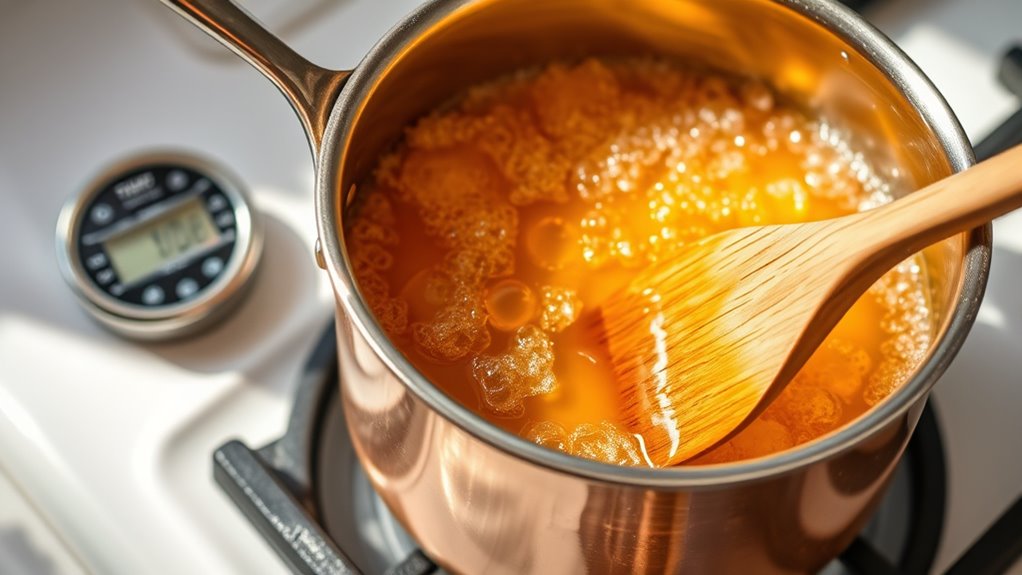
Preventing burnt sugar bitterness relies on paying close attention to your technique and avoiding common pitfalls. One top tip is monitoring the caramel consistency carefully; aim for a smooth, golden liquid without overcooking. Overheating can lead to a bitter, burnt flavor. Be mindful of sugar crystallization, which can cause graininess and uneven caramel. To prevent this, avoid stirring once the sugar begins to melt, and keep the mixture moist with a brush of water if needed. Using a clean, dry saucepan also helps prevent unwanted crystallization. Ultimately, don’t rush the process—patience ensures even heating and prevents burning. Additionally, understanding the importance of temperature control can make a significant difference in achieving perfect caramel without bitterness. Properly managing heat is essential for caramelization and avoiding burnt flavors. By focusing on these tips and avoiding these mistakes, you’ll enhance your chances of achieving perfect caramel without bitterness.
Frequently Asked Questions
Can Using a Different Pan Prevent Sugar From Burning?
Yes, using a different pan can help prevent sugar from burning. Opt for an alternative cookware with a better heat distribution, like a heavy-bottomed pan made from stainless steel or copper. These pan materials reduce hot spots, allowing you to control the temperature more effectively. By choosing the right pan material, you minimize the risk of burning, ensuring your sugar melts smoothly without bitterness.
What Temperature Should Sugar Ideally Reach to Avoid Bitterness?
Think of sugar as a performer on a stage; it shines brightest at just the right moment. To avoid bitterness, keep the sugar’s temperature around the caramelization point, typically between 340-350°F (170-177°C). If it climbs higher, bitterness develops as the sugar burns. Use a reliable thermometer to monitor the temperature carefully, ensuring a perfect, sweet finish without the harsh, burnt notes.
Does Humidity Affect the Sugar Caramelization Process?
Humidity impact definitely matters when caramelizing sugar. High humidity introduces moisture into the environment, making it harder for sugar to reach the right temperature and caramelize evenly. To control moisture, keep your workspace dry and use a clean, dry pan. Proper moisture control helps prevent uneven caramelization and bitterness, ensuring your sugar reaches the ideal temperature without becoming burnt or overly bitter.
Are There Specific Brands of Sugar Less Prone to Burning?
Some brands of sugar are less prone to burning because they have higher quality and consistent granulation. To reduce the risk, choose refined, pure sugar from reputable brands and store it in airtight containers in a cool, dry place. Proper storage conditions prevent moisture absorption, which can cause uneven caramelization and burning. By selecting quality sugar and maintaining ideal storage, you’ll have a smoother caramelization process with less chance of bitterness.
How Does Stirring Impact the Risk of Sugar Burning?
Stirring plays a essential role in ensuring even heat distribution, helping you avoid the risk of burning your sugar. Keep the stirring consistency gentle and steady, so the heat spreads smoothly across the mixture. This careful approach prevents hot spots that can cause bitterness. By maintaining consistent stirring, you create a gentle rhythm that keeps your sugar at just the right temperature, transforming your cooking into a delightful experience.
Conclusion
Think of cooking sugar as walking a tightrope—you need balance, attention, and a steady hand. By understanding why sugar burns, choosing the right tools, and monitoring your progress, you can prevent bitterness from creeping in. With patience and care, you’ll master the art of perfect caramel, turning a simple ingredient into a golden masterpiece. Keep your focus sharp, and enjoy the sweet reward of your perfectly cooked sugar, free from bitter surprises.